
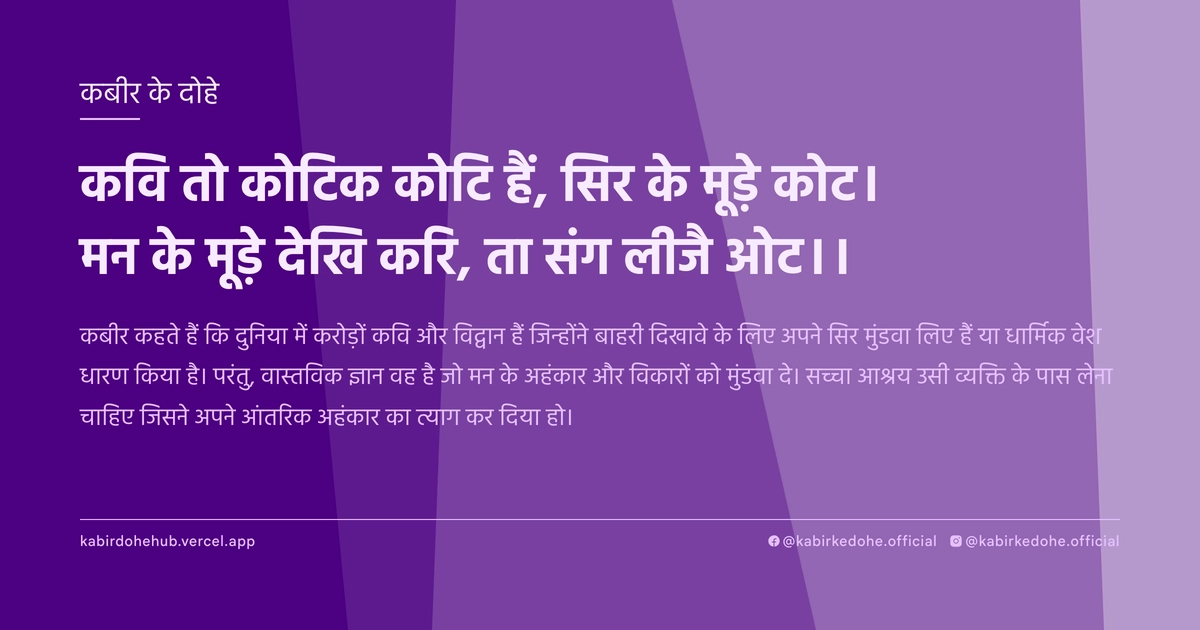
कवि तो कोटिक कोटि हैं, सिर के मूड़े कोट।
मन के मूड़े देखि करि, ता संग लीजै ओट।।
Kavi to kotik koti hain, sir ke mude kot. Man ke mude dekh kari, ta sang leeje ot.
इस पृष्ठ पर इस कबीर दोहे का अर्थ (meaning), हिंदी व्याख्या और अंग्रेज़ी अनुवाद, दार्शनिक विश्लेषण और व्यावहारिक जीवन सीख दी गई है। यह दोहा आत्मनिरीक्षण (Self-introspection) विषय से जुड़ा है — Kabir doha meaning and explanation in Hindi and English.
अर्थ (Meaning):
कबीर कहते हैं कि दुनिया में करोड़ों कवि और विद्वान हैं जिन्होंने बाहरी दिखावे के लिए अपने सिर मुंडवा लिए हैं या धार्मिक वेश धारण किया है। परंतु, वास्तविक ज्ञान वह है जो मन के अहंकार और विकारों को मुंडवा दे। सच्चा आश्रय उसी व्यक्ति के पास लेना चाहिए जिसने अपने आंतरिक अहंकार का त्याग कर दिया हो।
Kabir asserts that there are millions of poets and scholars who have shaved their heads or adopted outward religious appearances to signal holiness. However, true wisdom lies in 'shaving' the ego and desires of the mind. One should seek refuge and guidance only from those who have conquered their internal pride and mental clutter.
व्याख्या (Interpretation):
इस दोहे में 'सिर मुंडवाना' बाहरी कर्मकांड का प्रतीक है, जबकि 'मन मुंडवाना' आंतरिक शुद्धि का। कबीर यहाँ एक गहरा विरोधाभास प्रस्तुत करते हैं: बाहरी त्याग अक्सर आंतरिक अहंकार को और बढ़ा देता है। निर्गुण भक्ति के अनुसार, ईश्वर किसी विशेष वेशभूषा या जाति में नहीं, बल्कि उस शून्य में बसता है जहाँ 'मैं' समाप्त हो जाता है। यह अद्वैत वेदांत के उस सिद्धांत से जुड़ा है जहाँ माया (भ्रम) केवल बाहरी आवरण है, और आत्मा का वास्तविक स्वरूप तब प्रकट होता है जब मानसिक विकारों का विसर्जन हो जाता।
In this couplet, 'shaving the head' symbolizes external ritualism, while 'shaving the mind' represents internal purification. Kabir presents a profound paradox: external renunciation often inflates internal ego. According to Nirgun Bhakti, the Divine does not reside in specific attire or caste, but in the void created when the 'I' is extinguished. This aligns with Advaita Vedanta, where Maya (illusion) is merely an outer shell, and the true nature of the Atman is revealed only when mental distortions are discarded.
दार्शनिक विश्लेषण (Philosophical Analysis):
कबीर का यह प्रहार उस समय के धार्मिक पाखंडों पर था जहाँ केवल तिलक, माला या मुंडन को मोक्ष का मार्ग माना जाता था। वे स्पष्ट करते हैं कि बौद्धिक ज्ञान (कवि होना) और आध्यात्मिक अनुभव (मन की शुद्धि) दो अलग चीजें हैं। कई लोग शास्त्रों के ज्ञाता होते हैं, लेकिन उनका व्यवहार अभी भी अहंकार से प्रेरित होता है।
सूफी मत के 'फना' (अहंकार का विनाश) और वेदांत के 'अहं ब्रह्मास्मि' के बीच एक सेतु है—दोनों ही इस बात पर जोर देते हैं कि जब तक व्यक्तिगत पहचान का भ्रम नहीं टूटता, सत्य की प्राप्ति असंभव है। कबीर यहाँ 'ओट' (आश्रय) शब्द का प्रयोग कर रहे हैं, जिसका अर्थ है कि हमें ऐसे गुरु की तलाश करनी चाहिए जो केवल शब्दों का ज्ञाता न हो, बल्कि जिसने स्वयं को जीता हो।
यह विश्लेषण हमें यह समझने में मदद करता है कि धर्म केवल नियमों का पालन नहीं, बल्कि चेतना का रूपांतरण है। यदि कोई व्यक्ति बाहरी रूप से संत दिखता है लेकिन भीतर ईर्ष्या और क्रोध से भरा है, तो वह केवल एक 'कवि' है, साधक नहीं।
मनुष्य की सबसे बड़ी त्रासदी यह है कि वह बाहरी प्रतीकों को ही सत्य मान लेता है। कबीर इस भ्रम को तोड़कर हमें अंतर्मुखी होने की प्रेरणा देते हैं। वे कहते हैं कि वास्तविक तीर्थयात्रा शरीर की नहीं, बल्कि मन की परतों को हटाने की प्रक्रिया है।
अंततः, यह दोहा हमें सिखाता है कि ज्ञान का उद्देश्य अहंकार को बढ़ाना नहीं, बल्कि उसे मिटाना होना चाहिए। जब मन के सारे 'मूड़े' (विकार) निकल जाते हैं, तब जो शेष रहता है, वही शुद्ध चेतना या ब्रह्म है।
Kabir's critique targets the religious hypocrisy of his era, where marks of renunciation like shaved heads or beads were mistaken for enlightenment. He distinguishes between intellectual scholarship (being a 'poet') and spiritual realization (purification of the mind). Many possess scriptural knowledge, yet their actions remain driven by ego.
There is a bridge between the Sufi concept of 'Fana' (annihilation of the self) and the Vedantic 'Aham Brahmasmi'—both emphasize that truth is unattainable until the illusion of individual identity is shattered. By using the word 'Ot' (refuge), Kabir suggests seeking a guide who is not merely a master of words but a master of their own impulses.
This analysis reveals that religion is not the adherence to rules, but the transformation of consciousness. If a person appears as a saint externally but harbors jealousy and rage internally, they are merely a 'poet' of spirituality, not a practitioner.
The greatest human tragedy is mistaking external symbols for ultimate reality. Kabir urges us to turn inward, suggesting that the true pilgrimage is not a physical journey but the process of peeling away the layers of the mind.
Ultimately, this doha teaches that the purpose of knowledge is not to inflate the ego, but to dissolve it. When all the 'shavings' (impurities) of the mind are removed, what remains is pure consciousness or Brahman.
मूल संदेश (Core Message):
- बाहरी दिखावा आध्यात्मिक प्रगति का प्रमाण नहीं है।
- बौद्धिक ज्ञान तब तक व्यर्थ है जब तक वह अहंकार को न मिटाए।
- सच्चा गुरु वह है जिसका मन विकारों से मुक्त हो।
- अहंकार का विसर्जन ही वास्तविक मोक्ष का द्वार है।
- शब्दों के जाल से ऊपर उठकर अनुभव की गहराई में उतरें।
- External appearances are not evidence of spiritual progress.
- Intellectual knowledge is futile unless it dissolves the ego.
- A true guide is one whose mind is free from distortions.
- The annihilation of the ego is the only true gateway to liberation.
- Rise above the web of words and dive into the depth of experience.
व्यावहारिक उदाहरण (Practical Example):
वाराणसी के एक पुराने घाट पर रामदीन नाम का एक वृद्ध नाविक रहता था। वह सादा जीवन जीता था और किसी भी धार्मिक संप्रदाय का दावा नहीं करता था। उसी घाट पर कई बड़े पंडित और विद्वान आते थे जो अपनी विद्वत्ता का प्रदर्शन करते थे और लोगों को उपदेश देते थे कि मोक्ष कैसे प्राप्त किया जाए।
रामदीन चुपचाप अपनी नाव चलाता और लोगों को पार लगाता। एक दिन एक अहंकारी युवा विद्वान, जो स्वयं को महान कवि और दार्शनिक मानता था, रामदीन की नाव पर सवार हुआ। उसने रामदीन का मजाक उड़ाते हुए कहा, 'तुम अनपढ़ हो, तुम्हें क्या पता कि ईश्वर क्या है? देखो मुझे, मैंने शास्त्रों का अध्ययन किया है और मेरा जीवन संयम से भरा है।'
रामदीन ने मुस्कुराकर जवाब दिया, 'साहब, मैंने कभी शास्त्र नहीं पढ़े, लेकिन मैंने यह देखा है कि जब नाव में पानी भर जाता है, तो वह डूब जाती है, चाहे वह सोने की हो या मिट्टी की। वैसे ही, जब मन में अहंकार का पानी भर जाता है, तो ज्ञान की नाव डूब जाती है।'
विद्वान को लगा कि यह एक साधारण बात है, लेकिन तभी उसने देखा कि रामदीन की आँखों में एक ऐसी शांति और करुणा थी जो उसने बड़े-बड़े आश्रमों के संतों में नहीं देखी थी। रामदीन का व्यवहार निस्वार्थ था; वह बीमारों की मदद करता और बिना किसी प्रशंसा की इच्छा के सेवा करता था।
उस रात विद्वान सो नहीं सका। उसे कबीर का वह विचार याद आया कि बाहरी वेशभूषा और शब्दों के जाल से बड़ा मन की शुद्धि है। उसने महसूस किया कि वह केवल 'सिर मुंडवाने' वाले कवियों की श्रेणी में था—उसने बाहरी ज्ञान तो जुटा लिया था, लेकिन उसके भीतर अभी भी 'मैं' का शोर था।
अगले दिन, उसने अपना अहंकार त्याग कर रामदीन से पूछा, 'मुझे वह शांति कैसे मिलेगी जो आपके पास है?' रामदीन ने बस इतना कहा, 'अपने शब्दों को चुप कराओ और अपने भीतर के शोर को सुनो। जब तक तुम खुद को दूसरों से बड़ा समझते रहोगे, तुम केवल एक कवि रहोगे, साधक नहीं।'
विद्वान ने अपनी जीवनशैली बदल दी। उसने उपदेश देना बंद किया और सेवा करना शुरू किया। उसने पाया कि जब उसने दूसरों को छोटा समझना बंद किया, तब उसके भीतर का वास्तविक ज्ञान जागृत हुआ।
यह 'कबीर ट्विस्ट' था—जहाँ एक अनपढ़ नाविक ने एक विद्वान को सिखाया कि वास्तविक पवित्रता बाहरी प्रतीकों में नहीं, बल्कि अहंकार के विसर्जन में है। विद्वान अब केवल शब्दों का ज्ञाता नहीं, बल्कि शांति का अनुभव करने वाला व्यक्ति बन गया।
On an ancient ghat in Varanasi lived an elderly boatman named Ramdeen. He led a simple life and claimed no religious affiliation. Many great pundits and scholars visited the same ghat, showcasing their erudition and lecturing people on how to attain salvation.
Ramdeen silently rowed his boat and ferried passengers. One day, an arrogant young scholar, who considered himself a great poet and philosopher, boarded Ramdeen's boat. He mocked Ramdeen, saying, 'You are illiterate; what do you know of God? Look at me, I have studied the scriptures and my life is full of discipline.'
Ramdeen smiled and replied, 'Sir, I have never read the scriptures, but I have seen that when a boat fills with water, it sinks, whether it is made of gold or clay. Similarly, when the mind fills with the water of ego, the boat of knowledge sinks.'
The scholar thought this was a trivial remark, but then he noticed a peace and compassion in Ramdeen's eyes that he had never seen in the saints of great ashrams. Ramdeen's behavior was selfless; he helped the sick and served others without any desire for praise.
That night, the scholar could not sleep. He remembered Kabir's thought that the purification of the mind is greater than external appearances and webs of words. He realized he belonged to the category of 'poets who shave their heads'—he had gathered external knowledge, but the noise of 'I' still roared within him.
The next day, casting aside his pride, he asked Ramdeen, 'How do I find the peace that you possess?' Ramdeen simply said, 'Silence your words and listen to the noise within. As long as you consider yourself superior to others, you will remain a poet, not a seeker.'
The scholar changed his lifestyle. He stopped preaching and started serving. He found that when he stopped viewing others as inferior, his true inner knowledge awakened.
This was the 'Kabir Twist'—where an illiterate boatman taught a scholar that true holiness is not in external symbols, but in the dissolution of the ego. The scholar ceased to be a mere master of words and became an experiencer of peace.
अभ्यास मार्गदर्शन (Practice Guidance):
- दैनिक आत्म-निरीक्षण: दिन के अंत में 15 मिनट बैठें और विचार करें कि आज कितनी बार आपने अपनी श्रेष्ठता सिद्ध करने के लिए शब्दों का प्रयोग किया।
- मौन अभ्यास: प्रतिदिन एक घंटा पूर्ण मौन रहें, न केवल वाणी से, बल्कि मानसिक रूप से भी किसी को 'सही' या 'गलत' साबित करने की इच्छा का त्याग करें।
- सेवा बिना पहचान: किसी ऐसे व्यक्ति की मदद करें जो आपकी सामाजिक या आर्थिक स्थिति से बहुत नीचे हो, और यह सुनिश्चित करें कि उसे पता न चले कि मदद किसने की है।
- डायग्नोस्टिक चेकलिस्ट: क्या मैं दूसरों की प्रशंसा के बिना भी संतुष्ट हूँ? क्या मैं किसी की गलती पर उसे सुधारने की तीव्र इच्छा (अहंकार) महसूस करता हूँ? क्या मेरी धार्मिक पहचान मेरी विनम्रता को बढ़ा रही है या मेरे गर्व को?
- Daily Self-Inquiry: Spend 15 minutes at the end of the day reflecting on how many times you used words specifically to prove your superiority over others.
- Silence Practice: Maintain complete silence for one hour daily—not just vocally, but mentally letting go of the urge to prove anyone 'right' or 'wrong'.
- Anonymous Service: Help someone who is significantly lower than you in social or economic status, ensuring they never find out who provided the help.
- Diagnostic Checklist: Am I content without external praise? Do I feel an intense urge (ego) to correct others' mistakes? Is my religious identity increasing my humility or fueling my pride?
चिंतन प्रश्न (Reflection Questions):
- क्या मेरी आध्यात्मिक या नैतिक पहचान वास्तव में मुझे विनम्र बनाती है, या यह मेरे लिए एक नया 'अहंकार' बन गई है?
- यदि मुझसे मेरी सारी डिग्रियां, पद और धार्मिक पहचान छीन ली जाए, तो मेरे भीतर क्या बचेगा?
- मैं अक्सर दूसरों को उपदेश देता हूँ, लेकिन क्या मैं स्वयं उन उपदेशों के अनुसार जीता हूँ?
- मेरे जीवन का कौन सा 'बाहरी मुंडन' (दिखावा) है जिसे मैं दुनिया को दिखाने के लिए बनाए रखता हूँ?
- क्या मैं सत्य की खोज कर रहा हूँ, या केवल इस बात की खोज कि मैं दूसरों से अधिक 'सत्य' जानता हूँ?
- Does my spiritual or moral identity actually make me humble, or has it become a new form of 'ego' for me?
- If all my degrees, titles, and religious identities were stripped away, what would remain within me?
- I often preach to others, but do I actually live according to those preachings in my private moments?
- What is the 'external shaving' (pretense) in my life that I maintain just to show the world?
- Am I searching for the Truth, or merely searching for the feeling that I know the Truth better than others?