
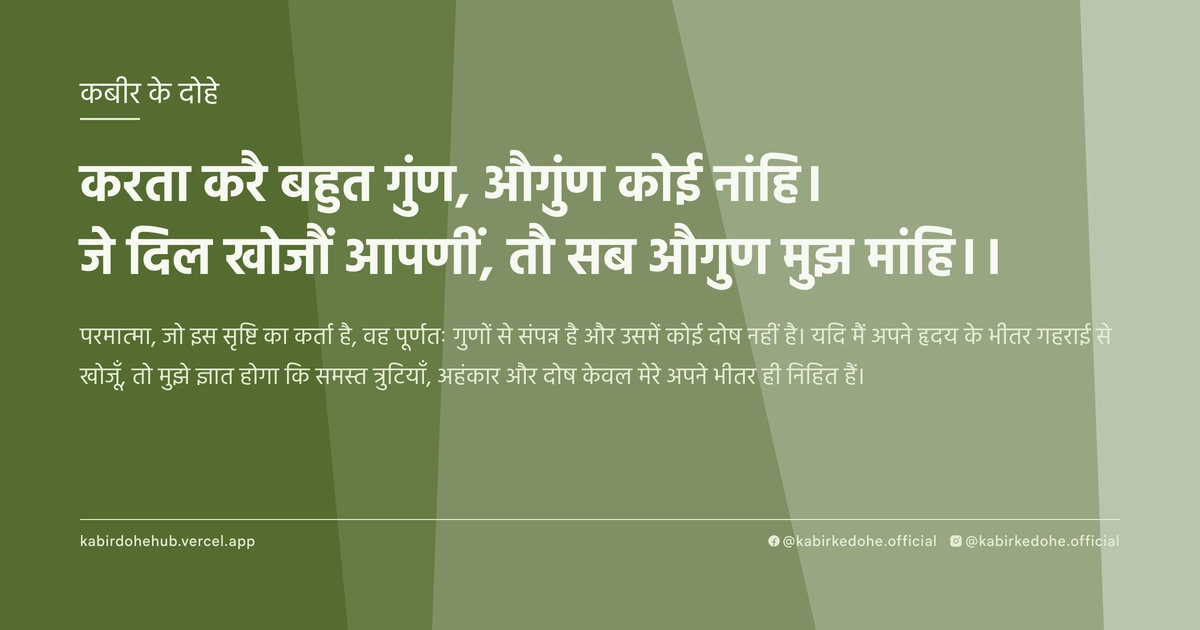
करता करै बहुत गुंण, औगुंण कोई नांहि।
जे दिल खोजौं आपणीं, तौ सब औगुण मुझ मांहि।।
Karta karai bahut gun, augun koi naahin. Je dil khojaun aapni, tau sab augun mujh maahin.
इस पृष्ठ पर इस कबीर दोहे का अर्थ (meaning), हिंदी व्याख्या और अंग्रेज़ी अनुवाद, दार्शनिक विश्लेषण और व्यावहारिक जीवन सीख दी गई है। यह दोहा विनम्रता (Humility) विषय से जुड़ा है — Kabir doha meaning and explanation in Hindi and English.
अर्थ (Meaning):
परमात्मा, जो इस सृष्टि का कर्ता है, वह पूर्णतः गुणों से संपन्न है और उसमें कोई दोष नहीं है। यदि मैं अपने हृदय के भीतर गहराई से खोजूँ, तो मुझे ज्ञात होगा कि समस्त त्रुटियाँ, अहंकार और दोष केवल मेरे अपने भीतर ही निहित हैं।
The Creator, the primal cause of all existence, is endowed with infinite virtues and is devoid of any flaw. If I search within the depths of my own heart, I will discover that all imperfections, shortcomings, and vices reside solely within me.
व्याख्या (Interpretation):
यह दोहा द्वैत से अद्वैत की ओर संक्रमण का मार्ग है। प्रारंभ में, कवि ईश्वर को 'गुणवान' और स्वयं को 'दोषपूर्ण' बताकर एक भेद उत्पन्न करता है, जो कि मानवीय अहंकार की पहली परत है। लेकिन वास्तव में, यह 'औगुण' या दोष आत्मा का नहीं, बल्कि 'अहंकार' (Ego) का है जो सत्य को ढंकता है। निर्गुण भक्ति के अनुसार, जब तक साधक स्वयं को कर्ता मानता है, वह दोषों का अनुभव करता है। जैसे ही वह यह समझता है कि वह केवल ब्रह्म का प्रतिबिंब है, दोष विलीन हो जाते हैं। यह विरोधाभास है: स्वयं को सबसे तुच्छ मानकर ही मनुष्य उस सर्वोच्च पूर्णता को प्राप्त करता है।
This couplet represents the transition from duality to non-duality. Initially, the poet creates a distinction by attributing infinite virtues to the Creator and flaws to the self, which is the first layer of human ego. However, these 'flaws' do not belong to the eternal soul (Atman) but to the illusory ego (Maya) that veils the truth. In the path of Nirgun Bhakti, as long as the seeker perceives themselves as the 'doer', they experience imperfection. The moment they realize they are a reflection of the Formless Divine, the flaws vanish. It is a spiritual paradox: by acknowledging one's utter insignificance, one attains the supreme wholeness of Brahman.
दार्शनिक विश्लेषण (Philosophical Analysis):
कबीर का यह कथन उस युग की प्रतिक्रिया है जहाँ धार्मिक पाखंड और बाहरी कर्मकांडों के माध्यम से पवित्रता का दावा किया जाता था। कबीर यहाँ 'बाहरी शुद्धि' के बजाय 'आंतरिक ईमानदारी' पर बल देते हैं। वे यह स्थापित करते हैं कि ईश्वर को बाहर खोजने के बजाय, अपनी कमियों को स्वीकार करना ही वास्तविक आध्यात्मिक यात्रा की शुरुआत है।
अद्वैत वेदांत के परिप्रेक्ष्य में, यह दोहा 'माया' के प्रभाव को दर्शाता है। जब तक हम स्वयं को शरीर और मन से जोड़कर देखते हैं, हम 'औगुण' (दोष) देखते हैं। लेकिन जब ज्ञानोदय होता है, तब यह स्पष्ट होता है कि दोष केवल अज्ञान (Avidya) था। कबीर यहाँ सूफी मत के 'फना' (अहंकार का विनाश) के करीब हैं, जहाँ साधक अपनी हस्ती को मिटाकर परमात्मा में विलीन हो जाता है।
यहाँ 'कर्ता' शब्द का प्रयोग अत्यंत सूक्ष्म है। कबीर यह संकेत दे रहे हैं कि वास्तविक कर्ता केवल वह एक परमात्मा है। मनुष्य का यह भ्रम कि 'मैं कर रहा हूँ', ही सभी दुखों और दोषों की जड़ है। यदि हम स्वयं को कर्ता मानना छोड़ दें, तो दोष स्वतः समाप्त हो जाएंगे क्योंकि दोष केवल 'अहं' के साथ जुड़े होते हैं।
सामाजिक स्तर पर, यह दोहा जाति और वर्ग के अहंकार पर प्रहार है। जो व्यक्ति स्वयं को श्रेष्ठ मानता है, वह दूसरों में दोष खोजता है। कबीर का दर्शन यह है कि जब हम अपनी आंतरिक कुरूपता को स्वीकार कर लेते हैं, तब हम दूसरों के प्रति करुणा और क्षमा का भाव विकसित करते हैं, जिससे सामाजिक समरसता आती है।
अंततः, यह मनोवैज्ञानिक रूपांतरण की प्रक्रिया है। दोषों का स्वीकार उन्हें मिटाने का पहला कदम है। जब हम यह स्वीकार करते हैं कि "सब औगुण मुझ मांहि", तब हम बाहरी दुनिया के साथ संघर्ष करना बंद कर देते हैं और अंतर्मुखी होकर उस शांत, दोषरहित चेतना की खोज करते हैं जो हमारे भीतर ही स्थित है।
Kabir's statement is a reaction to an era dominated by religious hypocrisy and the claim of purity through external rituals. He emphasizes 'internal honesty' over 'external purification,' establishing that acknowledging one's own flaws is the true beginning of the spiritual journey.
From the perspective of Advaita Vedanta, this couplet illustrates the influence of 'Maya'. As long as we identify ourselves with the body and mind, we perceive 'augun' (flaws). However, upon enlightenment, it becomes clear that the flaw was merely ignorance (Avidya). Kabir aligns here with the Sufi concept of 'Fana' (annihilation of the ego), where the seeker erases their individual identity to merge with the Divine.
The use of the word 'Karta' (Creator/Doer) is subtle. Kabir suggests that the only true Doer is the Formless Divine. The human delusion of 'I am the doer' is the root of all suffering and imperfection. If we cease to believe we are the authors of our actions, the flaws vanish because flaws are only attached to the 'ego'.
On a social level, this is an attack on the arrogance of caste and class. Those who perceive themselves as superior spend their lives finding flaws in others. Kabir's philosophy posits that by accepting our own internal ugliness, we develop compassion and forgiveness toward others, leading to social harmony.
Ultimately, this is a process of psychological transformation. Acceptance of flaws is the first step toward erasing them. When we admit that "all flaws reside in me," we stop fighting the external world and turn inward to discover that silent, flawless consciousness that resides within.
मूल संदेश (Core Message):
- दूसरों में दोष खोजना स्वयं के अंधेरे से भागना है।
- अपनी अपूर्णता को स्वीकार करना ही पूर्णता की पहली सीढ़ी है।
- ईश्वर की पूर्णता को समझने के लिए अपनी लघुता को पहचानें।
- अहंकार का विसर्जन ही वास्तविक आध्यात्मिक शुद्धि है।
- जब 'मैं' मिटता है, तब केवल दोषरहित सत्य शेष रहता है।
- Finding flaws in others is an escape from one's own darkness.
- Accepting your imperfection is the first step toward wholeness.
- Recognize your own smallness to comprehend the perfection of the Divine.
- The dissolution of ego is the only true spiritual purification.
- When the 'I' vanishes, only the flawless Truth remains.
व्यावहारिक उदाहरण (Practical Example):
वाराणसी के घाटों पर रहने वाली एक वृद्ध विधवा, जानकी, का जीवन केवल दूसरों की आलोचना में बीता था। वह मोहल्ले की हर स्त्री के चरित्र और उनके पूजा करने के तरीके पर टिप्पणी करती थी। उसे लगता था कि वह धर्म के मार्ग पर सबसे शुद्ध है और बाकी सब पापी हैं।
एक दिन वह एक साधु के पास गई और शिकायत की कि उसके आस-पास के लोग कितने अधर्मी और दोषपूर्ण हैं। साधु ने उसे एक गंदा दर्पण दिया और कहा, "इसमें देखो, तुम्हें क्या दिखता है?" जानकी ने देखा कि दर्पण पर धूल जमी थी, जिससे उसका अपना चेहरा धुंधला और बदसूरत दिख रहा था।
साधु ने मुस्कुराते हुए कहा, "तुम दुनिया की धूल साफ करना चाहती हो, लेकिन तुम्हारा अपना दर्पण ही मैला है। जब तक तुम अपनी धूल नहीं देखोगी, तुम्हें हर चेहरा गंदा ही नजर आएगा।"
जानकी को गहरा धक्का लगा। उसने महसूस किया कि जिसे वह दूसरों का 'दोष' समझ रही थी, वह वास्तव में उसके अपने भीतर का क्रोध और अहंकार था जो बाहर प्रक्षेपित (project) हो रहा था।
उस रात वह घंटों रोई और पहली बार अपनी उन गलतियों को याद किया जो उसने दूसरों के साथ की थीं। उसने महसूस किया कि उसकी 'पवित्रता' का दावा वास्तव में एक बहुत बड़ा झूठ था।
अगली सुबह, जानकी का व्यवहार बदल गया। उसने दूसरों की आलोचना करना बंद कर दिया। जब कोई उससे किसी की बुराई करने को कहता, तो वह चुपचाप मुस्कुराती और कहती, "मेरे भीतर ही बहुत काम है, दूसरों को समय कहाँ है?"
उसने अपने घर के दरवाजे उन लोगों के लिए खोल दिए जिन्हें वह पहले नापसंद करती थी। उसने पाया कि जब उसने अपने दोषों को स्वीकार किया, तो उसका मन हल्का हो गया।
उसकी शांति देखकर मोहल्ले के लोग हैरान थे। जो महिला कभी दूसरों को नीचा दिखाती थी, अब वह सबकी सेवा कर रही थी।
यह 'कबीर ट्विस्ट' था—अपनी पूर्णता का दावा छोड़कर अपनी अपूर्णता को स्वीकार करना। जानकी ने पाया कि दोषों की स्वीकारोक्ति ही वास्तविक शुद्धि का द्वार है।
अंततः, जानकी ने जाना कि ईश्वर दोषरहित है क्योंकि वह प्रेम है, और मनुष्य दोषपूर्ण है क्योंकि वह अहंकार में है। इस बोध ने उसे वास्तव में मुक्त कर दिया।
Janaki, an elderly widow living on the ghats of Varanasi, spent her life criticizing others. She commented on every woman's character and their way of praying in the neighborhood, believing she was the purest and everyone else was sinful.
One day, she approached a monk and complained about how unrighteous and flawed the people around her were. The monk handed her a dirty mirror and asked, "Look into this, what do you see?" Janaki saw that the mirror was covered in dust, making her own reflection appear blurred and ugly.
The monk smiled and said, "You wish to clean the dust of the world, but your own mirror is filthy. Until you see your own dust, every face you look upon will seem dirty."
Janaki was deeply shaken. She realized that what she perceived as the 'flaws' of others was actually her own internal anger and ego being projected outward.
That night, she wept for hours, recalling for the first time the wrongs she had done to others. She realized that her claim of 'purity' was, in fact, a massive lie.
The next morning, Janaki's behavior changed. She stopped criticizing others. Whenever someone asked her to gossip about another's faults, she would simply smile and say, "I have too much work within myself; where is the time for others?"
She opened the doors of her home to those she had previously disliked. She discovered that by accepting her flaws, her heart became light.
The people of the neighborhood were astonished. The woman who once looked down on everyone was now serving them all.
This was the 'Kabir Twist'—abandoning the claim of perfection to embrace imperfection. Janaki found that the admission of flaws is the gateway to true purification.
Ultimately, Janaki understood that God is flawless because He is Love, and humans are flawed because they are in Ego. This realization truly liberated her.
अभ्यास मार्गदर्शन (Practice Guidance):
- दैनिक आत्म-अवलोकन: प्रतिदिन 15 मिनट मौन बैठें और उन क्षणों को याद करें जब आपने दूसरों की आलोचना की। यह विश्लेषण करें कि वह दोष आपके अपने भीतर कहाँ स्थित है।
- अहंकार-लेखन (Journaling): एक डायरी लिखें जिसमें आप अपनी उन कमियों को लिखें जिन्हें आप दुनिया से छिपाते हैं। इसे 'स्वीकृति पत्र' का नाम दें।
- व्यवहारिक परिवर्तन: जब भी किसी दूसरे व्यक्ति में कोई दोष दिखे, तुरंत मन में कहें, "यह दर्पण है, यह मुझे मेरा अपना दोष दिखा रहा है।"
- निदान चेकलिस्ट: क्या आप दूसरों को बदलने की कोशिश कर रहे हैं? क्या आप अपनी सही होने की जिद पर अड़े हैं? यदि हाँ, तो आप अभी भी 'औगुण' के भ्रम में हैं।
- Daily Self-Observation: Sit in silence for 15 minutes daily and recall moments where you criticized others. Analyze where that same flaw resides within you.
- Ego-Journaling: Maintain a diary where you list the imperfections you hide from the world. Label this the 'Letter of Acceptance'.
- Behavioral Shift: Whenever you spot a flaw in another person, immediately tell yourself, "This is a mirror; it is showing me my own flaw."
- Diagnostic Checklist: Are you trying to change others? Are you clinging to the need to be 'right'? If yes, you are still trapped in the illusion of 'augun'.
चिंतन प्रश्न (Reflection Questions):
- वह कौन सा दोष है जिसे मैं दूसरों में सबसे अधिक नापसंद करता हूँ, और वह मेरे अपने जीवन में किस रूप में मौजूद है?
- क्या मेरी 'धार्मिकता' या 'नैतिकता' वास्तव में दूसरों को नीचा दिखाने का एक सूक्ष्म उपकरण है?
- यदि मैं आज अपनी सभी सामाजिक पहचान (पद, प्रतिष्ठा, जाति) खो दूँ, तो मेरे भीतर क्या बचेगा?
- मैं अपनी गलतियों को स्वीकार करने के बजाय उन्हें तर्क से सही ठहराने के लिए कितनी ऊर्जा खर्च करता हूँ?
- क्या मेरा प्रेम बिना किसी शर्त के है, या यह इस बात पर निर्भर है कि सामने वाला मेरी नजर में कितना 'गुणवान' है?
- What is the flaw I dislike most in others, and in what form does it exist within my own life?
- Is my 'righteousness' or 'morality' actually a subtle tool used to make others feel inferior?
- If I were to lose all my social identities (rank, status, caste) today, what would remain within me?
- How much energy do I spend justifying my mistakes through logic instead of simply accepting them?
- Is my love unconditional, or does it depend on how 'virtuous' the other person is in my eyes?