
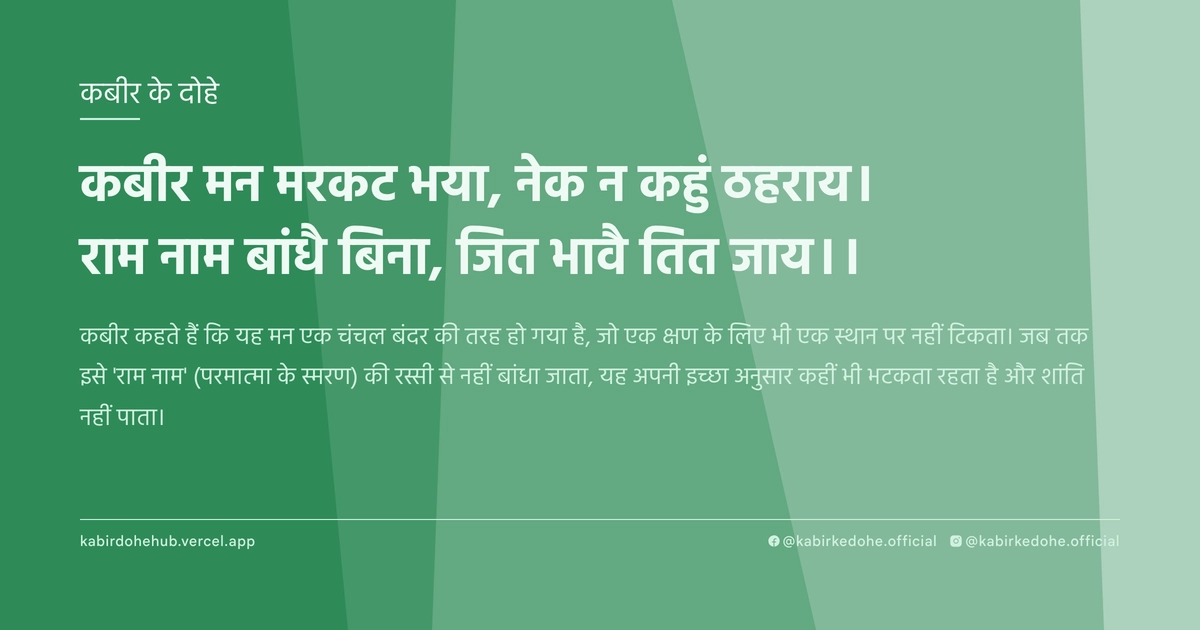
कबीर मन मरकट भया, नेक न कहुं ठहराय।
राम नाम बांधै बिना, जित भावै तित जाय।।
Kabir man markat bhaya, nek na kahun thahray. Ram naam bandhai bina, jit bhavai tit jaaye.
इस पृष्ठ पर इस कबीर दोहे का अर्थ (meaning), हिंदी व्याख्या और अंग्रेज़ी अनुवाद, दार्शनिक विश्लेषण और व्यावहारिक जीवन सीख दी गई है। यह दोहा भक्ति (Bhakti) विषय से जुड़ा है — Kabir doha meaning and explanation in Hindi and English.
अर्थ (Meaning):
कबीर कहते हैं कि यह मन एक चंचल बंदर की तरह हो गया है, जो एक क्षण के लिए भी एक स्थान पर नहीं टिकता। जब तक इसे 'राम नाम' (परमात्मा के स्मरण) की रस्सी से नहीं बांधा जाता, यह अपनी इच्छा अनुसार कहीं भी भटकता रहता है और शांति नहीं पाता।
Kabir observes that the human mind has become like a restless monkey, refusing to remain still for even a single moment. Unless it is tethered by the steady rope of 'Ram Naam' (divine remembrance), it wanders aimlessly wherever its whims lead, forever escaping the center of peace.
व्याख्या (Interpretation):
शाब्दिक रूप से, यह दोहा मन की चंचलता की तुलना बंदर से करता है। आध्यात्मिक स्तर पर, यह 'मन' को माया के प्रभाव में एक अनियंत्रित शक्ति के रूप में दर्शाता है। निर्गुण भक्ति के अनुसार, मन का यह भटकाव अज्ञानता का परिणाम है, जहाँ आत्मा स्वयं को शरीर और इंद्रियों से जोड़ लेती है। 'राम नाम' यहाँ किसी व्यक्ति विशेष का नाम नहीं, बल्कि उस निराकार ब्रह्म की चेतना है जो द्वैत को समाप्त करती है। जब मन इस अनंत सत्य से जुड़ता है, तब वह अपनी बाहरी दौड़ छोड़कर अंतर्मुखी हो जाता है। यह विरोधाभास है कि बंधन (नाम का बंधन) ही वास्तव में वास्तविक मुक्ति का मार्ग है।
Literally, the couplet compares the mind's volatility to a monkey. Spiritually, it depicts the mind as an uncontrolled force under the influence of Maya. In the context of Nirgun Bhakti, this restlessness is a symptom of ignorance, where the Atman mistakenly identifies with the transient body and senses. 'Ram Naam' here does not refer to a deity in a temple, but to the formless consciousness of the Absolute. When the mind aligns with this infinite truth, it ceases its outward race and turns inward. It presents a profound paradox: that the 'bondage' of divine remembrance is the only path to true liberation from the bondage of desire.
दार्शनिक विश्लेषण (Philosophical Analysis):
कबीर का यह दोहा मध्यकालीन भारत के उस सामाजिक-धार्मिक परिवेश से उपजा है जहाँ कर्मकांड और बाहरी आडंबर चरम पर थे। कबीर ने स्पष्ट किया कि मोक्ष किसी तीर्थ या मंदिर में नहीं, बल्कि मन के अनुशासन में है। यह विचार अद्वैत वेदांत के करीब है, जहाँ मन की चंचलता को 'चित्त वृत्ति' कहा गया है, जिसे शांत करना ही आत्म-साक्षात्कार का मार्ग है।
सूफी मत के 'नफ्स' (अहंकार/इच्छा) की अवधारणा यहाँ स्पष्ट दिखती है। जिस प्रकार सूफी साधक अपने नफ्स को वश में करने का प्रयास करता है, कबीर मन को 'मरकट' (बंदर) कहकर उसकी अदम्य प्रकृति को रेखांकित करते हैं। यह केवल मानसिक व्यायाम नहीं, बल्कि एक मनोवैज्ञानिक रूपांतरण है जहाँ व्यक्ति अपनी पहचान बाहरी दुनिया से हटाकर आंतरिक शून्य में स्थापित करता है।
कबीर जाति और धर्म के भेदों को नकारते हुए यह संदेश देते हैं कि मन की व्याकुलता सार्वभौमिक है। चाहे वह पंडित हो या मोची, जब तक अहंकार जीवित है, मन बंदर की तरह कूदेगा। वे ritualism का विरोध करते हैं क्योंकि बाहरी अनुष्ठान मन को शांत नहीं करते, बल्कि उसे और अधिक अहंकारी बना देते हैं।
यहाँ 'राम' शब्द का प्रयोग एक कोड के रूप में है, जो उस सार्वभौमिक ऊर्जा को दर्शाता है जो कण-कण में व्याप्त है। यह निर्गुण ब्रह्म है, जिसका कोई रूप या गुण नहीं है, फिर भी वह समस्त अस्तित्व का आधार है। इस नाम का जाप वास्तव में एक ध्यान प्रक्रिया है जो मन के बिखरे हुए हिस्सों को एक केंद्र पर केंद्रित करती है।
अंततः, यह विश्लेषण हमें बताता है कि अहंकार का विलोपन ही वास्तविक शांति है। जब 'मैं' मिटता है, तब बंदर जैसा मन शांत होकर शिवत्व या बुद्धत्व को प्राप्त करता है। यह एक ऐसी यात्रा है जहाँ साधक अपनी इच्छाओं का दास बनने के बजाय, अपनी चेतना का स्वामी बन जाता है।
This Doha emerges from the socio-religious milieu of medieval India, where ritualism and external piety were rampant. Kabir asserts that liberation is found not in pilgrimages or temples, but in the discipline of the mind. This aligns closely with Advaita Vedanta, where the restlessness of the mind is termed 'Chitta Vritti,' and its cessation is the only path to self-realization.
There is a strong resonance with the Sufi concept of 'Nafs' (the egoic self). Just as the Sufi seeker strives to tame the Nafs, Kabir uses the metaphor of the 'Markat' (monkey) to highlight the indomitable and chaotic nature of the untamed mind. This is not merely a mental exercise but a psychological transformation where the individual shifts their identity from the external world to the internal void.
Kabir transcends caste and creed, suggesting that mental agitation is a universal human condition. Whether a priest or a cobbler, as long as the ego persists, the mind will leap like a monkey. He rejects ritualism because external ceremonies do not quiet the mind; rather, they often inflate the ego, creating a further barrier to truth.
The use of 'Ram' serves as a metaphysical code for the universal energy pervading every atom. This is the Nirgun Brahman—formless, attributeless, yet the foundation of all existence. The repetition of the Name is actually a meditative process designed to gather the fragmented pieces of consciousness and center them into a single point of awareness.
Ultimately, this analysis reveals that the annihilation of the ego is the only gateway to peace. When the 'I' dissolves, the monkey-mind settles into a state of Shiva-consciousness or Buddhahood. It is a journey from being a slave to one's desires to becoming the master of one's own consciousness.
मूल संदेश (Core Message):
- मन की चंचलता ही संसार का सबसे बड़ा बंधन है।
- बाहरी पूजा व्यर्थ है यदि आंतरिक मन अनियंत्रित है।
- दिव्य स्मरण केवल मंत्र नहीं, बल्कि मानसिक स्थिरता का साधन है।
- अहंकार का विसर्जन ही मन को शांत करने की एकमात्र कुंजी है।
- स्थिर मन ही वह दर्पण है जिसमें परमात्मा का दर्शन होता है।
- The restlessness of the mind is the greatest bondage in existence.
- External worship is futile if the internal mind remains uncontrolled.
- Divine remembrance is not a mere chant, but a tool for mental stability.
- The dissolution of ego is the only key to silencing the mind.
- A still mind is the only mirror in which the Divine is reflected.
व्यावहारिक उदाहरण (Practical Example):
वाराणसी के घाटों पर रहने वाली एक वृद्ध विधवा, जानकी, का जीवन केवल दूसरों की सेवा और अंतहीन प्रार्थनाओं में बीत रहा था। बाहरी तौर पर वह शांत दिखती थी, लेकिन भीतर उसका मन एक अशांत बंदर की तरह था। वह हर समय इस चिंता में रहती थी कि समाज उसके बारे में क्या सोचेगा, उसके मृत पति की यादें उसे कचोटती थीं, और वह भविष्य के अकेलेपन से डरी रहती थी।
वह घंटों मंदिर में बैठती, लेकिन उसका मन बाजार की चर्चाओं, पड़ोसियों के तानों और अपनी पुरानी गलतियों के बीच झूलता रहता। वह जितना प्रयास करती कि वह ईश्वर में लीन हो जाए, उसका मन उतना ही तेजी से इधर-उधर भागता। उसे महसूस हुआ कि उसकी प्रार्थनाएं केवल शब्दों का दोहराव थीं, हृदय का मिलन नहीं।
एक दिन उसकी मुलाकात एक फकीर से हुई जिसने उसे कबीर का यह दोहा सुनाया। फकीर ने कहा, 'जानकी, तुम मंदिर में शरीर लेकर बैठती हो, लेकिन तुम्हारा मन तो अभी भी उन गलियों में भटक रहा है जहाँ तुम्हें अपमान मिला था। तुम बंदर को रस्सी से बांधने की कोशिश नहीं कर रही, बल्कि उसे खुला छोड़कर यह उम्मीद कर रही हो कि वह खुद बैठ जाएगा।'
जानकी ने महसूस किया कि वह 'राम नाम' को केवल एक मंत्र मान रही थी, जबकि वह वास्तव में एक लंगर (anchor) था। उसने अपनी साधना बदली। अब वह केवल शब्द नहीं बोलती थी, बल्कि हर विचार के आने पर उसे धीरे से 'राम' के विचार से जोड़ती। जब भी उसे क्रोध आता या दुख होता, वह उस भावना को पकड़कर उसे उस निराकार शांति में विलीन करने का प्रयास करती।
शुरुआत में यह कठिन था। उसका मन पहले से भी अधिक विद्रोह करने लगा। वह कभी अतीत की यादों में कूदता, तो कभी भविष्य के डर में। लेकिन जानकी ने धैर्य रखा। उसने सीखा कि मन को जबरदस्ती दबाना नहीं है, बल्कि उसे प्रेम और जागरूकता की रस्सी से धीरे-धीरे बांधना है।
धीरे-धीरे, उसके भीतर का शोर कम होने लगा। वह अब भी वही काम करती थी, वही घाटों पर रहती थी, लेकिन अब वह बाहरी दुनिया की प्रतिक्रियाओं से विचलित नहीं होती थी। उसका मन अब भटकता नहीं था, बल्कि एक स्थिर झील की तरह हो गया था जिसमें सत्य का प्रतिबिंब स्पष्ट दिख रहा था।
एक दिन, एक युवक उसके पास आया और अपनी मानसिक पीड़ा साझा की। जानकी ने उसे कोई उपदेश नहीं दिया, बस एक शांत मुस्कान दी। उस मुस्कान में वह स्थिरता थी जो केवल एक 'बंधे हुए मन' से आती है। युवक को महसूस हुआ कि जानकी के पास वह शांति है जिसे वह दुनिया भर में खोज रहा था।
जानकी का रूपांतरण यह था कि उसने बाहरी अनुष्ठानों को छोड़कर आंतरिक जागरूकता को चुना। उसने समझ लिया कि मुक्ति मंदिर की सीढ़ियों पर नहीं, बल्कि मन की चंचलता को प्रेम में बदलने में है। अब वह वास्तव में स्वतंत्र थी, क्योंकि उसका बंदर जैसा मन अब परमात्मा के प्रेम में विश्राम पा चुका था।
Janaki, an elderly widow living on the ghats of Varanasi, spent her days in selfless service and endless prayers. Outwardly, she appeared serene, but inside, her mind was like a restless monkey. She was perpetually anxious about societal judgment, haunted by memories of her late husband, and terrified of her future loneliness.
She would sit in the temple for hours, yet her mind would swing between market gossip, the taunts of neighbors, and her own past mistakes. The more she tried to immerse herself in God, the faster her mind leaped away. She realized her prayers were merely a repetition of words, not a union of the heart.
One day, she met a wandering fakir who recited this specific Doha to her. The fakir said, 'Janaki, you sit in the temple with your body, but your mind is still wandering in the alleys where you were insulted. You are not trying to tether the monkey; you are leaving it loose and hoping it will sit still on its own.'
Janaki realized she had treated 'Ram Naam' as a mere mantra, whereas it was meant to be an anchor. She changed her practice. Instead of just chanting, she began to gently link every arising thought to the consciousness of the Divine. Whenever anger or sorrow surfaced, she would hold that emotion and attempt to dissolve it into that formless peace.
Initially, it was grueling. Her mind rebelled even more violently. It leaped into memories of the past and fears of the future. But Janaki remained patient. She learned that the mind must not be suppressed by force, but tethered gently with the rope of love and awareness.
Gradually, the internal noise subsided. She continued her daily routines and lived on the same ghats, but she was no longer disturbed by external reactions. Her mind ceased its frantic leaping and became like a still lake, reflecting the truth with absolute clarity.
One day, a young man approached her, sharing his mental anguish. Janaki gave him no sermon, only a quiet, profound smile. In that smile lay a stability that only comes from a 'tethered mind.' The young man felt that Janaki possessed the peace he had been searching for across the world.
Janaki's transformation lay in her shift from external ritual to internal awareness. She understood that liberation is not found on the steps of a temple, but in transforming the restlessness of the mind into love. She was finally free, for her monkey-mind had found its eternal rest in the Divine.
अभ्यास मार्गदर्शन (Practice Guidance):
- साक्षी भाव का अभ्यास: दिन भर में 10 बार रुकें और देखें कि आपका मन इस समय कहाँ है। उसे बिना judged किए केवल देखें।
- नाम-केंद्रित ध्यान: जब भी मन विचलित हो, 'राम' (या अपने इष्ट) के विचार को एक लंगर की तरह उपयोग करें। शब्द पर नहीं, उस शब्द से उत्पन्न शांति पर ध्यान दें।
- आत्म-पूछताछ जर्नल: प्रतिदिन लिखें कि आज आपका 'मन-बंदर' किन तीन चीजों के पीछे सबसे ज्यादा भागा और क्यों?
- डायग्नोस्टिक चेकलिस्ट: क्या आप बात करते समय दूसरे की बात सुन रहे हैं या अपना उत्तर तैयार कर रहे हैं? क्या आप वर्तमान क्षण में हैं या अतीत/भविष्य में? यदि उत्तर 'नहीं' है, तो मन अभी भी स्वतंत्र बंदर है।
- Practice of Witnessing: Stop 10 times a day and observe where your mind is currently residing. Observe it without judgment.
- Name-Centered Meditation: Whenever the mind wanders, use the thought of 'Ram' (or your chosen Divine) as an anchor. Focus not on the word, but on the peace the word evokes.
- Self-Inquiry Journal: Write daily about the three things your 'monkey-mind' chased most aggressively today and analyze the underlying void.
- Diagnostic Checklist: While speaking, are you listening to the other person or preparing your response? Are you in the present moment or lost in past/future? If the latter, the monkey-mind is still untethered.
चिंतन प्रश्न (Reflection Questions):
- आपका 'मन-बंदर' डिजिटल दुनिया के किन आकर्षणों के पीछे सबसे ज्यादा भागता है और वह वहां क्या खोज रहा है?
- क्या आपकी धार्मिक या आध्यात्मिक पहचान वास्तव में आपके मन को शांत करती है, या यह आपके अहंकार को और अधिक पोषण देती है?
- वह कौन सी गहरी असुरक्षा है जो आपके मन को एक जगह टिकने नहीं देती?
- यदि आप अपनी सभी सामाजिक भूमिकाएं (नाम, पद, रिश्ता) छोड़ दें, तो क्या आपका मन शांत रहेगा या और अधिक घबराएगा?
- क्या आप वास्तव में मौन रहना जानते हैं, या आपका मौन केवल शब्दों का अभाव है जबकि भीतर शोर जारी है?
- Which digital distractions does your 'monkey-mind' chase most aggressively, and what void is it trying to fill?
- Does your religious or spiritual identity actually quiet your mind, or does it merely feed your ego?
- What is the deep-seated insecurity that prevents your mind from remaining still in the present?
- If you stripped away all social roles (name, title, relationship), would your mind be peaceful or would it panic?
- Do you truly know how to be silent, or is your silence merely an absence of words while the internal noise continues?