
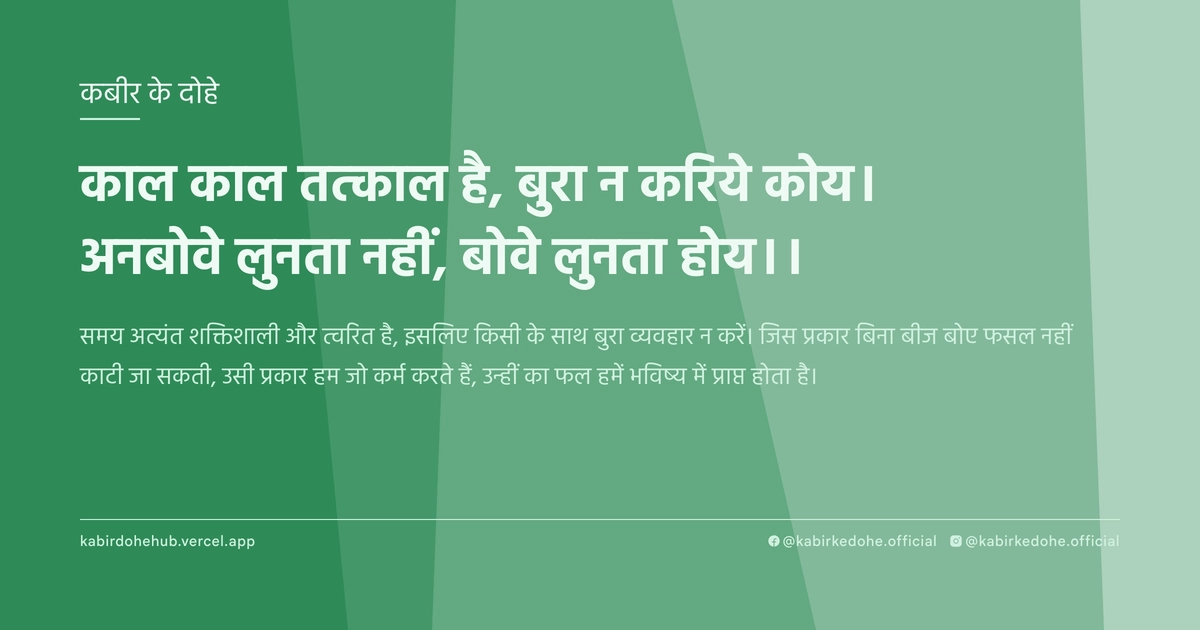
काल काल तत्काल है, बुरा न करिये कोय।
अनबोवे लुनता नहीं, बोवे लुनता होय।।
Kaal kaal tatkaal hai, bura na kariye koy. Anbove lunta nahi, bove lunta hoye.
इस पृष्ठ पर इस कबीर दोहे का अर्थ (meaning), हिंदी व्याख्या और अंग्रेज़ी अनुवाद, दार्शनिक विश्लेषण और व्यावहारिक जीवन सीख दी गई है। यह दोहा कर्म (Karma) विषय से जुड़ा है — Kabir doha meaning and explanation in Hindi and English.
अर्थ (Meaning):
समय अत्यंत शक्तिशाली और त्वरित है, इसलिए किसी के साथ बुरा व्यवहार न करें। जिस प्रकार बिना बीज बोए फसल नहीं काटी जा सकती, उसी प्रकार हम जो कर्म करते हैं, उन्हीं का फल हमें भविष्य में प्राप्त होता है।
Time is absolute and immediate; therefore, one should never commit evil acts. Just as one cannot harvest a crop without first sowing a seed, the fruits of our life are the direct result of the actions we have planted.
व्याख्या (Interpretation):
कबीर यहाँ 'काल' को केवल समय नहीं, बल्कि एक अटल न्याय प्रणाली के रूप में प्रस्तुत करते हैं। शाब्दिक अर्थ यह है कि कर्म का फल निश्चित है। रूपकात्मक स्तर पर, यह 'निरुपाधिक' सत्य है कि ब्रह्मांड में कोई भी कार्य शून्य में नहीं होता। यह अद्वैत वेदांत के उस सिद्धांत से जुड़ा है जहाँ आत्मा और परमात्मा एक हैं, अतः दूसरे को दिया गया दुःख वास्तव में स्वयं को ही दिया गया दुःख है। माया हमें यह भ्रम देती है कि हम दूसरों को चोट पहुँचाकर बच सकते हैं, लेकिन 'बोवे लुनता होय' यह स्पष्ट करता है कि कर्म का चक्र अटूट है। यह मनुष्य की उस विडंबना को दर्शाता है जहाँ वह तात्कालिक लाभ के लिए दीर्घकालिक आध्यात्मिक विनाश को चुनता है।
Kabir presents 'Kaal' not merely as chronological time, but as an immutable system of cosmic justice. Literally, it asserts that the fruition of action is inevitable. Metaphorically, this is the 'unconditioned' truth that no action occurs in a vacuum. It aligns with Advaita Vedanta's non-duality: since the Atman is universal, harming another is fundamentally harming oneself. Maya creates the illusion that one can escape the consequences of cruelty, but 'bove lunta hoy' clarifies that the cycle of Karma is unbreakable. This highlights the central human paradox: sacrificing eternal spiritual peace for fleeting, ego-driven gratification.
दार्शनिक विश्लेषण (Philosophical Analysis):
कबीर का यह दोहा उनके युग के सामाजिक और धार्मिक पाखंड के विरुद्ध एक सशक्त प्रहार है। उस समय कर्मकांडों और बाहरी अनुष्ठानों के माध्यम से पापों को धोने का दावा किया जाता था, जिसे कबीर ने सिरे से खारिज कर दिया। उनका दर्शन यह है कि कोई भी तीर्थ या मंत्र उस बीज को नहीं मिटा सकता जो आपने अपने व्यवहार के रूप में बोया है।
दार्शनिक रूप से, यह सूफी मत के 'इश्क-ए-हकीकी' और वेदांत के 'कर्म सिद्धांत' का संगम है। कबीर यहाँ यह समझा रहे हैं कि ईश्वर किसी मंदिर या मस्जिद में नहीं, बल्कि हमारे आचरण की शुद्धता में है। यदि आपका आचरण दूषित है, तो आपकी प्रार्थनाएँ केवल शोर हैं।
अहंकार (Ego) ही वह पर्दा है जो हमें यह विश्वास दिलाता है कि हम दूसरों से श्रेष्ठ हैं और इसलिए उन्हें नियंत्रित या प्रताड़ित कर सकते हैं। कबीर के अनुसार, जब तक 'मैं' का विलोपन नहीं होता, तब तक मनुष्य यह नहीं समझ पाता कि वह जिस बीज को बो रहा है, वह वास्तव में उसके अपने भविष्य की फसल है।
यह विश्लेषण हमें यह सिखाता है कि नैतिकता केवल सामाजिक व्यवस्था नहीं है, बल्कि एक आध्यात्मिक अनिवार्यता है। जो व्यक्ति दूसरों के प्रति करुणा नहीं रखता, वह वास्तव में अपनी ही मुक्ति के मार्ग में बाधा उत्पन्न कर रहा है।
अंततः, यह दोहा हमें 'साक्षी भाव' में आने की प्रेरणा देता है। जब हम यह जान लेते हैं कि समय (काल) सबको समान रूप से देखता है, तब हम भय और क्रोध से मुक्त होकर प्रेम और सेवा के मार्ग पर अग्रसर होते हैं।
This couplet is a powerful critique of the social and religious hypocrisy of Kabir's era. During his time, it was widely claimed that sins could be washed away through external rituals and pilgrimages—a notion Kabir categorically rejects. His philosophy posits that no temple or mantra can erase the seed planted through one's own behavior.
Philosophically, this is a confluence of the Sufi concept of 'Ishq-e-Haqiqi' (Divine Love) and the Vedantic 'Law of Karma'. Kabir argues that God resides not in structures of stone, but in the purity of one's conduct. If one's actions are corrupted, their prayers are mere noise.
The Ego (Ahamkara) is the veil that convinces an individual of their superiority, leading them to believe they can control or oppress others. According to Kabir, until the 'I' is annihilated, a person fails to realize that the seed they sow is actually the harvest of their own future.
This analysis reveals that morality is not just a social construct but a spiritual necessity. One who lacks compassion for others is effectively obstructing their own path to liberation (Mukti).
Ultimately, the verse encourages the state of 'Sakshi' (the Witness). By recognizing that Time (Kaal) views all beings with absolute impartiality, one can transcend fear and anger, moving toward a life of universal love and selfless service.
मूल संदेश (Core Message):
- अहंकार का भ्रम ही हमें कर्म के फल से अंधा करता है।
- कोई भी बुरा कार्य गुप्त नहीं रहता; समय उसे प्रकट करता है।
- करुणा ही वह एकमात्र बीज है जो शाश्वत शांति देता है।
- स्वयं की मुक्ति दूसरों के कल्याण में निहित है।
- ब्रह्मांड एक दर्पण है; जो आप भेजते हैं, वही लौटता है।
- The illusion of ego blinds us to the inevitable harvest of our actions.
- No evil act remains hidden; Time eventually unveils every seed.
- Compassion is the only seed that yields eternal spiritual peace.
- Individual liberation is inextricably linked to the welfare of others.
- The universe is a mirror; what you project is what you receive.
व्यावहारिक उदाहरण (Practical Example):
वाराणसी के एक पुराने घाट पर रामदीन नाम का एक वृद्ध नाविक रहता था। वह अपनी छोटी सी नाव से पर्यटकों को घुमाता था, लेकिन उसका स्वभाव अत्यंत कठोर था। वह अक्सर अपने साथी नाविकों को नीचा दिखाता और छोटे दुकानदारों को धमकाता था, यह सोचकर कि उसकी नाव सबसे तेज है और वह घाट का 'राजा' है।
एक दिन, रामदीन ने एक युवा नाविक की नाव को जानबूझकर धक्का दिया जिससे उसका सामान पानी में गिर गया। रामदीन जोर-जोर से हँसा और उसका मजाक उड़ाया। उसे लगा कि उसने अपनी ताकत दिखाई है और वह जीत गया है।
कुछ महीने बीते। एक भीषण तूफान आया और रामदीन की नाव एक चट्टान से टकराकर टूट गई। वह बीच नदी में असहाय था और उसकी सारी जमापूंजी पानी में बह गई। वह चिल्लाया, लेकिन कोई उसकी मदद के लिए नहीं आया क्योंकि उसने सालों तक सबके साथ बुरा व्यवहार किया था।
तभी वही युवा नाविक, जिसे उसने अपमानित किया था, अपनी नाव लेकर आया। उसने बिना किसी द्वेष के रामदीन को बचाया और उसे किनारे तक पहुँचाया। रामदीन की आँखों में आँसू थे। उसे समझ आया कि उसने नफरत के बीज बोए थे, लेकिन उसे प्रेम की फसल मिली, जिसने उसे शर्मिंदा कर दिया।
उसने महसूस किया कि 'काल' ने उसे उसकी अपनी ही क्रूरता का आईना दिखाया था। वह समझ गया कि जिस समय उसने दूसरों को छोटा समझा, वह समय वास्तव में उसके अपने पतन की तैयारी कर रहा था।
रामदीन ने उस दिन से अपनी नाव का नाम 'करुणा' रख लिया। उसने घाट के उन सभी लोगों से माफी मांगी जिन्हें उसने कभी दुख पहुँचाया था।
उसने देखा कि जब उसने दूसरों की मदद करना शुरू किया, तो उसके जीवन में एक अजीब सी शांति आ गई। अब वह केवल पैसे के लिए नाव नहीं चलाता था, बल्कि बीमारों और बुजुर्गों को मुफ्त में घाट तक पहुँचाने लगा।
उसका जीवन अब भय से नहीं, बल्कि कृतज्ञता से भरा था। उसने जान लिया था कि जीवन में हम जो भी देते हैं, वही लौटकर आता है, चाहे वह कड़वाहट हो या मिठास।
On an ancient ghat in Varanasi lived an elderly boatman named Ramdeen. He operated a small boat for tourists, but his temperament was harsh. He frequently belittled fellow boatmen and intimidated small vendors, believing his boat was the fastest and that he was the 'king' of the ghat.
One day, Ramdeen deliberately rammed his boat into a young boatman's vessel, causing the youth's belongings to spill into the river. Ramdeen laughed loudly, mocking him, believing he had asserted his dominance and emerged victorious.
Months passed. A violent storm struck, and Ramdeen's boat collided with a rock and shattered. He was helpless in the middle of the river, and all his savings were swept away by the current. He screamed for help, but no one came, for he had spent years sowing seeds of malice.
Then, the same young boatman he had humiliated arrived. Without a shred of resentment, the youth rescued Ramdeen and brought him safely to the shore. Tears streamed down Ramdeen's face; he realized he had sown hatred, yet received love, which made his own cruelty feel unbearable.
He understood that 'Kaal' (Time) had held up a mirror to his own brutality. He realized that the moments he spent belittling others were actually the moments he was preparing his own downfall.
From that day forward, Ramdeen renamed his boat 'Karuna' (Compassion). He sought forgiveness from every person on the ghat whom he had ever wronged.
He noticed that as he began helping others, a strange and profound peace entered his life. He no longer rowed for money alone; he began transporting the sick and elderly to the ghats for free.
His life was no longer filled with fear, but with gratitude. He had learned that whatever we give to the world is exactly what returns to us, whether it be bitterness or sweetness.
अभ्यास मार्गदर्शन (Practice Guidance):
- दैनिक आत्म-निरीक्षण: प्रतिदिन सोने से पहले विचार करें कि आज आपने दूसरों के प्रति कौन से 'बीज' (शब्द या कार्य) बोए हैं।
- मौन साधना: दिन में 20 मिनट मौन रहें और यह महसूस करें कि आपकी चेतना ब्रह्मांड की सामूहिक चेतना से जुड़ी है।
- करुणा अभ्यास: जानबूझकर किसी ऐसे व्यक्ति की मदद करें जिससे आपके संबंध तनावपूर्ण रहे हैं, बिना किसी अपेक्षा के।
- निदान चेकलिस्ट: क्या आप दूसरों की गलती पर तुरंत क्रोधित होते हैं? क्या आप अपनी सफलता का श्रेय केवल स्वयं को देते हैं? यदि हाँ, तो आप अभी भी अहंकार के बीज बो रहे हैं।
- Daily Self-Audit: Before sleep, reflect on the 'seeds' (words or actions) you sowed in others' lives today.
- Silence Practice: Spend 20 minutes in total silence, feeling your consciousness merge with the collective universal consciousness.
- Compassion Exercise: Deliberately help someone with whom you have a strained relationship, expecting absolutely nothing in return.
- Diagnostic Checklist: Do you react with immediate anger to others' mistakes? Do you attribute your success solely to yourself? If yes, you are still sowing seeds of ego.
चिंतन प्रश्न (Reflection Questions):
- वह कौन सा 'गुप्त बीज' है जिसे मैं बो रहा हूँ और मुझे लगता है कि कोई नहीं देख रहा?
- क्या मेरी नैतिकता केवल सामाजिक डर पर आधारित है, या यह मेरी आंतरिक चेतना का हिस्सा है?
- जब मैं दूसरों की आलोचना करता हूँ, तो मैं वास्तव में अपने भीतर के किस अंधेरे को देख रहा होता हूँ?
- यदि आज मेरा जीवन समाप्त हो जाए, तो मेरी 'फसल' (legacy) दूसरों के लिए क्या होगी?
- क्या मैं वास्तव में क्षमा करता हूँ, या मैं केवल सही समय का इंतज़ार कर रहा हूँ बदला लेने के लिए?
- What 'hidden seed' am I sowing, believing that no one is watching?
- Is my morality based on social fear, or is it an intrinsic part of my consciousness?
- When I criticize others, which shadow within myself am I actually projecting?
- If my life were to end today, what would my 'harvest' (legacy) be for others?
- Do I truly forgive, or am I merely waiting for the opportune moment to seek revenge?