
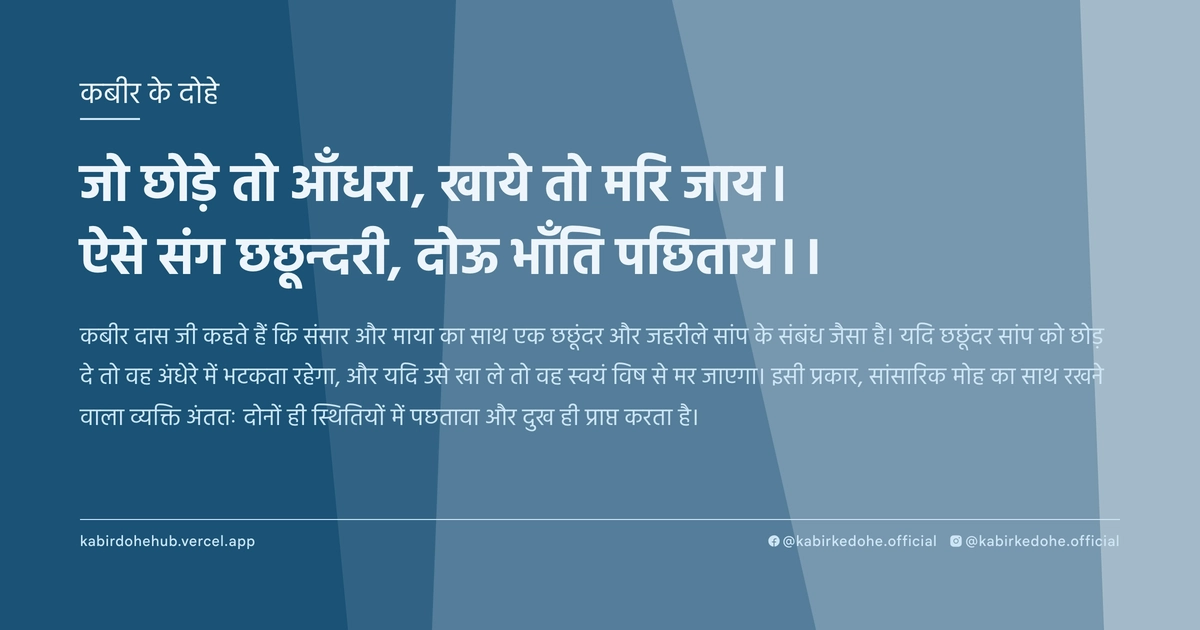
जो छोड़े तो आँधरा, खाये तो मरि जाय।
ऐसे संग छछून्दरी, दोऊ भाँति पछिताय।।
Jo chhode to aandhara, khaye to mari jaaye. Aise sang chachhundari, dou bhaanti pachitaye.
इस पृष्ठ पर इस कबीर दोहे का अर्थ (meaning), हिंदी व्याख्या और अंग्रेज़ी अनुवाद, दार्शनिक विश्लेषण और व्यावहारिक जीवन सीख दी गई है। यह दोहा सत्संग (Satsang) विषय से जुड़ा है — Kabir doha meaning and explanation in Hindi and English.
अर्थ (Meaning):
कबीर दास जी कहते हैं कि संसार और माया का साथ एक छछूंदर और जहरीले सांप के संबंध जैसा है। यदि छछूंदर सांप को छोड़ दे तो वह अंधेरे में भटकता रहेगा, और यदि उसे खा ले तो वह स्वयं विष से मर जाएगा। इसी प्रकार, सांसारिक मोह का साथ रखने वाला व्यक्ति अंततः दोनों ही स्थितियों में पछतावा और दुख ही प्राप्त करता है।
Kabir explains that the attachment to worldly illusions (Maya) is akin to the precarious bond between a shrew and a venomous snake. If the shrew abandons the snake, it remains lost in the darkness of ignorance; if it consumes the snake, it perishes from the poison. Similarly, one entangled in worldly desires faces regret and suffering regardless of whether they cling to or attempt to consume these illusions.
व्याख्या (Interpretation):
यह दोहा माया और अहंकार के सूक्ष्म जाल का वर्णन करता है। शाब्दिक अर्थ में यह एक जीव की विवशता है, लेकिन आध्यात्मिक स्तर पर यह 'सांसारिक आसक्ति' का रूपक है। छछूंदर यहाँ उस साधक का प्रतीक है जो अज्ञानता में है, और सांप उस माया का प्रतीक है जो आकर्षक लगती है परंतु घातक है। निर्गुण भक्ति के परिप्रेक्ष्य में, यह दर्शाता है कि जब तक हम द्वैत (duality) में जीते हैं, हम या तो अभाव से डरते हैं या अतिभोग से नष्ट होते हैं। यह आत्मा और ब्रह्म के बीच के उस पर्दे को उजागर करता है जिसे हम 'मोह' कहते हैं। अंततः, यह विरोधाभास यह सिखाता है कि मुक्ति केवल बाहरी त्याग से नहीं, बल्कि आंतरिक वैराग्य से संभव है।
This couplet describes the subtle trap of Maya and the ego. Literally, it depicts a creature's desperation, but spiritually, it serves as a metaphor for worldly attachment. The shrew symbolizes the seeker trapped in ignorance, while the snake represents Maya—alluring yet lethal. From the perspective of Nirgun Bhakti, it illustrates that as long as we exist in duality, we are either terrified by lack or destroyed by excess. It exposes the veil of 'Moh' (attachment) that separates the Atman from Brahman. Ultimately, this paradox teaches that liberation is achieved not through mere external renunciation, but through internal detachment (Vairagya).
दार्शनिक विश्लेषण (Philosophical Analysis):
कबीर का यह दोहा उस युग की सामाजिक और धार्मिक जड़ता पर प्रहार करता है जहाँ लोग कर्मकांडों और बाहरी दिखावे में उलझे थे। कबीर यहाँ 'माया' को एक ऐसे विषैले साथी के रूप में चित्रित करते हैं जिससे अलग होना कठिन है और जिसके साथ रहना घातक है। यह विचार अद्वैत वेदांत के उस सिद्धांत से मेल खाता है जहाँ यह माना जाता है कि संसार एक मिथ्या है, जो हमें सत्य (ब्रह्म) को देखने से रोकता है।
सूफीवाद के प्रभाव में, कबीर यहाँ 'नफ्स' (अहंकार) के विनाश की बात करते हैं। जिस प्रकार छछूंदर सांप के साथ एक अजीब निर्भरता में है, वैसे ही मनुष्य अपनी वासनाओं और सामाजिक पहचान के साथ एक विषाक्त संबंध साझा करता है। वह अपनी पहचान को इन बाहरी चीजों से जोड़ लेता है, जिससे उसकी वास्तविक आध्यात्मिक पहचान खो जाती है।
कबीर जाति और धर्म के भेदभाव को नकारते हुए यह समझाते हैं कि यह मानसिक गुलामी सार्वभौमिक है। चाहे कोई पंडित हो या मौलवी, यदि वह माया के मोह में है, तो वह उसी छछूंदर की तरह विवश है। यह विश्लेषण हमें बताता है कि आध्यात्मिक प्रगति के लिए सबसे पहले इस 'विषाक्त संबंध' की पहचान करना आवश्यक है।
मनोवैज्ञानिक स्तर पर, यह दोहा 'संज्ञानात्मक विसंगति' (Cognitive Dissonance) को दर्शाता है। मनुष्य जानता है कि भौतिक सुख क्षणभंगुर हैं, फिर भी वह उन्हें छोड़ने का साहस नहीं जुटा पाता। यह डर कि 'छोड़ने पर अंधेरा होगा' वास्तव में अस्तित्वगत भय (existential dread) है।
अंततः, कबीर का संदेश यह है कि मुक्ति का मार्ग 'मध्यम मार्ग' या केवल त्याग नहीं है, बल्कि पूर्ण जागरूकता है। जब साधक यह समझ जाता है कि सांप (माया) और छछूंदर (अहंकार) दोनों ही भ्रम हैं, तब वह इस चक्र से मुक्त होकर उस निर्गुण परमात्मा में विलीन हो जाता है जहाँ न कोई अंधेरा है और न ही कोई विष।
Kabir’s couplet attacks the social and religious inertia of his era, where people were entangled in rituals and outward displays. He portrays 'Maya' as a toxic companion—difficult to abandon yet lethal to keep. This aligns with the Advaita Vedanta principle that the world is an illusion (Mithya) preventing the realization of the Absolute Truth (Brahman).
Influenced by Sufism, Kabir speaks of the annihilation of the 'Nafs' (ego). Just as the shrew shares a strange dependency with the snake, humans share a toxic relationship with their desires and social identities. By anchoring their identity in these external constructs, they lose sight of their true spiritual essence.
Rejecting caste and religious divisions, Kabir emphasizes that this mental bondage is universal. Whether a priest or a cleric, anyone trapped in the lure of Maya is as helpless as the shrew. This analysis reveals that the first step toward spiritual progress is recognizing this 'toxic bond.'
Psychologically, the verse illustrates 'cognitive dissonance.' Humans know that material pleasures are ephemeral, yet they lack the courage to let go. The fear that 'abandoning will lead to darkness' is essentially existential dread—the fear of losing one's perceived identity.
Ultimately, Kabir’s message is that liberation is not found in a mere 'middle path' or external renunciation, but in total awareness. When the seeker realizes that both the snake (Maya) and the shrew (Ego) are illusions, they break the cycle and merge into the Nirgun Paramatma, where neither darkness nor poison exists.
मूल संदेश (Core Message):
- माया का मोह एक ऐसा जाल है जिसमें जीत भी हार के समान है।
- अहंकार और वासना का साथ अंततः विनाश और पश्चाताप की ओर ले जाता है।
- सच्ची स्वतंत्रता बाहरी वस्तुओं के त्याग में नहीं, बल्कि आंतरिक अनासक्ति में है।
- अज्ञानता का अंधेरा केवल आत्म-ज्ञान के प्रकाश से ही मिटाया जा सकता है।
- जब हम द्वैत से ऊपर उठते हैं, तब हम विष और अमृत दोनों के पार हो जाते हैं।
- Attachment to Maya is a trap where even victory feels like defeat.
- The companionship of ego and lust leads inevitably to ruin and regret.
- True freedom lies not in external renunciation, but in internal detachment.
- The darkness of ignorance can only be dispelled by the light of self-realization.
- When we transcend duality, we rise above both the poison and the nectar.
व्यावहारिक उदाहरण (Practical Example):
एक समय की बात है, वाराणसी के घाटों पर रहने वाला एक वृद्ध बुनकर था जिसका नाम माधव था। माधव अपने काम में निपुण था, लेकिन उसका मन हमेशा इस बात की चिंता में रहता था कि उसके पास और अधिक धन हो ताकि वह शहर के बड़े व्यापारियों जैसा सम्मान पा सके।
वह दिन-रात मेहनत करता, लेकिन जितना अधिक वह कमाता, उसकी इच्छाएं उतनी ही बढ़ती जातीं। वह अपने परिवार और स्वास्थ्य की अनदेखी कर केवल सोने के सिक्कों के संग्रह में लगा रहा। वह उस छछूंदर की तरह था जिसने सांप (लालच) को पकड़ रखा था।
एक दिन माधव ने देखा कि उसके पास सब कुछ होते हुए भी वह मानसिक रूप से अशांत था। वह रात भर सो नहीं पाता था क्योंकि उसे डर था कि कोई उसके धन को चुरा लेगा। वह 'सांप' उसे धीरे-धीरे भीतर से निगल रहा था।
तभी उसकी मुलाकात एक फकीर से हुई जिसने उसे यह दोहा सुनाया। फकीर ने कहा, 'माधव, तुम जिस धन को अपना सहारा मान रहे हो, वह वास्तव में वह विष है जो तुम्हारी शांति को मार रहा है।'
माधव ने सोचा कि यदि वह यह सब छोड़ दे, तो वह फिर से गरीब और 'अंधेरे' में चला जाएगा। वह डर गया। लेकिन फकीर ने समझाया कि असली अंधेरा धन की कमी नहीं, बल्कि आत्मा की अज्ञानता है।
माधव ने धीरे-धीरे अपनी संपत्ति का उपयोग दूसरों की मदद के लिए करना शुरू किया। उसने महसूस किया कि जब वह दूसरों के दुख दूर करता है, तो उसका अपना आंतरिक भय समाप्त होने लगता है।
उसने पाया कि जब उसने लालच के सांप को 'खाने' (उस पर नियंत्रण पाने) की कोशिश की, तो वह पहले और अधिक तनाव में आया, लेकिन जब उसने उस सांप के प्रति अपनी 'आसक्ति' छोड़ी, तो वह वास्तव में स्वतंत्र हो गया।
अब माधव के पास बहुत धन नहीं था, लेकिन उसके चेहरे पर एक ऐसी शांति थी जो पहले कभी नहीं थी। उसने जान लिया था कि माया का साथ केवल पछतावा लाता है।
उसने अपने जीवन के अंतिम वर्षों में केवल अपनी बुनाई का आनंद लिया, बिना इस चिंता के कि दुनिया उसे क्या समझती है।
यह माधव का रूपांतरण था—एक ऐसे व्यक्ति से जो अपनी इच्छाओं का कैदी था, एक ऐसे व्यक्ति में जो अपनी आत्मा के प्रकाश में जीता था।
Once, in the ghats of Varanasi, lived an elderly weaver named Madhav. Madhav was skilled in his craft, but his mind was constantly consumed by the desire for more wealth so that he could earn the respect of the city's wealthy merchants.
He worked day and night, but as his earnings grew, so did his desires. He neglected his family and health, focusing solely on accumulating gold coins. He was like the shrew who had clung to the snake (greed).
One day, Madhav realized that despite having everything, he was mentally restless. He couldn't sleep at night, terrified that someone would steal his riches. The 'snake' was slowly consuming him from within.
Then he met a wandering dervish who recited this doha to him. The dervish said, 'Madhav, the wealth you consider your support is actually the poison killing your peace.'
Madhav feared that if he gave it all up, he would return to the 'darkness' of poverty. He was terrified. But the dervish explained that true darkness is not the lack of money, but the ignorance of the soul.
Madhav gradually began using his wealth to help others. He discovered that as he eased the suffering of others, his own internal fear began to vanish.
He found that when he tried to 'consume' the snake by controlling his greed, he only became more stressed; but when he released his 'attachment' to the snake, he became truly free.
Madhav no longer possessed great riches, but a peace radiated from his face that had never been there before. He understood that companionship with Maya brings only regret.
He spent his final years simply enjoying the act of weaving, indifferent to how the world perceived him.
This was Madhav's transformation—from a man who was a prisoner of his desires to one who lived in the light of his own soul.
अभ्यास मार्गदर्शन (Practice Guidance):
- दैनिक चिंतन: प्रतिदिन 15 मिनट मौन बैठें और उन चीजों की सूची बनाएं जिनसे आप भावनात्मक रूप से इतने जुड़े हैं कि उनके बिना आपको 'अंधेरा' महसूस होता है।
- आत्म-पूछताछ जर्नल: लिखें कि 'मेरी कौन सी इच्छा मुझे मानसिक शांति से दूर ले जा रही है?' और विश्लेषण करें कि क्या यह इच्छा वास्तव में आवश्यक है या केवल एक सामाजिक मुखौटा है।
- व्यवहारिक परिवर्तन: सप्ताह में एक बार ऐसी वस्तु या आदत का त्याग करें जो आपको सुख तो देती है लेकिन आपकी मानसिक स्वतंत्रता को बाधित करती है।
- निदान चेकलिस्ट: यदि आप किसी चीज को खोने के डर से तनाव में हैं, या उसे पाने की जिद में अपनी नैतिकता खो रहे हैं, तो समझ लें कि आप 'छछूंदर' की स्थिति में हैं।
- Daily Contemplation: Sit in silence for 15 minutes daily and list the things you are so emotionally attached to that their absence feels like 'darkness'.
- Self-Inquiry Journal: Write down: 'Which of my desires is distancing me from mental peace?' and analyze if this desire is genuinely necessary or merely a social mask.
- Behavioral Change: Once a week, consciously renounce an object or habit that provides pleasure but hinders your mental freedom.
- Diagnostic Checklist: If you are stressed by the fear of losing something, or compromising your ethics to acquire it, recognize that you are in the 'shrew's' condition.
चिंतन प्रश्न (Reflection Questions):
- मेरे जीवन में वह कौन सा 'सांप' है जिसे मैं डर और जरूरत के कारण पकड़े हुए हूँ?
- क्या मेरी सामाजिक प्रतिष्ठा वास्तव में मेरी अपनी है, या यह केवल एक मुखौटा है जिसे खोने के डर से मैं घबराता हूँ?
- जब मैं कहता हूँ कि मैं 'स्वतंत्र' हूँ, तो क्या मैं वास्तव में अपनी इच्छाओं का स्वामी हूँ या उनका दास?
- मेरे भीतर का वह कौन सा हिस्सा है जो मुझे विश्वास दिलाता है कि भौतिक संग्रह ही सुरक्षा का एकमात्र साधन है?
- यदि आज मेरी सारी बाहरी पहचान छीन ली जाए, तो मेरे भीतर क्या बचेगा?
- What is the 'snake' in my life that I hold onto out of fear or perceived necessity?
- Is my social status truly mine, or is it merely a mask that I am terrified of losing?
- When I claim to be 'free', am I truly the master of my desires or their slave?
- Which part of me convinces me that material accumulation is the only means of security?
- If all my external identities were stripped away today, what would remain within me?