
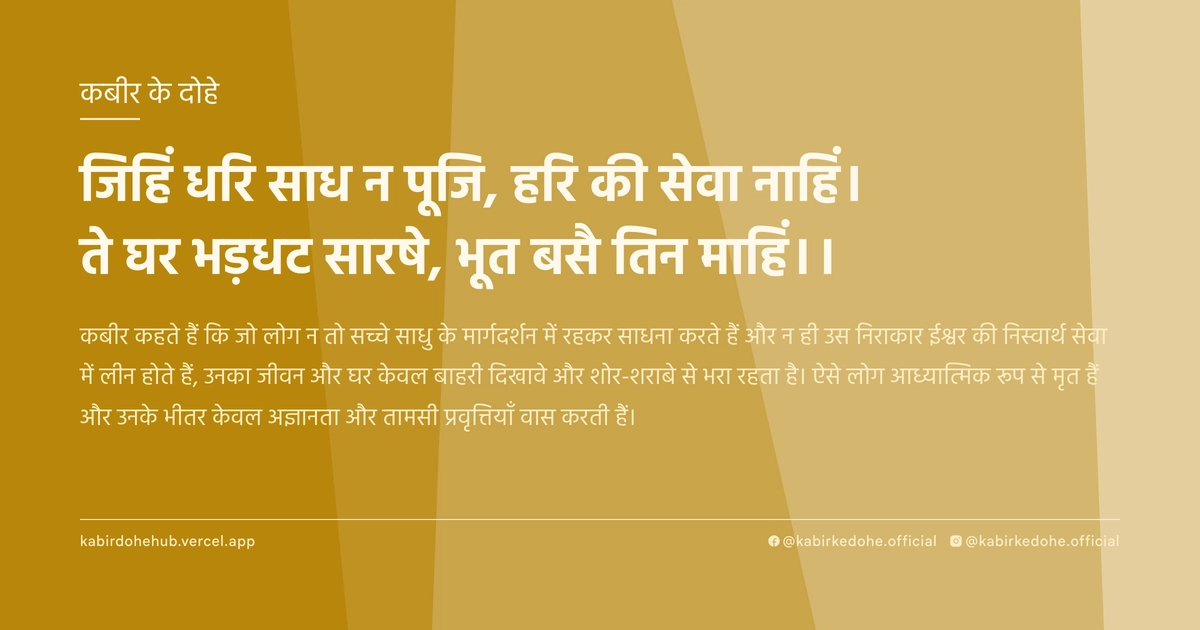
जिहिं धरि साध न पूजि, हरि की सेवा नाहिं।
ते घर भड़धट सारषे, भूत बसै तिन माहिं।।
Jihin dhari saadh na pooji, hari ki seva naahin. Te ghar bhadbhat saarashe, bhoot basai tin maahin.
इस पृष्ठ पर इस कबीर दोहे का अर्थ (meaning), हिंदी व्याख्या और अंग्रेज़ी अनुवाद, दार्शनिक विश्लेषण और व्यावहारिक जीवन सीख दी गई है। यह दोहा धार्मिक पाखंड (Religious Hypocrisy) विषय से जुड़ा है — Kabir doha meaning and explanation in Hindi and English.
अर्थ (Meaning):
कबीर कहते हैं कि जो लोग न तो सच्चे साधु के मार्गदर्शन में रहकर साधना करते हैं और न ही उस निराकार ईश्वर की निस्वार्थ सेवा में लीन होते हैं, उनका जीवन और घर केवल बाहरी दिखावे और शोर-शराबे से भरा रहता है। ऐसे लोग आध्यात्मिक रूप से मृत हैं और उनके भीतर केवल अज्ञानता और तामसी प्रवृत्तियाँ वास करती हैं।
Kabir asserts that those who neither seek the guidance of a true spiritual master nor engage in the selfless service of the Formless Divine live lives characterized by superficiality and noise. Their homes may be full of activity, but they are spiritually vacant, inhabited only by the 'ghosts' of ignorance and egoic delusions.
व्याख्या (Interpretation):
यहाँ 'साध' का अर्थ केवल बाहरी संन्यास नहीं, बल्कि आंतरिक अनुशासन है। कबीर संकेत करते हैं कि बिना गुरु के मार्गदर्शन और ईश्वर के प्रति समर्पण के, मनुष्य केवल सामाजिक मुखौटों को पहनता है। 'भड़धट' शब्द बाहरी आडंबर और अहंकार के शोर को दर्शाता है। 'भूत' यहाँ किसी प्रेत की बात नहीं, बल्कि 'अविद्या' और 'अहंकार' का प्रतीक है जो मनुष्य की चेतना को ग्रस लेता है। यह दोहा निर्गुण भक्ति के उस सिद्धांत पर आधारित है जहाँ बाहरी कर्मकांडों के बजाय आंतरिक शुद्धि को प्राथमिकता दी गई है। यह आत्मा और परमात्मा के बीच के पर्दे, जिसे माया कहते हैं, को हटाने की आवश्यकता पर बल देता है। अंततः, यह मनुष्य की उस त्रासदी को दर्शाता है जहाँ वह भौतिक समृद्धि को ही आध्यात्मिक उपलब्धि मान बैठता है।
Here, 'Saadh' refers not to external asceticism but to internal discipline. Kabir suggests that without the guidance of a Satguru and surrender to the Divine, a person merely wears social masks. The term 'Bhadadhat' symbolizes the noise of external ostentation and ego. The 'Ghost' (Bhoot) is not a supernatural entity but a metaphor for 'Avidya' (ignorance) and the ego that consumes human consciousness. This doha is rooted in the principle of Nirgun Bhakti, prioritizing inner purification over ritualistic performance. It emphasizes the necessity of removing the veil of Maya that separates the Atman from Brahman. Ultimately, it highlights the human tragedy of mistaking material accumulation and social status for spiritual evolution.
दार्शनिक विश्लेषण (Philosophical Analysis):
कबीर का यह दोहा तत्कालीन समाज में व्याप्त पाखंड और कर्मकांडीय धर्म पर एक तीखा प्रहार है। उनके समय में, धर्म केवल बाहरी प्रतीकों—जैसे माला, तिलक और तीर्थयात्रा—तक सीमित हो गया था। कबीर ने इस 'धार्मिक प्रदर्शन' को आध्यात्मिक शून्यता के रूप में देखा। वे तर्क देते हैं कि यदि हृदय में प्रेम और सेवा नहीं है, तो सभी धार्मिक क्रियाएँ व्यर्थ हैं।
दार्शनिक स्तर पर, यह अद्वैत वेदांत के उस विचार से मेल खाता है जहाँ अज्ञान (माया) ही बंधन का कारण है। जब व्यक्ति स्वयं को शरीर या सामाजिक पद से जोड़ता है, तो वह वास्तव में एक 'भूत' (अचेतन अवस्था) की तरह व्यवहार करता है। सूफी मत के 'फना' (अहंकार का विनाश) के समान, कबीर यहाँ अहंकार के विनाश की बात कर रहे हैं।
वे जाति और वर्ण व्यवस्था द्वारा थोपे गए कृत्रिम विभाजनों को नकारते हैं। उनके लिए 'हरि की सेवा' का अर्थ किसी मूर्ति की पूजा नहीं, बल्कि समस्त मानवता में उसी एक नूर या प्रकाश को देखना है। यह सेवा ही वह सेतु है जो जीव को ब्रह्म से जोड़ती है।
मनोवैज्ञानिक रूप से, 'भड़धट' उस रक्षा तंत्र (defense mechanism) को दर्शाता है जिसे मनुष्य अपनी आंतरिक रिक्तता को छिपाने के लिए उपयोग करता है। हम शोर मचाते हैं ताकि हमें अपने भीतर के सन्नाटे और अकेलेपन का सामना न करना पड़े।
अतः, कबीर का संदेश यह है कि वास्तविक धर्म बाहरी प्रदर्शन में नहीं, बल्कि आंतरिक मौन और निस्वार्थ सेवा में निहित है। जो व्यक्ति इस सत्य को नहीं पहचानता, वह जीवित होते हुए भी आध्यात्मिक रूप से मृत है।
This doha is a sharp critique of the hypocrisy and ritualistic religion prevalent in Kabir's era. During his time, religion had been reduced to external symbols—beads, tilaks, and pilgrimages. Kabir viewed this 'religious performance' as spiritual emptiness, arguing that without love and selfless service in the heart, all rituals are futile.
Philosophically, this aligns with Advaita Vedanta, where ignorance (Maya) is the primary cause of bondage. When a person identifies solely with the body or social status, they behave like a 'ghost' (an unconscious state). Similar to the Sufi concept of 'Fana' (annihilation of the ego), Kabir advocates for the destruction of the false self.
He rejects the artificial divisions imposed by the caste system. For Kabir, 'service to Hari' is not the worship of an idol, but the recognition of the same divine light (Noor) within all of humanity. This service is the bridge connecting the individual soul to the Universal Consciousness.
Psychologically, 'Bhadadhat' represents the defense mechanism humans use to mask their inner void. We create noise and ostentation so that we do not have to confront the silence and loneliness within.
Therefore, Kabir's message is that true religion lies not in external display but in inner silence and selfless service. One who fails to realize this remains spiritually dead despite being physically alive.
मूल संदेश (Core Message):
- बाहरी आडंबर आध्यात्मिक शून्यता का मुखौटा है।
- बिना गुरु और समर्पण के साधना केवल अहंकार को बढ़ाती है।
- सच्ची भक्ति सेवा में है, प्रदर्शन में नहीं।
- अहंकार का शोर आत्मा की आवाज़ को दबा देता है।
- निराकार ईश्वर का वास करुणा और सादगी में है।
- External ostentation is a mask for spiritual emptiness.
- Practice without guidance and surrender only inflates the ego.
- True devotion resides in service, not in performance.
- The noise of ego drowns out the voice of the soul.
- The Formless Divine dwells in compassion and simplicity.
व्यावहारिक उदाहरण (Practical Example):
वाराणसी के एक पुराने मोहल्ले में माधव नाम का एक अत्यंत धनी व्यापारी रहता था। उसका घर शहर के सबसे भव्य मकानों में से एक था, जहाँ हर समय उत्सव जैसा माहौल रहता था। माधव बड़े-बड़े दान देता था, मंदिर के सबसे महंगे पुजारी को बुलाता था और अपनी दानशीलता का ढिंढोरा पूरे शहर में पिटवाता था। उसके घर में हमेशा मेहमानों का तांता लगा रहता और चर्चा केवल उसकी समृद्धि और 'धर्मपरायणता' की होती थी।
किंतु, घर की चारदीवारी के भीतर माधव एक क्रूर व्यक्ति था। वह अपने नौकरों को अपमानित करता, अपनी पत्नी की इच्छाओं को कुचलता और अपने बच्चों को केवल संपत्ति के उत्तराधिकारी के रूप में देखता था। उसके भीतर शांति का एक कतरा भी नहीं था; वह हर समय क्रोध, ईर्ष्या और असुरक्षा से घिरा रहता था। उसका घर बाहर से तो चमक रहा था, लेकिन अंदर वह मानसिक तनाव और कड़वाहट का केंद्र था।
एक दिन, एक फकीर उसके द्वार पर आया। फकीर ने माधव के वैभव को देखा और फिर उसकी आँखों में झाँका। फकीर ने मुस्कुराते हुए कहा, 'माधव, तुम्हारा घर तो बहुत शोर कर रहा है, लेकिन क्या तुम्हारे भीतर कोई बोल रहा है? या वहाँ केवल पुराने भूतों का बसेरा है?'
माधव को पहले तो यह बात चुभी, लेकिन फकीर ने उसे एक चुनौती दी। फकीर ने कहा, 'अगले सात दिनों तक, तुम जो भी दान दोगे, वह गुप्त होना चाहिए। और तुम अपने घर के उस व्यक्ति की सेवा करोगे जिसे तुम सबसे अधिक तुच्छ समझते हो।'
माधव ने अनिच्छा से इसे स्वीकार किया। उसने अपने सबसे पुराने और बीमार नौकर, रामू, की सेवा करना शुरू किया। उसने रामू के घावों पर मरहम लगाया और उससे उसकी कहानियाँ सुनीं। पहली बार, माधव ने महसूस किया कि जब वह किसी के दुख को कम करता है, तो उसके अपने भीतर का शोर कम होने लगता है।
जैसे-जैसे दिन बीते, माधव का अहंकार टूटने लगा। उसे अहसास हुआ कि उसकी 'भड़धट' वास्तव में उसके डर का पर्दा थी। वह डर कि यदि वह महान नहीं दिखा, तो लोग उसे महत्व नहीं देंगे।
उसने पाया कि असली 'हरि की सेवा' मंदिर के चंदे में नहीं, बल्कि रामू की आँखों में छिपे संतोष में थी। उसने बाहरी दिखावे को त्याग दिया और सादगी को अपनाया।
अंततः, माधव का घर अब भी भव्य था, लेकिन अब वहाँ का वातावरण बदल चुका था। अब वहाँ शोर नहीं, बल्कि शांति थी। वह 'भूत' जो उसके क्रोध और अहंकार के रूप में वास करता था, अब करुणा और प्रेम में बदल गया था।
In an old neighborhood of Varanasi lived a very wealthy merchant named Madhav. His house was one of the most magnificent in the city, always buzzing with a festive atmosphere. Madhav gave lavish donations, hired the most expensive priests, and ensured his 'piety' was trumpeted throughout the city. His home was always full of guests, and the conversations revolved solely around his prosperity and religious devotion.
However, within the four walls of his home, Madhav was a cruel man. He humiliated his servants, crushed his wife's aspirations, and viewed his children merely as heirs to his property. There wasn't a shred of peace within him; he was constantly consumed by anger, jealousy, and insecurity. His home sparkled on the outside, but inside, it was a center of mental stress and bitterness.
One day, a wandering fakir arrived at his door. The fakir observed Madhav's opulence and then looked into his eyes. Smiling, the fakir said, 'Madhav, your house makes a lot of noise, but is there anyone speaking within you? Or is it merely a dwelling for old ghosts?'
Madhav was initially offended, but the fakir gave him a challenge: 'For the next seven days, every donation you give must be secret. And you must serve the person in your house whom you consider the most insignificant.'
Madhav reluctantly agreed. He began serving his oldest and sickest servant, Ramu. He tended to Ramu's wounds and listened to his life stories. For the first time, Madhav felt that as he eased someone else's pain, the noise within himself began to subside.
As the days passed, Madhav's ego began to crumble. He realized that his 'Bhadadhat' (ostentation) was actually a veil for his fear—the fear that if he didn't appear great, people wouldn't value him.
He discovered that true 'service to Hari' was not in temple donations, but in the contentment reflected in Ramu's eyes. He abandoned the external show and embraced simplicity.
Eventually, Madhav's house remained grand, but the atmosphere had changed. There was no longer noise, only peace. The 'ghost' that resided in him as anger and ego had been transformed into compassion and love.
अभ्यास मार्गदर्शन (Practice Guidance):
- मौन साधना: प्रतिदिन 30 मिनट पूर्ण मौन रहें। बाहरी शोर को कम करें ताकि आप अपने भीतर के 'मानसिक शोर' (भड़धट) को सुन सकें और उसे पहचान सकें।
- अनाम सेवा: सप्ताह में एक बार ऐसा कार्य करें जिससे किसी की मदद हो, लेकिन यह सुनिश्चित करें कि किसी को भी पता न चले कि वह कार्य आपने किया है।
- आत्म-निरीक्षण जर्नल: प्रतिदिन लिखें कि आज आपने कितनी बार अपनी श्रेष्ठता सिद्ध करने के लिए शब्दों का प्रयोग किया। क्या वह आवश्यकता थी या अहंकार?
- निदान चेकलिस्ट: यदि आप दूसरों की प्रशंसा के बिना कार्य करने में असमर्थ हैं, या यदि आपकी धार्मिक पहचान आपके व्यवहार से अधिक प्रभावी है, तो समझें कि 'भूत' (अहंकार) अभी भी हावी है।
- Silence Practice: Spend 30 minutes in complete silence daily. Reduce external noise to hear and identify the 'mental noise' (Bhadadhat) within you.
- Anonymous Service: Once a week, perform an act of kindness ensuring that no one knows you were the source of the help.
- Self-Inquiry Journal: Record daily instances where you used words to prove your superiority. Was it a necessity or an ego-driven impulse?
- Diagnostic Checklist: If you find it impossible to act without external validation, or if your religious identity is more prominent than your behavior, recognize that the 'ghost' (ego) is still dominant.
चिंतन प्रश्न (Reflection Questions):
- मेरे जीवन का वह कौन सा 'शोर' है जिसे मैं दुनिया को सुनाता हूँ ताकि मेरी आंतरिक रिक्तता छिप सके?
- यदि मेरी सभी सामाजिक उपलब्धियाँ और धार्मिक पहचान छीन ली जाएँ, तो मेरे पास क्या बचेगा?
- क्या मेरी सेवा वास्तव में निस्वार्थ है, या मैं गुप्त रूप से 'परोपकारी' होने का आनंद ले रहा हूँ?
- मेरे भीतर वह कौन सा 'भूत' (डर या क्रोध) है जो मुझे वास्तव में प्रेम करने से रोकता है?
- मैं अपनी आध्यात्मिक यात्रा में 'साधु' (अनुशासन) को खोज रहा हूँ या केवल 'साधु' जैसा दिखने की कोशिश कर रहा हूँ?
- What is the 'noise' in my life that I project to the world to hide my inner void?
- If all my social achievements and religious identities were stripped away, what would remain of me?
- Is my service truly selfless, or am I secretly enjoying the feeling of being 'benevolent'?
- Which 'ghost' (fear or anger) within me prevents me from loving unconditionally?
- Am I seeking 'Saadh' (discipline) in my spiritual journey, or am I merely trying to look like a seeker?