
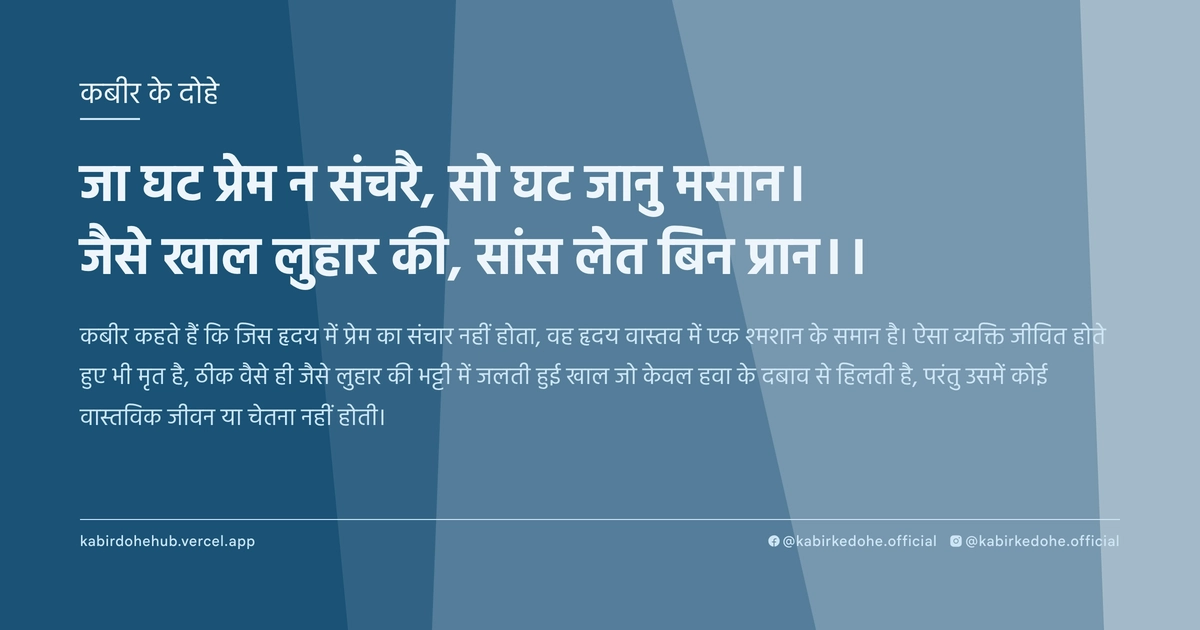
जा घट प्रेम न संचरै, सो घट जानु मसान।
जैसे खाल लुहार की, सांस लेत बिन प्रान।।
Ja ghat prem na sancharai, so ghat jaanu masaan. Jaise khaal luhar ki, saans let bin praan.
इस पृष्ठ पर इस कबीर दोहे का अर्थ (meaning), हिंदी व्याख्या और अंग्रेज़ी अनुवाद, दार्शनिक विश्लेषण और व्यावहारिक जीवन सीख दी गई है। यह दोहा भक्ति (Bhakti) विषय से जुड़ा है — Kabir doha meaning and explanation in Hindi and English.
अर्थ (Meaning):
कबीर कहते हैं कि जिस हृदय में प्रेम का संचार नहीं होता, वह हृदय वास्तव में एक श्मशान के समान है। ऐसा व्यक्ति जीवित होते हुए भी मृत है, ठीक वैसे ही जैसे लुहार की भट्टी में जलती हुई खाल जो केवल हवा के दबाव से हिलती है, परंतु उसमें कोई वास्तविक जीवन या चेतना नहीं होती।
Kabir asserts that a heart devoid of love is nothing more than a cremation ground. Such a person, though physically alive, is spiritually dead—comparable to the hide of an animal in a blacksmith's forge that may seem to move or breathe due to the heat and air, yet possesses no actual soul or vital spark.
व्याख्या (Interpretation):
इस दोहे में कबीर 'प्रेम' को केवल एक भावना नहीं, बल्कि जीवन की अनिवार्य ऊर्जा के रूप में परिभाषित करते हैं। 'मसान' (श्मशान) का प्रतीक यह दर्शाता है कि बिना प्रेम के मनुष्य का अस्तित्व केवल राख और रिक्तता है। यहाँ 'लुहार की खाल' का रूपक अत्यंत गहरा है; जिस प्रकार आग की तपिश से खाल फूलती है और ऐसा लगता है कि वह सांस ले रही है, वैसे ही अहंकार और सांसारिक उपलब्धियों से भरा व्यक्ति बाहरी रूप से सक्रिय दिखता है, परंतु आंतरिक रूप से वह शून्य है। यह निर्गुण भक्ति का सार है जहाँ प्रेम ही वह एकमात्र सेतु है जो जीव को ब्रह्म से जोड़ता है। माया के प्रभाव में व्यक्ति कर्म तो करता है, परंतु यदि उसमें करुणा और प्रेम नहीं है, तो वह केवल एक यांत्रिक शरीर है। यह अद्वैत वेदांत की उस स्थिति को दर्शाता है जहाँ व्यक्ति स्वयं को अलग मानकर प्रेम विहीन हो जाता है, जिससे वह अपनी वास्तविक दैवीय प्रकृति से कट जाता है।
In this couplet, Kabir defines 'Love' not merely as an emotion, but as the essential energy of existence. The symbol of the 'Masaan' (cremation ground) suggests that without love, human existence is reduced to ash and void. The metaphor of the 'blacksmith's hide' is profoundly poignant; just as a hide in the forge may expand and appear to breathe due to the intense heat, a person driven by ego and worldly ambition may appear active and successful, yet remains internally hollow. This encapsulates the essence of Nirgun Bhakti, where love is the sole bridge connecting the individual soul to the Formless Absolute. Under the veil of Maya, one may perform actions, but without compassion, these are merely mechanical movements. This reflects the state in Advaita Vedanta where the illusion of separation leads to a loveless existence, severing the individual from their inherent divine nature.
दार्शनिक विश्लेषण (Philosophical Analysis):
कबीर का यह विचार उनके युग के कट्टरपंथ और शुष्क कर्मकांड के विरुद्ध एक सशक्त प्रहार है। उन्होंने देखा कि लोग तीर्थों, मालाओं और उपवासों में व्यस्त थे, लेकिन उनके दिलों में मानवता और प्रेम के लिए कोई स्थान नहीं था। कबीर के अनुसार, ईश्वर किसी मंदिर या मस्जिद में नहीं, बल्कि उस हृदय में बसता है जो प्रेम से स्पंदित होता है। यह दृष्टिकोण सूफी मत के 'इश्क-ए-हकीकी' (ईश्वरीय प्रेम) से गहराई से मेल खाता है, जहाँ प्रेमी और प्रियतम का विलीनीकरण ही अंतिम लक्ष्य है।
दार्शनिक स्तर पर, कबीर यहाँ 'अहंकार' और 'प्रेम' के बीच के द्वंद्व को स्पष्ट कर रहे हैं। अहंकार व्यक्ति को संकुचित करता है और उसे दूसरों से अलग करता है, जिससे हृदय 'मसान' बन जाता है। इसके विपरीत, प्रेम सीमाओं को मिटा देता है और अद्वैत (non-duality) की स्थिति पैदा करता है। जब मैं 'मैं' से मुक्त होकर 'तू' में विलीन होता हूँ, तभी वास्तविक जीवन का प्रारंभ होता है।
यहाँ 'लुहार' का उदाहरण सामाजिक और मनोवैज्ञानिक विश्लेषण प्रस्तुत करता है। लुहार आग से खेलता है, जो विनाश का प्रतीक है। इसी तरह, जो व्यक्ति केवल क्रोध, ईर्ष्या और भौतिक लालसा की आग में जल रहा है, वह बाहरी दुनिया को भ्रमित कर सकता है कि वह शक्तिशाली या जीवित है, परंतु उसकी आत्मा मृत हो चुकी है। यह एक चेतावनी है कि बाहरी सक्रियता को आध्यात्मिक जीवंतता समझने की भूल न करें।
भक्ति आंदोलन के संदर्भ में, कबीर यह स्थापित करते हैं कि ज्ञान (Gyan) यदि प्रेम में परिवर्तित नहीं हुआ, तो वह केवल एक बौद्धिक बोझ है। शुष्क ज्ञान अहंकार को बढ़ाता है, जबकि प्रेम उसे गला देता है। बिना प्रेम के योग या तपस्या केवल शारीरिक व्यायाम हैं, जिनका मोक्ष से कोई संबंध नहीं है।
अंततः, यह दोहा मनुष्य को अपनी आंतरिक स्थिति का निरीक्षण करने के लिए प्रेरित करता है। यह प्रश्न उठाता है कि क्या हम वास्तव में जीवित हैं, या हम केवल सामाजिक भूमिकाओं के मुखौटे पहने हुए एक 'चलते-फिरते श्मशान' हैं? वास्तविक जीवन की पहचान केवल सांसों से नहीं, बल्कि हृदय की करुणा और प्रेम की गहराई से होती है।
Kabir's insight is a powerful critique of the rigid orthodoxy and dry ritualism of his era. He observed people immersed in pilgrimages, rosaries, and fasts, yet their hearts remained devoid of humanity and love. According to Kabir, the Divine resides not in temples or mosques, but in the heart that vibrates with love. This perspective aligns deeply with the Sufi concept of 'Ishq-e-Haqiqi' (Divine Love), where the annihilation of the lover into the Beloved is the ultimate goal.
On a philosophical level, Kabir elucidates the conflict between 'Ego' and 'Love'. Ego contracts the individual and creates separation, turning the heart into a 'Masaan' (cremation ground). Conversely, love erases boundaries and fosters the state of Advaita (non-duality). Real life begins only when the 'I' dissolves into the 'Thou'.
The example of the 'blacksmith' provides a socio-psychological analysis. The blacksmith works with fire, a symbol of destruction. Similarly, a person consumed by the fires of anger, jealousy, and material greed may deceive the world into believing they are powerful or vibrant, but their soul has effectively perished. It is a warning not to mistake external activity for spiritual vitality.
Within the context of the Bhakti movement, Kabir establishes that knowledge (Gyan), if not transmuted into love, remains a mere intellectual burden. Dry knowledge inflates the ego, while love dissolves it. Yoga or austerity without love are merely physical exercises with no connection to liberation.
Ultimately, this couplet urges the human being to inspect their internal state. It poses the question: are we truly alive, or are we merely 'walking cremation grounds' wearing the masks of social roles? The hallmark of true life is not the act of breathing, but the depth of compassion and love within the heart.
मूल संदेश (Core Message):
- प्रेम ही जीवन की एकमात्र वास्तविक प्रमाण है।
- अहंकार से प्रेरित सक्रियता केवल एक भ्रम है।
- बिना करुणा के ज्ञान केवल एक बोझ है।
- आंतरिक रिक्तता को बाहरी उपलब्धियों से नहीं भरा जा सकता।
- प्रेम का संचार ही आत्मा का वास्तविक जागरण है।
- Love is the only authentic evidence of being alive.
- Activity driven by ego is a mere illusion of vitality.
- Knowledge without compassion is nothing but a burden.
- Internal emptiness cannot be filled by external achievements.
- The flow of love is the true awakening of the soul.
व्यावहारिक उदाहरण (Practical Example):
एक समय की बात है, वाराणसी के एक पुराने मोहल्ले में माधव नाम का एक अत्यंत कुशल लेकिन अहंकारी मूर्तिकार रहता था। माधव की बनाई मूर्तियाँ इतनी सजीव होती थीं कि लोग उन्हें देखकर दंग रह जाते थे। उसकी ख्याति दूर-दूर तक फैली थी, और वह अपनी कला के कारण बहुत धन और सम्मान कमाता था। लेकिन माधव के भीतर करुणा का नामोनिशान नहीं था। वह अपने सहायकों को अपमानित करता, गरीबों को दुत्कारता और केवल अपनी श्रेष्ठता के गर्व में डूबा रहता था।
उसका जीवन बाहरी तौर पर बहुत समृद्ध था। वह दिन भर अपनी कार्यशाला में व्यस्त रहता, नए प्रयोग करता और शहर के बड़े-बड़े लोगों से मिलता। देखने वालों को लगता कि माधव का जीवन ऊर्जा और जुनून से भरा है। परंतु वास्तव में, उसका हृदय पूरी तरह से शुष्क हो चुका था। उसके लिए कला केवल पैसा और प्रसिद्धि कमाने का साधन थी, उसमें कोई भक्ति या प्रेम नहीं था।
एक दिन, एक वृद्ध महिला उसके पास आई। वह बहुत गरीब थी और उसके हाथ में एक छोटी सी, टूटी हुई मिट्टी की मूर्ति थी। उसने माधव से विनती की, "बेटा, यह मूर्ति मेरे दिवंगत पति की आखिरी निशानी है, क्या तुम इसे थोड़ा ठीक कर सकते हो? मेरे पास तुम्हें देने के लिए पैसे नहीं हैं, बस यह मेरी आखिरी उम्मीद है।"
माधव ने उस महिला की ओर देखा और घृणा से कहा, "मेरी कला इतनी सस्ती नहीं है कि मैं मुफ्त में कचरा ठीक करूँ। यहाँ से चली जाओ, मेरा समय बर्बाद मत करो।"
महिला की आँखों में आँसू थे, लेकिन उसने शांति से कहा, "बेटा, तुम्हारी मूर्तियाँ पत्थर की होकर भी सजीव लगती हैं, लेकिन तुम्हारा हृदय जीवित होकर भी पत्थर बन चुका है। तुम उस लुहार की खाल की तरह हो जो आग में फूलकर सांस लेती तो दिखती है, पर उसमें प्राण नहीं होते।"
यह वाक्य माधव के कानों में गूंजने लगा। उसे पहली बार महसूस हुआ कि उसकी सारी उपलब्धियाँ, उसकी प्रसिद्धि और उसकी कला केवल एक बाहरी आवरण हैं। उसने महसूस किया कि वह वास्तव में एक 'जीवित शव' है क्योंकि उसके जीवन में प्रेम का कोई स्थान नहीं था।
उस रात माधव सो नहीं सका। उसे उस वृद्ध महिला की आँखों का दर्द याद आता रहा। उसने अपनी महंगी मूर्तियों को देखा और पाया कि वे सब बेजान थीं, क्योंकि वे प्रेम से नहीं, बल्कि अहंकार से बनी थीं।
अगली सुबह, माधव ने अपनी कार्यशाला के दरवाजे सबके लिए खोल दिए। उसने उस वृद्ध महिला को खोजा, उसके पैर छुए और उसकी उस टूटी हुई मूर्ति को पूरी श्रद्धा और प्रेम से ठीक किया। उसने अपनी कला को अहंकार का साधन बनाने के बजाय, दूसरों के दुख दूर करने का माध्यम बना लिया।
माधव के व्यवहार में यह बदलाव रातों-रात नहीं आया, लेकिन उस एक 'कबीर ट्विस्ट' ने उसके भीतर की मृत चेतना को जगा दिया। अब उसकी मूर्तियों में वह चमक नहीं थी जो केवल तकनीक से आती है, बल्कि उनमें एक ऐसी शांति और करुणा थी जिसने देखने वालों की आँखों में आँसू ला दिए।
उसने सीखा कि बिना प्रेम के जीवन केवल एक यांत्रिक प्रक्रिया है। अब वह केवल एक मूर्तिकार नहीं था, वह एक प्रेमी बन गया था, और तभी उसका वास्तविक जीवन शुरू हुआ।
Once, in an old neighborhood of Varanasi, lived a highly skilled but arrogant sculptor named Madhav. Madhav's sculptures were so lifelike that people were stunned by them. His fame spread far and wide, and he earned great wealth and respect through his art. However, there was no trace of compassion within Madhav. He insulted his assistants, sneered at the poor, and lived immersed in the pride of his own superiority.
Externally, his life appeared very prosperous. He spent his days busy in his workshop, experimenting with new techniques and meeting the city's elite. To an observer, Madhav's life seemed full of energy and passion. But in reality, his heart had become completely dry. For him, art was merely a means to acquire money and fame; there was no devotion or love in it.
One day, an elderly woman came to him. She was very poor and held a small, broken clay idol in her hands. She pleaded, "Son, this idol is the last memory of my late husband. Could you please fix it? I have no money to pay you, but this is my last hope."
Madhav looked at the woman and said with contempt, "My art is not so cheap that I fix trash for free. Leave this place; do not waste my time."
There were tears in the woman's eyes, but she calmly replied, "Son, your sculptures are made of stone yet look alive, but your heart, though living, has become stone. You are like the hide of a blacksmith's forge—it expands and seems to breathe in the fire, but it possesses no soul."
These words echoed in Madhav's ears. For the first time, he realized that all his achievements, his fame, and his art were merely an outer shell. He felt that he was indeed a 'living corpse' because there was no place for love in his life.
Madhav could not sleep that night. He kept remembering the pain in the elderly woman's eyes. He looked at his expensive sculptures and realized they were all lifeless because they were created from ego, not love.
The next morning, Madhav opened the doors of his workshop to everyone. He searched for the elderly woman, touched her feet, and repaired her broken idol with complete devotion and love. He stopped using his art as a tool for ego and instead made it a medium to alleviate the suffering of others.
This change in Madhav's behavior did not happen overnight, but that one 'Kabir Twist' awakened the dead consciousness within him. His sculptures no longer possessed the brilliance that comes from mere technique, but they held a peace and compassion that brought tears to the eyes of those who saw them.
He learned that life without love is merely a mechanical process. He was no longer just a sculptor; he had become a lover, and only then did his true life begin.
अभ्यास मार्गदर्शन (Practice Guidance):
- दैनिक करुणा अभ्यास: प्रतिदिन कम से कम एक ऐसा कार्य करें जिसमें आपका कोई व्यक्तिगत लाभ न हो, केवल दूसरे की खुशी का उद्देश्य हो।
- आत्म-निरीक्षण जर्नल: हर रात लिखें कि आज आपने कितनी बार अहंकार के कारण किसी के प्रति कठोरता दिखाई और उस क्षण में आप 'मसान' की तरह कैसे महसूस कर रहे थे।
- मौन चिंतन: प्रतिदिन 20 मिनट मौन बैठें और हृदय के केंद्र में प्रेम की भावना को महसूस करने का प्रयास करें, यह देखते हुए कि पूरा ब्रह्मांड एक ही चेतना का विस्तार है।
- निदान चेकलिस्ट: (1) क्या मैं दूसरों की सफलता से ईर्ष्या करता हूँ? (2) क्या मैं केवल अपनी उपयोगिता के आधार पर लोगों से जुड़ता हूँ? (3) क्या मेरी मदद के पीछे प्रशंसा की इच्छा होती है? यदि हाँ, तो हृदय में 'मसान' की स्थिति है।
- Daily Compassion Practice: Perform at least one act daily that offers no personal gain, aimed solely at the happiness of another.
- Self-Inquiry Journal: Every night, record instances where ego led you to be harsh toward others and how you felt like a 'Masaan' (void) in those moments.
- Silent Contemplation: Sit in silence for 20 minutes daily, attempting to feel the vibration of love in the center of your heart, recognizing the universe as an extension of one consciousness.
- Diagnostic Checklist: (1) Do I feel jealousy at others' success? (2) Do I connect with people only based on their utility? (3) Is my desire for praise hidden behind my acts of help? If yes, the heart is in a state of 'Masaan'.
चिंतन प्रश्न (Reflection Questions):
- क्या मेरी सामाजिक छवि और मेरी आंतरिक शांति के बीच कोई गहरा विरोधाभास है?
- मैं किन लोगों के प्रति प्रेम महसूस नहीं कर पाता, और वह कौन सी दीवार है जो मुझे रोकता है?
- क्या मैं वास्तव में दूसरों की परवाह करता हूँ, या मैं केवल अपनी 'अच्छी छवि' की परवाह करता हूँ?
- मेरे जीवन का वह कौन सा हिस्सा है जो 'लुहार की खाल' की तरह केवल बाहरी दबाव से संचालित है?
- यदि आज मेरा सारा पद और प्रतिष्ठा छीन ली जाए, तो क्या मेरे भीतर प्रेम के रूप में कुछ बचेगा?
- Is there a profound contradiction between my social image and my internal peace?
- Toward whom do I struggle to feel love, and what is the wall that prevents me?
- Do I truly care for others, or do I only care for my 'good image'?
- Which part of my life is operating like the 'blacksmith's hide'—driven only by external pressure?
- If all my status and prestige were stripped away today, would anything remain within me in the form of love?