
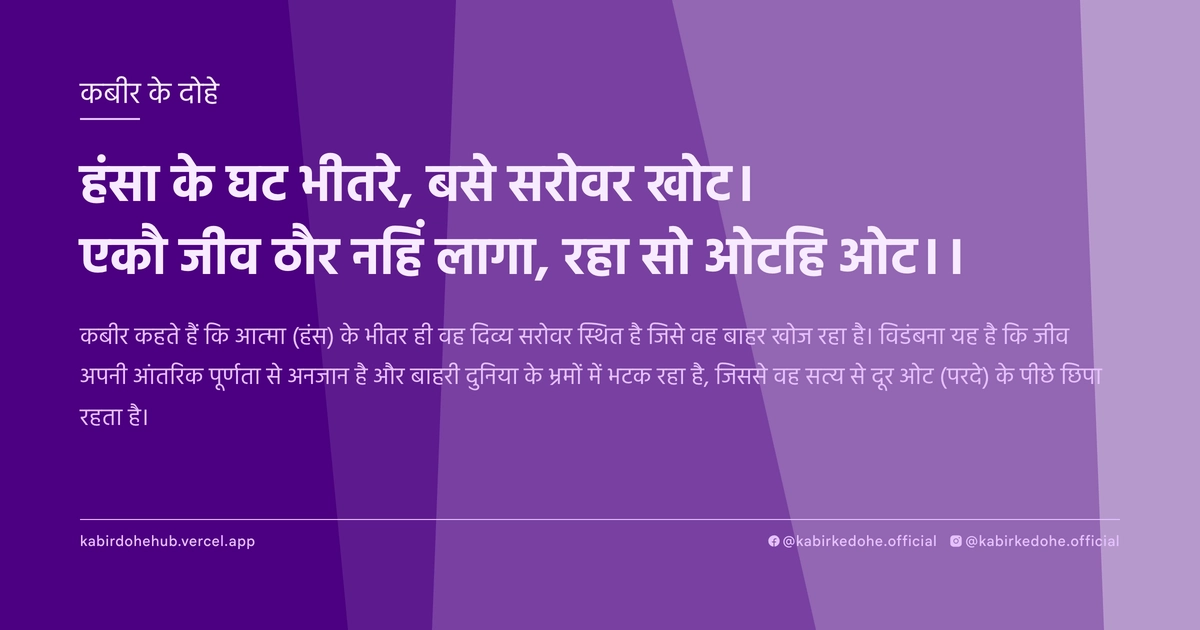
हंसा के घट भीतरे, बसे सरोवर खोट।
एकौ जीव ठौर नहिं लागा, रहा सो ओटहि ओट।।
Hansa ke ghat bhitare, base sarovar khot. Ekau jeev thaur nahin laaga, raha so otahi ot.
इस पृष्ठ पर इस कबीर दोहे का अर्थ (meaning), हिंदी व्याख्या और अंग्रेज़ी अनुवाद, दार्शनिक विश्लेषण और व्यावहारिक जीवन सीख दी गई है। यह दोहा अंतर ज्योति (The Inner Light) विषय से जुड़ा है — Kabir doha meaning and explanation in Hindi and English.
अर्थ (Meaning):
कबीर कहते हैं कि आत्मा (हंस) के भीतर ही वह दिव्य सरोवर स्थित है जिसे वह बाहर खोज रहा है। विडंबना यह है कि जीव अपनी आंतरिक पूर्णता से अनजान है और बाहरी दुनिया के भ्रमों में भटक रहा है, जिससे वह सत्य से दूर ओट (परदे) के पीछे छिपा रहता है।
Kabir asserts that the divine lake, which the soul (represented as the swan) seeks externally, actually resides within its own being. The tragedy is that the living entity finds no stable resting place in the external world, remaining hidden behind layers of illusion and ignorance.
व्याख्या (Interpretation):
यहाँ 'हंस' शुद्ध आत्मा का प्रतीक है और 'सरोवर' उस परम आनंद या ब्रह्म का, जो तृप्ति प्रदान करता है। शाब्दिक अर्थ यह है कि खोज का केंद्र बाहर नहीं, बल्कि भीतर है। आध्यात्मिक स्तर पर, यह निर्गुण भक्ति का सार है जहाँ ईश्वर किसी मंदिर या मस्जिद में नहीं, बल्कि चेतना के केंद्र में स्थित है। माया वह 'ओट' या पर्दा है जो आत्मा को उसके वास्तविक स्वरूप से अलग करता है। यह अद्वैत वेदांत के उस सिद्धांत को दर्शाता है जहाँ जीव और ब्रह्म वास्तव में एक ही हैं, लेकिन अज्ञानता के कारण द्वैत का अनुभव होता है। जब तक जीव बाहरी आश्रय खोजता है, वह केवल भटकाव में रहता है।
The 'Hansa' (swan) symbolizes the pure soul, and the 'Sarovar' (lake) represents the primordial bliss or Brahman. Literally, it suggests that the destination of the search is the seeker themselves. Metaphorically, this aligns with Nirgun Bhakti, where the Divine is formless and dwells within the core of consciousness. 'Maya' acts as the 'Ot' or veil, creating a perceived separation between the Atman and Brahman. This reflects the Advaita Vedanta principle of non-duality; the feeling of being 'lost' is a psychological illusion. The paradox is that the soul wanders the entire universe searching for a home that it already occupies, failing to realize that the seeker is the sought.
दार्शनिक विश्लेषण (Philosophical Analysis):
कबीर का यह दोहा मध्यकालीन भारत के उस सामाजिक-धार्मिक परिवेश में लिखा गया था जहाँ कर्मकांड और बाहरी तीर्थयात्राओं का बोलबाला था। कबीर ने पुरजोर तरीके से उन परंपराओं का विरोध किया जो मोक्ष को बाहरी क्रियाओं या भौगोलिक स्थानों से जोड़ती थीं। उनके लिए, असली तीर्थ 'हृदय' है।
दार्शनिक रूप से, यह सूफी मत के 'इंसान-ए-कामिल' और अद्वैत वेदांत के 'अहं ब्रह्मास्मि' का संगम है। सूफीवाद में 'अनल हक़' (मैं ही सत्य हूँ) की अवधारणा यहाँ स्पष्ट है। कबीर समझाते हैं कि अहंकार (Ego) ही वह मुख्य बाधा है जो हमें आंतरिक सरोवर को देखने नहीं देती। जब तक हम खुद को शरीर या सामाजिक पहचान मानते हैं, हम 'ओट' के पीछे रहते हैं।
यह विश्लेषण यह स्पष्ट करता है कि कबीर केवल धर्म की बात नहीं कर रहे, बल्कि मनोवैज्ञानिक रूपांतरण की बात कर रहे हैं। बाहरी दुनिया में स्थिरता खोजना वैसा ही है जैसे रेगिस्तान में पानी खोजना। वास्तविक शांति केवल तब आती है जब व्यक्ति अपनी बाहरी पहचान का विसर्जन करता है और आंतरिक शून्यता में प्रवेश करता है।
कबीर का दृष्टिकोण कट्टरपंथी नहीं, बल्कि क्रांतिकारी है। वे कहते हैं कि यदि ईश्वर बाहर है, तो वह हमारी पहुँच से दूर है, लेकिन यदि वह भीतर है, तो वह सबसे निकट है। यह बोध व्यक्ति को जाति, धर्म और वर्ग के संकीर्ण बंधनों से मुक्त करता है क्योंकि आत्मा की कोई सामाजिक पहचान नहीं होती।
अंततः, यह दोहा इस सत्य को स्थापित करता है कि संसार एक दर्पण है। हम जो बाहर खोजते हैं, वह वास्तव में हमारे भीतर की एक कमी का प्रतिबिंब होता है। जब आंतरिक सरोवर की खोज पूरी होती है, तो बाहरी दुनिया का द्वंद्व समाप्त हो जाता है और जीव अपनी वास्तविक 'ठौर' या ठिकाने पर पहुँच जाता है।
This couplet emerged during a period of intense ritualism in medieval India, where salvation was often tied to external pilgrimages and rigid caste hierarchies. Kabir radically challenged these norms by shifting the locus of spirituality from the temple and mosque to the human heart, asserting that the internal landscape is the only true sanctuary.
Philosophically, this is a synthesis of Sufi 'Wahdat al-Wujūd' (Unity of Being) and Advaita Vedanta's non-dualism. The concept of 'An-al-Haq' (I am the Truth) resonates here; the realization that the individual soul is not distinct from the Universal Soul. The 'Ot' or veil is the ego—the false construct of identity that creates the illusion of separation.
Kabir focuses on psychological transformation rather than religious conversion. He argues that seeking stability in the material world is a futile endeavor, akin to chasing a mirage. True stability is found only when the practitioner ceases the outward projection of desire and turns the gaze inward to the 'silent witness' within.
His approach is revolutionary because it democratizes spirituality. By claiming that the Divine resides within every 'Hansa', he renders the priestly class and their intermediaries obsolete. If the Truth is internal, then no one can be denied access to it based on their birth or social standing.
Ultimately, the poem addresses the fundamental human condition of alienation. We feel like strangers in the world because we are strangers to ourselves. The 'lack' we feel is not a lack of external resources, but a disconnection from our own innate divinity. Once the veil of ignorance is lifted, the search ends, and the soul finds its eternal resting place.
मूल संदेश (Core Message):
- बाहरी खोज अक्सर आंतरिक पलायन का एक तरीका होती है।
- सत्य किसी स्थान या व्यक्ति में नहीं, बल्कि चेतना की गहराई में है।
- अहंकार वह पर्दा है जो हमें हमारी अपनी पूर्णता देखने नहीं देता।
- शांति कोई उपलब्धि नहीं है, बल्कि हमारा मूल स्वभाव है।
- जब खोजकर्ता और खोज एक हो जाते हैं, तब द्वैत समाप्त हो जाता है।
- External searching is often a sophisticated form of internal escape.
- Truth resides not in a place or person, but in the depths of consciousness.
- The ego is the veil that blinds us to our own inherent wholeness.
- Peace is not an achievement to be earned, but our original nature.
- When the seeker and the sought become one, all duality dissolves.
व्यावहारिक उदाहरण (Practical Example):
वाराणसी के घाटों पर रहने वाले एक वृद्ध विधवा, जानकी, का जीवन केवल दूसरों की सेवा और मंदिर की सीढ़ियों पर बिताए समय तक सीमित था। वह मानती थीं कि मोक्ष केवल गंगा स्नान और कठोर उपवास से मिलेगा।
वर्षों तक उन्होंने कठिन तपस्या की, लेकिन उनके मन में एक गहरी बेचैनी और अधूरापन बना रहा। उन्हें लगता था कि ईश्वर उनसे नाराज हैं या शायद वह उनके योग्य नहीं हैं।
एक दिन उनकी मुलाकात एक घुमक्कड़ फकीर से हुई, जिसने उन्हें कबीर का यह दोहा सुनाया। फकीर ने उनसे पूछा, "माँ, आप जिस गंगा को बाहर खोज रही हैं, क्या आपने अपने भीतर की शांति की धारा को देखा है?"
जानकी ने पहले तो इसे बकवास माना, लेकिन फिर उन्होंने एक प्रयोग किया। उन्होंने बाहरी शोर से हटकर मौन में बैठना शुरू किया और अपनी सांसों के साथ जुड़ना चाहा।
शुरुआत में उन्हें केवल अपने पुराने दुखों और पछतावे की यादें आईं। यह वह 'ओट' था जिसे कबीर ने बताया था—स्मृतियों और पहचान का पर्दा।
धीरे-धीरे, उन्होंने महसूस किया कि जिस शांति की तलाश में वह सुबह चार बजे उठकर ठंडे पानी में डुबकी लगाती थीं, वह शांति उनके भीतर के मौन में पहले से मौजूद थी।
उन्होंने पाया कि उनकी सेवा भावना तब और बढ़ गई जब उन्होंने खुद को भीतर से पूर्ण महसूस किया। अब वह दूसरों की मदद किसी 'पुण्य' के लिए नहीं, बल्कि प्रेम के कारण करती थीं।
उनका व्यवहार बदल गया; अब वह मंदिर की भीड़ में नहीं, बल्कि अपने एकांत में ईश्वर से बातें करती थीं।
उनके चेहरे पर एक ऐसी चमक आई जो किसी कठिन उपवास से नहीं, बल्कि आंतरिक संतोष से उपजी थी।
जानकी ने समझ लिया कि वह जीवन भर घर के बाहर खड़ी होकर अंदर झांकने की कोशिश कर रही थीं, जबकि वह पहले से ही घर के भीतर थीं।
Janki, an elderly widow living on the ghats of Varanasi, spent her entire existence in a cycle of rigorous fasting and temple rituals. She believed that liberation was a prize to be won through external austerity and the holy waters of the Ganges.
Despite her piety, a profound sense of restlessness and incompleteness haunted her. She felt that the Divine was distant, perhaps displeased with her, or that she was simply unworthy of grace.
One afternoon, she encountered a wandering fakir who recited Kabir's verse about the swan and the internal lake. The fakir asked her, "Mother, you seek the Ganges outside, but have you glimpsed the stream of peace flowing within you?"
Initially, Janki dismissed this as heresy. However, curiosity led her to experiment. She began spending an hour each day in absolute silence, focusing solely on the rhythm of her breath.
At first, she encountered only the 'Ot'—the veil of old regrets, grief, and the identity of a 'suffering widow'. These mental noises were the barriers Kabir spoke of.
Slowly, as she persisted, the noise subsided. She discovered a reservoir of stillness that was far deeper and more consistent than the fleeting peace she felt after a ritual bath.
She realized that her desire to serve others had shifted; she no longer helped people to accumulate 'punya' (merit), but because she felt a kinship with their shared suffering.
Her behavior transformed from a rigid adherence to rules to a fluid expression of love. She stopped fearing the judgment of the priests and started trusting her own internal compass.
A radiant serenity settled upon her face, a glow that did not come from the exhaustion of fasting, but from the nourishment of inner fulfillment.
Janki finally understood the 'Kabir Twist': she had spent her whole life knocking on the door of a house she was already inside of.
अभ्यास मार्गदर्शन (Practice Guidance):
- प्रतिदिन 20 मिनट 'साक्षी भाव' का अभ्यास करें, जहाँ आप अपने विचारों को बिना किसी निर्णय के केवल देखें, जैसे आप किसी और को देख रहे हों।
- एक डायरी लिखें जिसमें उन बाहरी चीजों की सूची बनाएं जिन्हें आप अपनी खुशी के लिए आवश्यक मानते हैं, और फिर विश्लेषण करें कि उनमें से कौन सी भावनाएं वास्तव में आपके भीतर से उत्पन्न हो रही हैं।
- जब भी आप तनाव या अधूरापन महसूस करें, तो रुकें और खुद से पूछें: "मैं इस समय बाहर क्या खोज रहा हूँ जो मेरे भीतर मौजूद है?"
- निदान चेकलिस्ट: यदि आप अभी भी दूसरों की प्रशंसा या आलोचना से विचलित होते हैं, तो इसका अर्थ है कि आप अभी भी 'ओट' (अहंकार के परदे) के पीछे हैं। यदि आप मौन में सहज हैं, तो आप सरोवर के करीब हैं।
- Practice 'Witness Consciousness' for 20 minutes daily, observing your thoughts without judgment, as if you are watching a stranger's mind.
- Maintain a journal listing external things you believe are necessary for your happiness, then analyze which of those emotions are actually generated from within.
- Whenever you feel stress or a sense of lack, pause and ask: "What am I seeking externally right now that already exists within me?"
- Diagnostic Checklist: If you are still easily swayed by external praise or criticism, you are living behind the 'Ot' (veil of ego). If you feel comfortable in absolute silence, you are nearing the internal lake.
चिंतन प्रश्न (Reflection Questions):
- मेरी वह कौन सी 'डिजिटल पहचान' है जिसे मैं अपनी वास्तविक पहचान मान बैठा हूँ?
- मैं किन बाहरी उपलब्धियों के पीछे भाग रहा हूँ ताकि मुझे अपने भीतर के खालीपन का सामना न करना पड़े?
- क्या मेरा धर्म या मेरी मान्यताएं मुझे सत्य के करीब ले जा रही हैं, या वे केवल एक नया 'पर्दा' बन गई हैं?
- यदि मुझसे मेरी सारी सामाजिक भूमिकाएं (नाम, पद, रिश्ता) छीन ली जाएं, तो मेरे भीतर क्या बचेगा?
- मैं अपनी शांति के लिए दूसरों पर कितना निर्भर हूँ, और यह निर्भरता मुझे मेरे आंतरिक सरोवर से कैसे दूर करती है?
- Which 'digital identity' have I mistaken for my true self?
- What external achievements am I chasing to avoid facing the void within me?
- Are my religious or ideological beliefs bringing me closer to Truth, or have they become a new 'veil'?
- If all my social roles (name, title, relationships) were stripped away, what would remain of me?
- To what extent is my peace dependent on others, and how does this dependency distance me from my internal lake?