
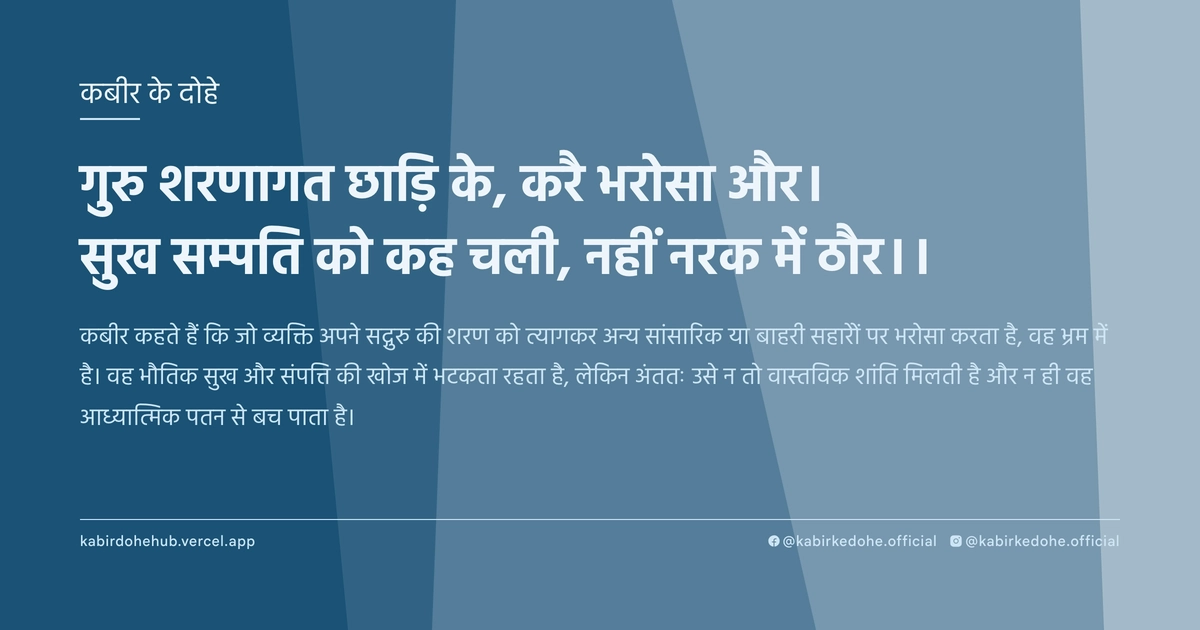
गुरु शरणागत छाड़ि के, करै भरोसा और।
सुख सम्पति को कह चली, नहीं नरक में ठौर।।
Guru sharanagat chhadi ke, karai bharosa aur. Sukh sampati ko kah chali, nahi narak mein thaur.
इस पृष्ठ पर इस कबीर दोहे का अर्थ (meaning), हिंदी व्याख्या और अंग्रेज़ी अनुवाद, दार्शनिक विश्लेषण और व्यावहारिक जीवन सीख दी गई है। यह दोहा गुरु महत्व (The Guru's Importance) विषय से जुड़ा है — Kabir doha meaning and explanation in Hindi and English.
अर्थ (Meaning):
कबीर कहते हैं कि जो व्यक्ति अपने सद्गुरु की शरण को त्यागकर अन्य सांसारिक या बाहरी सहारेों पर भरोसा करता है, वह भ्रम में है। वह भौतिक सुख और संपत्ति की खोज में भटकता रहता है, लेकिन अंततः उसे न तो वास्तविक शांति मिलती है और न ही वह आध्यात्मिक पतन से बच पाता है।
Kabir asserts that one who abandons the sanctuary of the True Guru to place trust in external or worldly supports is living in delusion. Such a person chases material wealth and fleeting pleasures, yet finds neither genuine peace nor a refuge from the inevitable spiritual descent.
व्याख्या (Interpretation):
इस दोहे का शाब्दिक अर्थ है कि गुरु का साथ छोड़कर अन्यत्र भरोसा करना व्यर्थ है। आध्यात्मिक स्तर पर, 'गुरु' केवल एक व्यक्ति नहीं, बल्कि वह चैतन्य शक्ति है जो अज्ञान के पर्दे को हटाती है। जब साधक बाहरी माया और भौतिक संपत्तियों में सुख खोजता है, तो वह वास्तव में अपनी आत्मा (Atman) से दूर जा रहा होता है। यह निरगुण भक्ति का सार है, जहाँ बाहरी आडंबरों के बजाय आंतरिक सत्य की खोज महत्वपूर्ण है। माया एक ऐसा जाल है जो हमें यह विश्वास दिलाता है कि सुख वस्तुओं में है, जबकि वह केवल गुरु द्वारा दिखाए गए ज्ञान के मार्ग से संभव है। यहाँ 'नरक' का अर्थ केवल मृत्यु के बाद की स्थिति नहीं, बल्कि वर्तमान जीवन में मानसिक अशांति और अलगाव की स्थिति है। अंततः, यह दोहा द्वैत से अद्वैत की ओर ले जाने वाले मार्ग पर गुरु की अपरिहार्यता को रेखांकित करता है।
Literally, the verse warns against abandoning the Guru's guidance for other dependencies. Metaphorically, the 'Guru' represents the illuminating consciousness that dissolves the veil of ignorance. When a seeker pursues happiness through material accumulation, they drift further from the Atman, falling prey to Maya—the cosmic illusion. In the context of Nirgun Bhakti, this highlights the futility of ritualistic or worldly anchors in the quest for the Formless Divine. The 'hell' mentioned is not merely a post-mortem destination but the psychological torment of fragmentation and spiritual void experienced in the present. The central paradox is that the seeker searches for security in the very things (wealth, status) that ensure their insecurity. Thus, the Guru is the bridge from the duality of 'I and Mine' to the non-dual realization of Brahman.
दार्शनिक विश्लेषण (Philosophical Analysis):
कबीर का यह दोहा उनके युग के धार्मिक पाखंड और बाहरी कर्मकांडों के प्रति एक तीखा प्रहार है। उस समय समाज में धर्म के नाम पर केवल तीर्थयात्राओं और बाहरी अनुष्ठानों को मोक्ष का साधन माना जाता था। कबीर ने इस धारणा को चुनौती देते हुए 'सद्गुरु' की आंतरिक आवश्यकता पर बल दिया। उनके लिए गुरु वह है जो साधक को उसके अपने अहंकार (Ego) से परिचित कराकर उसे नष्ट करने में मदद करे।
यह विचार अद्वैत वेदांत के इस सिद्धांत से मेल खाता है कि जीव और ब्रह्म एक ही हैं, लेकिन अज्ञान के कारण अलग प्रतीत होते हैं। गुरु वह उत्प्रेरक है जो इस अज्ञान को मिटाता है। यदि कोई व्यक्ति गुरु के मार्गदर्शन को छोड़कर भौतिक सुखों (माया) में विश्वास करता है, तो वह वास्तव में अपनी वास्तविक प्रकृति को भूलकर एक झूठी पहचान को अपना रहा होता है।
सूफी मत के 'मुर्शिद' (मार्गदर्शक) की अवधारणा भी यहाँ स्पष्ट है, जहाँ बिना एक आध्यात्मिक गुरु के, ईश्वर तक पहुँचने का मार्ग अत्यंत कठिन और भ्रामक है। कबीर यहाँ यह समझा रहे हैं कि बाहरी संपत्ति केवल शरीर का पोषण करती है, आत्मा का नहीं।
मनोवैज्ञानिक स्तर पर, 'अन्य पर भरोसा' करना वास्तव में बाहरी सत्यापन (External Validation) की खोज है। जब मनुष्य अपनी आंतरिक शक्ति के बजाय बाहरी परिस्थितियों पर निर्भर होता है, तो वह निरंतर भय और असुरक्षा में जीता है। यह निर्भरता ही वह 'नरक' है जिसका कबीर उल्लेख कर रहे हैं।
अतः, यह दोहा केवल गुरु की पूजा करने का निर्देश नहीं है, बल्कि यह चेतना के रूपांतरण की बात करता है। यह सिखाता है कि वास्तविक सुरक्षा केवल आत्म-साक्षात्कार में है, जिसे केवल एक योग्य मार्गदर्शक की सहायता से प्राप्त किया जा सकता है, न कि धन या सामाजिक प्रतिष्ठा के माध्यम से।
This Doha is a piercing critique of the religious hypocrisy and external ritualism prevalent during Kabir's era. At a time when salvation was sought through pilgrimages and rigid caste-based rituals, Kabir pivoted the focus toward the internal necessity of the 'Sadguru'. For Kabir, the Guru is not merely a teacher but the catalyst who mirrors the seeker's ego back to them, facilitating its annihilation.
This aligns profoundly with Advaita Vedanta, which posits that the individual soul (Jiva) and the ultimate reality (Brahman) are one, separated only by the veil of Avidya (ignorance). The Guru serves as the light that dissolves this veil. To abandon this guidance in favor of material wealth is to trade an eternal reality for a transient illusion, reinforcing the ego's grip on a false identity.
Parallel to this is the Sufi concept of the 'Murshid'. In Sufism, the spiritual journey is considered perilous and prone to deception without a guide who has already traversed the path. Kabir integrates this mystical necessity, suggesting that external anchors provide a false sense of security while the soul remains starved.
Psychologically, 'trusting others' refers to the pursuit of external validation. When a human anchors their worth in possessions or social status, they enter a state of perpetual anxiety—a psychological 'hell' characterized by the fear of loss. This dependency is the antithesis of spiritual liberation (Mukti).
Ultimately, the verse transcends the literal relationship between student and teacher. It is a call for a shift in consciousness. It argues that true security is found not in the accumulation of objects, but in the realization of the Self, a process that requires the surgical precision of a Guru's wisdom to strip away the delusions of the material world.
मूल संदेश (Core Message):
- बाहरी सहारे केवल अस्थायी सुरक्षा का भ्रम पैदा करते हैं।
- सच्चा मार्गदर्शन केवल आंतरिक जागरण और गुरु के बोध से मिलता है।
- भौतिक संपत्तियों की खोज आध्यात्मिक पतन का कारण बन सकती है।
- अहंकार का त्याग ही वास्तविक शरण और शांति का एकमात्र द्वार है।
- मोक्ष किसी रस्म में नहीं, बल्कि स्वयं के साथ एकात्मता में है।
- External dependencies create only a fragile illusion of security.
- True guidance is found only through inner awakening and the Guru's insight.
- The pursuit of material wealth can lead to spiritual fragmentation.
- Relinquishing the ego is the only gateway to genuine refuge and peace.
- Liberation lies not in rituals, but in the oneness with the Self.
व्यावहारिक उदाहरण (Practical Example):
वाराणसी के घाटों पर रहने वाले एक वृद्ध विधवा, जानकी, की कहानी है। जानकी ने अपना पूरा जीवन धर्म के नाम पर दान और कठिन उपवासों में बिताया था। उन्हें विश्वास था कि जितना अधिक वे बाहरी अनुष्ठानों का पालन करेंगी और संतों को दान देंगी, उनका परलोक उतना ही सुखद होगा। वे अपनी छोटी सी कुटिया में रहती थीं, लेकिन उनका मन हमेशा इस चिंता में रहता था कि क्या उन्होंने पर्याप्त पुण्य कमाया है।
एक दिन उनकी मुलाकात एक घुमक्कड़ फकीर से हुई, जिसने उन्हें कबीर का यह दोहा सुनाया। फकीर ने उनसे पूछा, 'माँ, आप इन पत्थरों और रस्मों में किसे खोज रही हैं? क्या आपने कभी अपने भीतर के उस गुरु को देखा है जो आपको सत्य का मार्ग दिखाता है?'
जानकी को पहले तो यह बात अजीब लगी। उन्होंने कहा, 'मैंने जीवन भर शास्त्रों का पालन किया है, मुझे किसी और गुरु की क्या आवश्यकता?' फकीर ने मुस्कुराते हुए कहा, 'शास्त्र केवल नक्शे हैं, लेकिन गुरु वह साथी है जो आपको मंजिल तक ले जाता है। आप नक्शों को पूज रही हैं, लेकिन चलने का साहस नहीं जुटा पा रही हैं।'
जानकी ने महसूस किया कि उनका पूरा जीवन केवल 'पुण्य' इकट्ठा करने की एक व्यापारिक गतिविधि बन गया था। वे वास्तव में ईश्वर से नहीं, बल्कि इस डर से जुड़ी थीं कि कहीं वे नरक में न गिर जाएँ। उन्होंने महसूस किया कि उनका 'भरोसा' बाहरी कर्मकांडों पर था, न कि उस आंतरिक चेतना पर जो उन्हें प्रेम और करुणा सिखाती।
धीरे-धीरे, जानकी ने बाहरी दिखावे को छोड़ दिया। उन्होंने उपवास करना बंद नहीं किया, लेकिन अब वे उसे शरीर को कष्ट देने के लिए नहीं, बल्कि मन को शांत करने के लिए करने लगीं। उन्होंने दूसरों की सेवा को ही अपना सबसे बड़ा अनुष्ठान बना लिया।
एक दिन, जब एक बीमार अजनबी घाट पर आया और सबने उसे अछूत मानकर छोड़ दिया, तब जानकी ने बिना किसी संकोच के उसकी सेवा की। उस क्षण उन्हें वह शांति मिली जो उन्हें वर्षों के कठिन व्रत और दान से नहीं मिली थी।
उन्हें समझ आया कि असली 'गुरु' वह बोध है जो हमें अहंकार से मुक्त करता है। जब उन्होंने अपनी 'पुण्य कमाने' की इच्छा को त्याग दिया, तो उनका डर गायब हो गया।
अब जानकी के चेहरे पर एक ऐसी चमक थी जो किसी मंदिर की आरती से नहीं, बल्कि आंतरिक संतोष से आई थी। उन्होंने जान लिया था कि बाहरी संपत्तियाँ और रस्में केवल भ्रम हैं; वास्तविक शरण तो केवल सत्य के प्रति समर्पण में है।
Consider the story of Janaki, an elderly widow living on the ghats of Varanasi. Janaki had spent her entire existence immersed in religious donations and rigorous fasting. She believed that the more she adhered to external rituals and gave to saints, the more blissful her afterlife would be. Living in a tiny hut, her mind was perpetually plagued by the anxiety of whether she had accumulated enough 'merit' (punya).
One day, she encountered a wandering fakir who recited this specific Doha to her. The fakir asked, 'Mother, whom are you searching for in these stones and rituals? Have you ever looked at the Guru within who shows the path to Truth?'
Initially, Janaki was perplexed. She replied, 'I have followed the scriptures all my life; why would I need another Guru?' The fakir smiled and said, 'Scriptures are merely maps, but the Guru is the companion who actually walks you to the destination. You are worshipping the maps, but you lack the courage to walk.'
Janaki realized that her entire life had become a transactional activity of 'collecting merit.' She wasn't actually connected to the Divine; she was connected to the fear of falling into hell. Her 'trust' was placed in external ceremonies, not in the internal consciousness that teaches love and compassion.
Slowly, Janaki abandoned the outward show. She didn't stop her fasts, but she stopped doing them to punish the body; instead, she used them to quiet the mind. She transformed her service to others into her primary ritual.
One day, when a sick stranger arrived at the ghat and was shunned by everyone as 'untouchable,' Janaki served him without a moment's hesitation. In that instant, she felt a peace that years of rigid vows and donations had never provided.
She understood that the real 'Guru' is the awakening that frees us from the ego. When she surrendered the desire to 'earn' salvation, her fear vanished.
Now, Janaki's face bore a radiance that didn't come from temple lamps, but from inner contentment. She had realized that external assets and rituals are mere illusions; true refuge lies only in the surrender to Truth.
अभ्यास मार्गदर्शन (Practice Guidance):
- दैनिक आत्म-निरीक्षण: प्रतिदिन 15 मिनट मौन बैठें और विचार करें कि आप अपनी सुरक्षा के लिए किन बाहरी चीजों (पैसा, पद, प्रशंसा) पर निर्भर हैं।
- अहंकार का विसर्जन: दिन में कम से कम एक ऐसा कार्य करें जहाँ आप अपनी पहचान या श्रेय को पूरी तरह त्याग दें और केवल सेवा भाव रखें।
- जर्नलिंग प्रॉम्प्ट: 'यदि मेरी सारी भौतिक संपत्तियाँ और सामाजिक पहचान आज छीन ली जाएँ, तो मेरे भीतर क्या बचेगा?' इस प्रश्न पर गहराई से लिखें।
- डायग्नोस्टिक चेकलिस्ट: क्या मैं किसी कार्य को केवल 'फल' या 'पुण्य' की आशा में कर रहा हूँ? क्या मेरा मानसिक सुकून बाहरी परिस्थितियों पर निर्भर है? यदि हाँ, तो आप अभी भी 'अन्य भरोसे' में हैं।
- Daily Self-Inquiry: Spend 15 minutes in silence daily, observing which external anchors (money, status, validation) you are relying on for your sense of security.
- Ego Dissolution: Perform at least one act daily where you completely relinquish your identity or the need for credit, acting solely from a place of selfless service.
- Journaling Prompt: Write deeply on the question: 'If all my material possessions and social identities were stripped away today, what would remain within me?'
- Diagnostic Checklist: Am I performing this act solely for the sake of 'merit' or a future reward? Is my mental peace contingent on external circumstances? If yes, you are still relying on 'other supports'.
चिंतन प्रश्न (Reflection Questions):
- मेरे जीवन में 'गुरु' की भूमिका क्या है—क्या वह केवल एक व्यक्ति है या एक जागृत चेतना?
- मैं किन गुप्त पूर्वाग्रहों के कारण कुछ लोगों को 'अपात्र' और कुछ को 'पवित्र' मानता हूँ?
- मेरी डिजिटल पहचान (सोशल मीडिया) मेरे वास्तविक स्वरूप को कितना ढक रही है?
- क्या मेरा धर्म प्रेम पर आधारित है या केवल दंड और पुरस्कार के भय पर?
- वह कौन सा डर है जो मुझे पूरी तरह से शून्य होने से रोकता है?
- क्या मैं सत्य की खोज कर रहा हूँ, या केवल अपनी मान्यताओं की पुष्टि?
- What is the role of the 'Guru' in my life—is it merely a person or an awakened consciousness?
- Which hidden biases lead me to label some people as 'unworthy' and others as 'holy'?
- To what extent does my digital identity mask my authentic self?
- Is my spirituality based on love, or merely on the fear of punishment and hope for reward?
- What is the specific fear that prevents me from becoming completely void of ego?
- Am I searching for the Truth, or merely seeking confirmation of my own beliefs?