
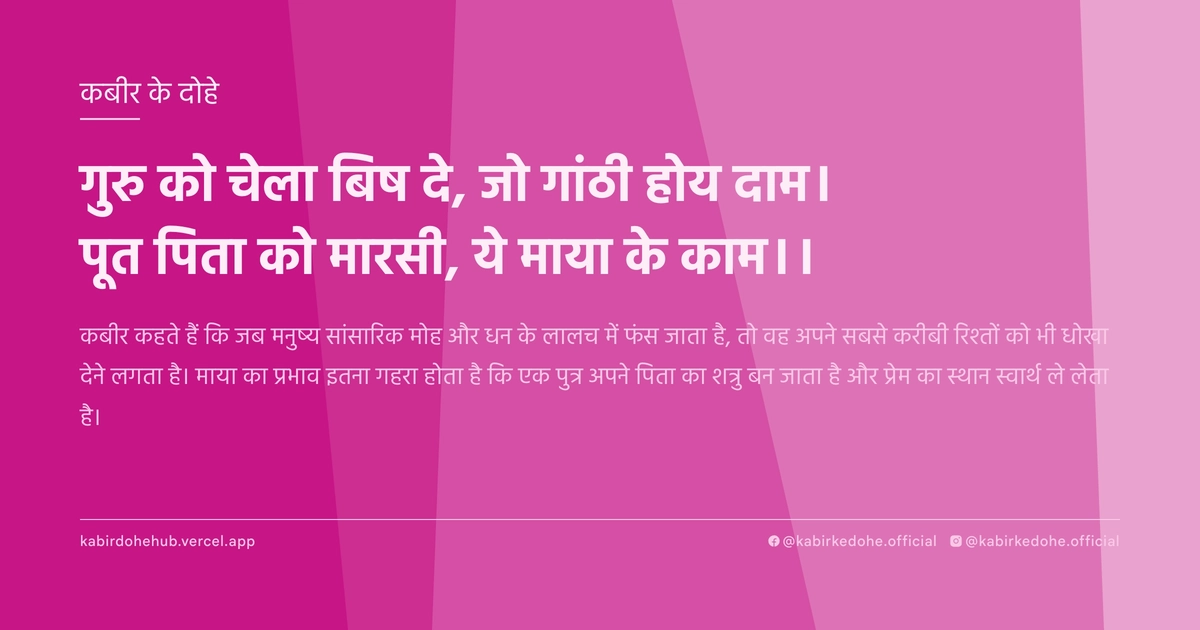
गुरु को चेला बिष दे, जो गांठी होय दाम।
पूत पिता को मारसी, ये माया के काम।।
Guru ko chela bish de, jo ganthi hoye daam. Put pita ko marsi, ye maya ke kaam.
इस पृष्ठ पर इस कबीर दोहे का अर्थ (meaning), हिंदी व्याख्या और अंग्रेज़ी अनुवाद, दार्शनिक विश्लेषण और व्यावहारिक जीवन सीख दी गई है। यह दोहा माया (Maya) विषय से जुड़ा है — Kabir doha meaning and explanation in Hindi and English.
अर्थ (Meaning):
कबीर कहते हैं कि जब मनुष्य सांसारिक मोह और धन के लालच में फंस जाता है, तो वह अपने सबसे करीबी रिश्तों को भी धोखा देने लगता है। माया का प्रभाव इतना गहरा होता है कि एक पुत्र अपने पिता का शत्रु बन जाता है और प्रेम का स्थान स्वार्थ ले लेता है।
Kabir asserts that when a human is consumed by worldly attachments and the greed for wealth, they begin to betray even their closest kin. The influence of Maya is so potent that it can turn a son against his own father, replacing natural love with cold selfishness.
व्याख्या (Interpretation):
इस दोहे का शाब्दिक अर्थ है कि धन की लालसा व्यक्ति को विषैला बना देती है। रूपकात्मक रूप से, 'रु' या 'चेला' यहाँ उस अहंकार और वासना का प्रतीक है जो मनुष्य के भीतर सक्रिय है। यह माया का वह जाल है जहाँ भौतिक संपत्ति (दाम) आत्मा के विवेक को ढक लेती है। निर्गुण भक्ति के परिप्रेक्ष्य में, यह द्वैत का चरम है जहाँ व्यक्ति स्वयं को और दूसरों को अलग मानकर केवल भौतिक लाभ खोजता है। यह स्थिति अविद्या की पराकाष्ठा है, जहाँ आत्मा अपनी वास्तविक प्रकृति को भूलकर शरीर और संपत्ति की पहचान से चिपक जाती है, जिससे रिश्तों में घृणा और हिंसा का जन्म होता है।
Literally, the verse speaks of how the lust for wealth poisons a person. Metaphorically, the 'disciple' or 'agent' refers to the ego and desire active within the human psyche. This is the web of Maya where material wealth (daam) obscures the soul's discernment. In the context of Nirgun Bhakti, this represents the peak of duality, where the individual perceives separation and seeks only material gain. This state is the height of Avidya (ignorance), where the Atman forgets its true nature and clings to the identity of the body and possessions, inevitably leading to hatred and violence within the most sacred bonds of kinship.
दार्शनिक विश्लेषण (Philosophical Analysis):
कबीर का यह दोहा उनके युग के सामाजिक और धार्मिक पाखंड के विरुद्ध एक तीखा प्रहार है। उन्होंने देखा कि कैसे धर्म के नाम पर लोग कर्मकांडों में उलझे थे, जबकि उनके भीतर लालच और ईर्ष्या का विष भरा था। यहाँ कबीर 'माया' को एक ऐसी मनोवैज्ञानिक शक्ति के रूप में परिभाषित करते हैं जो सत्य को छिपाती है और असत्य को सत्य दिखाती है।
अद्वैत वेदांत के अनुसार, जब तक मनुष्य स्वयं को ब्रह्म से अलग मानता है, वह माया के अधीन रहता है। यह अलगाव ही 'मैं' और 'मेरा' की भावना पैदा करता है, जो अंततः संघर्ष का कारण बनता है। कबीर यहाँ चेतावनी दे रहे हैं कि भौतिक संपत्ति केवल एक साधन होनी चाहिए, साध्य नहीं। जब साधन ही साध्य बन जाता है, तो मानवीय संवेदनाएं समाप्त हो जाती हैं।
सूफी मत के 'नफ्स' (अहंकार) की अवधारणा यहाँ स्पष्ट दिखती है। जब नफ्स हावी होता है, तो वह व्यक्ति को अंधा कर देता है। कबीर का तर्क है कि बाहरी पूजा-पाठ या तीर्थयात्रा तब तक व्यर्थ हैं जब तक कि आंतरिक लालच का अंत न हो। वे जाति और वर्ण के भेदभाव को नकारते हुए यह बताते हैं कि माया का विष किसी भी वर्ग के व्यक्ति को समान रूप से प्रभावित कर सकता है।
मनोवैज्ञानिक स्तर पर, यह दोहा संज्ञानात्मक विसंगति (cognitive dissonance) को दर्शाता है। व्यक्ति जानता है कि पिता का सम्मान करना चाहिए, लेकिन धन का लालच उसे उस नैतिकता को नकारने पर मजबूर करता है। यह आंतरिक द्वंद्व ही मानसिक अशांति और आध्यात्मिक पतन का मूल कारण है।
अंततः, कबीर इस समस्या का समाधान 'सहज' मार्ग और वैराग्य में देखते हैं। वे यह नहीं कहते कि धन पूरी तरह त्याग दिया जाए, बल्कि यह कि धन के प्रति आसक्ति (attachment) को समाप्त किया जाए। जब व्यक्ति यह अनुभव कर लेता है कि वह और उसका पिता दोनों एक ही निराकार परमात्मा के अंश हैं, तब भौतिक संपत्ति का मोह स्वतः समाप्त हो जाता है और प्रेम की पुनर्स्थापना होती है।
This couplet is a sharp critique of the social and religious hypocrisy of Kabir's era. He observed how people were entangled in rituals while their hearts were filled with the poison of greed and envy. Here, Kabir defines 'Maya' as a psychological force that conceals the Truth and presents the illusion as reality.
According to Advaita Vedanta, as long as a human perceives themselves as separate from Brahman, they remain under the sway of Maya. This perceived separation creates the sense of 'I' and 'Mine,' which ultimately leads to conflict. Kabir warns that material wealth should only be a means, never the end. When the means become the end, human empathy evaporates.
The Sufi concept of 'Nafs' (the lower self/ego) is evident here. When the Nafs dominates, it blinds the individual. Kabir argues that external worship or pilgrimages are futile unless the internal greed is eradicated. Rejecting caste and creed, he illustrates that the poison of Maya can affect anyone regardless of their social standing.
On a psychological level, this verse depicts cognitive dissonance. A person knows the moral imperative to respect their father, yet the lure of wealth forces them to negate that morality. This internal conflict is the root cause of mental turmoil and spiritual decay.
Ultimately, Kabir finds the solution in the 'Sahaj' path and Vairagya (detachment). He does not advocate for the total abandonment of wealth, but for the cessation of attachment to it. When an individual realizes that both they and their father are manifestations of the same formless Divine, the lure of material possession vanishes, and love is restored.
मूल संदेश (Core Message):
- लालच आत्मा के विवेक को नष्ट कर देता है।
- माया रिश्तों में कृत्रिम दीवारें खड़ी करती है।
- भौतिक संपत्ति क्षणभंगुर है, प्रेम शाश्वत है।
- अहंकार का त्याग ही वास्तविक मुक्ति है।
- निराकार ईश्वर का प्रेम ही एकमात्र सत्य है।
- Greed erodes the soul's capacity for discernment.
- Maya constructs artificial walls within sacred relationships.
- Material wealth is ephemeral; love is eternal.
- The annihilation of ego is the only true liberation.
- Love for the Formless Divine is the sole ultimate truth.
व्यावहारिक उदाहरण (Practical Example):
वाराणसी के एक पुराने मोहल्ले में रामदीन नाम का एक वृद्ध बुनकर रहता था। वह अपनी कला में निपुण था और उसने जीवन भर ईमानदारी से कपड़े बुने थे। उसका एक ही बेटा था, माधव, जिसे रामदीन ने बहुत लाड़-प्यार से पाला और उसे शहर में पढ़ने भेजा।
माधव शहर जाकर आधुनिक दुनिया की चकाचौंध में खो गया। उसने देखा कि उसके पिता के पास पुश्तैनी जमीन का एक छोटा सा टुकड़ा है, जिसकी कीमत शहर के विस्तार के कारण अब करोड़ों में थी। माधव के मन में लालच का बीज बोया गया।
वह वापस लौटा, लेकिन पिता के प्रति प्रेम लेकर नहीं, बल्कि उस जमीन के कागजात हथियाने की योजना लेकर। उसने धीरे-धीरे अपने पिता को यह विश्वास दिलाना शुरू किया कि वह जमीन किसी ट्रस्ट को दान कर दें ताकि उनका नाम अमर हो जाए, जबकि वास्तव में वह उसे अपने नाम करवाना चाहता था।
रामदीन को अपने बेटे पर अटूट विश्वास था। वह उसकी बातों में आ गया और बिना सोचे-समझे कागजों पर हस्ताक्षर कर दिए। जैसे ही जमीन माधव के नाम हुई, उसका व्यवहार पूरी तरह बदल गया।
उसने अपने पिता को घर से बाहर निकालने की कोशिश शुरू कर दी। वह अब उन्हें बोझ समझने लगा। वह कहता कि अब वह एक बड़ा व्यवसायी है और एक पुराने बुनकर का साथ उसकी छवि खराब करेगा।
रामदीन टूट गया। उसे जमीन खोने का दुख नहीं था, बल्कि यह देखकर गहरा आघात लगा कि जिस पुत्र को उसने अपनी आत्मा माना, वही उसके लिए 'विष' बन गया। वह घर के एक कोने में चुपचाप बैठ गया, अपनी करघे की यादों में खोया हुआ।
एक दिन, माधव एक बड़े सौदे के लिए बैंक गया, लेकिन उसके साथी ने उसे धोखा दिया और उसके सारे पैसे हड़प लिए। माधव सड़क पर आ गया। वह जिस लालच के कारण अपने पिता को ठुकराया था, उसी लालच ने उसे बर्बाद कर दिया।
पूरी तरह टूटकर वह अपने पिता के पास लौटा। उसने देखा कि रामदीन अभी भी उसके लिए भोजन बना रहा था और उसकी प्रतीक्षा कर रहा था। रामदीन ने बस इतना कहा, 'बेटा, माया ने तुझे अंधा कर दिया था, लेकिन प्रेम कभी अंधा नहीं होता।'
माधव को अपनी गलती का अहसास हुआ। उसने महसूस किया कि भौतिक संपत्ति केवल एक भ्रम है, जबकि पिता का निस्वार्थ प्रेम ही वास्तविक सत्य है। उसने जमीन वापस की और फिर से अपने पिता के साथ बुनकर के जीवन को अपनाया, लेकिन इस बार लालच के बिना, संतोष के साथ।
In an old neighborhood of Varanasi lived an elderly weaver named Ramdeen. He was a master of his craft and had spent his entire life weaving cloth with honesty. He had one son, Madhav, whom he raised with immense love and sent to the city for education.
Madhav became lost in the glitter of the modern world. He discovered that his father owned a small piece of ancestral land, which, due to urban expansion, was now worth millions. A seed of greed was planted in Madhav's mind.
He returned, not with love for his father, but with a plan to seize the land documents. He began manipulating his father, convincing him to donate the land to a trust for 'eternal fame,' while in reality, he intended to transfer it to his own name.
Ramdeen had unwavering trust in his son. He believed him and signed the papers without a second thought. As soon as the land was transferred, Madhav's behavior shifted completely.
He began trying to push his father out of the house. He started viewing him as a burden, claiming that as a rising businessman, the presence of an old weaver would tarnish his social image.
Ramdeen was shattered. He wasn't grieving the loss of the land, but the shock that the son he considered his own soul had become 'poison' to him. He retreated to a corner of the house, lost in memories of his loom.
One day, Madhav went to a bank for a massive deal, but his partner betrayed him and stole all his money. Madhav was left destitute. The very greed that led him to discard his father had now ruined him.
Broken, he returned to his father. He found Ramdeen still preparing food for him, waiting for his return. Ramdeen simply said, 'Son, Maya had blinded you, but love is never blind.'
Madhav realized his error. He understood that material wealth is a mere illusion, while a father's selfless love is the ultimate truth. He returned the land and resumed the weaver's life with his father, but this time without greed, embracing contentment.
अभ्यास मार्गदर्शन (Practice Guidance):
- प्रतिदिन 20 मिनट मौन ध्यान करें, जहाँ आप अपने भीतर उठने वाले लालच और आसक्ति के विचारों को केवल एक साक्षी (observer) की तरह देखें, बिना किसी निर्णय के।
- एक 'मोह-डायरी' लिखें: उन चीजों या रिश्तों की सूची बनाएं जहाँ आप भावनात्मक रूप से इतने अधिक जुड़े हैं कि वह आपकी विवेक शक्ति को प्रभावित कर रहे हैं।
- व्यवहार परिवर्तन: सप्ताह में एक बार अपनी क्षमता से अधिक किसी ऐसे व्यक्ति की मदद करें जिससे आपको भविष्य में कोई लाभ मिलने की उम्मीद न हो।
- निदान चेकलिस्ट: क्या मैं किसी वस्तु को पाने के लिए अपने प्रियजनों के साथ झूठ बोल रहा हूँ? क्या मेरी खुशी दूसरों की हानि पर टिकी है? क्या मैं अपनी पहचान अपनी संपत्ति से जोड़ रहा हूँ?
- Practice 20 minutes of silent meditation daily, observing the thoughts of greed and attachment as a witness, without judgment.
- Maintain a 'Maya-Journal': List the objects or relationships where your emotional attachment is so strong that it impairs your rational discernment.
- Behavioral Shift: Once a week, help someone beyond your capacity, specifically someone from whom you expect absolutely no future benefit.
- Diagnostic Checklist: Am I lying to loved ones to acquire something? Is my happiness predicated on someone else's loss? Am I equating my identity with my possessions?
चिंतन प्रश्न (Reflection Questions):
- मेरे जीवन में वह कौन सी 'संपत्ति' है जिसके लिए मैं अपनी नैतिकता से समझौता करने को तैयार हूँ?
- क्या मेरा प्रेम वास्तव में निस्वार्थ है, या मैं केवल अपनी जरूरतों के लिए दूसरों से जुड़ा हूँ?
- जब मैं सोशल मीडिया पर अपनी सफलता दिखाता हूँ, तो क्या मैं वास्तव में खुश हूँ या मैं केवल एक 'डिजिटल माया' का निर्माण कर रहा हूँ?
- मेरे भीतर का वह कौन सा हिस्सा है जो अपनों को ही शत्रु समझने लगता है जब मेरा स्वार्थ पूरा नहीं होता?
- यदि आज मेरी सारी भौतिक उपलब्धियां छीन ली जाएं, तो मेरी पहचान में क्या बचेगा?
- What is the specific 'possession' in my life for which I am willing to compromise my ethics?
- Is my love truly selfless, or am I connected to others merely to fulfill my own needs?
- When I showcase success on social media, am I truly happy, or am I merely constructing a 'digital Maya'?
- Which part of my inner self begins to perceive loved ones as enemies when my selfish desires are unmet?
- If all my material achievements were stripped away today, what would remain of my identity?