
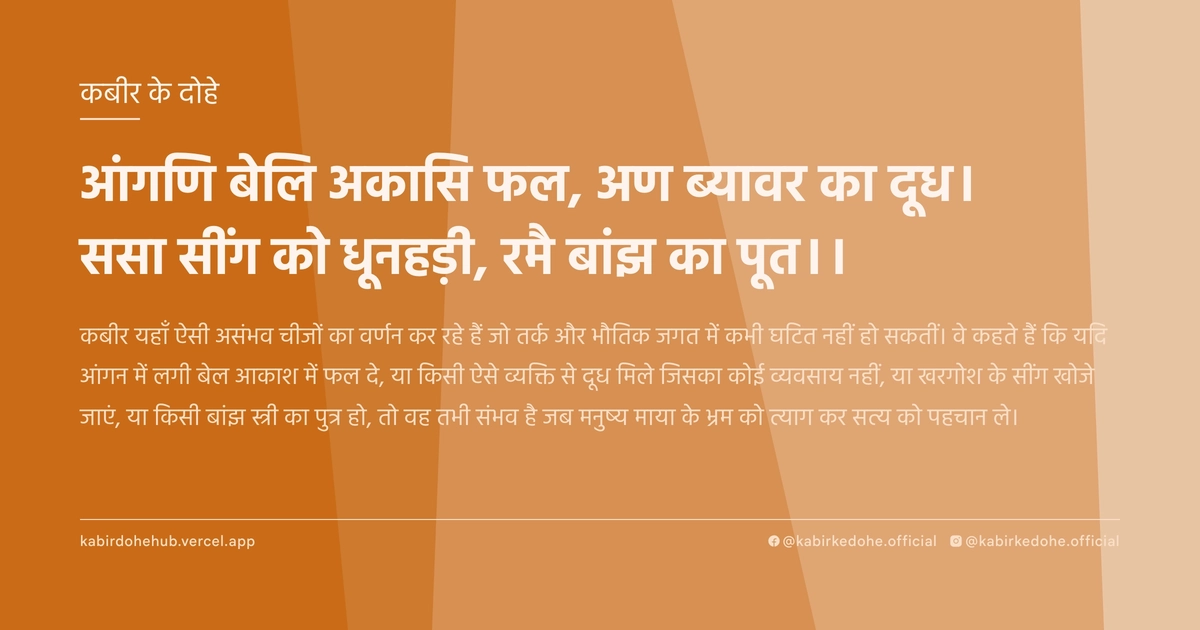
आंगणि बेलि अकासि फल, अण ब्यावर का दूध।
ससा सींग को धूनहड़ी, रमै बांझ का पूत।।
Aangani beli akasi phal, an byavar ka doodh. Sasa seeng ko dhunahadi, ramai banjh ka poot.
इस पृष्ठ पर इस कबीर दोहे का अर्थ (meaning), हिंदी व्याख्या और अंग्रेज़ी अनुवाद, दार्शनिक विश्लेषण और व्यावहारिक जीवन सीख दी गई है। यह दोहा सहज योग (Sahaja Yoga) विषय से जुड़ा है — Kabir doha meaning and explanation in Hindi and English.
अर्थ (Meaning):
कबीर यहाँ ऐसी असंभव चीजों का वर्णन कर रहे हैं जो तर्क और भौतिक जगत में कभी घटित नहीं हो सकतीं। वे कहते हैं कि यदि आंगन में लगी बेल आकाश में फल दे, या किसी ऐसे व्यक्ति से दूध मिले जिसका कोई व्यवसाय नहीं, या खरगोश के सींग खोजे जाएं, या किसी बांझ स्त्री का पुत्र हो, तो वह तभी संभव है जब मनुष्य माया के भ्रम को त्याग कर सत्य को पहचान ले।
Kabir describes a series of absolute impossibilities within the physical realm to highlight a spiritual paradox. He speaks of a vine in the courtyard bearing fruit in the sky, milk from a non-existent source, the search for a rabbit's horns, and the birth of a child to a barren woman. He suggests that these impossibilities mirror the futility of seeking the Divine through external rituals while the ego remains intact.
व्याख्या (Interpretation):
यह दोहा प्रतीकात्मक रूप से 'माया' और 'अज्ञान' की पराकाष्ठा को दर्शाता है। कबीर कहते हैं कि जब तक मन बाहरी आडंबरों और असंभव इच्छाओं में उलझा है, वह उसी तरह है जैसे खरगोश के सींग खोजना। यहाँ 'आकाश में फल' उस आध्यात्मिक उपलब्धि का प्रतीक है जिसे लोग गलत दिशा में खोज रहे हैं। यह निर्गुण भक्ति का सार है, जहाँ ईश्वर बाहर नहीं बल्कि भीतर है। जब तक साधक द्वैत (दो होने का भाव) में जीता है, सत्य उसे असंभव लगेगा। केवल आत्म-साक्षात्कार के बाद ही वह 'असंभव' सत्य 'संभव' हो जाता है, क्योंकि तब वह जान जाता है कि वह स्वयं ही ब्रह्म है।
This couplet symbolically depicts the peak of 'Maya' (illusion) and spiritual ignorance. Kabir posits that as long as the mind is entangled in external rituals and impossible desires, it is akin to searching for a rabbit's horns—a logical impossibility. The 'fruit in the sky' represents the spiritual liberation that seekers pursue in the wrong direction. This is the essence of Nirgun Bhakti, where the Divine is not a distant entity but an internal reality. As long as the seeker exists in duality, the Truth seems impossible. Only upon the realization of non-duality (Advaita) does the 'impossible' become 'possible,' for the seeker discovers they are one with the Absolute.
दार्शनिक विश्लेषण (Philosophical Analysis):
कबीर का यह दोहा उनके समय के धार्मिक पाखंडों पर एक तीखा प्रहार है। उन्होंने देखा कि लोग तीर्थयात्राओं और कठिन उपवासों के माध्यम से मोक्ष पाने की कोशिश कर रहे थे, जो कबीर की दृष्टि में वैसा ही था जैसे 'बांझ का पूत' चाहना। वे तर्क देते हैं कि भौतिक जगत के नियमों से परे एक सत्य है, लेकिन उस तक पहुँचने का मार्ग बाहरी नहीं, आंतरिक है।
अद्वैत वेदांत के परिप्रेक्ष्य में, यह दोहा 'अविद्या' (अज्ञान) की व्याख्या करता है। जब हम स्वयं को शरीर मानते हैं, तो हम माया के जाल में फंस जाते हैं और ऐसी चीजों के पीछे भागते हैं जो अस्तित्वहीन हैं। कबीर यहाँ सूफी मत के 'फना' (अहंकार का विनाश) के करीब हैं, जहाँ व्यक्ति अपनी झूठी पहचान को मिटाकर परमात्मा में विलीन हो जाता है।
कबीर जाति और धर्म के भेदभाव को पूरी तरह नकारते हैं। उनके लिए, एक ब्राह्मण का मंत्र पढ़ना या एक मुसलमान का रोजा रखना तब तक व्यर्थ है जब तक हृदय में प्रेम और सत्य का वास न हो। वे बताते हैं कि ritualism (कर्मकांड) केवल एक मानसिक भ्रम है जो मनुष्य को सत्य से दूर ले जाता है।
मनोवैज्ञानिक स्तर पर, यह दोहा संज्ञानात्मक विसंगति (cognitive dissonance) को दर्शाता है। मनुष्य वह चाहता है जो संभव नहीं है, जबकि वह उस सत्य को अनदेखा कर देता है जो उसके भीतर मौजूद है। यह अहंकार की वह स्थिति है जहाँ व्यक्ति अपनी सीमाओं को नहीं पहचानता और बाहरी दुनिया में पूर्णता खोजता है।
अंततः, कबीर यह संदेश देते हैं कि आध्यात्मिक जागृति कोई जादुई घटना नहीं है, बल्कि एक गहरी समझ है। जब 'मैं' (अहंकार) समाप्त हो जाता है, तब वह सब कुछ संभव हो जाता है जिसे दुनिया असंभव मानती थी, क्योंकि अब साधक प्रकृति के विरुद्ध नहीं, बल्कि प्रकृति के मूल स्रोत के साथ लयबद्ध है।
This doha is a sharp critique of the religious hypocrisy prevalent during Kabir's era. He observed people attempting to attain salvation through pilgrimages and rigorous fasting, which he viewed as being as futile as wishing for 'a child from a barren woman.' He argues that while there is a truth beyond the laws of the physical world, the path to it is internal, not external.
From the perspective of Advaita Vedanta, this verse explains 'Avidya' (ignorance). When we identify ourselves solely with the body, we are trapped in Maya and chase things that have no real existence. Kabir aligns here with the Sufi concept of 'Fana' (annihilation of the ego), where the individual dissolves their false identity to merge with the Divine.
Kabir utterly rejects the divisions of caste and creed. To him, a Brahmin's chants or a Muslim's fast are meaningless unless the heart is filled with love and truth. He asserts that ritualism is merely a mental delusion that distances a human being from the ultimate reality.
Psychologically, the doha illustrates cognitive dissonance. Humans strive for the impossible while ignoring the truth that already resides within them. This is the state of the ego, where the individual fails to recognize their limitations and seeks perfection in the external world.
Ultimately, Kabir conveys that spiritual awakening is not a magical occurrence but a profound understanding. When the 'I' (ego) is extinguished, everything the world deemed impossible becomes possible, for the seeker is no longer fighting nature but is aligned with the primordial source of existence.
मूल संदेश (Core Message):
- बाहरी आडंबरों का त्याग करें, क्योंकि वे मृगतृष्णा के समान हैं।
- असंभव की खोज छोड़कर अपने भीतर के सत्य को पहचानें।
- अहंकार का विसर्जन ही वास्तविक आध्यात्मिक उपलब्धि है।
- कर्म और समर्पण का मिलन ही जीवन का वास्तविक फल है।
- सत्य कहीं बाहर नहीं, बल्कि स्वयं के बोध में निहित है।
- Abandon external rituals, for they are like a mirage in the desert.
- Stop searching for the impossible and recognize the truth within.
- The dissolution of the ego is the only real spiritual achievement.
- The union of selfless action and surrender is the true fruit of life.
- Truth resides not in the distance, but in the awakening of the self.
व्यावहारिक उदाहरण (Practical Example):
वाराणसी के एक पुराने मोहल्ले में माधव नाम का एक बुनकर रहता था। माधव अपनी कला में निपुण था, लेकिन उसका मन हमेशा इस बात से दुखी रहता था कि वह गरीब है। वह घंटों मंदिर के बाहर बैठकर यह प्रार्थना करता कि कोई चमत्कार हो और वह रातों-रात अमीर बन जाए। वह अपनी मेहनत से ज्यादा भाग्य और बाहरी चमत्कारों पर भरोसा करता था।
एक दिन उसकी मुलाकात एक फकीर से हुई जिसने उसे कबीर का यह दोहा सुनाया। फकीर ने माधव से पूछा, "क्या तुम कभी ऐसे कपड़े बुन सकते हो जिसमें धागे न हों?" माधव हँसा और बोला, "यह तो असंभव है!"
फकीर ने मुस्कुराते हुए कहा, "ठीक वैसे ही, जैसे तुम बिना अपने अहंकार को मिटाए और बिना कर्म किए केवल प्रार्थना से मोक्ष या समृद्धि चाहते हो। तुम उस 'बांझ' भाग्य से संतान चाह रहे हो जिसमें बीज ही नहीं है।"
माधव को अपनी गलती का अहसास हुआ। उसने महसूस किया कि वह अपनी वर्तमान कला और मेहनत को नजरअंदाज कर एक काल्पनिक दुनिया के पीछे भाग रहा था। उसने अपनी प्रार्थनाओं को 'माँगने' के बजाय 'समर्पण' में बदल दिया।
उसने अपनी बुनाई में नई तकनीकें सीखीं और अपने काम को ईश्वर की सेवा माना। उसने यह सोचना छोड़ दिया कि बाहरी दुनिया उसे कुछ देगी; उसने अपने भीतर के संतोष को खोजा।
धीरे-धीरे उसकी कला इतनी प्रसिद्ध हुई कि लोग दूर-दूर से उसके पास आने लगे। उसकी समृद्धि अब किसी चमत्कार का परिणाम नहीं, बल्कि उसके आंतरिक रूपांतरण और कर्म के प्रति निष्ठा का फल थी।
उसने सीखा कि जब उसने 'चमत्कार' की असंभव इच्छा को छोड़ा, तब वास्तविक जीवन का चमत्कार उसके सामने प्रकट हुआ।
अब माधव केवल कपड़े नहीं बुनता था, बल्कि वह मोहल्ले के युवाओं को यह सिखाता था कि असली फल 'आकाश' में नहीं, बल्कि अपने वर्तमान कर्म की जड़ों में होता है।
उसका जीवन अब एक शांत नदी की तरह था, जहाँ न कोई शिकायत थी और न ही कोई लालसा, केवल एक गहरा संतोष था।
In an old neighborhood of Varanasi lived a weaver named Madhav. Madhav was skilled in his craft, but his heart was always heavy with the sorrow of his poverty. He would spend hours outside the temple praying for a miracle that would make him rich overnight. He trusted fate and external miracles more than his own hard work.
One day, he met a wandering dervish who recited this doha of Kabir to him. The dervish asked Madhav, "Can you ever weave a cloth that has no threads?" Madhav laughed and replied, "That is impossible!"
The dervish smiled and said, "Exactly. In the same way, you seek salvation or prosperity through prayer alone, without erasing your ego or performing your karma. You are seeking a child from a 'barren' fate that contains no seed."
Madhav realized his mistake. He understood that he was chasing a fantasy while ignoring the art and effort right in front of him. He shifted his prayers from 'asking' to 'surrendering.'
He began learning new techniques in weaving and treated his work as a service to the Divine. He stopped believing that the external world owed him something and instead sought contentment within.
Gradually, his art became so renowned that people traveled from afar to visit him. His prosperity was no longer the result of a miracle, but the fruit of his internal transformation and dedication to his work.
He learned that when he let go of the impossible desire for a 'miracle,' the actual miracle of life manifested before him.
Madhav no longer just wove cloth; he taught the youth of the neighborhood that the real fruit is not in the 'sky' but in the roots of one's current actions.
His life became like a calm river, devoid of complaints or cravings, filled only with a profound sense of peace.
अभ्यास मार्गदर्शन (Practice Guidance):
- प्रतिदिन 20 मिनट मौन बैठें और विचार करें कि आप किन ऐसी इच्छाओं के पीछे भाग रहे हैं जो आपके नियंत्रण से बाहर हैं (असंभव की खोज)।
- एक डायरी लिखें जिसमें उन 'मानसिक भ्रमों' की सूची हो जिन्हें आप सत्य मानते हैं, और विश्लेषण करें कि वे आपकी प्रगति में कैसे बाधा डाल रहे हैं।
- व्यवहार परिवर्तन: किसी भी बाहरी सहायता या चमत्कार की उम्मीद किए बिना, अपने वर्तमान कार्य को पूर्ण निष्ठा और प्रेम के साथ करें।
- निदान चेकलिस्ट: क्या मैं अभी भी दूसरों में दोष देख रहा हूँ? क्या मैं अपनी खुशी के लिए बाहरी परिस्थितियों पर निर्भर हूँ? यदि हाँ, तो आप अभी भी 'माया' के प्रभाव में हैं।
- Sit in silence for 20 minutes daily and contemplate which desires you are chasing that are beyond your control (the search for the impossible).
- Maintain a journal listing the 'mental illusions' you mistake for truth, and analyze how they hinder your spiritual progress.
- Behavioral Change: Perform your current duties with absolute sincerity and love, without expecting external aid or miracles.
- Diagnostic Checklist: Am I still finding faults in others? Am I dependent on external circumstances for my happiness? If yes, you are still under the influence of 'Maya'.
चिंतन प्रश्न (Reflection Questions):
- मेरे जीवन में वह 'खरगोश के सींग' क्या हैं जिन्हें मैं सालों से खोज रहा हूँ?
- मैं अपनी पहचान को बाहरी उपलब्धियों से क्यों जोड़ता हूँ, जबकि मैं उनसे परे हूँ?
- क्या मेरा धर्म केवल एक सामाजिक मुखौटा है या यह मेरे आंतरिक रूपांतरण का साधन है?
- यदि आज मेरी सारी बाहरी पहचान छीन ली जाए, तो मेरे भीतर क्या शेष बचेगा?
- मैं किन ऐसी मान्यताओं को पकड़ कर बैठा हूँ जो मुझे सत्य देखने से रोक रही हैं?
- क्या मैं वास्तव में शांति चाहता हूँ, या केवल अपनी इच्छाओं की पूर्ति का सुख?
- What are the 'rabbit's horns' in my life that I have been chasing for years?
- Why do I link my identity to external achievements when I am far beyond them?
- Is my religion merely a social mask, or is it a tool for my internal transformation?
- If all my external identities were stripped away today, what would remain within me?
- What beliefs am I clinging to that prevent me from seeing the ultimate truth?
- Do I truly seek peace, or do I only seek the pleasure of fulfilling my desires?