
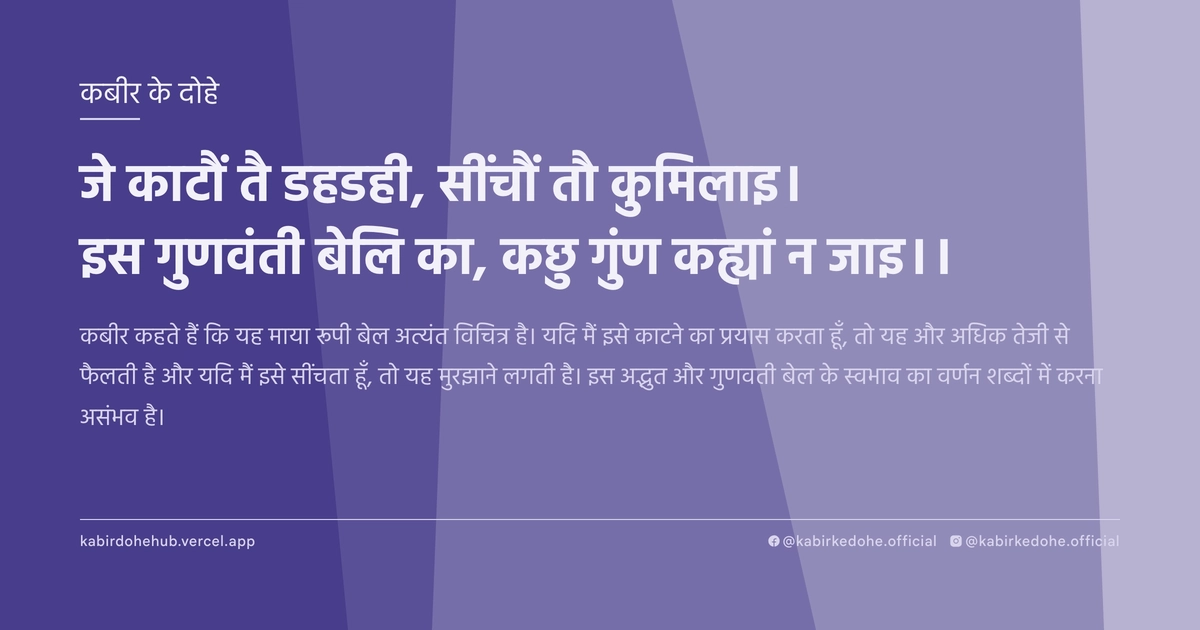
जे काटौं तै डहडही, सींचौं तौ कुमिलाइ।
इस गुणवंती बेलि का, कछु गुंण कह्यां न जाइ।।
Je kaatoun tai dahdahi, seenchoun tau kumilai. Is gunvanti beli ka, kachhu gun kahyan na jaai.
इस पृष्ठ पर इस कबीर दोहे का अर्थ (meaning), हिंदी व्याख्या और अंग्रेज़ी अनुवाद, दार्शनिक विश्लेषण और व्यावहारिक जीवन सीख दी गई है। यह दोहा सहज योग (Sahaja Yoga) विषय से जुड़ा है — Kabir doha meaning and explanation in Hindi and English.
अर्थ (Meaning):
कबीर कहते हैं कि यह माया रूपी बेल अत्यंत विचित्र है। यदि मैं इसे काटने का प्रयास करता हूँ, तो यह और अधिक तेजी से फैलती है और यदि मैं इसे सींचता हूँ, तो यह मुरझाने लगती है। इस अद्भुत और गुणवती बेल के स्वभाव का वर्णन शब्दों में करना असंभव है।
Kabir observes that the vine of Maya (worldly illusion) is profoundly paradoxical. If one attempts to cut it down through force or repression, it grows more vigorously; yet, if one nurtures it with attention or desire, it seems to wither or deceive. The intricate nature of this mystical vine defies all conventional description.
व्याख्या (Interpretation):
यहाँ 'बेल' माया का प्रतीक है जो जीव को संसार से बांधे रखती है। कबीर एक आध्यात्मिक विरोधाभास प्रस्तुत कर रहे हैं: जब हम अहंकार के बल पर माया को नष्ट करना चाहते हैं, तो वह हमारी इच्छाशक्ति को चुनौती देकर और प्रबल हो जाती है। इसके विपरीत, जब हम इसे प्रेम या आसक्ति से सींचते हैं, तो हम भ्रम के जाल में और गहरे फंस जाते हैं, जिससे वास्तविक सत्य मुरझा जाता है। यह निरगुण भक्ति का मार्ग है जहाँ माया को न तो युद्ध से जीता जा सकता है और न ही समर्पण से, बल्कि केवल 'साक्षी भाव' से ही इसे समझा जा सकता है। यह अद्वैत वेदांत के उस सिद्धांत को दर्शाता है जहाँ माया सत्य नहीं है, फिर भी वह इतनी प्रभावी है कि वह ब्रह्म को भी ढंक लेती है। अंततः, यह बेल उस मानवीय स्थिति को दर्शाती है जहाँ प्रयास ही बाधा बन जाता है।
The 'vine' here symbolizes Maya, the cosmic illusion that binds the soul to the material world. Kabir presents a spiritual paradox: when we attempt to destroy Maya through the force of ego or repression, it grows more vigorously, fueled by our own resistance. Conversely, when we nurture it through attachment or desire, the light of the Atman withers, leaving us trapped in a deceptive cycle. This aligns with Nirgun Bhakti, suggesting that the formless truth cannot be reached through binary struggles of 'fighting' or 'feeding' the world. It reflects the Advaita Vedanta concept where Maya is neither absolutely real nor absolutely unreal, but a veil. The paradox highlights the human condition: the more we struggle against the illusion, the more we reinforce its existence. Only through the state of a 'witness' (Sakshi) can the vine be transcended.
दार्शनिक विश्लेषण (Philosophical Analysis):
कबीर का यह दोहा मध्यकालीन भारत के उस सामाजिक-धार्मिक परिवेश से उपजा है जहाँ कर्मकांड और बाहरी आडंबरों की प्रधानता थी। कबीर ने स्पष्ट किया कि मोक्ष किसी बाहरी अनुष्ठान से नहीं, बल्कि आंतरिक चेतना के परिवर्तन से मिलता है। यहाँ माया का वर्णन केवल भौतिक सुखों के रूप में नहीं, बल्कि उस सूक्ष्म मनोवैज्ञानिक जाल के रूप में है जो मनुष्य को उसकी वास्तविक प्रकृति (ब्रह्म) से अलग करता है।
अद्वैत वेदांत के परिप्रेक्ष्य में, यह बेल 'अविद्या' है। जब साधक इसे 'काटने' का प्रयास करता है, तो वह वास्तव में अपने अहंकार को बढ़ा रहा होता है, क्योंकि 'काटने वाला' स्वयं माया का एक हिस्सा है। यह ठीक वैसा ही है जैसे कोई अपनी ही परछाईं से लड़ने की कोशिश करे। सूफी मत के 'नफ्स' (अहंकार) के सिद्धांत के समान, कबीर यहाँ अहंकार के विलीनीकरण की बात कर रहे हैं।
कबीर का विरोध केवल जाति या धर्म से नहीं था, बल्कि उस मानसिक जड़ता से था जो मनुष्य को यह विश्वास दिलाती है कि वह संसार का स्वामी है। वे समझाते हैं कि माया को नियंत्रित करने का प्रयास ही माया का सबसे बड़ा जाल है। जब तक 'मैं' मौजूद है, तब तक यह बेल बढ़ती रहेगी।
मनोवैज्ञानिक स्तर पर, यह 'प्रतिरोध का नियम' (Law of Resistance) है। जिस भावना या विचार को हम दबाने की कोशिश करते हैं, वह अवचेतन में और अधिक शक्तिशाली हो जाती है। कबीर यहाँ एक ऐसे मार्ग का सुझाव देते हैं जो द्वंद्व से परे है—न घृणा, न आसक्ति।
अंततः, यह दोहा हमें सिखाता है कि आध्यात्मिक प्रगति का अर्थ संसार को नष्ट करना नहीं, बल्कि संसार के प्रति अपनी दृष्टि को बदलना है। जब साधक यह जान लेता है कि वह स्वयं उस बेल का हिस्सा नहीं है, बल्कि उसे देखने वाला चैतन्य है, तब माया स्वतः ही अपनी पकड़ छोड़ देती है।
This couplet emerges from the socio-religious milieu of medieval India, where ritualism and outward displays of piety dominated. Kabir asserts that liberation is not achieved through external rites but through a fundamental shift in internal consciousness. Here, Maya is not merely material luxury, but a subtle psychological snare that separates the individual from their true essence (Brahman).
From the lens of Advaita Vedanta, this vine represents 'Avidya' (ignorance). When a seeker attempts to 'cut' the vine, they are inadvertently strengthening their ego, for the 'cutter' is himself a manifestation of Maya. It is akin to fighting one's own shadow; the struggle itself validates the existence of the shadow. This mirrors the Sufi concept of the 'Nafs' (lower self), where the annihilation of the ego (Fana) is the only path to truth.
Kabir's rebellion was not just against caste or creed, but against the mental inertia that convinces humans they can master the illusion. He explains that the attempt to control Maya is the most sophisticated trap of Maya itself. As long as the 'I' (Ahamkara) persists, the vine continues to flourish.
Psychologically, this reflects the 'Law of Resistance.' Whatever emotion or thought we violently suppress often grows stronger in the subconscious. Kabir suggests a path beyond duality—neither hatred nor attachment, but a state of neutral observation.
Ultimately, the poem teaches that spiritual progress is not about destroying the world, but about transforming one's perception of it. When the seeker realizes they are not the vine, but the consciousness observing it, the illusion naturally loses its grip without the need for violent effort.
मूल संदेश (Core Message):
- प्रतिरोध ही बंधन का असली कारण है।
- माया को लड़कर नहीं, बल्कि जानकर जीता जाता है।
- अहंकार का प्रयास आध्यात्मिक प्रगति में बाधा है।
- सत्य केवल तटस्थता और साक्षी भाव में मिलता है।
- संसार का त्याग नहीं, बल्कि संसार के प्रति दृष्टि का त्याग करें।
- Resistance is the primary fuel for bondage.
- Maya is conquered by awareness, not by conflict.
- The effort of the ego is an obstacle to spiritual growth.
- Truth is found only in neutrality and the state of the witness.
- Do not renounce the world; renounce your distorted perception of it.
व्यावहारिक उदाहरण (Practical Example):
वाराणसी के एक पुराने घाट पर रहने वाली एक वृद्ध विधवा, जानकी, का जीवन इसी द्वंद्व का उदाहरण था। जानकी ने अपने जीवन के तीस साल केवल इस प्रयास में बिता दिए कि वह अपने मन से दुखों और यादों को 'काट' दे। वह घंटों जप करती और खुद को कठोर अनुशासन में रखती ताकि वह संसार की मोह-माया से पूरी तरह मुक्त हो सके।
परंतु, वह जितना अधिक अपने मन को दबाती, उसकी यादें और क्रोध उतना ही तीव्र होता गया। वह जितना अधिक कहती कि 'मुझे अब किसी से प्रेम नहीं', उसका अकेलापन उतना ही गहरा होता गया। वह माया की उस बेल को काटने की कोशिश कर रही थी, लेकिन उसका वह 'प्रयास' ही उसके अहंकार को बढ़ा रहा था।
एक दिन उसकी मुलाकात एक घुमंतू साधु से हुई, जिसने उसे देखा और मुस्कुराते हुए कहा, "माँ, तुम इस बेल को काटने की कोशिश क्यों कर रही हो? बस इसे देखो, इसे महसूस करो, और जान लो कि तुम यह बेल नहीं हो।"
जानकी ने पहले तो इसे अनसुना किया, लेकिन फिर उसने एक प्रयोग किया। उसने अपनी यादों से लड़ना बंद कर दिया। जब भी कोई दुखद विचार आता, वह उसे काटने के बजाय बस यह कहती, "यह विचार आ रहा है, मैं इसे देख रही हूँ।"
धीरे-धीरे, उसने महसूस किया कि जब उसने विरोध करना बंद किया, तो यादों की वह बेल अपने आप सूखने लगी। वह अब दुखों से लड़ नहीं रही थी, बल्कि उनके प्रति तटस्थ हो गई थी।
उसने पाया कि जिस 'मुक्ति' को वह कठोर तपस्या से पाना चाहती थी, वह वास्तव में 'समर्पण' और 'स्वीकार' में छिपी थी।
अब वह घाट पर आने वाले हर व्यक्ति से प्रेम से बात करती, बिना इस डर के कि वह फिर से मोह में फंस जाएगी।
उसका जीवन अब एक बोझ नहीं, बल्कि एक प्रवाह बन गया था।
उसने सीखा कि माया को जीतना उसे नष्ट करना नहीं, बल्कि उसके प्रति अपनी प्रतिक्रिया को बदल देना है।
जानकी अब उस बेल की छाया में शांति से बैठती थी, क्योंकि अब वह बेल उसे बांध नहीं रही थी।
Janaki, an elderly widow living on an ancient ghat in Varanasi, embodied this spiritual struggle. For thirty years, Janaki spent her life attempting to 'cut' the vines of grief and memory from her heart. She practiced rigorous austerities and strict discipline, believing that by forcefully suppressing her emotions, she could achieve total liberation from the world.
However, the more she tried to repress her mind, the more intense her memories and anger became. The more she declared, 'I no longer love or desire anything,' the deeper her loneliness grew. She was attempting to cut the vine of Maya, but the very act of 'trying' was feeding her ego and reinforcing the illusion.
One day, she met a wandering monk who observed her struggle and smiled, saying, 'Mother, why do you fight the vine? Simply observe it, feel it, and realize that you are not the vine.'
Janaki initially ignored him, but eventually decided to experiment. She stopped fighting her thoughts. Whenever a painful memory surfaced, instead of trying to push it away, she simply noted, 'This thought is arising, and I am the observer of it.'
Gradually, she discovered that once she ceased the resistance, the vine of suffering began to wither on its own. She was no longer battling her pain; she had become neutral toward it.
She realized that the 'liberation' she sought through harsh penance was actually hidden in the act of 'surrender' and 'acceptance.'
She began to interact with every stranger on the ghat with genuine love, no longer fearing that attachment would trap her, because she knew her true nature was separate from the emotion.
Her life ceased to be a burden and became a fluid flow of existence.
She learned that conquering Maya is not about destroying the world, but about changing one's reaction to it.
Janaki now sat peacefully in the shadow of that very vine, for it no longer had the power to bind her.
अभ्यास मार्गदर्शन (Practice Guidance):
- प्रतिरोध-मुक्त अवलोकन: दिन में 20 मिनट मौन बैठें। जब भी कोई इच्छा या क्रोध उत्पन्न हो, उसे दबाने या 'काटने' के बजाय, केवल उसे एक दर्शक की तरह देखें।
- आत्म-पूछताछ जर्नल: लिखें कि आप जीवन में किन चीजों से 'लड़' रहे हैं। क्या आपका यह लड़ना उस समस्या को और अधिक बढ़ा रहा है?
- साक्षी भाव का अभ्यास: भीड़भाड़ वाली जगहों पर यह महसूस करें कि आप केवल एक दृष्टा हैं, न कि उस परिस्थिति का हिस्सा।
- निदान चेकलिस्ट: यदि आप किसी विचार के आने पर उत्तेजित होते हैं या उसे तुरंत हटाने का प्रयास करते हैं, तो आप 'बेल को काट' रहे हैं। यदि आप विचार के आने और जाने को शांति से देखते हैं, तो आप जाग रहे हैं।
- Non-Resistant Observation: Sit in silence for 20 minutes daily. When a desire or anger arises, instead of trying to 'cut' or suppress it, simply observe it as a witness.
- Self-Inquiry Journaling: List the things you are currently 'fighting' in your life. Analyze whether your resistance is actually fueling the persistence of those problems.
- The Witness Practice: In crowded or stressful environments, consciously remind yourself: 'I am the observer of this scene, not the victim of it.'
- Diagnostic Checklist: If you feel agitation or an urgent need to push away a thought, you are 'cutting the vine.' If you can watch a thought arise and dissolve without judgment, you are aligning with the truth.
चिंतन प्रश्न (Reflection Questions):
- आपकी वह कौन सी 'आदत' है जिसे आप सालों से बदलने की कोशिश कर रहे हैं, लेकिन वह और अधिक प्रबल होती जा रही है?
- क्या आपका 'आध्यात्मिक मार्ग' वास्तव में शांति की खोज है, या यह केवल आपके अहंकार का एक नया सूक्ष्म रूप है?
- जब आप किसी से घृणा करते हैं, तो क्या आप वास्तव में उस व्यक्ति को हटा रहे हैं, या अपनी चेतना में उसकी जड़ें और गहरी कर रहे हैं?
- यदि आप अपनी पहचान (नाम, पद, रिश्ता) को पूरी तरह हटा दें, तो जो बचेगा, क्या वह 'शून्य' है या 'पूर्ण'?
- आपकी डिजिटल पहचान (Social Media) आपकी वास्तविक आत्मा को ढकने वाली कितनी बड़ी 'बेल' बन चुकी है?
- Which habit have you been trying to 'cut' for years, only to find it growing stronger with every attempt?
- Is your 'spiritual path' truly a search for peace, or is it merely a more sophisticated form of ego?
- When you hate someone, are you actually removing them from your life, or are you deepening their roots in your consciousness?
- If you stripped away your identity (name, status, relations), would what remains be a 'void' or 'fullness'?
- To what extent has your digital persona become a vine of Maya, obscuring your authentic self?