
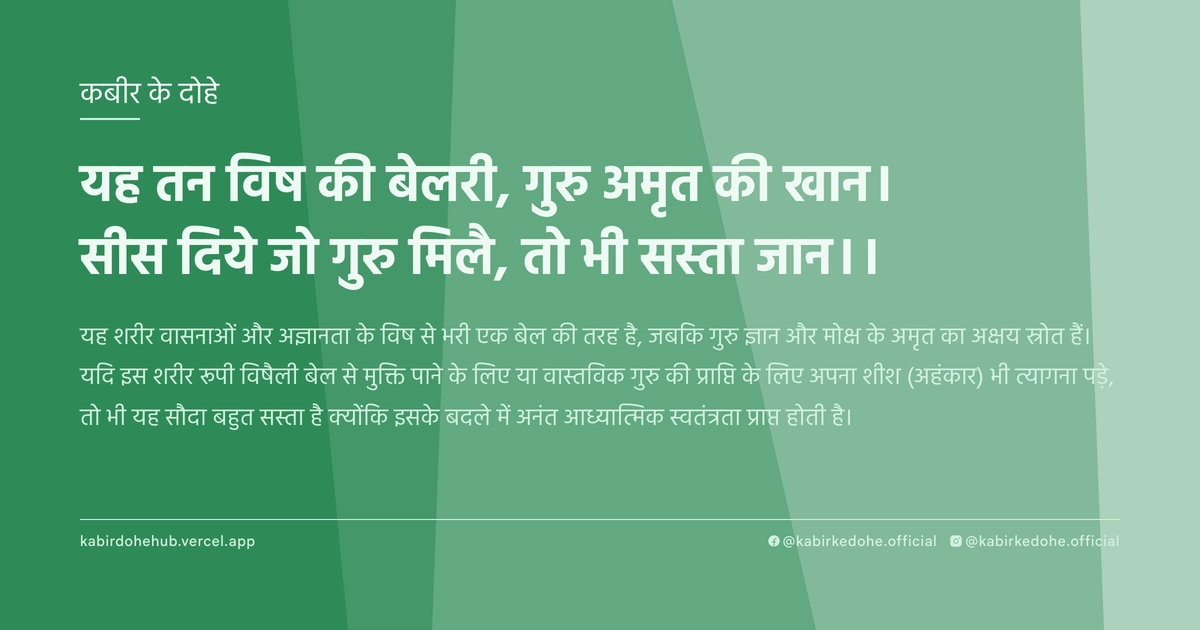
यह तन विष की बेलरी, गुरु अमृत की खान।
सीस दिये जो गुरु मिलै, तो भी सस्ता जान।।
Yeh tan vish ki belri, guru amrit ki khan. Sees diye jo guru milai, to bhi sasta jaan.
इस पृष्ठ पर इस कबीर दोहे का अर्थ (meaning), हिंदी व्याख्या और अंग्रेज़ी अनुवाद, दार्शनिक विश्लेषण और व्यावहारिक जीवन सीख दी गई है। यह दोहा गुरु महत्व (The Guru's Importance) विषय से जुड़ा है — Kabir doha meaning and explanation in Hindi and English.
अर्थ (Meaning):
यह शरीर वासनाओं और अज्ञानता के विष से भरी एक बेल की तरह है, जबकि गुरु ज्ञान और मोक्ष के अमृत का अक्षय स्रोत हैं। यदि इस शरीर रूपी विषैली बेल से मुक्ति पाने के लिए या वास्तविक गुरु की प्राप्ति के लिए अपना शीश (अहंकार) भी त्यागना पड़े, तो भी यह सौदा बहुत सस्ता है क्योंकि इसके बदले में अनंत आध्यात्मिक स्वतंत्रता प्राप्त होती है।
This physical body is like a vine laden with the poison of worldly desires and ignorance, whereas the Guru is an inexhaustible mine of the nectar of immortality. If one must sacrifice their head—symbolizing the ego—to find a true spiritual guide, it should be considered a bargain, for the reward is the eternal liberation of the soul from the cycle of suffering.
व्याख्या (Interpretation):
कबीर यहाँ शरीर की तुलना 'विष की बेलरी' से करते हैं, जो काम, क्रोध और मोह के जहरीले फलों से लदी है। यह भौतिक अस्तित्व केवल माया का एक जाल है जो आत्मा को सत्य से दूर रखता है। गुरु का 'अमृत' वह ज्ञान है जो इस विष को नष्ट कर सकता है। 'शीश देना' केवल शारीरिक मृत्यु नहीं, बल्कि अहंकार (I-consciousness) का पूर्ण विसर्जन है। यह निर्गुण भक्ति का सार है जहाँ साधक अपनी सीमित पहचान को मिटाकर उस निराकार ब्रह्म में विलीन हो जाता है। यहाँ विरोधाभास यह है कि स्वयं को पूरी तरह खोने के बाद ही वास्तविक 'स्व' की प्राप्ति होती है। यह अद्वैत वेदांत के उस सिद्धांत को पुष्ट करता है जहाँ जीव और ब्रह्म की एकता केवल अहंकार के विलीनीकरण से संभव है।
Kabir compares the human body to a 'vine of poison,' laden with the toxic fruits of lust, anger, and attachment. This physical existence is viewed as a manifestation of Maya, a veil that obscures the soul's true nature. The Guru's 'nectar' represents the transcendental knowledge (Jnana) capable of neutralizing this toxicity. The act of 'giving one's head' is not a literal sacrifice but a metaphor for the total annihilation of the ego. This aligns with Nirgun Bhakti, where the seeker transcends the form to merge with the Formless. The central paradox presented is that only through the complete surrender of the perceived self can the actual Self be realized. It echoes Advaita Vedanta, asserting that the duality between the individual soul and the Universal Consciousness is maintained only by the stubbornness of the ego.
दार्शनिक विश्लेषण (Philosophical Analysis):
कबीर का यह दोहा उनके युग के सामाजिक और धार्मिक पाखंडों पर एक गहरा प्रहार है। उस समय धर्म केवल कर्मकांडों और बाहरी दिखावे तक सीमित था। कबीर ने स्पष्ट किया कि मोक्ष किसी मंदिर, मस्जिद या तीर्थयात्रा से नहीं, बल्कि आंतरिक रूपांतरण से मिलता है। उन्होंने जाति और वर्ण व्यवस्था को नकारते हुए यह बताया कि आध्यात्मिक पात्रता केवल समर्पण और विनम्रता से आती है।
दार्शनिक स्तर पर, यह सूफी मत के 'फना' (अहंकार का विनाश) और वेदांत के 'अहं ब्रह्मास्मि' के बीच एक सेतु है। जब कबीर शरीर को विष कहते हैं, तो वे वास्तव में उस 'माया' की बात कर रहे हैं जो हमें यह विश्वास दिलाती है कि हम यह शरीर हैं। यह शरीर एक माध्यम तो है, लेकिन जब यह बंधन बन जाता है, तो यह विष बन जाता है।
गुरु यहाँ कोई व्यक्ति मात्र नहीं, बल्कि वह 'तत्व' है जो शिष्य के भीतर सोई हुई चेतना को जगाता है। यह संबंध गुरु-शिष्य परंपरा का उच्चतम शिखर है जहाँ शिष्य अपनी पूरी पहचान गुरु के चरणों में समर्पित कर देता है। यह समर्पण ही वह अग्नि है जिसमें अहंकार जलकर राख हो जाता है।
मनोवैज्ञानिक रूप से, यह दोहा 'संज्ञानात्मक पुनर्गठन' की बात करता है। जब व्यक्ति यह महसूस करता है कि उसकी वर्तमान पहचान (अहंकार) वास्तव में उसके दुख का कारण (विष) है, तब वह स्वेच्छा से उसे त्यागने के लिए तैयार हो जाता है। यह एक प्रकार का आध्यात्मिक विखंडन है जो पुनर्निर्माण की ओर ले जाता है।
अंततः, कबीर यह संदेश देते हैं कि सत्य की खोज में कोई भी कीमत बहुत अधिक नहीं होती। यदि आप अपनी झूठी पहचान को बचाने के लिए सत्य का त्याग करते हैं, तो आप विष की बेल को संजो रहे हैं। लेकिन यदि आप सत्य के लिए स्वयं को मिटा देते हैं, तो आप अमृत के अधिकारी बन जाते हैं।
Kabir's couplet serves as a profound critique of the ritualistic and dogmatic religious landscape of his era. During his time, spirituality was often reduced to external performances and caste-based exclusions. Kabir dismantled these notions by asserting that liberation is not found in pilgrimages or temples, but through an internal alchemy of the soul. He rejected the hierarchy of birth, suggesting that spiritual eligibility is born from humility and surrender.
Philosophically, this teaching bridges the Sufi concept of 'Fana' (annihilation of the self) and the Vedantic realization of non-duality. By labeling the body as a 'vine of poison,' Kabir refers to the deceptive nature of Maya, which tricks the soul into identifying with the transient physical form. The body is a vehicle, but when the vehicle is mistaken for the destination, it becomes a prison of desire.
The Guru in this context is not merely a human instructor but the embodiment of the 'Tattva' or the primordial truth that awakens the dormant consciousness within the seeker. This relationship represents the pinnacle of the Guru-Shishya tradition, where the student's surrender is not an act of submission to a person, but to the Truth that the person represents.
Psychologically, the Doha describes a process of radical cognitive restructuring. When an individual recognizes that their ego-identity is the primary source of their suffering (the poison), they become willing to let go of that identity. This is a spiritual death and rebirth, where the false self is shed to reveal the eternal witness.
Ultimately, Kabir emphasizes that no price is too high for the attainment of Truth. To cling to a false identity is to nurture a poisonous vine; to sacrifice that identity is to unlock the nectar of immortality. He challenges the reader to weigh the temporary comfort of the ego against the eternal bliss of liberation.
मूल संदेश (Core Message):
- अहंकार ही वह विष है जो आत्मा को सत्य से अलग करता है।
- गुरु का ज्ञान केवल सूचना नहीं, बल्कि अहंकार का विनाश है।
- पूर्ण समर्पण ही आध्यात्मिक पूर्णता का एकमात्र मार्ग है।
- बाहरी पहचान का त्याग आंतरिक अनंतता की प्राप्ति है।
- सत्य की प्राप्ति के लिए स्वयं के झूठे स्वरूप की आहुति आवश्यक है।
- The ego is the primary poison that separates the soul from Truth.
- The Guru's wisdom is not information, but the annihilation of the ego.
- Total surrender is the only gateway to spiritual wholeness.
- Relinquishing the external identity is the key to internal infinity.
- The sacrifice of the false self is the prerequisite for realizing the True Self.
व्यावहारिक उदाहरण (Practical Example):
वाराणसी के घाटों पर रहने वाला एक वृद्ध बुनकर था, जिसका नाम माधव था। माधव अपनी कला में निपुण था, लेकिन उसका अहंकार उसकी कला से भी बड़ा था। वह मानता था कि उसके द्वारा बुने गए वस्त्र दुनिया में सबसे श्रेष्ठ हैं और वह किसी भी अन्य बुनकर को अपने समकक्ष नहीं मानता था। उसका यह अहंकार उसके जीवन में कड़वाहट भर चुका था; उसके अपने बच्चे उससे दूर हो गए थे और वह अकेला पड़ गया था।
एक दिन माधव की मुलाकात एक फकीर से हुई, जो घाट की सीढ़ियों पर चुपचाप बैठा था। फकीर ने माधव के अहंकार को पहचान लिया और उससे कहा, "तुम्हारे वस्त्र सुंदर हैं, लेकिन तुम्हारा मन विषैला है। तुम अपनी श्रेष्ठता के गर्व में इतने अंधे हो कि तुम्हें अपनी आत्मा की प्यास सुनाई नहीं दे रही।"
माधव को पहले तो यह बात चुभी, लेकिन फकीर की आँखों में एक ऐसी शांति थी जिसने माधव को झकझोर दिया। फकीर ने उससे कहा, "यदि तुम वास्तव में महान बनना चाहते हो, तो पहले इस 'मैं' को मारना होगा। जब तक तुम खुद को सबसे ऊपर मानोगे, तुम कभी उस परम सत्य से नहीं मिल पाओगे जो हम सबके भीतर समान है।"
माधव ने कई दिनों तक फकीर के साथ समय बिताया। उसने महसूस किया कि उसका यह गर्व कि "मैं सबसे अच्छा हूँ", वास्तव में एक मानसिक जेल थी। वह जिस श्रेष्ठता का जश्न मना रहा था, वही उसे दूसरों से अलग कर रही थी और उसे भीतर से खोखला बना रही थी।
एक रात, माधव ने एक गहरा निर्णय लिया। उसने अपनी सबसे महंगी और श्रेष्ठ साड़ी, जिसे वह अपनी उपलब्धि का प्रतीक मानता था, एक गरीब अनाथ बच्चे को दान कर दी। यह उसके लिए केवल एक कपड़े का दान नहीं था, बल्कि उसके उस अहंकार का विसर्जन था जिसने उसे वर्षों से जकड़े रखा था।
जैसे ही उसने वह साड़ी दी, उसे अपने हृदय में एक अजीब सी हल्कापन महसूस हुआ। उसे लगा जैसे उसके सीने से कोई भारी पत्थर हट गया हो। उसने महसूस किया कि जिस 'शीश' (अहंकार) को वह बचाने की कोशिश कर रहा था, वह वास्तव में उसके विकास में सबसे बड़ी बाधा थी।
माधव का व्यवहार पूरी तरह बदल गया। अब वह अन्य बुनकरों की मदद करने लगा और अपने बच्चों से क्षमा मांगकर उन्हें वापस बुला लाया। उसकी कला अब भी श्रेष्ठ थी, लेकिन अब उसमें अहंकार की जगह करुणा और प्रेम था।
उसने सीखा कि जब तक वह खुद को 'विशेष' मानता रहा, वह विष की बेल में उलझा था। जिस क्षण उसने अपनी विशिष्टता के भ्रम को त्याग दिया, उसे वह अमृत मिल गया जिसे वह जीवन भर बाहरी उपलब्धियों में खोज रहा था।
In the ancient ghats of Varanasi lived an elderly weaver named Madhav. Madhav was a master of his craft, but his ego was larger than his skill. He believed his woven fabrics were the finest in the world and looked down upon every other weaver, considering them inferior. This arrogance had poisoned his personal life; his children had distanced themselves from him, and he lived in a state of profound loneliness.
One day, Madhav encountered a wandering fakir sitting silently on the stone steps of the Ganges. The fakir perceived Madhav's pride and remarked, "Your fabrics are beautiful, but your heart is toxic. You are so blinded by the pride of your superiority that you cannot hear the thirst of your own soul."
Initially, Madhav felt insulted, but there was a stillness in the fakir's eyes that unsettled him. The fakir told him, "If you truly wish to be great, you must first kill this 'I'. As long as you place yourself above others, you will never encounter the Supreme Truth that resides equally within all of us."
Madhav spent several days in the company of the fakir. He began to realize that his belief in being 'the best' was actually a mental prison. The superiority he celebrated was the very thing isolating him from humanity and leaving him hollow inside.
One night, Madhav made a radical decision. He took his most expensive and exquisite saree—the one he viewed as the ultimate symbol of his achievement—and gifted it to a poor orphan child. This was not merely an act of charity; it was the ritual sacrifice of the ego that had bound him for decades.
As he let go of the garment, he felt an extraordinary lightness in his chest, as if a heavy stone had been lifted. He realized that the 'head' (the ego) he had been fighting so hard to protect was actually the greatest obstacle to his own growth.
Madhav's behavior underwent a complete transformation. He began mentoring other weavers and sought forgiveness from his children, eventually reuniting his family. His art remained exquisite, but it was no longer fueled by pride; it was now infused with compassion and love.
He learned that as long as he clung to the illusion of being 'special,' he was entangled in a vine of poison. The moment he surrendered the illusion of his separate superiority, he tasted the nectar he had spent a lifetime searching for in external achievements.
अभ्यास मार्गदर्शन (Practice Guidance):
- दैनिक आत्म-निरीक्षण: प्रतिदिन 20 मिनट मौन बैठें और उन क्षणों को याद करें जब आपका अहंकार (मैं, मेरा, मेरा अधिकार) आपके व्यवहार को नियंत्रित कर रहा था।
- अहंकार विसर्जन अभ्यास: सप्ताह में एक बार ऐसा कार्य करें जहाँ आप अपनी योग्यता या स्थिति को पूरी तरह भुलाकर किसी की निस्वार्थ सेवा करें, विशेषकर उनके प्रति जिनसे आप घृणा करते हैं।
- जर्नलिंग प्रॉम्प्ट: "यदि मेरी वर्तमान पहचान, पद और प्रतिष्ठा कल छीन ली जाए, तो मेरे भीतर क्या बचेगा? क्या वह 'बचा हुआ' हिस्सा पर्याप्त है?"
- निदान चेकलिस्ट: क्या मैं दूसरों की सफलता पर ईर्ष्या करता हूँ? क्या मैं अपनी सलाह को अंतिम सत्य मानता हूँ? क्या मैं अपनी गलतियों को स्वीकार करने में असमर्थ हूँ? (यदि हाँ, तो विष की बेल अभी भी सक्रिय है)।
- Daily Self-Inquiry: Spend 20 minutes in silence daily, recalling moments where your ego (the 'I', 'Mine', 'My Right') dictated your reactions and behavior.
- Ego-Dissolution Practice: Once a week, perform an act of selfless service where you completely set aside your status or expertise, especially for someone you typically disregard.
- Journaling Prompt: "If my current identity, title, and reputation were stripped away tomorrow, what would remain within me? Is that remaining essence enough?"
- Diagnostic Checklist: Do I feel resentment at others' success? Do I view my opinions as absolute truths? Am I unable to admit mistakes without feeling diminished? (If yes, the 'vine of poison' is still active).
चिंतन प्रश्न (Reflection Questions):
- वह कौन सी 'पहचान' है जिसे खोने के डर से आप सबसे ज्यादा डरते हैं?
- क्या आपकी विनम्रता वास्तविक है, या यह केवल आपकी छवि को बेहतर बनाने का एक और तरीका है?
- आपके जीवन में 'गुरु' कौन है—एक व्यक्ति, या वह सत्य जो आपको आपकी गलतियों का आईना दिखाता है?
- यदि आप अपने अहंकार को पूरी तरह त्याग दें, तो आपके रिश्तों में क्या बदलाव आएगा?
- क्या आप वास्तव में सत्य को चाहते हैं, या आप केवल उस सत्य को चाहते हैं जो आपकी मान्यताओं की पुष्टि करे?
- आपके भीतर का 'विष' (क्रोध, ईर्ष्या, मोह) किस रूप में प्रकट होता है जब आप अकेले होते हैं?
- What is the specific 'identity' you are most terrified of losing?
- Is your humility genuine, or is it simply another strategy to enhance your public image?
- Who is the 'Guru' in your life—a person, or the Truth that mirrors your flaws back to you?
- If you completely surrendered your ego, how would your relationships fundamentally change?
- Do you truly seek the Truth, or do you only seek a truth that confirms your existing biases?
- In what forms does your internal 'poison' (anger, jealousy, attachment) manifest when you are alone with yourself?