
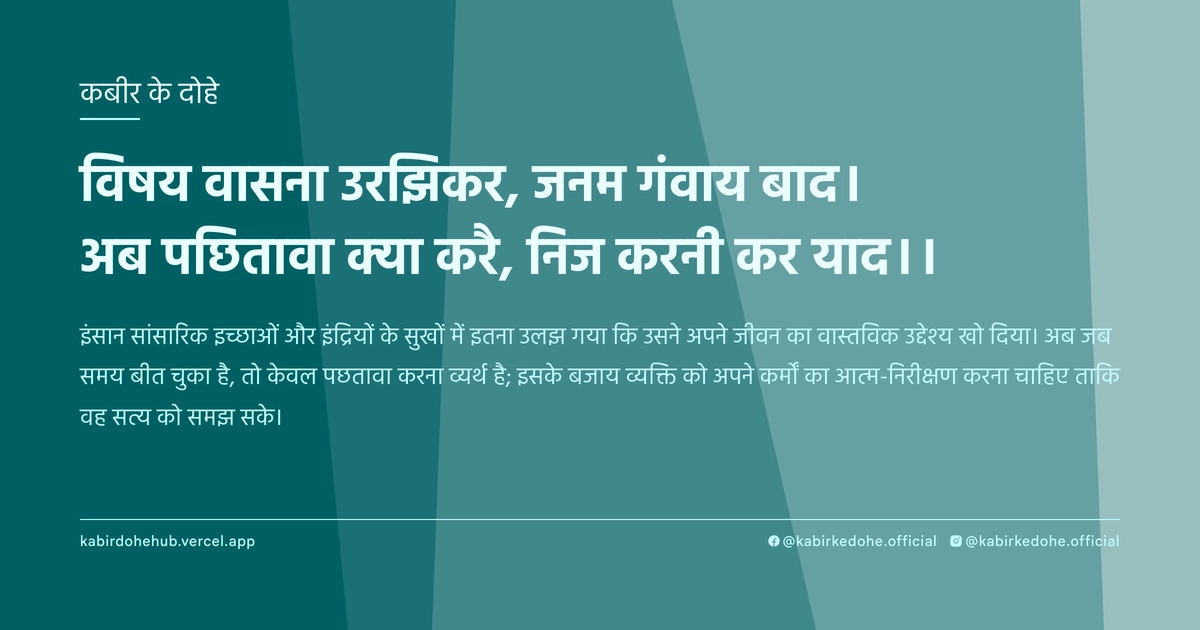
विषय वासना उरझिकर, जनम गंवाय बाद।
अब पछितावा क्या करै, निज करनी कर याद।।
Vishay vaasna urajhikar, janam ganvay baad. Ab pachitava kya karai, nij karani kar yaad.
इस पृष्ठ पर इस कबीर दोहे का अर्थ (meaning), हिंदी व्याख्या और अंग्रेज़ी अनुवाद, दार्शनिक विश्लेषण और व्यावहारिक जीवन सीख दी गई है। यह दोहा कर्म (Karma) विषय से जुड़ा है — Kabir doha meaning and explanation in Hindi and English.
अर्थ (Meaning):
इंसान सांसारिक इच्छाओं और इंद्रियों के सुखों में इतना उलझ गया कि उसने अपने जीवन का वास्तविक उद्देश्य खो दिया। अब जब समय बीत चुका है, तो केवल पछतावा करना व्यर्थ है; इसके बजाय व्यक्ति को अपने कर्मों का आत्म-निरीक्षण करना चाहिए ताकि वह सत्य को समझ सके।
A human becomes so entangled in sensory desires and worldly cravings that they squander the precious opportunity of a human birth. Now that time has slipped away, mere regret is futile; instead, one must reflect upon their own actions to realize the truth of their existence.
व्याख्या (Interpretation):
यह दोहा इंद्रिय सुखों के जाल और समय की अपरिवर्तनीयता पर प्रहार करता है। 'विषय वासना' वह माया है जो आत्मा को उसके वास्तविक स्वरूप (ब्रह्म) से दूर ले जाती है। कबीर यहाँ चेतावनी देते हैं कि जब व्यक्ति केवल बाहरी सुखों की खोज में रहता है, तो वह 'अविद्या' या अज्ञानता के गहरे गर्त में गिर जाता है। यह स्थिति निर्गुण भक्ति के उस सिद्धांत को दर्शाती है जहाँ ईश्वर बाहर नहीं, बल्कि भीतर है, लेकिन वासनाओं की धूल ने उस दर्पण को धुंधला कर दिया है। अंततः, पछतावा एक मानसिक बोझ है, जबकि 'निज करनी' का स्मरण एक आध्यात्मिक उपकरण है जो व्यक्ति को वर्तमान क्षण में जागरूक कर सकता है। यह द्वैत से अद्वैत की ओर बढ़ने का पहला कदम है—अपनी त्रुटियों को स्वीकार करना।
This couplet strikes at the heart of sensory entanglement and the irreversibility of time. 'Vishay Vaasna' represents the Maya (illusion) that veils the Atman from its true identity as Brahman. Kabir warns that when a person pursues only external gratifications, they sink into 'Avidya' or spiritual ignorance. This aligns with Nirgun Bhakti, where the Divine is formless and internal, yet the mirror of the soul is clouded by the dust of desire. Ultimately, regret is a psychological burden, whereas the remembrance of 'one's own deeds' is a spiritual tool for awakening in the present moment. It marks the transition from duality to non-duality—the act of acknowledging one's errors to dissolve the ego.
दार्शनिक विश्लेषण (Philosophical Analysis):
कबीर का यह दृष्टिकोण उनके समय के कर्मकांडीय धर्म और बाहरी आडंबरों के विरुद्ध एक सशक्त विद्रोह था। उन्होंने देखा कि लोग तीर्थयात्राओं और पूजा-पाठ में समय बिताते थे, लेकिन उनके भीतर की वासनाएं और अहंकार यथावत थे। कबीर के लिए, वास्तविक धर्म बाहरी क्रियाओं में नहीं, बल्कि आंतरिक शुद्धि में है।
यह दर्शन अद्वैत वेदांत के करीब है, जहाँ यह माना जाता है कि जीव और ब्रह्म एक ही हैं, लेकिन 'माया' के कारण हम स्वयं को अलग और सीमित महसूस करते हैं। वासनाएं इसी माया का विस्तार हैं, जो हमें यह विश्वास दिलाती हैं कि सुख बाहरी वस्तुओं में है। जब कबीर 'जनम गंवाय' कहते हैं, तो उनका तात्पर्य केवल शारीरिक मृत्यु से नहीं, बल्कि उस आध्यात्मिक अवसर के नष्ट होने से है जो मनुष्य को आत्म-साक्षात्कार के लिए मिलता है।
सूफीवाद के प्रभाव में, कबीर 'नफ्स' (अहंकार/इच्छाओं) के दमन की बात करते हैं। सूफी मार्ग की तरह, यहाँ भी यह माना गया है कि जब तक व्यक्ति अपनी वासनाओं का दास है, वह ईश्वर (परमात्मा) के प्रेम का अनुभव नहीं कर सकता। वासना एक पर्दा है जो प्रेमी और प्रियतम के बीच खड़ा है।
मनोवैज्ञानिक स्तर पर, यह दोहा 'संज्ञानात्मक विसंगति' (Cognitive Dissonance) को संबोधित करता है। पछतावा अक्सर एक रक्षा तंत्र होता है ताकि हम वास्तव में बदलने के कठिन कार्य से बच सकें। कबीर पछतावे को खारिज कर 'स्मरण' (Mindfulness) पर जोर देते हैं। यह केवल ग्लानि नहीं, बल्कि एक तटस्थ अवलोकन है कि मैंने अपना समय कहाँ व्यर्थ किया।
अंततः, यह संदेश देता है कि मुक्ति किसी बाहरी रक्षक से नहीं, बल्कि स्वयं के प्रति ईमानदारी से आती है। जाति, धर्म या सामाजिक स्थिति मायने नहीं रखती; केवल व्यक्ति की 'करनी' (कर्म) और उसकी चेतना की अवस्था ही उसकी आध्यात्मिक प्रगति निर्धारित करती है। यह एक क्रांतिकारी विचार था जिसने मध्यकालीन भारत में व्यक्ति को उसकी अपनी जिम्मेदारी का अहसास कराया।
Kabir's perspective is a powerful rebellion against the ritualistic religion and external pomposity of his era. He observed people spending lifetimes in pilgrimages and rituals while their internal desires and egos remained untouched. For Kabir, true religion lies not in external acts, but in internal purification.
This philosophy closely aligns with Advaita Vedanta, which posits that the individual soul (Jiva) and the ultimate reality (Brahman) are one, yet separated by 'Maya'. Desires are an extension of this illusion, tricking us into believing that happiness resides in external objects. When Kabir speaks of 'squandering a birth,' he refers not just to physical death, but to the loss of the spiritual opportunity for self-realization.
Influenced by Sufism, Kabir addresses the struggle with the 'Nafs' (the ego/lower self). Much like the Sufi path, he suggests that as long as one is a slave to desire, the divine love of the Beloved remains inaccessible. Desire is the veil standing between the seeker and the Sought.
Psychologically, this couplet addresses 'cognitive dissonance'. Regret is often a defense mechanism used to avoid the arduous task of actual transformation. Kabir dismisses regret in favor of 'remembrance' (Mindfulness). This is not mere guilt, but a neutral observation of how one's time was wasted.
Ultimately, the message is that liberation comes not from an external savior, but from honesty toward oneself. Caste, creed, or social status are irrelevant; only one's 'Karni' (actions) and state of consciousness determine spiritual progress. This was a revolutionary idea in medieval India, shifting the locus of responsibility from the priest to the individual.
मूल संदेश (Core Message):
- इंद्रिय सुख क्षणभंगुर हैं, आत्मा की शांति शाश्वत है।
- पछतावा एक मानसिक जाल है, आत्म-बोध ही वास्तविक मार्ग है।
- जीवन का मूल्य उपलब्धियों में नहीं, बल्कि जागरूकता में है।
- वासनाएं आत्मा और परमात्मा के बीच की सबसे बड़ी दीवार हैं।
- अपने कर्मों का ईमानदार विश्लेषण ही आध्यात्मिक जागृति की कुंजी है।
- Sensory pleasures are ephemeral; the peace of the soul is eternal.
- Regret is a mental trap; self-realization is the only true path.
- The value of life lies not in achievements, but in awareness.
- Desires are the greatest wall between the soul and the Divine.
- Honest analysis of one's actions is the key to spiritual awakening.
व्यावहारिक उदाहरण (Practical Example):
एक समय की बात है, वाराणसी के घाटों पर रामदीन नाम का एक वृद्ध बुनकर रहता था। रामदीन ने अपना पूरा जीवन केवल धन संचय करने और समाज में अपनी प्रतिष्ठा बढ़ाने की होड़ में बिता दिया। उसने अपने परिवार को उपेक्षित किया और अपनी आत्मा की पुकार को अनसुना कर दिया।
वह हमेशा सोचता था कि एक बार उसके पास पर्याप्त सोना हो जाए, फिर वह शांति की खोज करेगा। उसने अपनी पूरी ऊर्जा रेशमी वस्त्रों के व्यापार में लगा दी, लेकिन उसका मन कभी तृप्त नहीं हुआ। जितनी अधिक संपत्ति बढ़ती गई, उसकी चिंताएं और वासनाएं उतनी ही बढ़ती गईं।
जब वह अस्सी वर्ष का हुआ, तो उसे एक गंभीर बीमारी ने घेर लिया। अब उसके पास धन तो बहुत था, लेकिन वह धन उसे स्वास्थ्य या मानसिक शांति नहीं दे सका। उसके बच्चे केवल उसकी संपत्ति के भूखे थे, उनसे उसका कोई भावनात्मक जुड़ाव नहीं था।
एक शाम, वह घाट की सीढ़ियों पर बैठा था और उसकी आँखों में आंसू थे। वह अपनी बीती जिंदगी पर पछतावा कर रहा था कि उसने कितना समय व्यर्थ गँवा दिया। तभी वहां से एक फकीर गुजरा, जिसने रामदीन की व्याकुलता को देख लिया।
रामदीन ने रोते हुए कहा, 'बाबा, मैंने अपना पूरा जीवन गलत दिशा में बिताया। अब मैं क्या करूँ? मेरा बहुत पछतावा है।' फकीर ने मंद मुस्कान के साथ कहा, 'पछतावा तो कमजोरों का गहना है, पुत्र। पछतावा तुम्हें केवल दुख देगा, लेकिन सत्य का सामना तुम्हें मुक्ति देगा।'
फकीर ने उसे समझाया कि पछताने के बजाय, वह अपनी उन गलतियों को एक साक्षी (witness) की तरह देखे। वह देखे कि कैसे लालच ने उसे अंधा किया था और कैसे उसने प्रेम को धन के बदले बेच दिया।
रामदीन ने पहली बार अपनी 'करनी' को बिना किसी बहाने के देखा। उसने महसूस किया कि उसका अहंकार ही उसकी सबसे बड़ी बाधा था। उसने अपनी शेष संपत्ति का एक बड़ा हिस्सा गरीबों और अनाथों के लिए समर्पित कर दिया, न कि किसी दिखावे के लिए, बल्कि अपनी आत्मा की शुद्धि के लिए।
उसने अब रेशम के धागों से नहीं, बल्कि सेवा और करुणा के धागों से अपना जीवन बुनना शुरू किया। उसके चेहरे पर अब वह तनाव नहीं था, बल्कि एक गहरी शांति थी।
उसने सीखा कि जीवन का अंत पछतावे में नहीं, बल्कि इस बोध में है कि हम कौन थे और अब हम क्या बन सकते हैं। उसकी यह आंतरिक यात्रा उसे उस शांति तक ले गई जिसे वह जीवन भर सोने की तलाश में ढूंढ रहा था।
रामदीन की कहानी हमें सिखाती है कि जब हम अपनी वासनाओं के जाल को पहचान लेते हैं, तभी हम वास्तव में स्वतंत्र होते हैं।
Once, in the ghats of Varanasi, lived an elderly weaver named Ramdeen. Ramdeen had spent his entire life in a relentless race to accumulate wealth and elevate his social prestige. In this pursuit, he neglected his family and ignored the quiet whispers of his own soul.
He always believed that once he possessed enough gold, he would seek peace. He poured all his energy into the trade of silk fabrics, yet his mind was never satiated. As his wealth grew, so did his anxieties and cravings.
When he reached eighty, a severe illness gripped him. He had immense wealth, but that gold could neither buy him health nor mental tranquility. His children were merely hungry for his inheritance; there was no emotional bond between them.
One evening, sitting on the steps of the ghat, tears streamed down his face. He was mourning the years wasted in pursuit of shadows. A wandering fakir passed by and noticed Ramdeen's profound distress.
Ramdeen cried, 'Baba, I have spent my entire life in the wrong direction. What do I do now? I am consumed by regret.' The fakir smiled gently and replied, 'Regret is the ornament of the weak, my son. Regret will only bring you sorrow, but facing the truth will bring you liberation.'
The fakir guided him to stop regretting and instead observe his mistakes as a witness. He asked him to see how greed had blinded him and how he had traded love for gold.
For the first time, Ramdeen looked at his 'Karni' (actions) without making excuses. He realized that his ego had been his greatest obstacle. He dedicated a significant portion of his wealth to the poor and orphans—not for show, but for the purification of his soul.
He began to weave his life not with threads of silk, but with threads of service and compassion. The tension on his face vanished, replaced by a profound serenity.
He learned that the end of life should not be found in regret, but in the realization of who we were and who we can become. This internal journey led him to the peace he had spent a lifetime searching for in gold.
Ramdeen's story teaches us that we only become truly free when we recognize the web of our own desires.
अभ्यास मार्गदर्शन (Practice Guidance):
- दैनिक आत्म-निरीक्षण: प्रतिदिन 15 मिनट मौन बैठें और दिन भर की अपनी इच्छाओं और प्रतिक्रियाओं का तटस्थ अवलोकन करें।
- साक्षी भाव का अभ्यास: जब भी कोई तीव्र इच्छा (वासना) उत्पन्न हो, तो स्वयं से कहें, 'मैं यह इच्छा नहीं हूँ, मैं केवल इसका दृष्टा हूँ।'
- जर्नलिंग प्रॉम्प्ट: 'मेरे जीवन के वे कौन से तीन क्षेत्र हैं जहाँ मैंने केवल बाहरी दिखावे के लिए समय व्यर्थ किया है?'
- व्यवहार परिवर्तन: सप्ताह में एक बार अपनी सुख-सुविधाओं का त्याग कर किसी ऐसे व्यक्ति की निस्वार्थ सेवा करें जिसे आपकी सहायता की आवश्यकता हो।
- डायग्नोस्टिक चेकलिस्ट: क्या मैं अभी भी अतीत की गलतियों पर रो रहा हूँ (पछतावा)? या मैं उन गलतियों से सीखकर वर्तमान में सुधार कर रहा हूँ (जागरूकता)?
- Daily Self-Inquiry: Sit in silence for 15 minutes daily and neutrally observe your desires and reactions throughout the day.
- Practice of Witness Consciousness: Whenever a strong craving arises, tell yourself, 'I am not this desire; I am merely the observer of it.'
- Journaling Prompt: 'Which three areas of my life have I squandered time on merely for external validation or appearance?'
- Behavioral Shift: Once a week, renounce your comforts and selflessly serve someone in need, shifting focus from 'self' to 'other'.
- Diagnostic Checklist: Am I still weeping over past mistakes (Regret)? Or am I learning from those mistakes to improve in the present (Awareness)?
चिंतन प्रश्न (Reflection Questions):
- मेरी वर्तमान सफलताएं वास्तव में मेरी अपनी हैं, या मैं केवल समाज द्वारा निर्धारित 'सफलता' की वासना को पूरा कर रहा हूँ?
- यदि आज मेरा जीवन समाप्त हो जाए, तो क्या मैं अपनी 'करनी' को देखकर मुस्कुराऊंगा या पछताऊंगा?
- मेरे डिजिटल व्यक्तित्व (Social Media Ego) और मेरे वास्तविक आंतरिक स्वरूप के बीच कितना अंतर है?
- मैं किन ऐसी आदतों को 'जरूरी' मानता हूँ, जो वास्तव में मेरी आध्यात्मिक प्रगति में बाधा बन रही हैं?
- क्या मेरा पछतावा वास्तव में सुधार की इच्छा है, या यह केवल मेरी ईगो का एक तरीका है खुद को 'दुखी' दिखाकर विशेष महसूस करने का?
- Are my current successes truly my own, or am I merely fulfilling a desire for 'success' as defined by society?
- If my life were to end today, would I smile looking at my 'Karni' (actions), or would I be consumed by regret?
- How wide is the gap between my digital persona (Social Media Ego) and my actual internal reality?
- Which habits do I label as 'essential' that are actually hindering my spiritual growth?
- Is my regret a genuine desire for improvement, or is it just a way for my ego to feel 'special' by playing the victim of its own past?