
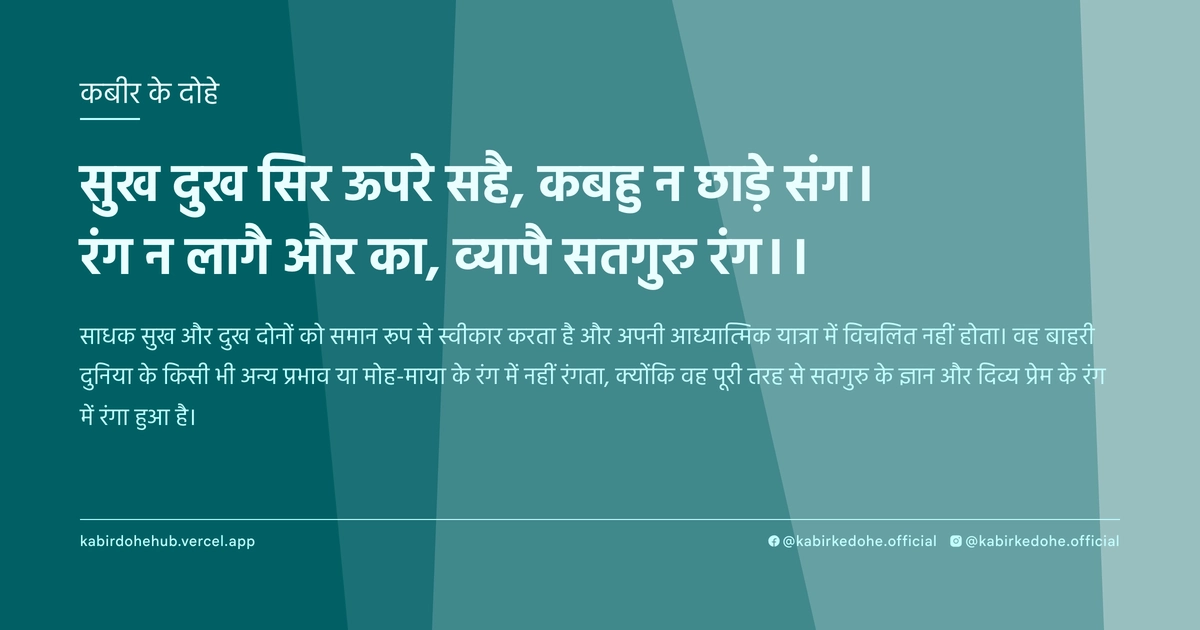
सुख दुख सिर ऊपरे सहै, कबहु न छाड़े संग।
रंग न लागै और का, व्यापै सतगुरु रंग।।
Sukh dukh sir upare sahe, kabhu na chhade sang. Rang na laage aur ka, vyapai satguru rang.
इस पृष्ठ पर इस कबीर दोहे का अर्थ (meaning), हिंदी व्याख्या और अंग्रेज़ी अनुवाद, दार्शनिक विश्लेषण और व्यावहारिक जीवन सीख दी गई है। यह दोहा गुरु महत्व (The Guru's Importance) विषय से जुड़ा है — Kabir doha meaning and explanation in Hindi and English.
अर्थ (Meaning):
साधक सुख और दुख दोनों को समान रूप से स्वीकार करता है और अपनी आध्यात्मिक यात्रा में विचलित नहीं होता। वह बाहरी दुनिया के किसी भी अन्य प्रभाव या मोह-माया के रंग में नहीं रंगता, क्योंकि वह पूरी तरह से सतगुरु के ज्ञान और दिव्य प्रेम के रंग में रंगा हुआ है।
The seeker endures both pleasure and pain with equanimity, never abandoning the path of spiritual discipline. They remain untouched by the fleeting colors of worldly attachments or external influences, for they are completely permeated by the eternal hue of the True Guru's wisdom and divine love.
व्याख्या (Interpretation):
यहाँ 'सिर ऊपरे सहना' का अर्थ है प्रतिकूलताओं को गरिमा और धैर्य के साथ स्वीकार करना। यह स्थिति द्वंद्वों से परे होने की है, जहाँ सुख और दुख केवल बाहरी लहरें हैं, जबकि आंतरिक गहराई शांत है। यह निर्गुण भक्ति का सार है, जहाँ ईश्वर किसी मूर्ति में नहीं, बल्कि इस समत्व (equanimity) में पाया जाता है। माया हमें सुख में अहंकारी और दुख में निराश करती है, लेकिन सतगुरु का 'रंग' उस भ्रम को मिटा देता है। यह अद्वैत वेदांत के उस सिद्धांत को दर्शाता है जहाँ आत्मा स्वयं को ब्रह्म के साथ एक पाती है। जब यह एकता घटित होती है, तो व्यक्ति बाहरी दुनिया के विरोधाभासों से मुक्त हो जाता है। अंततः, यह दोहे का संदेश है कि वास्तविक स्वतंत्रता बाहरी परिस्थितियों के बदलने में नहीं, बल्कि आंतरिक चेतना के रूपांतरण में है।
The phrase 'enduring above the head' signifies accepting adversities with dignity and unwavering patience. This state represents the transcendence of dualities, where pleasure and pain are merely surface ripples while the inner depths remain undisturbed. This is the essence of Nirgun Bhakti, where the Divine is found not in idols, but in this very equanimity. Maya lures us into arrogance during joy and despair during sorrow, but the 'color' of the Satguru dissolves this illusion. It mirrors the Advaita Vedanta principle where the Atman realizes its non-duality with Brahman. Once this oneness is achieved, the individual becomes immune to the contradictions of the external world. Ultimately, the message is that true liberation lies not in the alteration of circumstances, but in the transformation of consciousness.
दार्शनिक विश्लेषण (Philosophical Analysis):
कबीर का यह दोहा उस युग की उपज है जब धर्म केवल कर्मकांडों और बाहरी दिखावों तक सीमित था। कबीर ने इस बात पर जोर दिया कि वास्तविक धर्म हृदय की शुद्धि और आंतरिक अनुभव है, न कि तीर्थयात्रा या माला जपना। यहाँ 'रंग' एक रूपक है जो चेतना की स्थिति को दर्शाता है। जिस प्रकार एक बार रंगा हुआ कपड़ा अपना रंग नहीं छोड़ता, उसी प्रकार गुरु के ज्ञान से अभिमंत्रित मन सांसारिक प्रलोभनों से मुक्त हो जाता है।
दार्शनिक स्तर पर, यह सूफीवाद के 'फना' (अहंकार का विनाश) और वेदांत के 'साक्षी भाव' का संगम है। जब साधक सुख-दुख को 'सिर ऊपरे' सहता है, तो वह वास्तव में अपनी पहचान को शरीर और मन से हटाकर शुद्ध चेतना (Pure Consciousness) पर स्थानांतरित कर रहा होता है। यह अहंकार का विसर्जन है, क्योंकि अहंकार ही वह बिंदु है जहाँ सुख और दुख टकराते हैं।
कबीर जाति और वर्ग के भेदों को नकारते हुए यह बताते हैं कि आध्यात्मिक उपलब्धि किसी विशेष कुल या शास्त्र के ज्ञान से नहीं, बल्कि समर्पण और अनुभव से आती है। वे ritualism का विरोध करते हैं क्योंकि अनुष्ठान अक्सर अहंकार को पुष्ट करते हैं, जबकि गुरु का रंग अहंकार को मिटाता है।
मनोवैज्ञानिक रूप से, यह 'इमोशनल रेगुलेशन' की उच्चतम अवस्था है। जब व्यक्ति यह समझ जाता है कि सुख और दुख क्षणभंगुर हैं, तो वह प्रतिक्रिया करना बंद कर देता है और केवल अवलोकन करता है। यह तटस्थता उसे मानसिक शांति और स्थिरता प्रदान करती है।
अंततः, यह दोहा हमें सिखाता है कि सत्य वह नहीं है जिसे खोजा जाए, बल्कि वह है जिसे अनुभव किया जाए। सतगुरु का रंग कोई बाहरी लेप नहीं है, बल्कि वह आंतरिक प्रकाश है जो तब प्रकट होता है जब हम अपनी सीमित पहचान को त्याग कर अनंत के साथ एकाकार हो जाते हैं।
Kabir's couplet emerges from an era where religion was largely confined to rituals and outward displays. He emphasizes that true spirituality is a matter of inner purity and direct experience, rather than pilgrimages or the rote chanting of beads. Here, 'color' serves as a metaphor for the state of consciousness. Just as a dyed cloth does not lose its hue, a mind imbued with the Guru's wisdom remains untouched by worldly temptations.
Philosophically, this is a confluence of the Sufi concept of 'Fana' (annihilation of the ego) and the Vedantic 'Sakshi' (witness consciousness). When the seeker endures pleasure and pain 'above the head,' they are effectively shifting their identity from the body-mind complex to Pure Consciousness. This is the dissolution of the ego, for the ego is the only point where pleasure and pain can collide.
Rejecting caste and class distinctions, Kabir asserts that spiritual attainment comes not from a specific lineage or scriptural knowledge, but through surrender and lived experience. He opposes ritualism because rituals often reinforce the ego, whereas the Guru's color erases it.
Psychologically, this represents the highest state of emotional regulation. When an individual realizes that pleasure and pain are ephemeral, they cease to react and begin to observe. This neutrality grants them profound mental peace and stability.
Ultimately, the doha teaches that Truth is not something to be searched for, but something to be experienced. The Satguru's color is not an external coating, but an internal light that manifests when we relinquish our limited identity and merge with the Infinite.
मूल संदेश (Core Message):
- बाहरी द्वंद्वों से ऊपर उठकर आंतरिक स्थिरता प्राप्त करना ही वास्तविक मुक्ति है।
- सुख और दुख केवल मानसिक प्रतिक्रियाएं हैं, आत्मा का स्वभाव सदैव शांत है।
- गुरु का ज्ञान वह ढाल है जो हमें संसार के मोह-माया से सुरक्षित रखता है।
- अहंकार का विसर्जन ही वह द्वार है जिससे दिव्य प्रेम का रंग भीतर प्रवेश करता है।
- सत्य वह है जो हर परिस्थिति में अपरिवर्तित और अडिग रहता है।
- True liberation is achieving internal stability by rising above external dualities.
- Pleasure and pain are merely mental reactions; the soul's nature is eternally peaceful.
- The Guru's wisdom is the shield that protects us from the illusions of Maya.
- The dissolution of ego is the only gateway through which the color of divine love enters.
- Truth is that which remains unchanged and steadfast in every circumstance.
व्यावहारिक उदाहरण (Practical Example):
वाराणसी के एक पुराने घाट पर रहने वाली एक वृद्ध विधवा, जानकी, का जीवन अभावों से भरा था। समाज ने उन्हें हाशिए पर धकेल दिया था और उनके पास केवल एक छोटी सी कुटिया और कुछ पुराने बर्तन थे। उनके दिन प्रार्थनाओं और दूसरों की सेवा में बीतते थे, लेकिन उनके मन में एक गहरी शांति थी जिसे लोग 'पागलपन' कहते थे।
एक समय ऐसा आया जब उनके पास भोजन के लिए भी कुछ नहीं बचा। उनके पास रहने की जगह भी छिनने वाली थी। उनके पड़ोसी उन्हें सहानुभूति देते या उनका मजाक उड़ाते, लेकिन जानकी के चेहरे पर एक स्थिर मुस्कान रहती थी। वे न तो सुख में नाचती थीं और न ही दुख में रोती थीं।
एक दिन एक युवा विद्वान उनके पास आया और पूछा, 'माता, आपके पास कुछ नहीं है, फिर भी आप इतनी शांत कैसे हैं? क्या आपको डर नहीं लगता?' जानकी ने मुस्कुराकर जवाब दिया, 'बेटा, मैं तो बस उस रंग में रंगी हूँ जहाँ खोने और पाने का भेद मिट गया है।'
विद्वान हैरान था। उसने देखा कि जानकी ने अपने जीवन के सबसे कठिन समय को भी एक उत्सव की तरह जिया था। उन्होंने कभी किसी से शिकायत नहीं की और न ही किसी परिस्थिति को अपने ऊपर हावी होने दिया।
एक रात भारी बारिश हुई और उनकी कुटिया की छत गिर गई। जानकी ने उस बारिश में भी शांति से बैठकर ईश्वर का धन्यवाद किया। उन्होंने इसे प्रकृति का एक खेल माना, न कि अपना व्यक्तिगत नुकसान।
यह देखकर वह विद्वान, जो शास्त्रों का ज्ञाता था लेकिन मानसिक रूप से अशांत था, दंग रह गया। उसे समझ आया कि ज्ञान किताबों में नहीं, बल्कि जानकी जैसी समता में है।
जानकी का जीवन उस 'सतगुरु रंग' का जीता-जागता उदाहरण था, जहाँ बाहरी दुनिया की उथल-पुथल आंतरिक स्थिरता को प्रभावित नहीं कर पाती।
विद्वान ने अपनी सारी किताबी अहंकारी पहचान त्याग दी और जानकी के चरणों में बैठकर मौन रहना सीखा। उसने जाना कि जब हम सुख-दुख को सिर के ऊपर से गुजरने देते हैं, तब हम वास्तव में स्वतंत्र होते हैं।
इस अनुभव ने विद्वान के जीवन को बदल दिया। वह अब विवादों में नहीं पड़ता था और हर परिस्थिति को एक साक्षी की तरह देखने लगा।
अंततः, जानकी की सादगी और उनकी अडिग शांति ने एक अहंकारी बुद्धिजीवी को एक विनम्र साधक में बदल दिया।
In the ancient ghats of Varanasi lived Janaki, an elderly widow whose life was defined by scarcity. Society had pushed her to the margins; she possessed nothing but a small hut and a few old utensils. Her days were spent in prayer and serving others, yet she carried a profound peace that others dismissed as 'madness.'
There came a time when she had no food left, and even her shelter was under threat. Her neighbors offered pity or mocked her, yet a steady smile remained on Janaki's face. She neither danced in joy nor wept in sorrow.
One day, a young scholar visited her and asked, 'Mother, you have nothing, yet how are you so calm? Do you feel no fear?' Janaki smiled and replied, 'Son, I am simply dyed in that color where the distinction between losing and gaining has vanished.'
The scholar was astonished. He observed that Janaki had lived through her hardest years as if they were a celebration. She never complained and never allowed circumstances to dominate her spirit.
One night, a torrential rain collapsed the roof of her hut. Even then, Janaki sat calmly in the rain, thanking the Divine. She viewed it as a play of nature, not as a personal loss.
Seeing this, the scholar, who was a master of texts but mentally turbulent, was stunned. He realized that true knowledge lay not in books, but in the equanimity embodied by Janaki.
Janaki's life was a living testament to the 'Satguru's color,' where the chaos of the external world cannot disturb the internal stillness.
The scholar abandoned his arrogant intellectual identity and learned the art of silence at Janaki's feet. He understood that when we let pleasure and pain pass 'above the head,' we become truly free.
This experience transformed the scholar's life. He ceased engaging in pointless disputes and began observing every situation as a witness.
Ultimately, Janaki's simplicity and unwavering peace turned an arrogant intellectual into a humble seeker.
अभ्यास मार्गदर्शन (Practice Guidance):
- दैनिक अभ्यास: दिन में तीन बार (सुबह, दोपहर, शाम) 10 मिनट के लिए मौन बैठें। अपने भीतर आने वाले सुखद और दुखद विचारों को केवल 'देखें', उनसे जुड़ें नहीं।
- आत्म-पूछताछ जर्नल: हर रात लिखें—'आज किस बात ने मुझे विचलित किया? क्या मैं उस भावना को एक साक्षी की तरह देख पाया या मैं उसमें डूब गया?'
- व्यवहारिक परिवर्तन: जब भी कोई अप्रिय स्थिति आए, तुरंत प्रतिक्रिया देने के बजाय 5 गहरी सांसें लें और स्वयं से कहें, 'यह भी एक रंग है, मेरा मूल रंग तो अपरिवर्तित है।'
- डायग्नोस्टिक चेकलिस्ट: यदि आप छोटी बातों पर अत्यधिक क्रोधित हो रहे हैं या छोटी सफलताओं पर बहुत अधिक उत्साहित हैं, तो समझें कि आप अभी भी बाहरी रंगों के प्रभाव में हैं और 'सतगुरु रंग' से दूर हैं।
- Daily Practice: Sit in silence for 10 minutes three times a day (morning, noon, evening). Simply 'observe' the pleasant and unpleasant thoughts arising within, without attaching to them.
- Self-Inquiry Journal: Every night, record—'What disturbed me today? Was I able to observe that emotion as a witness, or did I drown in it?'
- Behavioral Shift: Whenever an unpleasant situation arises, instead of reacting immediately, take 5 deep breaths and tell yourself, 'This too is a fleeting color; my original hue remains unchanged.'
- Diagnostic Checklist: If you find yourself excessively angry over trivialities or overly elated by minor successes, recognize that you are still under the influence of external colors and distant from the 'Satguru's hue.'
चिंतन प्रश्न (Reflection Questions):
- क्या मेरी शांति बाहरी परिस्थितियों की गुलाम है, या वह मेरे भीतर से उपजती है?
- मैं अपनी सार्वजनिक छवि (Public Image) को बनाए रखने के लिए अंदर से कितना तनाव झेलता हूँ?
- जब मैं दूसरों की सफलता देखता हूँ, तो क्या मेरे भीतर ईर्ष्या का रंग उभरता है? वह रंग मुझे क्या बता रहा है?
- क्या मैं वास्तव में दुख को स्वीकार करता हूँ, या मैं केवल उसे सहने का नाटक करता हूँ?
- मेरे जीवन का वह कौन सा 'रंग' (आदत या मोह) है जिसे मैं छोड़ने से सबसे ज्यादा डरता हूँ?
- यदि आज मेरा सब कुछ छीन लिया जाए, तो क्या मेरे पास ऐसी कोई आंतरिक पूंजी बचेगी जो मुझे स्थिर रख सके?
- Is my peace a slave to external circumstances, or does it spring from within?
- How much internal stress do I endure simply to maintain my public image?
- When I witness others' success, does the color of envy emerge? What is that color revealing about me?
- Do I truly accept sorrow, or do I merely pretend to endure it?
- Which 'color' (habit or attachment) in my life am I most afraid to let go of?
- If everything were stripped away from me today, would I have any internal capital left to keep me steady?