
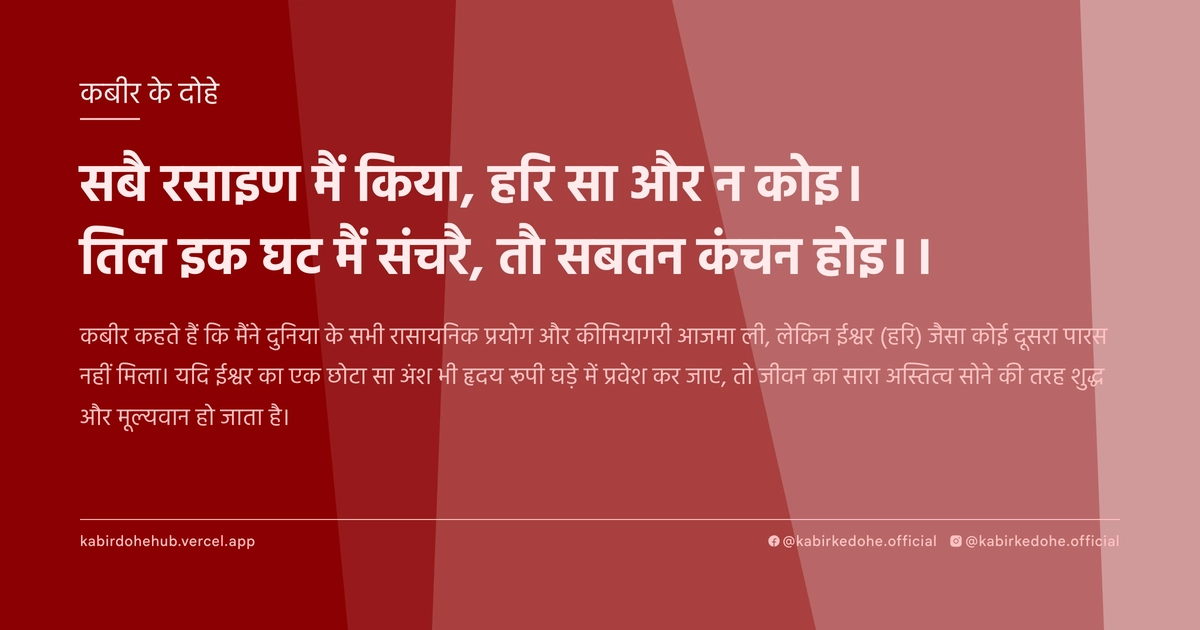
सबै रसाइण मैं किया, हरि सा और न कोइ।
तिल इक घट मैं संचरै, तौ सबतन कंचन होइ।।
Sabai rasain main kiya, hari sa aur na koi. Til ik ghat main sanchrai, tau sabtan kanchan hoye.
इस पृष्ठ पर इस कबीर दोहे का अर्थ (meaning), हिंदी व्याख्या और अंग्रेज़ी अनुवाद, दार्शनिक विश्लेषण और व्यावहारिक जीवन सीख दी गई है। यह दोहा निर्गुण ब्रह्म (Nirguna Brahman) विषय से जुड़ा है — Kabir doha meaning and explanation in Hindi and English.
अर्थ (Meaning):
कबीर कहते हैं कि मैंने दुनिया के सभी रासायनिक प्रयोग और कीमियागरी आजमा ली, लेकिन ईश्वर (हरि) जैसा कोई दूसरा पारस नहीं मिला। यदि ईश्वर का एक छोटा सा अंश भी हृदय रूपी घड़े में प्रवेश कर जाए, तो जीवन का सारा अस्तित्व सोने की तरह शुद्ध और मूल्यवान हो जाता है।
Kabir asserts that he has explored all the alchemical secrets and worldly remedies, yet found none as potent as the Divine. He explains that if even a tiny droplet of God's grace enters the vessel of the human heart, the entire existence of the individual is transmuted into pure, spiritual gold.
व्याख्या (Interpretation):
इस दोहे का शाब्दिक अर्थ कीमियागरी (Alchemy) से जुड़ा है जहाँ साधारण धातुओं को सोने में बदला जाता है। रूपकात्मक रूप से, 'रसाइण' हमारी सांसारिक कोशिशों, बौद्धिक अहंकार और बाहरी अनुष्ठानों का प्रतीक है। 'हरि' यहाँ किसी व्यक्ति विशेष नहीं, बल्कि उस निर्गुण ब्रह्म या शुद्ध चेतना का प्रतीक है जो सर्वव्यापी है। जब यह चेतना 'घट' यानी मानव शरीर और मन में जागृत होती है, तो माया का पर्दा हट जाता है। यह अद्वैत वेदांत के उस सत्य को दर्शाता है जहाँ आत्मा और परमात्मा का मिलन होता है। यह विरोधाभास है कि जिसे हम बाहर खोजते हैं, वह भीतर एक सूक्ष्म बिंदु के रूप में मौजूद है। अंततः, यह रूपांतरण बाहरी नहीं बल्कि आंतरिक है, जहाँ अज्ञानता की तांबे जैसी कठोरता, प्रेम और ज्ञान के स्वर्ण में बदल जाती है।
The literal meaning draws from the ancient art of alchemy, where base metals are transmuted into gold. Metaphorically, 'rasayan' represents our worldly efforts, intellectual pride, and external rituals. 'Hari' here does not denote a anthropomorphic deity, but the Nirgun Brahman—the formless, absolute consciousness. When this consciousness permeates the 'ghat' (the vessel of the human heart), the veil of Maya is lifted. This aligns with Advaita Vedanta, emphasizing the non-duality of Atman and Brahman. The central paradox lies in the fact that while we seek the Divine in distant heavens, it resides as a subtle seed within. The transmutation is not physical but ontological; the leaden weight of ego and ignorance is converted into the luminous gold of spiritual awakening.
दार्शनिक विश्लेषण (Philosophical Analysis):
कबीर का यह दोहा उनके युग के सामाजिक और धार्मिक परिवेश पर एक गहरा प्रहार है। उस समय समाज कर्मकांडों, बाहरी दिखावे और जटिल धार्मिक अनुष्ठानों में फंसा हुआ था। कबीर 'रसाइण' शब्द का प्रयोग उन सभी कृत्रिम प्रयासों के लिए करते हैं जो मनुष्य मोक्ष पाने के लिए करता है—चाहे वह कठिन तपस्या हो, तीर्थयात्रा हो या जातिगत श्रेष्ठता का अहंकार। वे स्पष्ट करते हैं कि कोई भी बाहरी विधि आत्मा को शुद्ध नहीं कर सकती।
दार्शनिक स्तर पर, यह विचार सूफी मत के 'फना' (अहंकार का विनाश) और अद्वैत वेदांत के 'अहं ब्रह्मास्मि' के करीब है। कबीर का तर्क है कि जब तक 'मैं' (अहंकार) मौजूद है, तब तक ईश्वर का अनुभव असंभव है। जैसे ही हरि का अंश हृदय में संचरित होता है, वह व्यक्तिगत पहचान को मिटाकर उसे सार्वभौमिक चेतना में विलीन कर देता है।
यहाँ 'कंचन' (सोना) केवल समृद्धि का प्रतीक नहीं है, बल्कि यह उस अवस्था को दर्शाता है जहाँ मनुष्य राग, द्वेष और मोह से मुक्त हो जाता है। यह मनोवैज्ञानिक रूपांतरण की प्रक्रिया है। कबीर यह समझाते हैं कि ज्ञान केवल सूचना नहीं है, बल्कि एक अनुभव है जो व्यक्ति के संपूर्ण व्यक्तित्व को बदल देता है।
वे जाति और धर्म की सीमाओं को नकारते हुए यह स्थापित करते हैं कि ईश्वरीय अनुभव किसी विशेष वर्ग का विशेषाधिकार नहीं है। यदि एक साधारण व्यक्ति भी अपने भीतर की पवित्रता को पहचान ले, तो वह किसी भी उच्च कुल के व्यक्ति से अधिक 'स्वर्ण' है।
अंततः, यह दोहा हमें यह सिखाता है कि जीवन का उद्देश्य बाहरी दुनिया को बदलना नहीं, बल्कि अपनी आंतरिक प्रकृति को बदलना है। जब दृष्टा बदलता है, तो पूरी सृष्टि बदल जाती है। यह 'परिवर्तन' ही वास्तविक कीमियागरी है।
This couplet serves as a profound critique of the socio-religious landscape of Kabir's era, characterized by rigid ritualism and external displays of piety. By using the term 'rasayan' (alchemy), Kabir refers to all artificial attempts to achieve liberation—be it through asceticism, pilgrimages, or the pride of caste superiority. He asserts that no external mechanism can purify the soul.
Philosophically, this mirrors the Sufi concept of 'Fana' (annihilation of the self) and the Advaita Vedanta realization of 'Aham Brahmasmi' (I am Brahman). Kabir argues that as long as the 'I' (the ego) persists, the experience of the Divine remains elusive. The moment the essence of Hari permeates the heart, it dissolves the individual identity into universal consciousness.
'Kanchan' (gold) here is not a symbol of material wealth, but of a state of being devoid of attachment, aversion, and delusion. This is a psychological transformation. Kabir emphasizes that spiritual knowledge is not an accumulation of information but a lived experience that alters one's entire existence.
He dismantles the notion of spiritual hierarchy, suggesting that divine realization is not the prerogative of a specific caste or creed. If a commoner recognizes the purity within, they become more 'golden' than any high-born individual clinging to ritual.
Ultimately, the teaching shifts the focus from changing the external world to transforming internal nature. When the observer is transformed, the observed world changes. This internal alchemy is the only true path to liberation.
मूल संदेश (Core Message):
- बाहरी अनुष्ठान केवल भ्रम हैं, वास्तविक परिवर्तन आंतरिक है।
- अहंकार वह जंग है जो आत्मा के स्वर्ण को छुपा देता है।
- ईश्वर का एक सूक्ष्म अंश भी संपूर्ण जीवन को पवित्र कर सकता है।
- प्रेम और करुणा ही वह वास्तविक कीमियागरी है जो मनुष्य को दिव्य बनाती है।
- स्वयं को जानना ही ब्रह्मांड के सबसे बड़े सत्य को जानना है।
- External rituals are mere illusions; true transformation is internal.
- The ego is the rust that conceals the gold of the soul.
- A tiny spark of Divine grace can sanctify an entire existence.
- Love and compassion are the only true alchemy that makes a human divine.
- Knowing oneself is the ultimate realization of the universal truth.
व्यावहारिक उदाहरण (Practical Example):
वाराणसी के एक पुराने मोहल्ले में माधव नाम का एक बुनकर रहता था। वह अपनी कला में निपुण था, लेकिन उसका मन हमेशा अशांत रहता था। वह खुद को दूसरों से श्रेष्ठ मानता था क्योंकि उसके पास सबसे महीन रेशम बुनने की कला थी। वह अक्सर अन्य बुनकरों का उपहास करता और अपनी श्रेष्ठता का प्रदर्शन करता।
माधव ने शांति की तलाश में कई पंडितों से संपर्क किया, महंगे अनुष्ठान करवाए और कठिन व्रत रखे। उसने अपनी पूरी संपत्ति आध्यात्मिक 'नुस्खों' और बाहरी उपचारों में लगा दी, ठीक वैसे ही जैसे कोई कीमियागर लोहे को सोना बनाने के लिए रसायनों का प्रयोग करता है। लेकिन उसकी आंतरिक कड़वाहट कम नहीं हुई।
एक दिन उसकी मुलाकात एक फकीर से हुई जो सड़क किनारे बैठा था। फकीर ने माधव के अहंकार को देखते हुए बस इतना कहा, "तू रेशम तो महीन बुन रहा है, पर अपने हृदय के धागे बहुत उलझे हुए हैं। बाहर की चमक सोने की नहीं, केवल पॉलिश की होती है।"
यह बात माधव के दिल में गहराई से चुभ गई। उसने महसूस किया कि उसकी सारी कोशिशें बाहरी थीं। उसने तय किया कि वह अब किसी बाहरी विधि के बजाय अपने भीतर के क्रोध और अहंकार पर काम करेगा।
उसने अपने जीवन में एक छोटा सा बदलाव किया: वह हर दिन एक घंटा उन लोगों की मदद करने लगा जिन्हें वह तुच्छ समझता था। उसने अपनी कला का उपयोग दूसरों को सिखाने के लिए किया, न कि उन्हें नीचा दिखाने के लिए।
धीरे-धीरे, माधव के भीतर का 'मैं' मिटने लगा। उसे महसूस हुआ कि जब वह दूसरों की सेवा करता है, तो उसे वही शांति मिलती है जो वह महंगे अनुष्ठानों में खोज रहा था।
उसके व्यवहार में एक अद्भुत सौम्यता आ गई। जो लोग पहले उससे डरते थे या नफरत करते थे, वे अब उसके पास सुकून पाने के लिए आने लगे।
माधव ने पाया कि उसका जीवन अब वास्तव में 'स्वर्ण' बन गया था। उसने किसी बाहरी रसायन का प्रयोग नहीं किया, बल्कि प्रेम और करुणा के उस एक 'तिल' (अंश) को अपने भीतर जगह दी, जिसने उसके पूरे व्यक्तित्व को बदल दिया।
अब वह केवल एक कुशल बुनकर नहीं था, बल्कि एक ऐसा मनुष्य था जिसके स्पर्श से दूसरों का जीवन भी प्रकाशित होने लगा।
यही कबीर की वह कीमियागरी थी, जहाँ अहंकार का विसर्जन ही वास्तविक सोने की प्राप्ति है।
In an ancient lane of Varanasi lived a weaver named Madhav. He was a master of his craft, but his mind was perpetually restless. He viewed himself as superior to others because of his ability to weave the finest silk, often mocking fellow weavers and flaunting his skill.
Madhav sought peace through various means. He consulted numerous priests, performed expensive rituals, and undertook rigorous fasts. He spent his wealth on spiritual 'formulas' and external remedies, much like an alchemist using chemicals to turn iron into gold. Yet, his internal bitterness remained.
One day, he encountered a wandering dervish sitting by the road. Observing Madhav's pride, the dervish remarked, "You weave fine silk, but the threads of your heart are hopelessly tangled. The shine you seek outside is mere polish, not gold."
These words pierced Madhav's consciousness. He realized that all his efforts had been superficial. He decided to stop seeking external methods and instead focus on the anger and ego within.
He implemented a small change: every day, he spent an hour helping those he had previously deemed inferior. He began using his art to teach others rather than to belittle them.
Slowly, Madhav's 'I' began to dissolve. He discovered that the peace he had sought in expensive rituals was found in the simple act of serving others.
A profound gentleness entered his demeanor. People who once feared or hated him now sought his company for solace.
Madhav realized that his life had truly become 'golden.' He hadn't used any external chemical; he had simply allowed a tiny 'til' (seed) of love and compassion to take root in his heart, transforming his entire personality.
He was no longer just a skilled weaver, but a human being whose presence illuminated the lives of others.
This was Kabir's alchemy—where the dissolution of the ego is the only true attainment of gold.
अभ्यास मार्गदर्शन (Practice Guidance):
- प्रतिदिन 20 मिनट मौन ध्यान करें, जहाँ आप बाहरी पहचान (नाम, पद, जाति) को हटाकर केवल एक 'साक्षी' के रूप में स्वयं को देखें।
- एक 'अहंकार डायरी' बनाएँ: दिन भर में जब भी आपको अपनी श्रेष्ठता का अनुभव हो या किसी पर निर्णय लेने की इच्छा हो, उसे लिखें और विश्लेषण करें कि वह कौन सा 'रसाइण' (मिथ्या प्रयास) है।
- व्यवहार परिवर्तन: सप्ताह में एक बार ऐसे व्यक्ति की निस्वार्थ सेवा करें जिससे आपका वैचारिक मतभेद हो, ताकि हृदय की कठोरता पिघल सके।
- निदान चेकलिस्ट: क्या मैं अभी भी बाहरी प्रशंसा की तलाश कर रहा हूँ? क्या मेरा सुकून दूसरों की स्थिति पर निर्भर है? यदि हाँ, तो आप अभी भी 'रसाइण' में उलझे हैं, 'हरि' में नहीं।
- Practice 20 minutes of silent meditation daily, stripping away external identities (name, rank, caste) and observing yourself solely as a 'witness'.
- Maintain an 'Ego Diary': Record moments throughout the day when you feel superior or judge others, analyzing which 'rasayan' (false effort) is driving that thought.
- Behavioral Shift: Once a week, perform a selfless act of service for someone with whom you have a fundamental disagreement, to melt the hardness of the heart.
- Diagnostic Checklist: Am I still seeking external validation? Is my peace dependent on others' status? If yes, you are still entangled in 'rasayan' rather than 'Hari'.
चिंतन प्रश्न (Reflection Questions):
- मेरे जीवन के वे कौन से 'रसाइण' (बाहरी प्रयास) हैं जिन्हें मैं सत्य मानकर अपनी ऊर्जा नष्ट कर रहा हूँ?
- यदि मेरी सामाजिक पहचान और उपलब्धियाँ छीन ली जाएँ, तो मेरे भीतर क्या बचेगा?
- क्या मेरा धर्म और मेरी आस्था मुझे दूसरों के प्रति अधिक संवेदनशील बनाती है या अधिक श्रेष्ठ?
- मेरे भीतर का वह 'तिल' (ईश्वरीय अंश) कहाँ छिपा है जिसे मैंने अहंकार की परतों के नीचे दबा दिया है?
- क्या मैं वास्तव में परिवर्तन चाहता हूँ, या मैं केवल अपनी वर्तमान स्थिति को आध्यात्मिक शब्दों से सजाना चाहता हूँ?
- What are the 'rasayans' (external efforts) in my life that I mistake for truth while wasting my energy?
- If my social identity and achievements were stripped away, what would remain within me?
- Does my religion and faith make me more compassionate toward others, or more convinced of my own superiority?
- Where is that 'til' (divine spark) hidden within me, buried under layers of ego?
- Do I truly desire transformation, or am I merely trying to decorate my current state with spiritual terminology?