
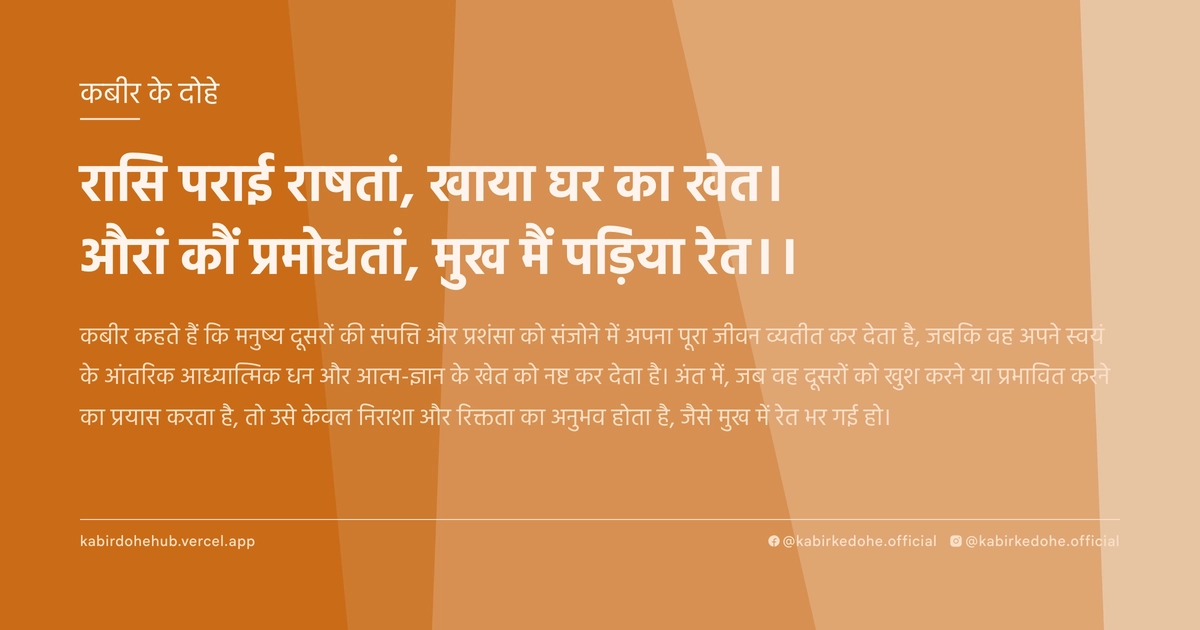
रासि पराई राषतां, खाया घर का खेत।
औरां कौं प्रमोधतां, मुख मैं पड़िया रेत।।
Rasi parai rashtan, khaya ghar ka khet. Auran kaun pramodhtan, mukh main padiya ret.
इस पृष्ठ पर इस कबीर दोहे का अर्थ (meaning), हिंदी व्याख्या और अंग्रेज़ी अनुवाद, दार्शनिक विश्लेषण और व्यावहारिक जीवन सीख दी गई है। यह दोहा अहंकार (The Ego) विषय से जुड़ा है — Kabir doha meaning and explanation in Hindi and English.
अर्थ (Meaning):
कबीर कहते हैं कि मनुष्य दूसरों की संपत्ति और प्रशंसा को संजोने में अपना पूरा जीवन व्यतीत कर देता है, जबकि वह अपने स्वयं के आंतरिक आध्यात्मिक धन और आत्म-ज्ञान के खेत को नष्ट कर देता है। अंत में, जब वह दूसरों को खुश करने या प्रभावित करने का प्रयास करता है, तो उसे केवल निराशा और रिक्तता का अनुभव होता है, जैसे मुख में रेत भर गई हो।
Kabir observes that humans spend their entire lives accumulating others' wealth or seeking external validation, while neglecting and consuming the fertile field of their own inner spiritual wealth. In the end, while attempting to please or impress the world, they find only bitterness and emptiness, as if their mouth is filled with dry sand.
व्याख्या (Interpretation):
यह दोहा बाहरी दिखावे और आंतरिक रिक्तता के बीच के विरोधाभास को दर्शाता है। 'पराई रासि' बाहरी दुनिया की माया और सामाजिक प्रतिष्ठा का प्रतीक है, जबकि 'घर का खेत' आत्मा और अंतरात्मा के ज्ञान का प्रतिनिधित्व करता है। कबीर यहाँ निरगुण भक्ति के उस सिद्धांत को उजागर करते हैं जहाँ ईश्वर बाहर नहीं, बल्कि भीतर है। जब साधक अपनी ऊर्जा बाहरी दुनिया को रिझाने में लगाता है, तो वह वास्तव में अपनी ही आध्यात्मिक ऊर्जा का क्षय करता है। यह अद्वैत वेदांत के उस सत्य की ओर संकेत है कि जब तक हम स्वयं को 'अलग' मानकर बाहरी दुनिया में सुख खोजते हैं, हम माया के जाल में फंसे रहते हैं। अंत में 'मुख में रेत' का अर्थ है कि भौतिक इच्छाओं की तृप्ति कभी नहीं होती; वे केवल प्यास बढ़ाती हैं और अंततः आत्मा को शुष्क और निराश छोड़ देती हैं।
This couplet illustrates the paradox between external pretense and internal void. 'Rasi parai' (others' wealth) symbolizes the Maya of the external world and social prestige, while 'ghar ka khet' (home field) represents the soul and the knowledge of the inner self. Kabir highlights the principle of Nirgun Bhakti, asserting that the Divine is not found externally but within. When a seeker spends their energy trying to impress the world, they are effectively depleting their own spiritual reserves. This aligns with Advaita Vedanta, suggesting that as long as we perceive ourselves as separate and seek happiness externally, we remain trapped in illusion. The 'sand in the mouth' signifies that material desires never lead to true satisfaction; they only increase thirst and ultimately leave the soul desiccated and disillusioned.
दार्शनिक विश्लेषण (Philosophical Analysis):
कबीर का यह दर्शन उनके समय के धार्मिक पाखंड और सामाजिक स्तरीकरण पर एक तीखा प्रहार है। उन्होंने देखा कि लोग तीर्थयात्राओं, कर्मकांडों और बाहरी आडंबरों में समय व्यतीत करते हैं, जबकि वास्तविक धर्म 'स्व' की पहचान में है। यह दृष्टिकोण सूफीवाद के 'फना' (अहंकार का विनाश) और अद्वैत वेदांत के 'अहं ब्रह्मास्मि' के करीब है। कबीर तर्क देते हैं कि अहंकार (Ego) ही वह पर्दा है जो हमें हमारे अपने 'खेत' यानी आत्म-तत्व से दूर रखता है।
यहाँ 'घर का खेत' केवल व्यक्तिगत लाभ नहीं, बल्कि वह दिव्य बीज है जो हर मनुष्य के भीतर निहित है। जब हम दूसरों की प्रशंसा के भूखे होते हैं, तो हम अपनी चेतना को बाहरी दुनिया के अधीन कर देते हैं। यह मनोवैज्ञानिक गुलामी है जहाँ व्यक्ति अपनी खुशी की चाबी दूसरों के हाथ में सौंप देता है। कबीर इस मानसिक दासता को तोड़ने का आह्वान करते हैं।
ऐतिहासिक संदर्भ में, कबीर ने जाति और धर्म के भेदों को नकारते हुए यह बताया कि सत्य सार्वभौमिक है। Ritualism या कर्मकांड केवल बाहरी आवरण हैं। यदि हृदय में प्रेम और सत्य नहीं है, तो हज़ारों पूजा-पाठ भी व्यर्थ हैं। यह विश्लेषण स्पष्ट करता है कि कबीर केवल एक कवि नहीं, बल्कि एक मनोवैज्ञानिक थे जो जानते थे कि मनुष्य की सबसे बड़ी त्रासदी अपनी ही वास्तविकता से अनभिज्ञ होना है।
अहंकार का विलोपन ही वह एकमात्र मार्ग है जिससे 'मुख की रेत' हटती है और अमृत का स्वाद मिलता है। जब व्यक्ति यह समझ जाता है कि वह और ब्रह्मांड एक ही चेतना के अंश हैं, तब उसे बाहरी दुनिया की 'रासि' (संपत्ति) की आवश्यकता नहीं रहती। वह स्वयं में पूर्ण हो जाता है।
अंततः, यह दोहा हमें चेतावनी देता है कि बाहरी दुनिया का मोह एक मृगतृष्णा है। हम जिसे सफलता या सम्मान समझते हैं, वह वास्तव में हमारी अपनी आत्मा की उपेक्षा का परिणाम है। वास्तविक उपलब्धि वह है जब हम अपने भीतर के मौन और शून्य से साक्षात्कार करते हैं, जहाँ कोई 'दूसरा' नहीं होता, केवल शुद्ध अस्तित्व होता है।
Kabir's philosophy here is a sharp critique of the religious hypocrisy and social stratification of his era. He observed people spending their lives in pilgrimages, rituals, and external displays, while true religion lies in the recognition of the 'Self'. This perspective closely aligns with the Sufi concept of 'Fana' (annihilation of the ego) and the Advaita Vedanta realization of 'Aham Brahmasmi' (I am Brahman). Kabir argues that the ego is the veil that separates us from our own 'field'—the essential divine nature.
The 'home field' is not merely personal gain, but the divine seed inherent in every human. When we crave external validation, we surrender our consciousness to the external world. This is a form of psychological slavery where an individual hands over the key to their happiness to others. Kabir calls for the shattering of this mental bondage.
In a historical context, Kabir rejected caste and religious divisions, asserting that truth is universal. Ritualism is merely an external shell; without love and truth in the heart, thousands of prayers are futile. This analysis reveals Kabir not just as a poet, but as a psychologist who understood that humanity's greatest tragedy is being ignorant of its own reality.
The dissolution of the ego is the only way to remove the 'sand from the mouth' and taste the nectar of truth. Once a person realizes that they and the universe are fragments of the same consciousness, the need for external 'wealth' or validation vanishes. They become complete within themselves.
Ultimately, this couplet warns that the lure of the external world is a mirage. What we perceive as success or honor is often the result of neglecting our own soul. True achievement is the encounter with the inner silence and void, where no 'other' exists—only pure existence.
मूल संदेश (Core Message):
- बाहरी प्रशंसा एक भ्रम है जो आंतरिक रिक्तता को बढ़ाती है।
- अपनी आत्मा के ज्ञान को संजोना ही वास्तविक संपत्ति है।
- दूसरों को रिझाने की कोशिश स्वयं के अस्तित्व को मिटा देती है।
- माया का जाल बाहरी उपलब्धियों में है, सत्य भीतर है।
- अहंकार का त्याग ही संतोष का एकमात्र द्वार है।
- External praise is an illusion that amplifies internal emptiness.
- Nurturing the knowledge of the soul is the only true wealth.
- The attempt to please others erases one's own existence.
- The trap of Maya lies in external achievements; truth is within.
- Renouncing the ego is the only gateway to contentment.
व्यावहारिक उदाहरण (Practical Example):
वाराणसी के एक पुराने मोहल्ले में माधव नाम का एक बुनकर रहता था। माधव अपनी कला में निपुण था, लेकिन उसका मन हमेशा इस बात में लगा रहता था कि शहर के बड़े सेठ और रईस उसके बारे में क्या सोचते हैं। वह अपनी साड़ियों में ऐसे रंग और डिजाइन डालता जो उसे पसंद नहीं थे, बल्कि वे जो बाजार में 'दिखावे' के लिए महंगे बिकते थे।
वह दिन भर सेठों की चापलूसी करता, उनके सामने झुकता और उनकी झूठी प्रशंसा करता ताकि उसे बड़े ऑर्डर मिल सकें। उसने अपने परिवार की सादगी और अपनी आंतरिक शांति को दांव पर लगा दिया। वह अपने घर के छोटे से आंगन में लगे तुलसी और नीम के पौधों को पानी देना भूल गया, जिन्हें वह कभी बहुत प्यार करता था।
धीरे-धीरे माधव की कला यांत्रिक हो गई। वह अब सृजन नहीं, बल्कि केवल व्यापार कर रहा था। उसकी प्रसिद्धि बढ़ी, धन आया, लेकिन उसके मन की व्याकुलता भी बढ़ती गई। वह जितना अधिक बाहरी दुनिया में 'रासि' (संपत्ति) और सम्मान बटोरता, उतना ही वह अंदर से खाली महसूस करता।
एक दिन, एक वृद्ध संन्यासी उसकी दुकान पर आए। उन्होंने माधव की सबसे महंगी साड़ी देखी और मुस्कुराकर कहा, "इस कपड़े में चमक तो बहुत है, लेकिन इसमें बुनकर की आत्मा गायब है। तुमने दूसरों के घरों को सजाने के लिए अपने भीतर के घर को उजाड़ दिया।"
माधव को लगा जैसे किसी ने उसके चेहरे पर आईना रख दिया हो। उसे याद आया कि कैसे वह अपनी कला के प्रति प्रेम को भूलकर केवल दूसरों को रिझाने में लगा रहा था। उसे महसूस हुआ कि उसकी सारी उपलब्धियां वास्तव में रेत की तरह थीं—दिखने में ढेर, लेकिन पकड़ने पर फिसल जाने वाली।
उस रात माधव सो नहीं सका। उसने सोचा कि उसने अपना पूरा जीवन दूसरों की इच्छाओं को पूरा करने में लगा दिया, जबकि उसकी अपनी आत्मा प्यासी रही। उसने महसूस किया कि उसने 'घर का खेत' यानी अपनी मानसिक शांति और मौलिकता को नष्ट कर दिया था।
अगले दिन से माधव ने बदलाव शुरू किया। उसने केवल उन्हीं ऑर्डर को लिया जिनमें वह अपनी ईमानदारी और कला डाल सकता था। उसने सेठों की चापलूसी छोड़ दी और अपनी साड़ियों में अपनी आत्मा के रंगों को उकेरना शुरू किया।
शुरुआत में उसकी कमाई कम हुई, लेकिन उसके चेहरे पर एक ऐसी चमक आई जो पहले कभी नहीं थी। अब वह दूसरों को खुश करने के लिए नहीं, बल्कि स्वयं की पूर्णता के लिए बुनता था।
अंततः, माधव ने पाया कि जब उसने स्वयं को स्वीकार किया और अपने आंतरिक धन को संजोया, तो दुनिया ने उसकी कला का वास्तविक सम्मान करना शुरू किया। अब उसके मुख में रेत नहीं, बल्कि संतोष का अमृत था।
In an old neighborhood of Varanasi lived a weaver named Madhav. Madhav was skilled in his craft, but his mind was always preoccupied with what the wealthy merchants and elites of the city thought of him. He incorporated colors and designs into his sarees that he personally disliked, but which were considered 'trendy' and expensive in the market.
He spent his days flattering the merchants, bowing before them, and offering false praise just to secure larger orders. In doing so, he gambled away the simplicity of his family life and his inner peace. He even forgot to water the Tulsi and Neem plants in his small courtyard, which he had once loved dearly.
Gradually, Madhav's art became mechanical. He was no longer creating; he was merely trading. His fame grew, and wealth accumulated, but so did his mental agitation. The more 'wealth' and honor he gathered from the external world, the emptier he felt inside.
One day, an elderly monk visited his shop. Looking at Madhav's most expensive saree, the monk smiled and said, "This cloth has much glitter, but the soul of the weaver is missing. You have ruined your own inner home to decorate the homes of others."
Madhav felt as if a mirror had been held up to his face. He remembered how he had forgotten his love for art, focusing only on pleasing others. He realized that all his achievements were like sand—appearing as a heap, but slipping through his fingers when he tried to grasp them.
Madhav could not sleep that night. He reflected on how he had spent his entire life fulfilling the desires of others while his own soul remained thirsty. He realized he had destroyed his 'home field'—his mental peace and authenticity.
From the next day, Madhav began to change. He only accepted orders where he could infuse honesty and his own artistic vision. He stopped flattering the merchants and began weaving the colors of his own soul into his fabrics.
Initially, his income decreased, but a glow appeared on his face that was never there before. He no longer wove to please others, but for his own wholeness.
Ultimately, Madhav found that once he accepted himself and nurtured his inner wealth, the world began to truly respect his art. Now, his mouth was not filled with sand, but with the nectar of contentment.
अभ्यास मार्गदर्शन (Practice Guidance):
- दैनिक आत्म-निरीक्षण: प्रतिदिन 15 मिनट मौन बैठें और विचार करें कि आज आपने कितनी बार अपनी इच्छाओं के बजाय दूसरों की अपेक्षाओं के आधार पर निर्णय लिए।
- डिजिटल डिटॉक्स और वैराग्य: सोशल मीडिया पर 'लाइक' और 'प्रशंसा' की भूख को पहचानें। सप्ताह में एक दिन पूरी तरह से बाहरी मान्यता से दूर रहें।
- आंतरिक निवेश: अपने किसी ऐसे शौक या गुण को पुनर्जीवित करें जिसे आपने सामाजिक दबाव के कारण छोड़ दिया था। इसे 'अपने खेत की जुताई' समझें।
- डायग्नोस्टिक चेकलिस्ट: क्या मैं दूसरों की तारीफ सुनकर उत्साहित होता हूँ और उनकी आलोचना से टूट जाता हूँ? यदि हाँ, तो मैं 'पराई रासि' के प्रभाव में हूँ। क्या मैं अकेलेपन में भी पूर्ण महसूस करता हूँ? यदि नहीं, तो मेरा 'घर का खेत' बंजर है।
- Daily Self-Inquiry: Sit in silence for 15 minutes daily and reflect on how many times today you made decisions based on others' expectations rather than your own truth.
- Digital Detox and Detachment: Recognize the hunger for 'likes' and 'validation' on social media. Spend one day a week completely detached from external approval.
- Inner Investment: Revive a hobby or a quality you abandoned due to social pressure. Treat this as 'tilling your own field'.
- Diagnostic Checklist: Do I feel elated by praise and crushed by criticism? If yes, I am under the influence of 'external wealth'. Do I feel complete even in solitude? If not, my 'home field' is barren.
चिंतन प्रश्न (Reflection Questions):
- मेरा वह कौन सा हिस्सा है जिसे मैं केवल इसलिए जीवित रखता हूँ क्योंकि दुनिया उसे पसंद करती है?
- यदि कल दुनिया से मेरी सारी प्रशंसा और पदवी छीन ली जाए, तो मेरे पास 'स्वयं' के रूप में क्या बचेगा?
- मैं अपनी ऊर्जा का कितना प्रतिशत दूसरों को प्रभावित करने में खर्च करता हूँ, और कितना स्वयं को जानने में?
- क्या मेरी 'सफलता' वास्तव में मेरी है, या यह केवल दूसरों की उम्मीदों का एक मुखौटा है?
- मेरे जीवन का वह 'बंजर खेत' कौन सा है जिसे मैंने उपेक्षा के कारण सूखने दिया है?
- Which part of my identity do I maintain only because the world approves of it?
- If all my praise and titles were stripped away tomorrow, what would remain of 'me'?
- What percentage of my energy is spent on influencing others versus knowing myself?
- Is my 'success' truly mine, or is it merely a mask of others' expectations?
- Which 'barren field' in my life have I allowed to wither through neglect?