
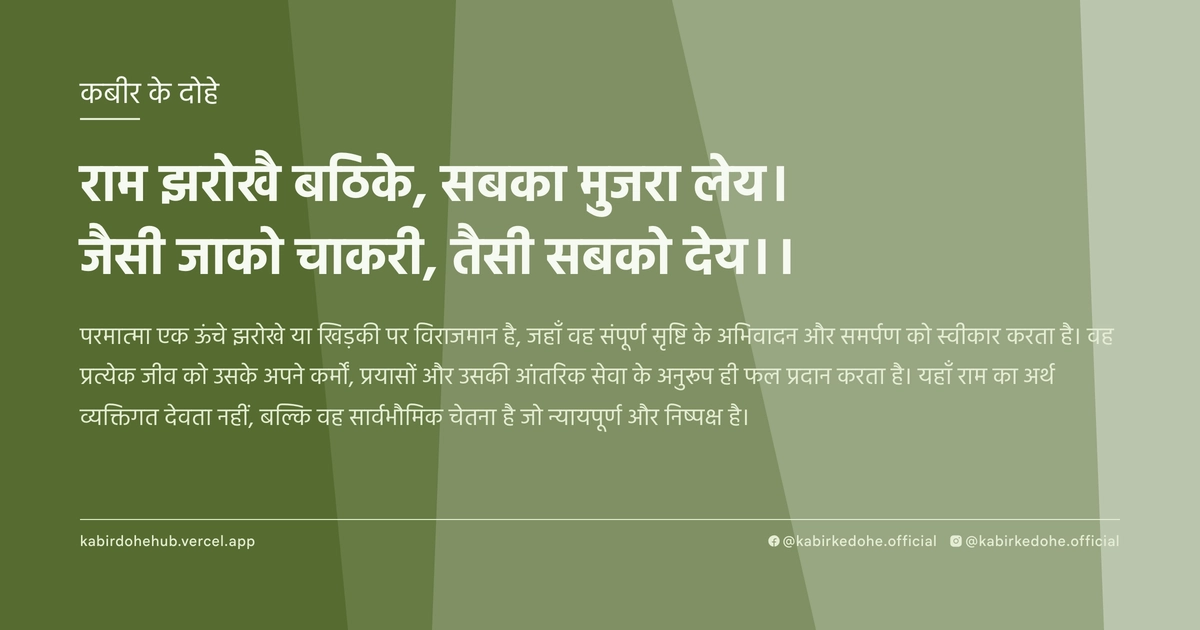
राम झरोखै बठिके, सबका मुजरा लेय।
जैसी जाको चाकरी, तैसी सबको देय।।
Ram jharokhai bathike, sabka mujra ley. Jaisi jaako chaakari, taisi sabko dey.
इस पृष्ठ पर इस कबीर दोहे का अर्थ (meaning), हिंदी व्याख्या और अंग्रेज़ी अनुवाद, दार्शनिक विश्लेषण और व्यावहारिक जीवन सीख दी गई है। यह दोहा कर्म (Karma) विषय से जुड़ा है — Kabir doha meaning and explanation in Hindi and English.
अर्थ (Meaning):
परमात्मा एक ऊंचे झरोखे या खिड़की पर विराजमान है, जहाँ वह संपूर्ण सृष्टि के अभिवादन और समर्पण को स्वीकार करता है। वह प्रत्येक जीव को उसके अपने कर्मों, प्रयासों और उसकी आंतरिक सेवा के अनुरूप ही फल प्रदान करता है। यहाँ राम का अर्थ व्यक्तिगत देवता नहीं, बल्कि वह सार्वभौमिक चेतना है जो न्यायपूर्ण और निष्पक्ष है।
The Divine sits at a high window, accepting the salutations and surrender of all beings. He grants each individual a reward that is exactly proportional to their own service, effort, and the quality of their inner devotion. Here, 'Ram' does not refer to a mythological figure, but to the Universal Consciousness that remains impartial and just.
व्याख्या (Interpretation):
इस दोहे में 'झरोखा' उस उच्च चेतना या साक्षी भाव का प्रतीक है जहाँ से ईश्वर संपूर्ण जगत को देखता है। 'मुजरा' केवल शारीरिक प्रणाम नहीं, बल्कि अहंकार का विसर्जन है। जब साधक अपने अहंकार को त्यागकर समर्पण करता है, तब वह उस झरोखे के दर्शन पाता है। यह निर्गुण भक्ति का सार है, जहाँ ईश्वर किसी एक धर्म या जाति का नहीं, बल्कि सबके लिए उपलब्ध है। 'चाकरी' का अर्थ है वह मानसिक और आध्यात्मिक श्रम जो हम जीवन भर करते हैं। अद्वैत वेदांत के अनुसार, हम जो बीज बोते हैं, वही काटते हैं; यह कर्मफल का सिद्धांत है। यह विरोधाभास है कि हम फल की इच्छा रखते हैं, जबकि फल केवल निस्वार्थ सेवा (चाकरी) का परिणाम होता है। अंततः, यह दोहा बताता है कि ब्रह्मांडीय न्याय पूर्णतः सटीक है और किसी के साथ अन्याय नहीं होता।
In this couplet, the 'window' (jharokha) symbolizes the state of higher consciousness or the Witness-Self from which the Divine observes the entire cosmos. 'Mujra' is not merely a physical bow, but the dissolution of the ego. When a seeker surrenders their pride, they gain access to this divine vantage point. This is the essence of Nirgun Bhakti, where the Divine is not confined to a specific religion or caste but is accessible to all. 'Chakri' refers to the mental and spiritual labor we perform throughout our lives. According to Advaita Vedanta, we reap exactly what we sow; this is the law of Karma. The central paradox lies in our desire for rewards, while the reward is only a byproduct of selfless service. Ultimately, the verse asserts that cosmic justice is precise and impartial, ensuring that no effort goes unnoticed.
दार्शनिक विश्लेषण (Philosophical Analysis):
कबीर का यह दृष्टिकोण उनके समय के कर्मकांडीय आडंबरों पर एक गहरा प्रहार है। उन्होंने देखा कि लोग मंदिर और मस्जिदों में बाहरी दिखावे के लिए झुकते हैं, जबकि वास्तविक 'मुजरा' आंतरिक पवित्रता में निहित है। यह सूफी मत के 'फना' (अहंकार का विनाश) के विचार से मिलता-जुलता है, जहाँ प्रेमी अपने अस्तित्व को मिटाकर ही प्रियतम (ईश्वर) को पा सकता है।
दार्शनिक स्तर पर, यह दोहा अद्वैत वेदांत के इस सिद्धांत की पुष्टि करता है कि आत्मा और परमात्मा एक ही हैं, लेकिन माया के कारण हम स्वयं को अलग मानते हैं। जब हम 'चाकरी' या सेवा के माध्यम से अपने स्वार्थ को मिटाते हैं, तब यह अलगाव समाप्त हो जाता है। कबीर यहाँ यह स्पष्ट कर रहे हैं कि ईश्वर कोई बाहरी न्यायाधीश नहीं है जो दंड देता है, बल्कि वह एक दर्पण है जो हमारे अपने कर्मों को प्रतिबिंबित करता है।
सामाजिक रूप से, कबीर जाति और वर्ण व्यवस्था को नकारते हुए कहते हैं कि ईश्वर की दृष्टि में केवल 'चाकरी' (कर्म) का महत्व है, जन्म का नहीं। यह एक क्रांतिकारी विचार था जिसने उस समय के समाज में समानता का बीज बोया। वे बताते हैं कि मोक्ष किसी विशेष अनुष्ठान से नहीं, बल्कि सत्यनिष्ठा और ईमानदारी से प्राप्त होता है।
मनोवैज्ञानिक रूप से, यह दोहा व्यक्ति को अपनी जिम्मेदारी लेने के लिए प्रेरित करता है। यदि हमें जीवन में दुख या अभाव मिल रहा है, तो यह हमारी अपनी 'चाकरी' या मानसिक प्रवृत्तियों का परिणाम है। यह हमें बाहरी दोषारोपण से हटाकर अंतर्मुखी बनाता है।
अंततः, कबीर का 'राम' वह शून्य है जो पूर्ण है। वह झरोखे पर बैठा है क्योंकि वह संसार में रहते हुए भी संसार से ऊपर (transcendental) है। वह सबको समान अवसर देता है, लेकिन परिणाम व्यक्ति की अपनी पात्रता और प्रयास पर निर्भर करता है।
Kabir's perspective here is a profound critique of the ritualistic pomposity of his era. He observed people bowing in temples and mosques for outward show, while true 'Mujra' resides in inner purity. This aligns with the Sufi concept of 'Fana' (annihilation of the self), where the lover must erase their ego to merge with the Beloved (the Divine).
On a philosophical level, this verse affirms the Advaita Vedanta principle that the Atman and Brahman are one, though we perceive separation due to Maya (illusion). When we erase our selfishness through 'Chakri' or selfless service, this duality vanishes. Kabir clarifies that God is not an external judge handing out punishments, but a mirror reflecting our own actions back to us.
Socially, Kabir rejects the caste and varna system, asserting that in the eyes of the Divine, only 'Chakri' (action/effort) matters, not birth. This was a revolutionary idea that sowed the seeds of equality in a rigid society. He suggests that liberation is achieved not through specific rituals, but through integrity and honesty.
Psychologically, the verse encourages individuals to take absolute ownership of their lives. If one experiences suffering or lack, it is a reflection of their own 'Chakri' or mental tendencies. This shifts the focus from external blame to internal introspection.
Ultimately, Kabir's 'Ram' is the Void that is Full. He sits at the window because He is in the world yet transcends it. He provides equal opportunity to all, but the outcome depends entirely on the individual's capacity and sincerity of effort.
मूल संदेश (Core Message):
- बाहरी अनुष्ठानों के बजाय आंतरिक समर्पण ही वास्तविक प्रार्थना है।
- ब्रह्मांडीय न्याय सटीक है; हम वही प्राप्त करते हैं जो हम वास्तव में हैं।
- अहंकार का विसर्जन ही वह एकमात्र द्वार है जिससे परमात्मा दिखता है।
- सेवा जब निस्वार्थ होती है, तभी वह आध्यात्मिक साधना बन जाती है।
- ईश्वर किसी एक धर्म का नहीं, बल्कि संपूर्ण चेतना का केंद्र है।
- Inner surrender, rather than external ritual, is the only true prayer.
- Cosmic justice is precise; we receive exactly what we truly are.
- The dissolution of ego is the only gateway through which the Divine is seen.
- Service becomes a spiritual discipline only when it is entirely selfless.
- God is not the property of one religion, but the center of all consciousness.
व्यावहारिक उदाहरण (Practical Example):
वाराणसी के एक पुराने घाट पर माधव नाम का एक वृद्ध नाविक रहता था। वह जीवन भर नाव चलाता था, लेकिन उसका मन हमेशा इस बात से दुखी रहता था कि उसके पास बड़े पंडितों की तरह ज्ञान नहीं है और न ही उसके पास धन है। वह अक्सर देखता कि लोग बड़े-बड़े दान देते थे और फिर भी उनके चेहरे पर शांति नहीं थी।
माधव की 'चाकरी' अलग थी। वह केवल नाव नहीं चलाता था, बल्कि वह हर यात्री की मदद निस्वार्थ भाव से करता था। यदि कोई बीमार होता, तो वह उसे बिना पैसे लिए किनारे तक पहुँचाता। यदि कोई भूखा होता, तो वह अपनी आधी रोटी उसे दे देता। उसने कभी नहीं सोचा कि वह पुण्य कमा रहा है; उसके लिए यह केवल मानवता थी।
एक दिन, एक अहंकारी विद्वान उसकी नाव पर सवार हुआ। विद्वान ने माधव का उपहास उड़ाते हुए कहा, "तुम अनपढ़ हो, तुम्हें ईश्वर के बारे में क्या पता? क्या तुम्हें लगता है कि तुम्हारी इस तुच्छ सेवा से तुम्हें कुछ मिलेगा?"
माधव चुप रहा और मुस्कुराया। उसने केवल इतना कहा, "साहब, मैं तो बस अपनी चाकरी कर रहा हूँ, फल तो वह झरोखे वाला देगा।"
कुछ समय बाद, उस विद्वान के जीवन में एक बड़ा संकट आया। उसका सारा मान-सम्मान और धन छिन गया। वह मानसिक रूप से टूट गया और शांति की तलाश में वापस उसी घाट पर आया। उसने देखा कि माधव, जिसके पास भौतिक रूप से कुछ नहीं था, उसके चेहरे पर एक अलौकिक तेज और असीम शांति थी।
विद्वान ने महसूस किया कि उसने जीवन भर शास्त्रों की 'चाकरी' की थी, लेकिन उसमें अहंकार था। जबकि माधव ने मानवता की 'चाकरी' की थी, जिसमें केवल प्रेम था।
विद्वान ने माधव के चरणों में गिरकर पूछा, "तुम्हें यह शांति कैसे मिली?"
माधव ने उत्तर दिया, "जब मैंने यह सोचना छोड़ दिया कि मैं कुछ 'दे' रहा हूँ, और यह मान लिया कि मैं केवल उस परमात्मा की सेवा कर रहा हूँ जो हर इंसान में है, तब मेरा बोझ उतर गया।"
यह माधव का 'कबीर ट्विस्ट' था। उसने यह समझ लिया कि ईश्वर किसी विशेष पूजा से नहीं, बल्कि उस सेवा से मिलता है जिसमें 'मैं' का भाव पूरी तरह मिट चुका हो। विद्वान ने भी अपनी बाहरी पहचान को त्यागकर सरल सेवा का मार्ग अपनाया और अंततः आंतरिक शांति प्राप्त की।
On an old ghat in Varanasi lived an elderly boatman named Madhav. He had spent his life rowing, but his heart was often heavy with the feeling that he lacked the scholarly knowledge of the great pundits or the wealth of the merchants. He often noticed that people gave massive donations, yet their faces lacked peace.
Madhav's 'Chakri' was different. He didn't just row a boat; he helped every passenger with selfless devotion. If someone was ill, he would take them to the shore without charging a penny. If someone was hungry, he would share half of his bread. He never thought he was earning spiritual merit; to him, it was simply humanity.
One day, an arrogant scholar boarded his boat. The scholar mocked Madhav, saying, "You are illiterate; what do you know of God? Do you really believe your trivial service will grant you anything?"
Madhav remained silent and smiled. He simply said, "Sir, I am merely performing my service; the one at the window will provide the fruit."
Sometime later, a great crisis struck the scholar's life. He lost all his prestige and wealth. Broken and desperate for peace, he returned to that same ghat. He saw Madhav, who possessed nothing materially, yet had a divine glow and infinite peace on his face.
The scholar realized that he had spent his life performing the 'Chakri' of scriptures, but it was laced with ego. Madhav, however, had performed the 'Chakri' of humanity, fueled only by love.
Falling at Madhav's feet, the scholar asked, "How did you attain this peace?"
Madhav replied, "When I stopped thinking that I was 'giving' something and realized I was merely serving the Divine present in every human, my burden vanished."
This was Madhav's 'Kabir Twist.' He understood that God is not found through specific rituals, but through service where the sense of 'I' is completely erased. The scholar also abandoned his external identity and adopted the path of simple service, eventually finding inner peace.
अभ्यास मार्गदर्शन (Practice Guidance):
- प्रतिदिन 20 मिनट मौन ध्यान करें, जहाँ आप स्वयं को एक 'साक्षी' (झरोखे) के रूप में देखें और अपने विचारों को बिना किसी निर्णय के गुजरते हुए देखें।
- एक 'निस्वार्थ सेवा डायरी' बनाएँ। प्रतिदिन एक ऐसा कार्य करें जिसका कोई भौतिक या सामाजिक लाभ न हो, और लिखें कि उस समय आपके भीतर 'अहंकार' की कितनी उपस्थिति थी।
- व्यवहार परिवर्तन: जब भी आप किसी की मदद करें, तो मन में यह विचार लाएँ कि आप उस व्यक्ति की नहीं, बल्कि उसके भीतर बैठे उस 'राम' (चेतना) की सेवा कर रहे हैं।
- डायग्नोस्टिक चेकलिस्ट: क्या मैं फल की चिंता कर रहा हूँ? क्या मैं मदद करने के बाद प्रशंसा की अपेक्षा करता हूँ? क्या मैं दूसरों को अपने से छोटा समझता हूँ? यदि हाँ, तो मेरी 'चाकरी' अभी भी अहंकार से प्रेरित है।
- Practice 20 minutes of silent meditation daily, positioning yourself as the 'Witness' (the window), observing your thoughts pass by without judgment.
- Maintain a 'Selfless Service Journal.' Perform one act daily that offers no material or social gain, and record the level of 'ego' present during the act.
- Behavioral Shift: Whenever you help someone, consciously tell yourself that you are not serving the person, but the 'Ram' (Universal Consciousness) residing within them.
- Diagnostic Checklist: Am I worrying about the results? Do I expect praise after helping? Do I perceive others as inferior? If yes, my 'Chakri' is still driven by ego.
चिंतन प्रश्न (Reflection Questions):
- मेरा 'मुजरा' (समर्पण) वास्तविक है या केवल सामाजिक छवि को बनाए रखने का एक तरीका है?
- मैं जिस 'चाकरी' (सेवा) का दावा करता हूँ, क्या उसमें सूक्ष्म रूप से प्रशंसा की भूख छिपी है?
- यदि मेरे जीवन के सभी बाहरी पद और पहचान छीन लिए जाएँ, तो उस 'झरोखे' के सामने मैं कौन रहूँगा?
- क्या मैं वास्तव में दूसरों की सेवा करता हूँ, या मैं अपनी श्रेष्ठता सिद्ध करने के लिए सेवा का उपयोग करता हूँ?
- मेरे जीवन के वर्तमान दुख मेरी किस पुरानी 'चाकरी' या मानसिक प्रवृत्ति का प्रतिबिंब हैं?
- क्या मैं ईश्वर को एक बाहरी न्यायाधीश मानता हूँ या अपने भीतर की एक जागृत चेतना?
- Is my 'Mujra' (surrender) genuine, or is it merely a way to maintain a social image?
- In the 'Chakri' (service) I claim to perform, is there a hidden hunger for validation?
- If all my external titles and identities were stripped away, who would I be before that 'window'?
- Do I truly serve others, or do I use service as a tool to prove my own superiority?
- Which old 'Chakri' or mental tendency is being reflected in the current hardships of my life?
- Do I perceive God as an external judge or as an awakened consciousness within me?