
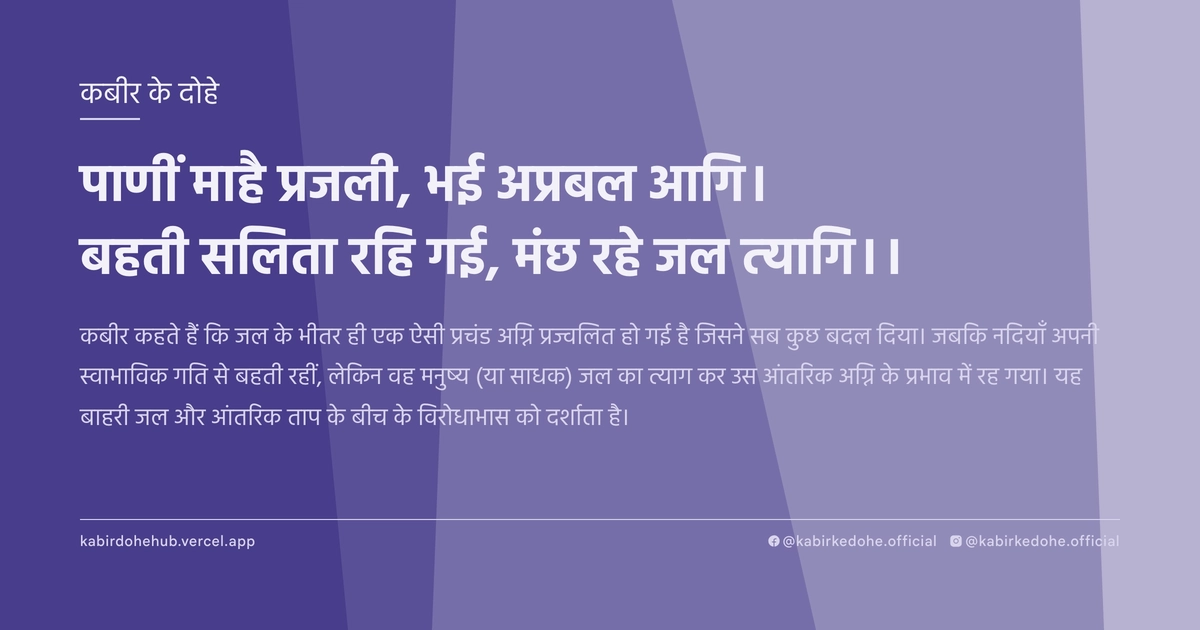
पाणीं माहै प्रजली, भई अप्रबल आगि।
बहती सलिता रहि गई, मंछ रहे जल त्यागि।।
Paani maahai prajali, bhai aprabal aagi. Behti salita rahi gai, manchh rahe jal tyaagi.
इस पृष्ठ पर इस कबीर दोहे का अर्थ (meaning), हिंदी व्याख्या और अंग्रेज़ी अनुवाद, दार्शनिक विश्लेषण और व्यावहारिक जीवन सीख दी गई है। यह दोहा माया (Maya) विषय से जुड़ा है — Kabir doha meaning and explanation in Hindi and English.
अर्थ (Meaning):
कबीर कहते हैं कि जल के भीतर ही एक ऐसी प्रचंड अग्नि प्रज्वलित हो गई है जिसने सब कुछ बदल दिया। जबकि नदियाँ अपनी स्वाभाविक गति से बहती रहीं, लेकिन वह मनुष्य (या साधक) जल का त्याग कर उस आंतरिक अग्नि के प्रभाव में रह गया। यह बाहरी जल और आंतरिक ताप के बीच के विरोधाभास को दर्शाता है।
Kabir describes a paradoxical state where a powerful, uncontrollable fire has ignited within the very element of water. While the rivers continue to flow in their natural course, the seeker or the human soul has abandoned the superficial water to remain immersed in that internal fire. It signifies the transcendence of the physical for the spiritual.
व्याख्या (Interpretation):
यहाँ 'पाणी' (जल) संसार की माया और भौतिकता का प्रतीक है, जबकि 'आगि' (अग्नि) ज्ञान की तीव्र तड़प और विरह की अग्नि है। शाब्दिक अर्थ में यह असंभव लगता है कि जल में अग्नि जले, लेकिन आध्यात्मिक स्तर पर यह 'कुण्डलिनी' या 'ज्ञान-अग्नि' का उदय है। यह निरगुण भक्ति का वह चरम है जहाँ साधक संसार के बीच रहकर भी उससे पूरी तरह अलग हो जाता है। माया की नदियाँ बहती रहती हैं, पर जागृत आत्मा अब उस मोह-माया के जल में नहीं डूबती। यह अद्वैत वेदांत के उस सत्य को उजागर करता है जहाँ द्वैत (जल और अग्नि) समाप्त होकर एक उच्च चेतना में विलीन हो जाते हैं। साधक का 'जल त्यागना' वास्तव में अज्ञान का त्याग करना है।
In this verse, 'Paani' (water) symbolizes the illusory world of Maya and material existence, while 'Aagi' (fire) represents the intense longing for the Divine and the fire of spiritual knowledge. Literally, fire cannot exist in water, but metaphorically, this represents the awakening of the inner flame or 'Kundalini' amidst the chaos of existence. It reflects the peak of Nirgun Bhakti, where the seeker remains in the world but is no longer of it. The rivers of worldly desire continue to flow, but the awakened soul has abandoned the 'water' of delusion. This aligns with Advaita Vedanta, where the duality of opposites dissolves into a singular, higher consciousness. The act of 'abandoning water' is the surrender of the ego and the cessation of identification with the transient body.
दार्शनिक विश्लेषण (Philosophical Analysis):
कबीर का यह दोहा मध्यकालीन भारत के उस सामाजिक-धार्मिक परिवेश से उपजा है जहाँ कर्मकांड और बाहरी आडंबरों का बोलबाला था। कबीर ने हमेशा बाहरी तीर्थों और जल-स्नान की तुलना में आंतरिक शुद्धि पर बल दिया। यहाँ 'जल' उन सभी औपचारिकताओं का प्रतीक है जिन्हें लोग मोक्ष का साधन मानते हैं, जबकि 'अग्नि' उस वास्तविक तप है जो अहंकार को जलाकर भस्म कर देती है।
दार्शनिक रूप से, यह सूफीवाद के 'इश्क-ए-हकीकी' (दिव्य प्रेम) के समान है, जहाँ प्रेमी ईश्वर की विरह-अग्नि में जलकर अपनी व्यक्तिगत पहचान खो देता है। यह 'फना' होने की प्रक्रिया है। जब तक मनुष्य स्वयं को शरीर और नाम (जल) मानता है, वह संसार की धारा में बहता रहता है। लेकिन जब ज्ञान की अग्नि प्रज्वलित होती है, तो वह इस प्रवाह से बाहर निकल आता है।
अद्वैत वेदांत के परिप्रेक्ष्य में, यह स्थिति 'विवेक' और 'वैराग्य' की है। जल यहाँ 'अविद्या' है और अग्नि 'विद्या'। जब विद्या का उदय होता है, तो अविद्या का भ्रम समाप्त हो जाता है। कबीर यह स्पष्ट करते हैं कि मोक्ष किसी बाहरी नदी में डुबकी लगाने से नहीं, बल्कि भीतर की अग्नि को जगाने से मिलता है।
मनोवैज्ञानिक स्तर पर, यह मानसिक रूपांतरण की प्रक्रिया है। मनुष्य अक्सर अपनी भावनाओं और इच्छाओं के 'जल' में डूबा रहता है। इस दोहे में 'अप्रबल आगि' उस तीव्र आत्म-साक्षात्कार की इच्छा को दर्शाती है जो व्यक्ति को उसकी सुख-सुविधाओं के क्षेत्र (Comfort Zone) से बाहर धकेल देती है।
अंततः, कबीर ritualism (कर्मकांड) का खंडन करते हुए यह संदेश देते हैं कि सत्य वह नहीं है जो दिखाई देता है, बल्कि वह है जो अनुभव किया जाता है। बाहरी दुनिया (बहती सलिता) अपनी गति से चलती रहेगी, लेकिन जो भीतर की अग्नि को पा लेता है, वह इस द्वंद्व से मुक्त हो जाता है।
This couplet emerges from the socio-religious landscape of medieval India, where ritualism and external piety dominated. Kabir consistently championed internal purification over external pilgrimages and ritual baths. Here, 'water' symbolizes the formalisms people mistake for salvation, while 'fire' represents the actual austerity (Tapas) that incinerates the ego.
Philosophically, this mirrors the Sufi concept of 'Ishq-e-Haqiqi' (Divine Love), where the seeker is consumed by the fire of longing for the Beloved, leading to 'Fana' or the annihilation of the self. As long as a human identifies with the body and social labels (water), they are swept away by the current of existence. However, once the fire of knowledge ignites, they transcend this flow.
From the lens of Advaita Vedanta, this state represents 'Viveka' (discrimination) and 'Vairagya' (detachment). Water is 'Avidya' (ignorance), and fire is 'Vidya' (knowledge). When true knowledge dawns, the illusion of ignorance vanishes. Kabir asserts that liberation is not found in the dips of a physical river but in the ignition of the inner flame.
Psychologically, this describes a profound transformation. Humans are often submerged in the 'water' of their emotions and desires. The 'uncontrollable fire' represents the intense drive for self-realization that forces an individual out of their psychological comfort zone and into a state of spiritual urgency.
Ultimately, Kabir rejects ritualism, suggesting that Truth is not what is visible but what is experienced. While the external world (the flowing river) continues its mindless cycle, the one who possesses the inner fire attains a state of stillness and liberation from duality.
मूल संदेश (Core Message):
- बाहरी अनुष्ठानों का मोह केवल एक भ्रम है।
- सच्ची आध्यात्मिक प्रगति आंतरिक तड़प और तप से आती है।
- अहंकार का विनाश ही वास्तविक ज्ञान का उदय है।
- संसार में रहें, लेकिन संसार को अपने भीतर न बसने दें।
- द्वैत से ऊपर उठकर अद्वैत की अग्नि में विलीन होना ही लक्ष्य है।
- Attachment to external rituals is a mere illusion.
- True spiritual progress stems from inner longing and austerity.
- The annihilation of the ego is the dawn of real knowledge.
- Live in the world, but do not let the world live within you.
- The ultimate goal is to transcend duality and merge into the fire of Oneness.
व्यावहारिक उदाहरण (Practical Example):
वाराणसी के एक पुराने मोहल्ले में माधव नाम का एक बुनकर रहता था। वह अपनी कला में निपुण था, लेकिन उसका मन हमेशा इस बात से अशांत रहता था कि वह समाज में अपनी पहचान कैसे बनाए। वह दिन-भर रेशमी धागों के साथ खेलता, लेकिन उसके भीतर एक खालीपन था। वह अक्सर गंगा किनारे जाता और घंटों पानी को देखता, यह सोचकर कि शायद इस पवित्र जल में उसकी सारी चिंताएँ बह जाएँगी।
एक दिन उसकी मुलाकात एक फकीर से हुई जिसने माधव से कहा, "तू बाहर के पानी में शांति ढूँढ रहा है, जबकि तेरे भीतर एक ऐसी आग है जो तुझे जला रही है, पर तू उसे देख नहीं पा रहा।"
माधव ने पूछा, "वह कौन सी आग है?"
फकीर ने उत्तर दिया, "वह सत्य को जानने की तड़प है। जब तक तू इस बाहरी दुनिया के प्रवाह (जल) में बहेगा, तू केवल एक बुनकर रहेगा। जिस दिन तू इस तड़प को स्वीकार करेगा, तू स्वयं को बुनना शुरू करेगा।"
माधव ने उस दिन से बाहरी दिखावे और सामाजिक प्रतिष्ठा की दौड़ को त्याग दिया। उसने अपनी बुनाई को केवल जीविका नहीं, बल्कि एक ध्यान (Meditation) बना लिया। वह अब भी रेशम बुनता था, लेकिन अब वह धागों में नहीं, बल्कि उस शून्य में खो जाता था जहाँ कोई 'मैं' नहीं था।
उसके साथी बुनकर उसे पागल कहने लगे क्योंकि वह अब महंगे ऑर्डर की चिंता नहीं करता था और अक्सर काम के बीच में मौन हो जाता था। वे अभी भी 'सफलता की नदी' में बह रहे थे।
लेकिन माधव के भीतर एक शांति थी। उसने महसूस किया कि वह अब तक जिस 'जल' (प्रतिष्ठा और मोह) में डूबा था, वह उसे केवल भारी बना रहा था।
उसने अपनी आंतरिक अग्नि को पहचाना—वह अग्नि जो उसके अहंकार को जला चुकी थी। अब वह गंगा के किनारे शांति के लिए नहीं जाता था, क्योंकि वह स्वयं शांति बन चुका था।
उसका जीवन अब एक विरोधाभास था: वह दुनिया के बीच था, लेकिन दुनिया उससे अलग थी। उसने बाहरी जल का त्याग कर आंतरिक अग्नि को अपना लिया था।
माधव की यह रूपांतरण यात्रा दिखाती है कि कैसे एक साधारण व्यक्ति अपनी आंतरिक तड़प को पहचानकर सांसारिक प्रवाह से मुक्त हो सकता है।
In an ancient alley of Varanasi lived a weaver named Madhav. He was masterful in his craft, yet his mind was perpetually restless, obsessed with how to establish his identity and status in society. He spent his days playing with silk threads, but an echoing void remained within him. He often visited the banks of the Ganges, watching the water for hours, hoping the holy river would wash away his anxieties.
One day, he encountered a wandering dervish who told him, "You seek peace in the external waters, while within you burns a fire you refuse to see."
Madhav asked, "What fire is this?"
The dervish replied, "It is the longing for Truth. As long as you flow with the current of this external world (water), you will remain merely a weaver. The day you embrace this inner fire, you will begin to weave your own soul."
From that day, Madhav abandoned the race for social prestige and external validation. He transformed his weaving from a mere livelihood into a form of meditation. He still worked with silk, but he no longer lost himself in the threads; instead, he dissolved into the void where the 'I' ceased to exist.
His fellow weavers called him mad because he no longer fretted over expensive orders and would often fall into deep silence mid-work. They were still swimming in the 'river of success.'
But Madhav possessed a profound stillness. He realized that the 'water' (prestige and attachment) he had been submerged in was only weighing him down.
He recognized his inner fire—the flame that had incinerated his ego. He no longer visited the Ganges to find peace, for he had become peace itself.
His life became a paradox: he was in the world, but the world was no longer in him. He had abandoned the external water to dwell in the internal fire.
Madhav's journey illustrates how an ordinary person, by recognizing their inner spiritual urgency, can liberate themselves from the mindless flow of worldly existence.
अभ्यास मार्गदर्शन (Practice Guidance):
- दैनिक ध्यान: प्रतिदिन 20 मिनट मौन बैठें और अपने भीतर की उस 'तड़प' या 'अशांति' को महसूस करें जिसे आप अक्सर दबा देते हैं। उसे दबाने के बजाय उसे एक अग्नि की तरह जलने दें।
- आत्म-पूछताछ जर्नल: लिखें कि आपके जीवन में 'जल' (वे बाहरी चीजें जो आपको भ्रमित करती हैं या जिनसे आप पहचान जोड़ते हैं) क्या है? क्या यह आपकी नौकरी है, आपका पद है, या आपकी छवि?
- व्यवहार परिवर्तन: दिन में कम से कम एक बार किसी ऐसी स्थिति में जाएँ जहाँ आपका अहंकार चोटिल हो, और उस समय प्रतिक्रिया करने के बजाय केवल साक्षी (Observer) बनें।
- निदान चेकलिस्ट: यदि आप अभी भी दूसरों की प्रशंसा से खुश और निंदा से दुखी होते हैं, तो आप अभी भी 'जल' में बह रहे हैं। यदि आप दोनों स्थितियों में तटस्थ हैं, तो आपकी आंतरिक अग्नि प्रज्वलित हो रही है।
- Daily Meditation: Sit in silence for 20 minutes daily and feel the 'restlessness' or 'longing' within you that you usually suppress. Instead of fighting it, let it burn like a sacred fire.
- Self-Inquiry Journaling: Identify the 'water' in your life—the external attachments or labels you use to define yourself. Is it your career, your social status, or your public image?
- Behavioral Shift: Once a day, consciously place yourself in a situation where your ego is challenged. Instead of reacting, practice being a detached observer of your own discomfort.
- Diagnostic Checklist: If you are still elated by praise and devastated by criticism, you are still flowing in the 'water.' If you remain equanimous in both, your inner fire is igniting.
चिंतन प्रश्न (Reflection Questions):
- आपकी वह कौन सी 'सामाजिक पहचान' है जिसे खोने के डर से आप अपनी आत्मा की पुकार को अनसुना कर रहे हैं?
- क्या आपकी शांति बाहरी परिस्थितियों पर निर्भर है, या वह आपके भीतर की एक स्वतंत्र अग्नि है?
- आप दुनिया के सामने जो 'आदर्श' चेहरा दिखाते हैं, उसके पीछे कौन सा अंधेरा या डर छिपा है?
- यदि आज आपकी सारी उपलब्धियाँ और पद छीन लिए जाएँ, तो क्या आपके पास ऐसा कुछ बचेगा जिसे आप 'मैं' कह सकें?
- आपकी डिजिटल पहचान (Social Media Ego) किस तरह आपको वास्तविक आत्म-साक्षात्कार से दूर ले जा रही है?
- Which 'social identity' are you so afraid of losing that you continue to ignore the call of your soul?
- Is your peace dependent on external circumstances, or is it an independent fire burning within you?
- What shadow or fear is hidden behind the 'ideal' face you present to the world?
- If all your achievements and titles were stripped away today, would there be anything left that you could call 'I'?
- How is your digital identity (social media ego) distancing you from the experience of your authentic self?