
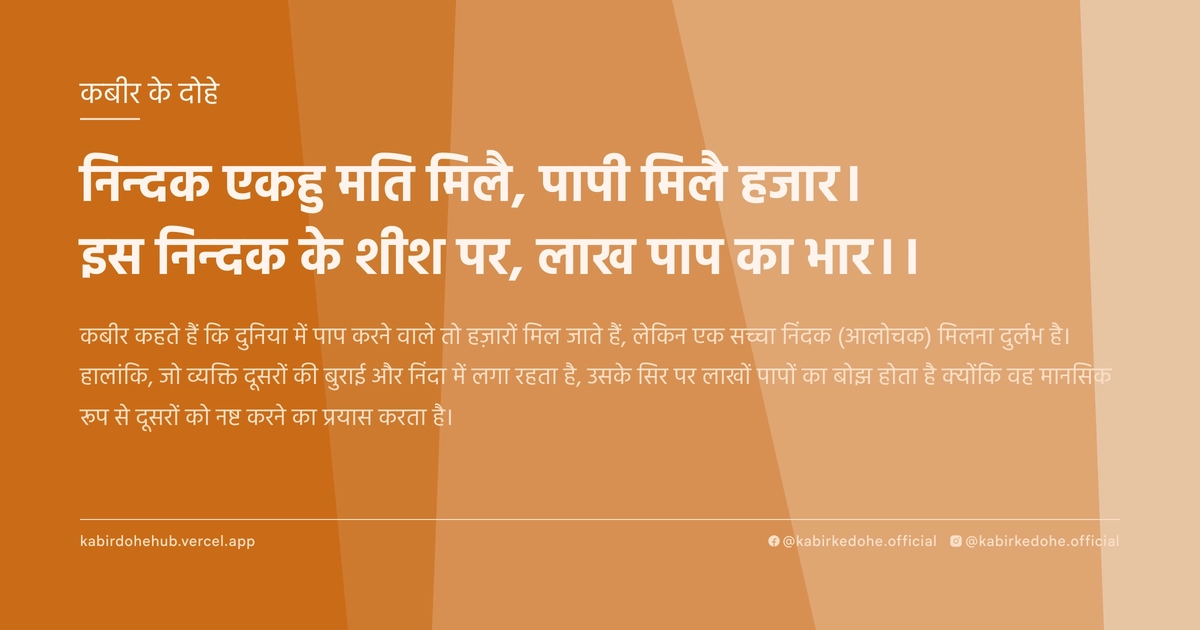
निन्दक एकहु मति मिलै, पापी मिलै हजार।
इस निन्दक के शीश पर, लाख पाप का भार।।
Nindak ekahu mati milai, paapi milai hazaar. Is nindak ke sheesh par, laakh paap ka bhaar.
इस पृष्ठ पर इस कबीर दोहे का अर्थ (meaning), हिंदी व्याख्या और अंग्रेज़ी अनुवाद, दार्शनिक विश्लेषण और व्यावहारिक जीवन सीख दी गई है। यह दोहा विनम्रता (Humility) विषय से जुड़ा है — Kabir doha meaning and explanation in Hindi and English.
अर्थ (Meaning):
कबीर कहते हैं कि दुनिया में पाप करने वाले तो हज़ारों मिल जाते हैं, लेकिन एक सच्चा निंदक (आलोचक) मिलना दुर्लभ है। हालांकि, जो व्यक्ति दूसरों की बुराई और निंदा में लगा रहता है, उसके सिर पर लाखों पापों का बोझ होता है क्योंकि वह मानसिक रूप से दूसरों को नष्ट करने का प्रयास करता है।
Kabir observes that while sinners are found by the thousands, a true critic or slanderer is a rare find. However, he warns that the one who habitually engages in the defamation of others carries the burden of a million sins upon their head, as the act of slandering is a profound spiritual transgression.
व्याख्या (Interpretation):
शाब्दिक अर्थ यह है कि निंदा करने वाले कम हैं पर उनका पाप अधिक है। रूपकात्मक रूप से, 'निंदक' वह अहंकार है जो स्वयं को श्रेष्ठ सिद्ध करने के लिए दूसरे की छवि को खंडित करता है। यह निर्गुण भक्ति के उस मार्ग का विरोध है जहाँ आत्मा को सर्वव्यापी माना गया है। जब हम किसी की निंदा करते हैं, तो हम वास्तव में उस ब्रह्म का अपमान करते हैं जो हर जीव में स्थित है। माया हमें यह भ्रम देती है कि दूसरे की त्रुटि को उजागर कर हम अपनी पवित्रता बढ़ा रहे हैं, जबकि वास्तव में हम अपने ही आत्मिक पतन का मार्ग प्रशस्त कर रहे हैं। यह द्वैतवाद की पराकाष्ठा है जहाँ 'मैं' और 'वह' का भेद घृणा को जन्म देता है।
Literally, the verse suggests that critics are few but their spiritual burden is immense. Metaphorically, the 'Nindak' represents the ego that seeks to elevate itself by diminishing another. In the context of Nirgun Bhakti, where the Divine is seen as omnipresent, slandering another is an act of aggression against the Brahman residing within that person. Maya creates the illusion that by highlighting another's flaws, we enhance our own purity; in reality, we accelerate our own spiritual decay. This is the peak of duality, where the perceived separation between 'I' and 'Thou' manifests as hatred, obscuring the non-dual truth of Advaita Vedanta.
दार्शनिक विश्लेषण (Philosophical Analysis):
कबीर का यह दोहा उनके युग के सामाजिक पाखंड और धार्मिक कट्टरता पर एक गहरा प्रहार है। उस समय लोग बाहरी कर्मकांडों में लीन थे, लेकिन उनके भीतर ईर्ष्या और द्वेष कूट-कूट कर भरा था। कबीर यहाँ 'पाप' को केवल शारीरिक क्रिया नहीं, बल्कि मानसिक विषाक्तता के रूप में परिभाषित करते हैं। वे बताते हैं कि एक साधारण पापी शायद अज्ञानवश गलती करता है, लेकिन निंदक सचेत रूप से दूसरे के सम्मान को चोट पहुँचाता है, जो कि एक अधिक गंभीर आध्यात्मिक अपराध है।
अद्वैत वेदांत के दृष्टिकोण से, यदि पूरी सृष्टि एक ही चेतना का विस्तार है, तो दूसरे की निंदा करना स्वयं के ही हाथ को काटने जैसा है। सूफी मत में इसे 'नफ्स' (अहंकार) की जीत कहा जाता है, जहाँ इंसान अपनी वासनाओं और अहंकार के वश में होकर दूसरे को नीचा दिखाता है। कबीर का उद्देश्य व्यक्ति को इस मानसिक जाल से मुक्त करना है।
यहाँ 'लाख पाप का भार' केवल धार्मिक दंड नहीं, बल्कि मनोवैज्ञानिक बोझ है। निंदा करने वाला व्यक्ति कभी शांत नहीं रह सकता क्योंकि उसका मन निरंतर दूसरों की कमियों की खोज में रहता है, जिससे उसकी अपनी आंतरिक शांति नष्ट हो जाती है। यह एक ऐसा चक्र है जहाँ घृणा घृणा को जन्म देती है।
कबीर ritualism (कर्मकांड) के बजाय internal purity (आंतरिक शुद्धि) पर जोर देते हैं। वे कहते हैं कि मंदिर-मस्जिद जाने से अधिक महत्वपूर्ण यह है कि आपकी वाणी और विचार दूसरों के प्रति करुणा से भरे हों। जो व्यक्ति दूसरों के दोष देखता है, वह वास्तव में अपने ही भीतर के अंधेरे को प्रतिबिंबित कर रहा होता है।
अंततः, यह विश्लेषण हमें अहंकार के विसर्जन की ओर ले जाता है। जब 'मैं' मिट जाता है, तो निंदा करने वाला कोई नहीं बचता और न ही कोई ऐसा जिसे निंदा की आवश्यकता हो। यही वह अवस्था है जिसे कबीर 'शून्य' या 'सहज' अवस्था कहते हैं, जहाँ केवल प्रेम और सत्य शेष रह जाते हैं।
Kabir's couplet is a profound critique of the social hypocrisy and religious bigotry of his era. While people were immersed in external rituals, their hearts were often filled with envy and malice. Kabir defines 'sin' not merely as a physical transgression but as mental toxicity. He posits that while a common sinner might err out of ignorance, a slanderer consciously attacks the dignity of another, which is a far more severe spiritual crime.
From the perspective of Advaita Vedanta, if the entire universe is an extension of a single consciousness, slandering another is akin to cutting one's own hand. In Sufism, this is seen as the victory of the 'Nafs' (ego), where the individual, driven by pride, seeks to diminish others to feel superior. Kabir aims to liberate the seeker from this psychological trap.
The 'burden of a million sins' is not just a religious penalty but a psychological weight. The slanderer can never find peace because their mind is perpetually scanning for flaws in others, thereby destroying their own inner tranquility. It is a vicious cycle where hatred only breeds more hatred.
Kabir emphasizes internal purity over ritualism. He suggests that visiting temples or mosques is meaningless if one's speech and thoughts are not infused with compassion. He argues that the one who perceives faults in others is merely projecting their own internal darkness onto the world.
Ultimately, this analysis leads toward the annihilation of the ego. When the 'I' vanishes, there is no one left to slander and no one left to be slandered. This is the state Kabir refers to as 'Shunya' (void) or 'Sahaj' (spontaneous state), where only love and truth remain.
मूल संदेश (Core Message):
- निंदा अहंकार का मुखौटा है, जो स्वयं की रिक्तता को छिपाता है।
- दूसरों के दोष देखना वास्तव में अपने आंतरिक अंधकार का प्रतिबिंब है।
- वाणी की पवित्रता ही आत्मा की वास्तविक शुद्धि का मार्ग है।
- जब हम दूसरों को क्षमा करते हैं, तो हम वास्तव में स्वयं को मुक्त करते हैं।
- ब्रह्म की सर्वव्यापकता को पहचानना ही निंदा के अंत की शुरुआत है।
- प्रेम वह एकमात्र शक्ति है जो द्वैत और घृणा के भार को मिटा सकती है।
- Slander is a mask of the ego, hiding its own inner emptiness.
- Perceiving faults in others is merely a reflection of one's own internal darkness.
- Purity of speech is the only true path to the purification of the soul.
- When we forgive others, we are actually liberating ourselves.
- Recognizing the omnipresence of Brahman is the beginning of the end of criticism.
- Love is the only force capable of erasing the burden of duality and hatred.
व्यावहारिक उदाहरण (Practical Example):
वाराणसी के एक पुराने घाट पर रहने वाली एक वृद्ध विधवा, जानकी, अपनी पूरी जिंदगी दूसरों की बातों और समाज के कड़े नियमों के बीच गुजार चुकी थी। वह अपने मोहल्ले की सबसे बड़ी 'निंदक' मानी जाती थी। वह हर आने-जाने वाले की बुराई करती, उनके पहनावे का मजाक उड़ाती और उनकी निजी जिंदगी की कमियों को चर्चा का विषय बनाती। उसे लगता था कि दूसरों की गलतियां बताकर वह अपनी धार्मिक श्रेष्ठता सिद्ध कर रही है।
एक दिन, जानकी की मुलाकात एक मौन साधु से हुई जो घाट की सीढ़ियों पर बैठे थे। जानकी ने उनके पास जाकर अपने पड़ोस की एक महिला की बुराई शुरू कर दी, जिसने हाल ही में अपने पति को खोया था और अब स्वतंत्र रूप से काम कर रही थी। जानकी ने कहा, "देखो महाराज, वह स्त्री मर्यादा भूल गई है, वह कितनी पापी है!"
साधु ने कुछ नहीं कहा, बस अपनी झोली से एक छोटा सा दर्पण निकाला और जानकी के चेहरे के सामने कर दिया। फिर उन्होंने धीरे से कहा, "माता, आप जिसे देख रही हैं, वह दर्पण नहीं, बल्कि आपकी अपनी आत्मा का प्रतिबिंब है। आप जो दूसरों में देख रही हैं, वह वास्तव में आपके अपने भीतर का अधूरापन और क्रोध है।"
जानकी पहले तो क्रोधित हुई, लेकिन साधु की शांत आँखों ने उसे अंदर तक झकझोर दिया। उसे अचानक महसूस हुआ कि पिछले कई वर्षों से वह दूसरों की निंदा करते हुए कितनी मानसिक थकान और भारीपन महसूस कर रही थी। उसकी रातों की नींद उड़ गई थी क्योंकि वह हमेशा इस चिंता में रहती थी कि कौन क्या कह रहा है और उसे किसका जवाब देना है।
उस रात जानकी को नींद नहीं आई। उसने महसूस किया कि 'पाप का भार' कोई बाहरी चीज नहीं, बल्कि वह कड़वाहट थी जो उसके अपने गले में अटकी हुई थी। उसने महसूस किया कि दूसरों को नीचा दिखाकर वह कभी ऊपर नहीं उठी, बल्कि और अधिक गहरे अंधेरे में गिर गई थी।
अगले दिन, जानकी ने एक अद्भुत बदलाव किया। जब उसकी सहेलियां फिर से किसी की बुराई करने के लिए उसके पास आईं, तो उसने मुस्कुराकर कहा, "बहनों, हम दूसरों के कांटों की बात करते रहे, कभी अपने पैरों के छालों को नहीं देखा। आज से मैं केवल उस बात का जिक्र करूँगी जो किसी के चेहरे पर मुस्कान लाए।"
शुरुआत में लोगों ने उसका मजाक उड़ाया, उसे 'पागल' कहा, लेकिन जानकी को अब एक अजीब सी शांति महसूस हो रही थी। उसने देखा कि जैसे-जैसे उसने निंदा करना छोड़ा, उसके मन का वह भारीपन कम होने लगा। वह अब दूसरों की गलतियों को सुधारने के बजाय उनकी अच्छाइयों को खोजने लगी।
धीरे-धीरे, मोहल्ले का माहौल बदलने लगा। जो लोग पहले एक-दूसरे की पीठ पीछे बात करते थे, अब वे जानकी की सकारात्मकता से प्रभावित होकर आपस में बातचीत करने लगे। जानकी ने पाया कि असली 'पुण्य' दूसरों को छोटा दिखाने में नहीं, बल्कि उन्हें बड़ा बनाने में है।
उसकी जिंदगी का वह 'कबीर ट्विस्ट' यह था कि उसने पाया कि जब उसने दूसरों के सिर से दोषों का बोझ उतारा, तो उसके अपने सिर से वह 'लाख पापों का भार' अपने आप हट गया। वह अब वास्तव में स्वतंत्र थी।
अंत में, जानकी ने अपनी शेष आयु सेवा और मौन में बिताई। उसने सीखा कि वाणी का सही उपयोग ही सबसे बड़ी तपस्या है और निंदा का त्याग ही मोक्ष का पहला कदम है।
In the ancient ghats of Varanasi lived an elderly widow named Janki, who had spent her life navigating the rigid rules of society. She was known as the most notorious slanderer in her neighborhood. She criticized everyone who passed by, mocked their attire, and turned their personal failures into public gossip. She believed that by exposing others' flaws, she was proving her own religious superiority.
One day, Janki encountered a silent monk sitting on the stone steps of the ghat. She approached him and began slandering a neighbor—a woman who had recently lost her husband and started working independently. Janki exclaimed, "Look, Maharaj, that woman has forgotten all modesty; she is a sinner!"
The monk said nothing. He simply pulled a small mirror from his bag and held it up to Janki's face. He whispered softly, "Mother, what you see is not a mirror, but a reflection of your own soul. The flaws you see in others are actually the voids and anger residing within yourself."
Janki was initially offended, but the monk's serene eyes shook her to the core. She suddenly realized that for years, while slandering others, she had been carrying an immense mental exhaustion and heaviness. Her sleep had vanished because she was constantly preoccupied with who was saying what and how she should respond.
That night, Janki could not sleep. She realized that the 'burden of sin' was not an external entity, but the bitterness lodged in her own throat. She understood that by belittling others, she had never risen; instead, she had sunk deeper into darkness.
The next day, Janki made a radical change. When her friends gathered to gossip and criticize someone, she smiled and said, "Sisters, we have spent our lives talking about the thorns in others' paths, but we never looked at the blisters on our own feet. From today, I will only speak of things that bring a smile to someone's face."
At first, people mocked her and called her 'mad,' but Janki felt a strange, new peace. She noticed that as she stopped slandering, the heaviness in her heart began to lift. She stopped looking for mistakes and started searching for the goodness in people.
Slowly, the atmosphere of the neighborhood shifted. People who once spoke behind each other's backs began to communicate openly, influenced by Janki's positivity. Janki discovered that true 'merit' lies not in making others feel small, but in helping them feel seen and valued.
Her 'Kabir Twist' was the realization that by removing the burden of judgment from others, the 'burden of a million sins' vanished from her own head. She was finally free.
Janki spent the remainder of her life in service and silence. She learned that the right use of speech is the greatest austerity and that renouncing slander is the first step toward liberation.
अभ्यास मार्गदर्शन (Practice Guidance):
- दैनिक मौन अभ्यास: दिन में कम से कम एक घंटा पूर्ण मौन रहें। इस दौरान जब भी किसी के प्रति निंदा का विचार आए, तो उसे केवल एक साक्षी (witness) की तरह देखें और पूछें, 'यह विचार कहाँ से आ रहा है?'
- आत्म-पूछताछ जर्नलिंग: हर रात सोने से पहले लिखें कि आज आपने किसकी निंदा की या किसके बारे में बुरा सोचा। फिर उस व्यक्ति के भीतर एक ऐसी खूबी लिखें जिसे आप नजरअंदाज कर रहे थे।
- वाणी का व्रत: संकल्प लें कि आप किसी भी व्यक्ति की अनुपस्थिति में उसके बारे में कोई नकारात्मक बात नहीं करेंगे। यदि कोई दूसरा निंदा शुरू करे, तो विनम्रता से विषय बदल दें या उस व्यक्ति की किसी अच्छाई का जिक्र करें।
- डायग्नोस्टिक चेकलिस्ट: (1) क्या मुझे दूसरों की गलती बताने के बाद एक क्षणिक श्रेष्ठता महसूस होती है? (2) क्या मैं दूसरों की सफलता से अंदर ही अंदर परेशान होता हूँ? (3) क्या मेरी बातचीत का अधिकांश हिस्सा दूसरों के विश्लेषण पर केंद्रित है? यदि हाँ, तो आप 'निंदक' के भार तले दबे हैं।
- Daily Silence Practice: Maintain complete silence for at least one hour a day. During this time, whenever a critical thought about someone arises, observe it as a witness and ask, 'Where is this thought originating from?'
- Self-Inquiry Journaling: Every night before sleep, write down who you criticized or thought ill of during the day. Then, intentionally write one quality of that person that you had been ignoring.
- Vow of Speech: Commit to never speaking negatively about someone in their absence. If someone else begins to slander, politely change the subject or mention a positive trait of the person being discussed.
- Diagnostic Checklist: (1) Do I feel a momentary sense of superiority after pointing out someone's mistake? (2) Do I feel internally disturbed by the success of others? (3) Is the majority of my conversation centered on analyzing others' flaws? If yes, you are carrying the 'burden of the slanderer'.
चिंतन प्रश्न (Reflection Questions):
- वह कौन सी असुरक्षा है जो मुझे दूसरों की कमियों को उजागर करके सुरक्षित महसूस कराती है?
- यदि मेरी पूरी सार्वजनिक छवि केवल मेरी दूसरों के बारे में की गई टिप्पणियों पर आधारित हो, तो मैं वास्तव में कौन हूँ?
- क्या मैं उन लोगों की निंदा करता हूँ जिनमें मैं स्वयं की दबी हुई इच्छाएं या कमियां देखता हूँ?
- मेरे डिजिटल जीवन (सोशल मीडिया) में मैं कितनी बार 'सही' दिखने के लिए दूसरों को 'गलत' साबित करने की कोशिश करता हूँ?
- क्या मेरी करुणा केवल उन लोगों के लिए है जो मुझसे सहमत हैं, या यह उन लोगों तक भी पहुँचती है जिन्हें मैं 'पापी' मानता हूँ?
- निंदा के बाद मिलने वाली वह क्षणिक संतुष्टि वास्तव में मुझे क्या दे रही है और मुझसे क्या छीन रही है?
- What is the underlying insecurity that makes me feel safe by highlighting the flaws of others?
- If my entire public identity were based solely on my comments about others, who would I actually be?
- Do I slander those in whom I see my own suppressed desires or hidden weaknesses?
- In my digital life (social media), how often do I try to prove others 'wrong' just to appear 'right'?
- Is my compassion reserved only for those who agree with me, or does it extend to those I label as 'sinners'?
- What is that momentary satisfaction after slandering actually giving me, and what is it stealing from me?