
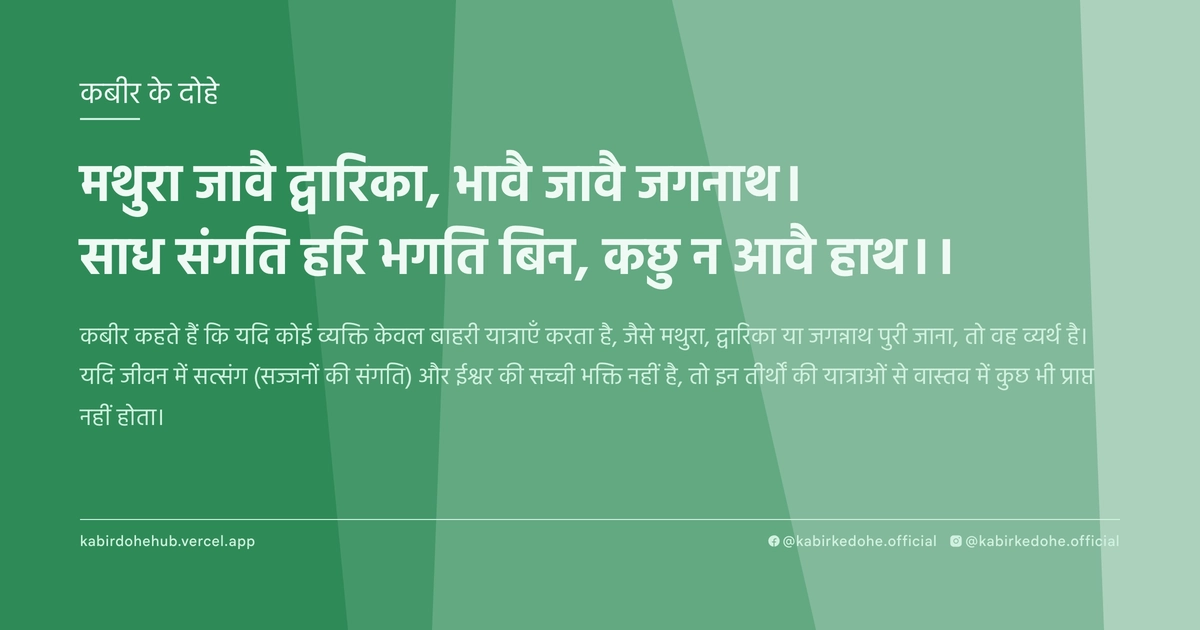
मथुरा जावै द्वारिका, भावै जावै जगनाथ।
साध संगति हरि भगति बिन, कछु न आवै हाथ।।
Mathura jaavai dwarika, bhaavai jaavai jagnath. Sadh sangati hari bhagati bin, kachu na aavai haath.
इस पृष्ठ पर इस कबीर दोहे का अर्थ (meaning), हिंदी व्याख्या और अंग्रेज़ी अनुवाद, दार्शनिक विश्लेषण और व्यावहारिक जीवन सीख दी गई है। यह दोहा सत्संग (Satsang) विषय से जुड़ा है — Kabir doha meaning and explanation in Hindi and English.
अर्थ (Meaning):
कबीर कहते हैं कि यदि कोई व्यक्ति केवल बाहरी यात्राएँ करता है, जैसे मथुरा, द्वारिका या जगन्नाथ पुरी जाना, तो वह व्यर्थ है। यदि जीवन में सत्संग (सज्जनों की संगति) और ईश्वर की सच्ची भक्ति नहीं है, तो इन तीर्थों की यात्राओं से वास्तव में कुछ भी प्राप्त नहीं होता।
Kabir asserts that visiting sacred pilgrimage sites like Mathura, Dwarka, or Jagannath Puri is futile if it remains a mere physical journey. Without the company of the enlightened (Sadh Sangati) and a genuine internal devotion to the Divine, these external rituals yield no spiritual fruit or liberation.
व्याख्या (Interpretation):
इस दोहे का शाब्दिक अर्थ है कि तीर्थयात्राएँ फलदायी नहीं होतीं यदि हृदय में भक्ति न हो। रूपकात्मक रूप से, मथुरा और द्वारिका केवल भौगोलिक स्थान नहीं, बल्कि मनुष्य की बाहरी खोज के प्रतीक हैं। कबीर यहाँ 'माया' के उस भ्रम पर प्रहार कर रहे हैं जहाँ व्यक्ति सोचता है कि स्थान बदलने से उसकी चेतना बदल जाएगी। निर्गुण भक्ति के अनुसार, ईश्वर किसी विशेष मंदिर या शहर में नहीं, बल्कि आत्मा के भीतर निवास करता है। जब तक साधु की संगति से अहंकार का नाश नहीं होता, तब तक बाहरी यात्राएँ केवल शरीर का भ्रमण हैं, आत्मा की यात्रा नहीं। यह अद्वैत वेदांत के उस सत्य को दर्शाता है कि ब्रह्म सर्वव्यापी है, अतः उसे खोजने के लिए कहीं जाने की आवश्यकता नहीं, बल्कि स्वयं को जानने की आवश्यकता है।
Literally, the verse suggests that pilgrimages are fruitless without inner devotion. Metaphorically, Mathura and Dwarka represent the external search for divinity—a distraction created by Maya. Kabir critiques the illusion that a change in geography can catalyze a change in consciousness. In the tradition of Nirgun Bhakti, the Divine is not localized in a temple or city but resides within the Atman. Until the ego is dissolved through the guidance of a realized soul (Sadh Sangati), external journeys are merely physical displacements, not spiritual ascents. This aligns with Advaita Vedanta, emphasizing that since Brahman is omnipresent, the search must shift from the 'where' to the 'who,' moving from external ritual to internal realization.
दार्शनिक विश्लेषण (Philosophical Analysis):
कबीर का यह दोहा उनके युग के गहरे सामाजिक और धार्मिक पाखंड पर एक प्रहार है। 15वीं शताब्दी में, तीर्थयात्रा को मोक्ष का सरल मार्ग माना जाता था, जिससे अक्सर पुरोहित वर्ग का वर्चस्व बढ़ता था। कबीर ने इस 'कर्मकांड' को पूरी तरह नकार दिया क्योंकि यह व्यक्ति को आंतरिक रूपांतरण के बजाय बाहरी प्रदर्शन की ओर ले जाता है। वे तर्क देते हैं कि धर्म का सार 'अनुभव' है, न कि 'यात्रा'।
दार्शनिक स्तर पर, यह सूफीवाद के 'इश्क-ए-हकीकी' (ईश्वरीय प्रेम) और अद्वैत के 'अहं ब्रह्मास्मि' के करीब है। सूफी संत भी मानते हैं कि खुदा दिल के अंदर है, न कि किसी विशेष इमारत में। कबीर के लिए, 'साध संगति' वह दर्पण है जिसमें मनुष्य अपना वास्तविक स्वरूप देख पाता है। बिना इस मार्गदर्शन के, मनुष्य अपनी वासनाओं और अहंकार के साथ तीर्थ जाता है और वापस वही बनकर लौटता है।
यहाँ 'हरि भगति' का अर्थ किसी मूर्ति की पूजा नहीं, बल्कि उस निराकार तत्व के प्रति पूर्ण समर्पण है जो कण-कण में व्याप्त है। यह भक्ति मार्ग का वह शिखर है जहाँ भक्त और भगवान के बीच का द्वैत समाप्त हो जाता है। कबीर यह स्पष्ट करते हैं कि मोक्ष किसी भौगोलिक स्थान का परिणाम नहीं, बल्कि मानसिक शुद्धि का परिणाम है।
मनोवैज्ञानिक रूप से, तीर्थयात्रा अक्सर एक 'पलायन' होती है—अपनी समस्याओं और आंतरिक रिक्तता से भागने का प्रयास। कबीर इस पलायन को चुनौती देते हैं और व्यक्ति को अपने केंद्र की ओर लौटने का आह्वान करते हैं। वे सिखाते हैं कि वास्तविक तीर्थयात्रा वह है जो अहंकार से आत्मा की ओर हो।
अंततः, यह दोहा जाति और वर्ग के भेदभाव को भी समाप्त करता है। यदि ईश्वर भीतर है, तो किसी विशेष स्थान पर जाने का विशेषाधिकार या उसकी अनिवार्यता समाप्त हो जाती है। यह आम आदमी को सशक्त बनाता है कि वह बिना किसी मध्यस्थ या पुरोहित के, केवल सत्संग और प्रेम के माध्यम से परमात्मा को प्राप्त कर सकता है।
This doha is a sharp critique of the socio-religious hypocrisy prevalent during Kabir's era. In the 15th century, pilgrimages were viewed as effortless shortcuts to salvation, often reinforcing the power of the priestly class. Kabir rejects this 'ritualism' because it encourages external performance over internal transformation. He argues that the essence of religion is 'experience' (Anubhava), not 'travel'.
Philosophically, this resonates with the Sufi concept of 'Ishq-e-Haqiqi' (Divine Love) and the Advaitic realization of 'Aham Brahmasmi'. Sufi mystics similarly believe that God dwells within the heart, not within a specific structure. For Kabir, 'Sadh Sangati' (the company of the wise) acts as a mirror, allowing the seeker to see their true nature. Without this guidance, a person carries their ego and desires to the pilgrimage and returns unchanged.
Here, 'Hari Bhakti' does not refer to idol worship but to total surrender to the Formless (Nirgun) element that permeates every atom. This is the pinnacle of the Bhakti path where the duality between the devotee and the Divine dissolves. Kabir clarifies that liberation is not a byproduct of geography but a result of mental purification.
Psychologically, pilgrimages are often a form of 'escape'—an attempt to flee from internal void and personal turmoil. Kabir challenges this escapism, calling the individual to return to their own center. He teaches that the only true pilgrimage is the journey from the ego to the soul.
Ultimately, this teaching dismantles caste and class hierarchies. If the Divine is internal, the privilege or necessity of visiting specific sites vanishes. It empowers the common person to attain the Divine through love and spiritual companionship, bypassing the need for intermediaries or priests.
मूल संदेश (Core Message):
- बाहरी यात्राएँ केवल शरीर का भ्रमण हैं, आत्मा का नहीं।
- सच्चा मोक्ष आंतरिक शुद्धि और अहंकार के विसर्जन में है।
- सत्संग वह कुंजी है जो हृदय के बंद द्वारों को खोलती है।
- ईश्वर किसी स्थान में नहीं, बल्कि प्रेम और करुणा में बसता है।
- कर्मकांड के बिना भक्ति केवल एक सामाजिक प्रदर्शन है।
- External journeys move the body, not the soul.
- True liberation lies in internal purity and the dissolution of ego.
- Sadh Sangati is the key that unlocks the closed doors of the heart.
- The Divine dwells not in locations, but in love and compassion.
- Devotion without inner transformation is merely a social performance.
व्यावहारिक उदाहरण (Practical Example):
एक समय की बात है, बनारस के घाटों पर रहने वाली एक वृद्ध विधवा, जानकी, का जीवन केवल पूजा-पाठ और तीर्थों की चर्चा में बीत रहा था। उसने अपनी जीवन भर की जमा पूँजी मथुरा, द्वारिका और पुरी की यात्राओं में खर्च कर दी थी। वह मानती थी कि इन पवित्र स्थानों की धूल उसके माथे पर लगाने से उसके जीवन के सारे दुख मिट जाएंगे और उसे मोक्ष मिल जाएगा।
जानकी हर साल नए वस्त्र पहनकर तीर्थ जाती, वहाँ बड़े-बड़े पंडितों को दान देती और घंटों कतारों में खड़ी रहती। लेकिन जब वह वापस घर लौटती, तो उसका मन पहले जैसा ही अशांत रहता। उसके भीतर का क्रोध, अकेलापन और दूसरों के प्रति निर्णय लेने की आदत वैसी ही बनी रही। वह बाहर से पवित्र दिखती थी, लेकिन भीतर से वह अभी भी अपनी पुरानी पहचान और शिकायतों से बंधी थी।
एक दिन, उसकी मुलाकात घाट पर बैठे एक साधारण से फकीर से हुई, जो न तो किसी मंदिर का पुजारी था और न ही किसी संप्रदाय का अनुयायी। फकीर ने जानकी की तीर्थयात्राओं की लंबी सूची सुनी और मुस्कुराते हुए कहा, "माँ, तुमने पूरी दुनिया नाप ली, पर क्या कभी अपने भीतर एक कदम भी चला?"
जानकी हैरान थी। उसने कहा, "मैंने तो भगवान के सबसे पवित्र धामों के दर्शन किए हैं!"
फकीर ने शांति से उत्तर दिया, "मंदिर की मूर्ति को देखना आसान है, लेकिन अपने भीतर बैठे उस अहंकार को देखना कठिन है जो तुम्हें शांति से दूर रखता है। तुम मथुरा गई, पर क्या तुमने अपने भीतर के क्रोध को विदा किया? तुम पुरी गई, पर क्या तुमने अपने भीतर की करुणा को जगाया? जब तक तुम इस 'मैं' को नहीं छोड़ती, तब तक तुम चाहे सात समुद्र पार कर लो, तुम वहीं रहोगी जहाँ तुम अभी हो।"
यह बात जानकी के हृदय में बिजली की तरह कौंधी। उसे एहसास हुआ कि उसने अब तक केवल 'पर्यटन' किया था, 'तपस्या' नहीं। उसने महसूस किया कि वह तीर्थों में भगवान को नहीं, बल्कि अपनी धार्मिक श्रेष्ठता के अहंकार को संतुष्ट करने गई थी।
अगले कुछ महीनों तक, जानकी ने तीर्थयात्राएं बंद कर दीं। उसने उस फकीर के साथ बैठना शुरू किया और मौन का अभ्यास किया। उसने सीखा कि कैसे अपने विचारों को बिना किसी निर्णय के देखना है। उसने अपने आस-पास के उन लोगों की मदद करना शुरू किया जिन्हें वह अब तक अनदेखा करती थी।
धीरे-धीरे, जानकी के चेहरे पर एक ऐसी शांति आई जो उसे किसी भी मंदिर की यात्रा से नहीं मिली थी। उसने पाया कि जब उसने दूसरों के प्रति सेवा और स्वयं के प्रति ईमानदारी अपनाई, तो मथुरा और द्वारिका का वह दिव्य अनुभव उसके अपने घर के आँगन में ही घटित होने लगा।
जानकी ने अब समझ लिया था कि असली तीर्थ वह हृदय है जो प्रेम और करुणा से भरा हो। उसने अपनी बची हुई पूँजी का उपयोग गरीब बच्चों की शिक्षा के लिए किया। उसकी जीवन यात्रा अब बाहरी रास्तों से हटकर आंतरिक गहराई की ओर मुड़ गई थी, और इसी में उसे वह मोक्ष मिला जिसकी तलाश में वह पूरी दुनिया घूम आई थी।
Once, in the ghats of Varanasi, lived an elderly widow named Janaki, whose life revolved entirely around rituals and discussions of pilgrimages. She had spent her life's savings traveling to Mathura, Dwarka, and Puri, believing that applying the sacred dust of these places to her forehead would erase her sorrows and grant her liberation.
Every year, Janaki would dress in new clothes, donate lavishly to high priests, and stand for hours in long queues. Yet, upon returning home, her mind remained as turbulent as before. Her anger, loneliness, and habit of judging others persisted. Externally, she appeared pious, but internally, she remained shackled to her old identity and grievances.
One day, she met a simple fakir sitting on the ghats—neither a temple priest nor a follower of any specific sect. After hearing Janaki's long list of pilgrimages, the fakir smiled and asked, "Mother, you have measured the whole world, but have you ever taken a single step within yourself?"
Janaki was bewildered. "I have visited the most sacred abodes of the Lord!" she exclaimed.
The fakir replied calmly, "Seeing an idol in a temple is easy, but seeing the ego within that keeps you from peace is difficult. You went to Mathura, but did you bid farewell to your anger? You went to Puri, but did you awaken the compassion within? Until you drop this 'I', no matter if you cross seven seas, you will remain exactly where you are."
These words struck Janaki like a bolt of lightning. She realized that she had been 'touring,' not 'transforming.' She understood that in those pilgrimages, she wasn't seeking God, but rather validating her own ego of religious superiority.
For the next few months, Janaki stopped her travels. She began sitting with the fakir and practicing silence. She learned to observe her thoughts without judgment and started helping those around her whom she had previously ignored.
Gradually, a peace descended upon Janaki's face that no temple visit had ever provided. She discovered that when she embraced service to others and honesty toward herself, the divine experience of Mathura and Dwarka began to manifest in her own courtyard.
Janaki now understood that the true pilgrimage is a heart filled with love and compassion. She used her remaining savings to educate poor children. Her life's journey shifted from external roads to internal depths, and in this, she found the liberation she had sought across the world.
अभ्यास मार्गदर्शन (Practice Guidance):
- प्रतिदिन 20 मिनट का मौन अभ्यास करें, जहाँ आप बाहरी दुनिया के शोर को छोड़कर केवल अपनी सांसों और आंतरिक विचारों के साक्षी बनें।
- एक 'आंतरिक तीर्थ' जर्नल बनाएँ: हर दिन लिखें कि आपने अपने किस अहंकार (जैसे क्रोध, ईर्ष्या या श्रेष्ठता) को पहचाना और उसे कैसे शांत किया।
- व्यवहार परिवर्तन: किसी ऐसे व्यक्ति की निस्वार्थ सेवा करें जिसे आप नापसंद करते हैं, यह महसूस करते हुए कि वह व्यक्ति भी उसी परमात्मा का अंश है।
- डायग्नोस्टिक चेकलिस्ट: क्या मैं शांति के लिए बाहरी स्थानों पर निर्भर हूँ? क्या मेरी भक्ति मुझे दूसरों से श्रेष्ठ महसूस कराती है? यदि हाँ, तो आप अभी भी माया के प्रभाव में हैं।
- Practice 20 minutes of daily silence, letting go of the external noise to become a witness to your breath and internal thoughts.
- Maintain an 'Inner Pilgrimage' journal: Record daily which aspect of your ego (e.g., anger, jealousy, or superiority) you identified and how you neutralized it.
- Behavioral Shift: Perform selfless service for someone you dislike, recognizing that they are also a manifestation of the same Divine essence.
- Diagnostic Checklist: Am I dependent on external locations for peace? Does my devotion make me feel superior to others? If yes, you are still under the influence of Maya.
चिंतन प्रश्न (Reflection Questions):
- क्या मेरी धार्मिक मान्यताएँ मुझे वास्तव में विनम्र बना रही हैं, या वे मेरे भीतर एक सूक्ष्म श्रेष्ठता का भाव पैदा कर रही हैं?
- यदि मुझे दुनिया के सभी पवित्र स्थानों पर जाने से रोक दिया जाए, तो क्या मैं अपने भीतर शांति खोजने में सक्षम होऊँगा?
- मैं अपनी डिजिटल पहचान (सोशल मीडिया) पर अपनी 'आध्यात्मिकता' का प्रदर्शन कितना करता हूँ और वास्तव में एकांत में कितना अभ्यास करता हूँ?
- मेरे जीवन का वह कौन सा 'मानसिक तीर्थ' है जहाँ मैं बार-बार जाता हूँ लेकिन कभी बदलता नहीं?
- क्या मैं ईश्वर को खोजने के लिए बाहर भाग रहा हूँ क्योंकि मैं अपने भीतर के खालीपन और अंधेरे का सामना करने से डरता हूँ?
- Are my religious beliefs truly making me humble, or are they fostering a subtle sense of superiority within me?
- If I were forbidden from visiting all sacred sites in the world, would I still be capable of finding peace within?
- How much do I perform my 'spirituality' for my digital identity, and how much do I actually practice in solitude?
- What is that 'mental pilgrimage' in my life where I return repeatedly but never actually change?
- Am I running outward to find God because I am afraid to face the emptiness and darkness within myself?