
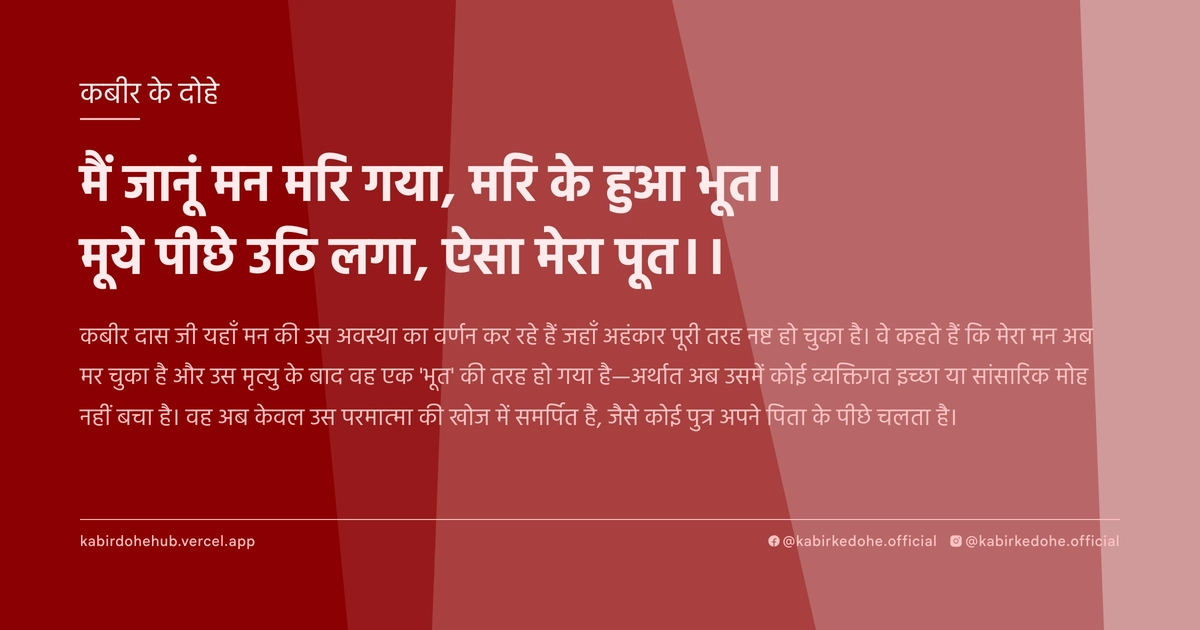
मैं जानूं मन मरि गया, मरि के हुआ भूत।
मूये पीछे उठि लगा, ऐसा मेरा पूत।।
Main jaanu man mari gaya, mari ke hua bhoot. Mooye peeche uthi laga, aisa mera poot.
इस पृष्ठ पर इस कबीर दोहे का अर्थ (meaning), हिंदी व्याख्या और अंग्रेज़ी अनुवाद, दार्शनिक विश्लेषण और व्यावहारिक जीवन सीख दी गई है। यह दोहा आत्मनिरीक्षण (Self-introspection) विषय से जुड़ा है — Kabir doha meaning and explanation in Hindi and English.
अर्थ (Meaning):
कबीर दास जी यहाँ मन की उस अवस्था का वर्णन कर रहे हैं जहाँ अहंकार पूरी तरह नष्ट हो चुका है। वे कहते हैं कि मेरा मन अब मर चुका है और उस मृत्यु के बाद वह एक 'भूत' की तरह हो गया है—अर्थात अब उसमें कोई व्यक्तिगत इच्छा या सांसारिक मोह नहीं बचा है। वह अब केवल उस परमात्मा की खोज में समर्पित है, जैसे कोई पुत्र अपने पिता के पीछे चलता है।
Kabir describes a state of consciousness where the ego has been completely annihilated. He suggests that his mind has 'died' and, in doing so, has become like a 'ghost'—meaning it no longer possesses personal desires or worldly attachments. Having shed the identity of the self, the soul now follows the Divine with the singular, unwavering devotion of a child following a father.
व्याख्या (Interpretation):
इस दोहे में 'मृत्यु' शारीरिक नहीं, बल्कि आध्यात्मिक है। 'मन का मरना' अहंकार (I-ness) के विलीनीकरण को दर्शाता है। जब मन मरता है, तो वह 'भूत' बन जाता है, जो यहाँ एक रूपक है उस सूक्ष्म चेतना के लिए जो अब भौतिक शरीर की सीमाओं से परे है। यह निर्गुण भक्ति का चरम है जहाँ साधक अपनी पृथक पहचान खोकर ब्रह्म में लीन हो जाता है। यह अद्वैत वेदांत के उस सत्य को उजागर करता है जहाँ ज्ञाता और ज्ञेय का भेद समाप्त हो जाता है। यहाँ 'पूत' (पुत्र) शब्द उस शुद्ध आत्मा का प्रतीक है जो अब केवल अपने मूल स्रोत, परमात्मा, की ओर अग्रसर है। यह विरोधाभास है कि जब हम स्वयं को पूरी तरह मिटा देते हैं, तभी हम वास्तव में जीवित होते हैं।
In this couplet, 'death' is not biological but spiritual. The 'death of the mind' signifies the total dissolution of the ego (Ahamkara). When the mind dies, it becomes a 'ghost'—a metaphor for a subtle consciousness that has transcended the limitations of the physical body and worldly cravings. This represents the pinnacle of Nirgun Bhakti, where the seeker merges into the formless Divine. It echoes the Advaita Vedanta truth where the distinction between the knower and the known vanishes. The term 'poot' (son) symbolizes the purified soul that now moves exclusively toward its origin, the Absolute. It presents the central paradox: only when the individual identity is completely erased does the true, universal existence begin.
दार्शनिक विश्लेषण (Philosophical Analysis):
कबीर का यह दृष्टिकोण उनके समय के कर्मकांडीय धर्म के विरुद्ध एक सशक्त प्रहार है। जहाँ लोग बाहरी अनुष्ठानों और तीर्थों में मुक्ति खोज रहे थे, कबीर आंतरिक मृत्यु या 'अहं-शून्यता' की बात करते हैं। यह सूफी मत के 'फना' (Fana) के सिद्धांत के समान है, जहाँ साधक ईश्वर में विलीन होने के लिए अपने अस्तित्व को मिटा देता है।
दार्शनिक रूप से, यह दोहा माया के आवरण को हटाने की प्रक्रिया है। माया हमें विश्वास दिलाती है कि हम एक अलग इकाई हैं, लेकिन कबीर कहते हैं कि यह 'मैं' एक भ्रम है। जब यह भ्रम मरता है, तब केवल सत्य शेष रहता है। यह अद्वैत दर्शन का सार है कि आत्मा और ब्रह्म एक ही हैं।
कबीर जाति और धर्म के भेदों को नकारते हुए यह स्पष्ट करते हैं कि आध्यात्मिक उन्नति किसी बाहरी पहचान से नहीं, बल्कि आंतरिक रूपांतरण से आती है। उनके लिए 'मन' वह पर्दा है जो मनुष्य को उसके वास्तविक स्वरूप से अलग करता है।
मनोवैज्ञानिक स्तर पर, यह 'ईगो डेथ' की प्रक्रिया है। जब व्यक्ति अपनी सामाजिक छवि, उपलब्धियों और इच्छाओं के प्रति आसक्ति छोड़ देता है, तो वह एक ऐसी शांति प्राप्त करता है जिसे शब्दों में व्यक्त नहीं किया जा सकता।
अंततः, यह दोहा हमें सिखाता है कि वास्तविक जीवन की शुरुआत वहीं से होती है जहाँ हमारी व्यक्तिगत इच्छाओं का अंत होता है। यह एक ऐसी स्थिति है जहाँ साधक अब 'कर्ता' नहीं रहता, बल्कि केवल एक 'साक्षी' बन जाता है।
Kabir's perspective is a powerful critique of the ritualistic religion of his era. While contemporaries sought liberation through external rites and pilgrimages, Kabir emphasized internal death or 'ego-voidance.' This aligns closely with the Sufi concept of 'Fana,' where the seeker annihilates their existence to merge with the Divine.
Philosophically, this couplet describes the process of stripping away the veil of Maya. Maya convinces us that we are separate entities, but Kabir asserts that this 'I' is an illusion. When this illusion dies, only the Truth remains. This is the essence of Advaita Vedanta: the realization that Atman and Brahman are one.
By rejecting caste and religious divisions, Kabir clarifies that spiritual evolution comes not from external identity but from internal transformation. For him, the 'mind' is the curtain that separates man from his true nature.
On a psychological level, this describes the process of 'ego death.' When an individual relinquishes attachment to their social image, achievements, and desires, they attain a peace that transcends description.
Ultimately, the couplet teaches that true life begins where personal desires end. It is a state where the seeker ceases to be the 'doer' and becomes the 'witness,' moving in harmony with the universal will.
मूल संदेश (Core Message):
- अहंकार की मृत्यु ही वास्तविक जीवन का जन्म है।
- जब 'मैं' मिटता है, तब केवल 'वह' (परमात्मा) शेष रहता है।
- सांसारिक पहचान एक बोझ है, इसे त्यागना ही मुक्ति है।
- समर्पण का अर्थ है अपनी इच्छाओं का पूर्ण विसर्जन।
- शून्य होना ही पूर्णता की पहली सीढ़ी है।
- The death of the ego is the birth of true existence.
- When the 'I' vanishes, only the 'Divine' remains.
- Worldly identity is a burden; shedding it is liberation.
- Surrender means the total dissolution of personal desire.
- Becoming void is the first step toward becoming whole.
व्यावहारिक उदाहरण (Practical Example):
वाराणसी के एक पुराने घाट पर माधव नाम का एक वृद्ध नाविक रहता था। माधव ने अपना पूरा जीवन लोगों को नदी पार कराने में बिता दिया था, लेकिन उसका मन हमेशा इस बात से भरा रहता था कि उसे शहर के सबसे बड़े नाविक के रूप में पहचाना जाए। वह अपनी नाव को सबसे सुंदर रखता और दूसरों को नीचा दिखाने का कोई मौका नहीं छोड़ता था।
एक बार एक भीषण बाढ़ आई जिसने घाट के कई हिस्सों को तबाह कर दिया। माधव की नाव बह गई और उसकी सारी जमापूंजी नष्ट हो गई। वह सड़क पर आ गया और उसकी वह 'नाविक की पहचान' पूरी तरह खत्म हो गई।
शुरुआत में वह गहरे अवसाद में रहा, लेकिन धीरे-धीरे उसने महसूस किया कि जिस 'अहंकार' को वह ढो रहा था, वह वास्तव में एक बोझ था। जब उसकी सामाजिक प्रतिष्ठा और संपत्ति 'मर' गई, तो उसे एक अजीब सी शांति महसूस हुई।
अब वह बिना किसी लालच के दूसरों की मदद करने लगा। वह अब यह नहीं सोचता था कि लोग उसे क्या कहेंगे या उसे क्या मिलेगा।
उसने देखा कि जब वह खुद को 'बड़ा नाविक' समझना बंद कर चुका था, तब वह वास्तव में सबके साथ जुड़ गया था।
उसका व्यवहार बदल गया; वह अब क्रोध नहीं करता था, बल्कि हर परिस्थिति को सहजता से स्वीकार करता था।
गाँव के लोग हैरान थे कि जो माधव पहले सबसे अभिमानी था, वह अब सबसे विनम्र और शांत व्यक्ति बन गया है।
यह माधव की 'आंतरिक मृत्यु' थी। उसकी पुरानी पहचान मर चुकी थी, और अब वह एक शुद्ध चेतना की तरह जीवन के प्रवाह में बह रहा था।
उसने पाया कि जब उसने 'मैं' को खो दिया, तो उसने पूरी दुनिया को पा लिया।
अब वह केवल एक नाविक नहीं था, बल्कि वह स्वयं वह नदी बन गया था जिसे वह पार कराने की कोशिश करता था।
On an ancient ghat in Varanasi lived an elderly boatman named Madhav. Madhav had spent his entire life ferrying people across the river, but his mind was always consumed by the desire to be recognized as the greatest boatman in the city. He kept his boat impeccably decorated and never missed a chance to belittle others.
One year, a devastating flood struck, destroying parts of the ghats. Madhav's boat was swept away, and all his savings were lost. He found himself destitute, and his identity as the 'great boatman' was completely obliterated.
Initially, he sank into deep depression, but gradually he realized that the 'ego' he had been carrying was actually a heavy burden. When his social status and wealth 'died,' he felt a strange, newfound peace.
He began helping others without any expectation of reward. He no longer worried about how people perceived him or what he would gain in return.
He noticed that once he stopped seeing himself as the 'superior boatman,' he finally connected deeply with everyone around him.
His behavior transformed; he no longer reacted with anger but accepted every situation with effortless grace.
Villagers were astonished that Madhav, once the most arrogant man, had become the most humble and serene person in the community.
This was Madhav's 'internal death.' His old identity had perished, and he was now flowing through life like a pure consciousness.
He discovered that by losing the 'I,' he had gained the entire universe.
He was no longer just a boatman; he had become the very river he once sought to conquer.
अभ्यास मार्गदर्शन (Practice Guidance):
- प्रतिदिन 20 मिनट 'साक्षी भाव' का अभ्यास करें: अपने विचारों को बिना किसी निर्णय के देखें, जैसे आप किसी अजनबी को देख रहे हों।
- आत्म-पूछताछ जर्नल: हर रात लिखें कि आज किस क्षण में मेरा 'अहंकार' चोटिल हुआ और मैंने उसे कैसे प्रतिक्रिया दी।
- सेवा का अभ्यास: सप्ताह में एक बार ऐसा कार्य करें जिसके लिए आपको कोई श्रेय न मिले और जिसके बारे में कोई न जाने।
- निदान चेकलिस्ट: क्या मैं अभी भी अपनी उपलब्धियों के बारे में बात कर रहा हूँ? क्या मुझे दूसरों की सफलता से जलन होती है? क्या मैं अपनी छवि को बचाने की कोशिश कर रहा हूँ? यदि हाँ, तो 'मन' अभी जीवित है।
- Practice 'Witness Consciousness' for 20 minutes daily: Observe your thoughts without judgment, as if you are watching a stranger.
- Self-Inquiry Journaling: Every night, record moments where your ego felt bruised and how you reacted to it.
- Anonymous Service: Once a week, perform an act of kindness where you receive no credit and no one knows of your involvement.
- Diagnostic Checklist: Am I still talking about my achievements? Do I feel jealousy toward others' success? Am I struggling to protect my image? If yes, the 'mind' is still alive.
चिंतन प्रश्न (Reflection Questions):
- यदि मेरी सारी डिग्रियाँ, पद और सामाजिक प्रतिष्ठा छीन ली जाए, तो मेरा 'मैं' क्या बचेगा?
- मैं अपनी सार्वजनिक छवि को बनाए रखने के लिए अंदर ही अंदर कितना तनाव महसूस करता हूँ?
- क्या मेरी करुणा वास्तव में निस्वार्थ है, या यह मेरे 'अच्छे इंसान' होने के अहंकार को पुष्ट करती है?
- मेरे जीवन का वह कौन सा हिस्सा है जिसे मैं छोड़ने से सबसे ज्यादा डरता हूँ?
- क्या मैं वास्तव में सत्य की खोज कर रहा हूँ, या मैं केवल सत्य के बारे में बात करने का आनंद ले रहा हूँ?
- मेरे भीतर का वह 'भूत' क्या है जो पुरानी यादों और पछतावे से चिपका हुआ है?
- If all my degrees, titles, and social status were stripped away, what would remain of my 'I'?
- How much internal stress do I endure simply to maintain my public image?
- Is my compassion truly selfless, or does it merely reinforce the ego of being a 'good person'?
- What part of my identity am I most terrified of losing?
- Am I truly seeking the Truth, or am I merely enjoying the act of talking about the Truth?
- What is that 'ghost' within me that remains clung to old memories and regrets?