
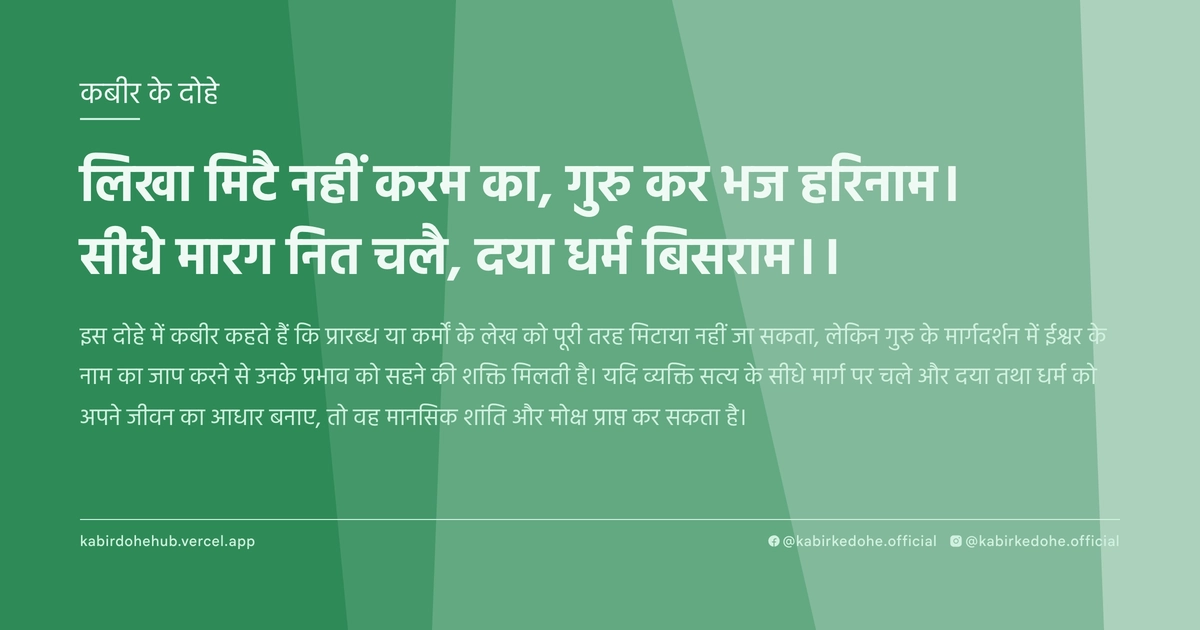
लिखा मिटै नहीं करम का, गुरु कर भज हरिनाम।
सीधे मारग नित चलै, दया धर्म बिसराम।।
Likha mitai nahin karam ka, guru kar bhaj harinam. Seedhe marag nit chalai, daya dharm bisram.
इस पृष्ठ पर इस कबीर दोहे का अर्थ (meaning), हिंदी व्याख्या और अंग्रेज़ी अनुवाद, दार्शनिक विश्लेषण और व्यावहारिक जीवन सीख दी गई है। यह दोहा गुरु महत्व (The Guru's Importance) विषय से जुड़ा है — Kabir doha meaning and explanation in Hindi and English.
अर्थ (Meaning):
इस दोहे में कबीर कहते हैं कि प्रारब्ध या कर्मों के लेख को पूरी तरह मिटाया नहीं जा सकता, लेकिन गुरु के मार्गदर्शन में ईश्वर के नाम का जाप करने से उनके प्रभाव को सहने की शक्ति मिलती है। यदि व्यक्ति सत्य के सीधे मार्ग पर चले और दया तथा धर्म को अपने जीवन का आधार बनाए, तो वह मानसिक शांति और मोक्ष प्राप्त कर सकता है।
Kabir asserts that the inscriptions of one's destiny or past karmas cannot be simply erased. However, by chanting the Divine Name under a Guru's guidance, one can transcend their suffering. By consistently walking the straight path of truth and anchoring one's life in compassion and righteousness, a seeker attains ultimate peace and liberation.
व्याख्या (Interpretation):
शाब्दिक अर्थ यह है कि कर्मों का फल अनिवार्य है, परंतु आध्यात्मिक अभ्यास इसे रूपांतरित कर सकता है। यहाँ 'लिखा' माया के उस जाल को दर्शाता है जिसमें जीव अपने पिछले जन्मों के संस्कारों से बंधा है। 'हरिनाम' केवल एक शब्द नहीं, बल्कि उस निर्गुण ब्रह्म की चेतना है जो अहंकार को मिटाती है। यह दोहा अद्वैत वेदांत के इस विचार को पुष्ट करता है कि जब तक 'मैं' (अहंकार) है, तब तक कर्म का बंधन है; जैसे ही गुरु की कृपा से आत्म-साक्षात्कार होता है, कर्म केवल एक खेल बन जाते हैं। 'सीधे मारग' का अर्थ है वह मार्ग जहाँ कोई पाखंड या आडंबर नहीं है। दया और धर्म यहाँ बाहरी अनुष्ठान नहीं, बल्कि आंतरिक गुण हैं जो आत्मा को परमात्मा से जोड़ते हैं।
Literally, the verse suggests that karmic debts are inevitable, yet spiritual practice transforms their impact. 'Likha' refers to the cosmic blueprint of Maya, where the soul is bound by latent impressions (Samskaras). 'Harinaam' is not a mere vocalization but the realization of the Nirgun Brahman that dissolves the ego. This aligns with Advaita Vedanta: as long as the 'I' exists, karma binds; once the Guru facilitates the realization of non-duality, karma becomes a mere play of consciousness. The 'straight path' signifies a life devoid of hypocrisy and ritualistic vanity. Compassion (Daya) and Righteousness (Dharma) are presented not as social duties, but as internal states of being that bridge the gap between the Atman and the Universal Soul.
दार्शनिक विश्लेषण (Philosophical Analysis):
कबीर का यह दृष्टिकोण उनके समय के कट्टरपंथी कर्मकांडों और भाग्यवादिता के विरुद्ध एक सशक्त प्रहार है। जहाँ एक ओर लोग केवल भाग्य के भरोसे बैठे थे, वहीं कबीर 'गुरु' और 'अभ्यास' के माध्यम से सक्रिय परिवर्तन की बात करते हैं। वे यह स्पष्ट करते हैं कि कर्मों का फल भुगतना पड़ता है, लेकिन उस फल के प्रति हमारी प्रतिक्रिया को बदला जा सकता है। यह सूफी मत के 'फना' (अहंकार का विनाश) के करीब है, जहाँ साधक अपनी व्यक्तिगत इच्छाओं को ईश्वर की इच्छा में विलीन कर देता है।
अद्वैत वेदांत के परिप्रेक्ष्य में, कर्म केवल तब तक प्रभावी होते हैं जब तक हम स्वयं को शरीर और मन समझते हैं। जब गुरु हमें यह बोध कराते हैं कि हम शुद्ध चैतन्य हैं, तो कर्मों का 'लेख' मिटता नहीं, बल्कि उसकी प्रासंगिकता समाप्त हो जाती है। कबीर यहाँ जाति और वर्ण के आधार पर मिलने वाले कथित 'पुण्यों' का खंडन करते हैं और केवल आंतरिक पवित्रता को महत्व देते हैं।
उनका 'सीधा मार्ग' वास्तव में सहज मार्ग है। वे जटिल योग क्रियाओं या कठिन तपस्या के बजाय सरल प्रेम और दया पर जोर देते हैं। यह इस मनोवैज्ञानिक सत्य को उजागर करता है कि घृणा और क्रोध कर्मों के बंधन को और मजबूत करते हैं, जबकि दया उन्हें शिथिल कर देती है।
कबीर का 'धर्म' किसी विशेष संप्रदाय का पालन करना नहीं है, बल्कि वह सार्वभौमिक नैतिकता है जो हर जीव में उसी एक ईश्वर को देखती है। यह दृष्टिकोण व्यक्ति को बाहरी दुनिया के संघर्षों से हटाकर आंतरिक शांति की ओर ले जाता है।
अंततः, यह दोहा यह सिखाता है कि मोक्ष कोई ऐसी वस्तु नहीं है जिसे भविष्य में प्राप्त किया जाए, बल्कि यह वर्तमान क्षण में दया और सत्य के साथ जीने की एक निरंतर प्रक्रिया है। अहंकार का विसर्जन ही वास्तविक मुक्ति है।
Kabir’s perspective is a potent critique of the rigid ritualism and fatalism prevalent during his era. While many succumbed to the belief that destiny is unchangeable, Kabir introduces the catalyst of the 'Guru' and 'Sadhana' to suggest a transformative shift. He clarifies that while the fruits of karma must be experienced, our psychological reaction to those fruits can be altered through spiritual awakening.
From the lens of Advaita Vedanta, karma remains binding only as long as we identify with the limited ego (Ahamkara). When the Guru awakens the seeker to their identity as Pure Consciousness (Atman), the 'written' destiny does not vanish, but its power to cause suffering evaporates. Kabir rejects the notion of merit based on caste or creed, emphasizing instead an internal alchemy of the heart.
His 'straight path' is the path of Sahaja (spontaneity). He eschews complex yogic gymnastics or extreme asceticism in favor of simple love and compassion. This highlights a psychological truth: hatred and greed tighten the knots of karma, whereas compassion loosens them, allowing the soul to glide toward liberation.
For Kabir, 'Dharma' is not adherence to a sectarian code but a universal ethic of seeing the Divine in every living being. This shift in perception moves the practitioner from the turbulence of external conflict to the stillness of internal peace.
Ultimately, this verse teaches that liberation is not a destination to be reached in a distant future, but a continuous process of living with truth and kindness in the present. The annihilation of the ego is the only true liberation from the cycle of cause and effect.
मूल संदेश (Core Message):
- भाग्य अटल हो सकता है, लेकिन आपकी प्रतिक्रिया आपके हाथ में है।
- गुरु का मार्गदर्शन अहंकार की परतों को हटाने की कुंजी है।
- ईश्वर का नाम केवल शब्द नहीं, बल्कि एक आंतरिक चेतना है।
- सत्य का मार्ग सरल है, इसमें आडंबर की कोई आवश्यकता नहीं।
- दया और धर्म ही वह सेतु हैं जो आत्मा को शांति तक ले जाते हैं।
- Destiny may be fixed, but your response is your own creation.
- The Guru's guidance is the key to peeling away the layers of ego.
- The Divine Name is not a word, but a state of internal consciousness.
- The path of truth is simple; it requires no theatrical piety.
- Compassion and Righteousness are the bridges to ultimate peace.
व्यावहारिक उदाहरण (Practical Example):
वाराणसी के घाटों पर रहने वाले एक वृद्ध विधवा, जानकी, का जीवन दुखों की एक लंबी श्रृंखला था। उनके पति और पुत्र का निधन कम उम्र में ही हो गया था, और समाज उन्हें 'अशुभ' मानकर अलग रखता था। जानकी अक्सर मंदिर की सीढ़ियों पर बैठकर सोचती थीं कि उनके पिछले जन्मों के कौन से पाप उन्हें इस अकेलेपन और तिरस्कार की ओर ले आए। वे भाग्य को कोसती रहती थीं और मानती थीं कि उनका 'लेख' बहुत बुरा है।
एक दिन उनकी मुलाकात एक घुमक्कड़ संत से हुई, जिन्होंने उन्हें कबीर के इस दोहे का अर्थ समझाया। संत ने कहा, 'बेटी, जो लिखा है वह शायद न मिटे, लेकिन तुम उस लेख को पढ़ने का तरीका बदल सकती हो।' उन्होंने जानकी को सिखाया कि वे अपने दुख को दूसरों की सेवा में बदल दें। जानकी ने धीरे-धीरे घाट पर आने वाले उन लाचार लोगों को भोजन कराना और उनकी देखभाल करना शुरू किया, जिन्हें समाज ने त्याग दिया था।
शुरुआत में यह उनके लिए कठिन था क्योंकि उनके पास स्वयं के लिए बहुत कम था। लेकिन जैसे-जैसे वे दूसरों के प्रति दया भाव रखने लगीं, उनके भीतर का अकेलापन गायब होने लगा। उन्होंने महसूस किया कि जब वे किसी और के आंसू पोंछती हैं, तो उनके अपने जख्म भरने लगते हैं। यह उनकी 'दया' थी जिसने उनके जीवन के कड़वे अनुभवों को एक उद्देश्य दे दिया।
एक समय ऐसा आया जब वही लोग, जो उन्हें अशुभ कहते थे, उनकी निस्वार्थ सेवा को देखकर उनके पास आने लगे। जानकी अब अपने भाग्य का विलाप नहीं करती थीं। उन्होंने समझ लिया था कि बाहरी परिस्थितियाँ (कर्म) भले ही न बदली हों, लेकिन उनके मन की स्थिति पूरी तरह बदल चुकी थी।
उन्होंने पाया कि 'हरिनाम' का जाप केवल माला फेरना नहीं था, बल्कि हर दुखी व्यक्ति में ईश्वर को देखना था। उनकी सेवा ही उनका सबसे बड़ा धर्म बन गई।
अब जब भी उन्हें कोई पुराना दुख याद आता, वे मुस्कुरा देतीं। उन्हें एहसास हुआ कि दुख केवल तब तक दुख था जब तक वे उसे 'मेरा' मानकर पकड़ कर बैठी थीं। जैसे ही उन्होंने उसे 'ईश्वर की इच्छा' मानकर दूसरों की सेवा में लगाया, वह बोझ हल्का हो गया।
उनकी शांति देखकर लोग उनसे पूछने लगे कि उन्होंने यह चमत्कार कैसे किया। जानकी बस इतना कहतीं, 'मैंने अपने भाग्य से लड़ना छोड़ दिया और प्रेम का रास्ता चुन लिया।'
यह जानकी का 'कबीर ट्विस्ट' था—उन्होंने अपने प्रारब्ध को मिटाने की कोशिश नहीं की, बल्कि दया और धर्म के माध्यम से उसे रूपांतरित कर लिया। अंत में, वे उसी शांति (बिसराम) में विलीन हो गईं जिसकी बात कबीर ने की थी।
Janaki, an elderly widow living on the ghats of Varanasi, had a life marked by a long chain of sorrows. Having lost her husband and son at a young age, society shunned her, labeling her 'inauspicious.' Janaki would often sit on the temple steps, wondering what sins from her past lives had led her to such profound loneliness and rejection. She spent her days cursing her fate, believing her 'destiny' was written in ink of misery.
One day, she encountered a wandering saint who explained the essence of this Kabir Doha to her. The saint told her, 'Daughter, what is written may not be erased, but you can change the way you read the script.' He encouraged her to transmute her suffering into service for others. Slowly, Janaki began providing food and care to the destitute and abandoned souls who drifted to the ghats.
Initially, this was challenging as she had very little for herself. However, as she cultivated genuine compassion, her internal void began to vanish. She discovered that whenever she wiped away another's tears, her own wounds began to heal. Her 'Daya' (compassion) gave a divine purpose to her bitter experiences.
Eventually, the very people who once called her inauspicious began to seek her company, moved by her selfless service. Janaki no longer lamented her fate. She realized that while the external circumstances (karma) remained, her internal state had been completely revolutionized.
She understood that 'Harinaam' was not merely the repetition of a word, but the act of seeing the Divine in every suffering being. Her service became her highest Dharma.
Now, whenever a memory of old pain surfaced, she would simply smile. She realized that pain was only pain as long as she clung to it as 'mine.' Once she accepted it as the Divine's will and channeled it into love, the burden vanished.
People began asking her the secret of her serenity. Janaki would simply reply, 'I stopped fighting my destiny and chose the path of love.'
This was Janaki's 'Kabir Twist'—she did not attempt to erase her karma but transformed it through compassion and righteousness. In the end, she attained that state of 'Bisraam' (rest/peace) that Kabir promised.
अभ्यास मार्गदर्शन (Practice Guidance):
- प्रतिदिन 20 मिनट मौन ध्यान करें, जहाँ आप अपने जीवन की कठिन परिस्थितियों को बिना किसी निर्णय के केवल एक 'साक्षी' (Witness) बनकर देखें।
- एक 'कर्म जर्नल' बनाएँ: उन घटनाओं को लिखें जो आपको परेशान करती हैं, और फिर उनके सामने लिखें कि आप उस स्थिति में 'दया' और 'धैर्य' का अभ्यास कैसे कर सकते हैं।
- व्यवहार परिवर्तन: सप्ताह में एक बार किसी ऐसे व्यक्ति की निस्वार्थ मदद करें जिससे आपका कोई निजी स्वार्थ न हो, ताकि अहंकार का विसर्जन हो सके।
- निदानात्मक चेकलिस्ट: क्या मैं अभी भी अपनी असफलताओं के लिए भाग्य को दोष दे रहा हूँ? क्या मेरी प्रार्थनाओं में केवल माँग है या समर्पण? क्या मैं दूसरों के दुख में अपनी खुशी ढूँढ पा रहा हूँ?
- Practice 20 minutes of silent meditation daily, observing the difficult circumstances of your life as a detached 'Witness' without judgment.
- Maintain a 'Karmic Journal': Record events that cause you distress, and next to them, write how you can apply 'Compassion' and 'Patience' to that specific situation.
- Behavioral Shift: Once a week, perform a selfless act of service for someone from whom you expect nothing in return, to facilitate the dissolution of the ego.
- Diagnostic Checklist: Am I still blaming fate for my failures? Do my prayers consist only of demands or is there true surrender? Am I able to find peace by alleviating the suffering of others?
चिंतन प्रश्न (Reflection Questions):
- क्या मैं वास्तव में अपने कर्मों का फल भुगत रहा हूँ, या मैं अपनी मानसिक धारणाओं के कारण दुख का निर्माण कर रहा हूँ?
- मेरे जीवन में 'गुरु' कौन है—एक व्यक्ति, या मेरी अपनी अंतरात्मा की वह आवाज जो मुझे सत्य की ओर ले जाती है?
- जब मैं दूसरों के प्रति दया दिखाता हूँ, तो क्या वह वास्तव में निस्वार्थ है, या यह मेरी अपनी 'अच्छे इंसान' होने की छवि (Digital/Social Ego) को संतुष्ट कर रहा है?
- मेरे जीवन का 'सीधा मार्ग' क्या है, और मैं किन अनावश्यक जटिलताओं या दिखावों में उलझा हुआ हूँ?
- यदि आज मेरा सारा सामाजिक पद और पहचान छीन ली जाए, तो मेरे भीतर क्या बचेगा?
- Am I truly experiencing the fruits of my karma, or am I creating suffering through my own mental perceptions?
- Who is the 'Guru' in my life—a physical person, or the inner voice of my conscience guiding me toward truth?
- When I show compassion to others, is it truly selfless, or is it merely feeding my image of being a 'good person' (Social/Digital Ego)?
- What is the 'straight path' in my own life, and what unnecessary complexities or pretenses am I currently entangled in?
- If all my social status and identities were stripped away today, what would remain within me?