
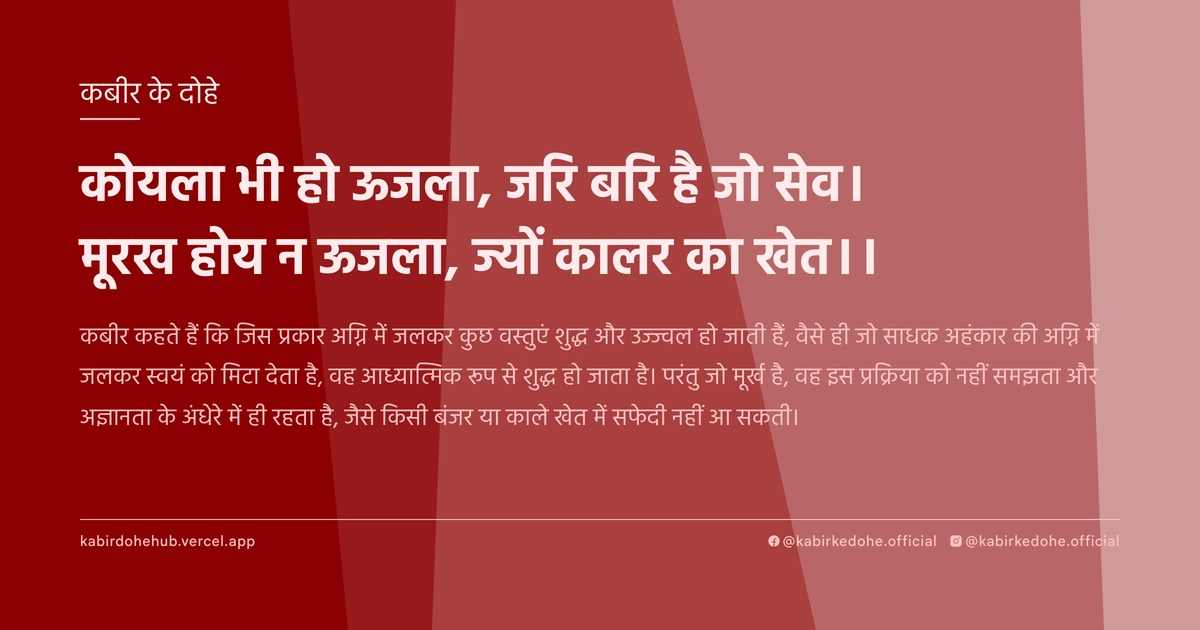
कोयला भी हो ऊजला, जरि बरि है जो सेव।
मूरख होय न ऊजला, ज्यों कालर का खेत।।
Koyla bhi ho ujla, jari bari hai jo sev. Murakh hoye na ujla, jyon kaalar ka khet.
इस पृष्ठ पर इस कबीर दोहे का अर्थ (meaning), हिंदी व्याख्या और अंग्रेज़ी अनुवाद, दार्शनिक विश्लेषण और व्यावहारिक जीवन सीख दी गई है। यह दोहा अहंकार (The Ego) विषय से जुड़ा है — Kabir doha meaning and explanation in Hindi and English.
अर्थ (Meaning):
कबीर कहते हैं कि जिस प्रकार अग्नि में जलकर कुछ वस्तुएं शुद्ध और उज्ज्वल हो जाती हैं, वैसे ही जो साधक अहंकार की अग्नि में जलकर स्वयं को मिटा देता है, वह आध्यात्मिक रूप से शुद्ध हो जाता है। परंतु जो मूर्ख है, वह इस प्रक्रिया को नहीं समझता और अज्ञानता के अंधेरे में ही रहता है, जैसे किसी बंजर या काले खेत में सफेदी नहीं आ सकती।
Kabir asserts that just as certain elements become pure and bright after passing through fire, a seeker who burns away their ego through spiritual discipline achieves inner luminosity. However, the foolish remain devoid of this brilliance, trapped in the darkness of ignorance, much like a blackened, barren field that can never reflect a pure white light.
व्याख्या (Interpretation):
यह दोहा आंतरिक रूपांतरण की प्रक्रिया को अग्नि के रूपक से समझाता है। 'ऊजला' होने का अर्थ केवल बाहरी शुद्धि नहीं, बल्कि आत्मा का परमात्मा में विलीन होना है। यहाँ 'जरि बरि' (जलना) अहंकार के विनाश का प्रतीक है, जो निरगुण भक्ति का मूल है। माया का पर्दा तभी हटता है जब साधक अपनी पहचान (अहंकार) को पूरी तरह भस्म कर देता है। अद्वैत वेदांत के अनुसार, जब तक 'मैं' का भाव रहता है, तब तक ब्रह्म का साक्षात्कार असंभव है। मूर्ख वह है जो बाहरी कर्मकांडों में उलझा है, जबकि वास्तविक शुद्धि आंतरिक तड़प और आत्म-साक्षात्कार से आती है। यह विरोधाभास है कि मिटने में ही वास्तविक अस्तित्व की प्राप्ति है।
This couplet employs the metaphor of fire to illustrate the process of internal transmutation. To become 'ujla' (bright/pure) refers not to external cleanliness, but to the soul's merger with the Divine. The act of 'burning' symbolizes the annihilation of the ego, a cornerstone of Nirgun Bhakti. The veil of Maya is lifted only when the seeker incinerates their perceived separate identity. According to Advaita Vedanta, as long as the sense of 'I' persists, the realization of Brahman remains elusive. The 'fool' is one entangled in external rituals, oblivious to the fact that true purity arises from spiritual longing and self-realization. It presents the central paradox: only through total self-extinction does one attain true existence.
दार्शनिक विश्लेषण (Philosophical Analysis):
कबीर का यह दृष्टिकोण उनके समय के कट्टरपंथी धार्मिक वातावरण के विरुद्ध एक विद्रोह था। उन्होंने देखा कि लोग तीर्थों और बाहरी दिखावे से शुद्धि खोज रहे थे, जबकि वास्तविक अशुद्धि मन के भीतर थी। यह दोहा सीधे तौर पर कर्मकांडवाद (Ritualism) पर प्रहार करता है, यह बताते हुए कि कोई भी बाहरी स्नान या मंत्र जाप तब तक व्यर्थ है जब तक कि अहंकार की अग्नि उसे शुद्ध न कर दे।
दार्शनिक स्तर पर, यह सूफी मत के 'फना' (Fana) के सिद्धांत से मेल खाता है, जहाँ साधक ईश्वर की इच्छा में स्वयं को मिटा देता है। जब 'मैं' समाप्त होता है, तो केवल 'वह' (परमात्मा) शेष रहता है। यह अद्वैत वेदांत के उस सत्य की पुष्टि करता है जहाँ जीव और ब्रह्म के बीच का अंतर केवल अज्ञानता (Avidya) के कारण है।
कबीर यहाँ 'कालर का खेत' (काले खेत) का उदाहरण देकर यह समझाते हैं कि जिस मन में अज्ञानता की जड़ें गहरी हैं, वहाँ ज्ञान का प्रकाश नहीं उतर सकता। यह मनोवैज्ञानिक रूपांतरण की बात है; जब तक हम अपनी त्रुटियों को स्वीकार कर उन्हें 'जलाते' नहीं, तब तक हम विकसित नहीं हो सकते।
यह शिक्षण जाति और वर्ग के भेदों को भी मिटाता है। अग्नि सबको समान रूप से जलाती है, ठीक उसी तरह जैसे आध्यात्मिक सत्य सबके लिए समान है, चाहे वह किसी भी सामाजिक स्तर से हो। शुद्धि का पैमाना जन्म नहीं, बल्कि अहंकार का त्याग है।
अंततः, कबीर यह स्पष्ट करते हैं कि आध्यात्मिक मार्ग कठिन है। यह केवल बौद्धिक व्यायाम नहीं है, बल्कि एक दर्दनाक प्रक्रिया है जिसमें पुराने व्यक्तित्व को मरना पड़ता है ताकि एक नया, दिव्य व्यक्तित्व जन्म ले सके। बिना इस 'तपन' के, मोक्ष केवल एक कल्पना है।
Kabir's perspective was a direct rebellion against the dogmatic religious atmosphere of his era. He observed people seeking purity through pilgrimages and external displays, while the actual impurity resided within the mind. This doha strikes at the heart of ritualism, suggesting that external baths or mantra recitations are futile unless the fire of spiritual discipline purifies the ego.
Philosophically, this aligns with the Sufi concept of 'Fana' (annihilation), where the seeker dissolves their identity into the Divine Will. When the 'I' vanishes, only the 'He' (the Absolute) remains. This validates the Advaita Vedanta truth that the perceived separation between the Jiva (individual soul) and Brahman is merely a result of Avidya (ignorance).
By using the imagery of the 'blackened field,' Kabir explains that in a mind where the roots of ignorance are deep, the light of knowledge cannot penetrate. This is a call for psychological transformation; unless we acknowledge and 'burn' our flaws, we cannot evolve.
This teaching also dismantles caste and class distinctions. Just as fire burns everything equally, spiritual truth is accessible to all, regardless of social standing. The metric of purity is not birth, but the surrender of the ego.
Ultimately, Kabir clarifies that the spiritual path is arduous. It is not a mere intellectual exercise but a painful process where the old personality must die for a new, divine consciousness to be born. Without this 'heat' of transformation, liberation remains a mere fantasy.
मूल संदेश (Core Message):
- बाहरी दिखावा आध्यात्मिक शुद्धि का विकल्प नहीं हो सकता।
- अहंकार का पूर्ण विनाश ही वास्तविक ज्ञान का द्वार है।
- पीड़ा और आत्म-मंथन आत्मा को उज्ज्वल करने वाली अग्नि हैं।
- बिना विनम्रता के, कोई भी साधना केवल एक मानसिक बोझ है।
- स्वयं को मिटाकर ही ब्रह्मांडीय सत्य के साथ एकाकार हुआ जा सकता है।
- External displays can never substitute for internal spiritual purification.
- The total annihilation of the ego is the only gateway to true knowledge.
- Pain and self-reflection are the fires that brighten the soul.
- Without humility, any spiritual practice is merely a mental burden.
- Only by erasing the self can one merge with the universal truth.
व्यावहारिक उदाहरण (Practical Example):
एक समय की बात है, वाराणसी के घाटों पर माधव नाम का एक वृद्ध बुनकर रहता था। माधव अपनी कला में निपुण था, लेकिन उसका अहंकार उससे भी बड़ा था। वह मानता था कि उसके द्वारा बुने गए वस्त्र शहर में सबसे श्रेष्ठ हैं और वह स्वयं को अन्य बुनकरों से श्रेष्ठ समझता था। उसका स्वभाव उग्र था और वह छोटी-छोटी बातों पर दूसरों को नीचा दिखाता था।
एक दिन उसकी मुलाकात एक मौन साधु से हुई। साधु ने माधव के अहंकार को भांप लिया और उससे कहा, 'माधव, तुम्हारा वस्त्र तो उज्ज्वल है, लेकिन तुम्हारा मन काले खेत की तरह है, जहाँ केवल क्रोध और घमंड की फसल उग रही है।'
माधव को यह बात चुभी, लेकिन साधु की आँखों में एक अजीब सी शांति थी। उसने साधु से पूछा कि वह अपने मन को 'उज्ज्वल' कैसे करे। साधु ने उसे एक कठिन कार्य दिया: उसे अगले एक महीने तक बिना किसी शिकायत के शहर के सबसे गरीब बीमार लोगों की सेवा करनी थी और अपने द्वारा बनाए गए सबसे महंगे वस्त्रों को मुफ्त में बांटना था।
शुरुआत में माधव के लिए यह प्रताड़ना जैसा था। उसका अहंकार उसे बार-बार याद दिलाता था कि वह एक महान कलाकार है और यह सेवा उसके स्तर के नीचे है। वह अंदर ही अंदर जल रहा था। उसे महसूस हुआ कि उसकी प्रतिष्ठा, उसका नाम और उसका गर्व धीरे-धीरे नष्ट हो रहे हैं।
जैसे-जैसे दिन बीते, माधव ने देखा कि जब वह दूसरों के दुखों को अपनी आँखों से देखता है, तो उसके भीतर का 'मैं' छोटा होने लगता है। एक रात, जब वह एक मरणासन्न व्यक्ति की सेवा कर रहा था, उसे अचानक महसूस हुआ कि उसकी सारी श्रेष्ठता का भ्रम टूट गया है। वह फूट-फूट कर रोने लगा।
यह रोना उसके अहंकार की अग्नि थी। वह जिस 'जलने' की प्रक्रिया से गुजर रहा था, वह उसे भीतर से शुद्ध कर रहा था। उसने महसूस किया कि असली सुंदरता रेशमी धागों में नहीं, बल्कि निस्वार्थ करुणा में है।
जब वह वापस साधु के पास गया, तो उसकी आँखों में एक नई चमक थी। वह अब पहले जैसा उग्र नहीं था। उसने अपनी कला को अब अहंकार का साधन नहीं, बल्कि ईश्वर की सेवा का माध्यम बना लिया था।
उसका व्यवहार बदल गया। अब वह अन्य बुनकरों की मदद करता था और उन्हें सिखाता था। उसके वस्त्रों में अब एक अलग ही दिव्यता थी, क्योंकि उन्हें बनाने वाला हाथ अब अहंकार से मुक्त था।
माधव ने अनुभव किया कि जिस तरह सोने को शुद्ध होने के लिए आग में तपना पड़ता है, उसी तरह उसके व्यक्तित्व की अशुद्धियों को मिटाने के लिए उसे अपनी प्रतिष्ठा की अग्नि में जलना पड़ा।
अब वह वाराणसी के घाटों पर केवल एक कुशल बुनकर नहीं, बल्कि एक शांत और प्रेमपूर्ण आत्मा के रूप में जाना जाता था। उसने 'काले खेत' को 'उज्ज्वल' बना लिया था।
Once, in the ghats of Varanasi, lived an elderly weaver named Madhav. Madhav was a master of his craft, but his ego was even greater than his skill. He believed the fabrics he wove were the finest in the city and viewed himself as superior to all other weavers. His temperament was harsh, and he frequently belittled others.
One day, he encountered a silent monk. The monk sensed Madhav's arrogance and told him, 'Madhav, your cloth is bright, but your mind is like a blackened field, where only the crops of anger and pride are growing.'
Madhav was stung by these words, yet there was an unsettling peace in the monk's eyes. He asked how he could make his mind 'bright.' The monk gave him a challenging task: for one month, he must serve the poorest sick people in the city without complaint and distribute his most expensive fabrics for free.
Initially, this felt like torture to Madhav. His ego constantly reminded him that he was a great artist and that such service was beneath his station. He felt as if he were burning from within.
As the days passed, Madhav noticed that as he witnessed the suffering of others, his sense of 'I' began to shrink. One night, while tending to a dying man, he suddenly felt the illusion of his superiority shatter completely. He broke down in tears.
This weeping was the fire of his ego. The process of 'burning' was purifying him from within. He realized that true beauty did not lie in silk threads, but in selfless compassion.
When he returned to the monk, there was a new radiance in his eyes. He was no longer the aggressive man he once was. He transformed his art from a tool of vanity into a medium of divine service.
His behavior shifted. He began helping other weavers and teaching them. His fabrics now possessed a different kind of divinity because the hands that made them were free from ego.
Madhav realized that just as gold must pass through fire to be purified, he had to burn through the fire of his own reputation to erase the impurities of his personality.
He became known on the ghats of Varanasi not just as a skilled weaver, but as a peaceful and loving soul. He had successfully turned his 'blackened field' into a 'bright' one.
अभ्यास मार्गदर्शन (Practice Guidance):
- प्रतिदिन 20 मिनट 'साक्षी भाव' का अभ्यास करें: अपने क्रोध, ईर्ष्या और अहंकार के विचारों को बिना किसी निर्णय के देखें, जैसे वे आग में जलकर राख हो रहे हों।
- आत्म-पूछताछ जर्नल: हर रात लिखें कि आज किस क्षण में मेरा 'अहंकार' हावी हुआ और मैंने किस तरह अपनी श्रेष्ठता सिद्ध करने की कोशिश की।
- अहंकार-विनाश व्यवहार: सप्ताह में एक बार ऐसा कार्य करें जो आपकी सामाजिक छवि के विपरीत हो और जिसमें आप पूरी तरह से विनम्रता का अभ्यास करें (जैसे किसी की गुप्त रूप से मदद करना)।
- निदान चेकलिस्ट: क्या मैं दूसरों की आलोचना करते समय स्वयं को श्रेष्ठ महसूस करता हूँ? क्या मैं अपनी उपलब्धियों का श्रेय केवल स्वयं को देता हूँ? यदि हाँ, तो मेरा 'खेत' अभी भी काला है।
- Practice 'Witness Consciousness' for 20 minutes daily: Observe your thoughts of anger, jealousy, and pride without judgment, as if they are being incinerated in a fire.
- Self-Inquiry Journaling: Every night, record the moments where your 'ego' took over and how you attempted to prove your superiority over others.
- Ego-Dissolution Action: Once a week, perform a task that contradicts your social image and requires total humility (e.g., helping someone anonymously).
- Diagnostic Checklist: Do I feel superior while criticizing others? Do I take sole credit for my achievements? If yes, my 'field' remains blackened.
चिंतन प्रश्न (Reflection Questions):
- मेरी वह कौन सी 'श्रेष्ठता' है जिसे मैं खोने से सबसे ज्यादा डरता हूँ?
- क्या मेरा धर्म या मेरी नैतिकता वास्तव में करुणा से उपजी है, या यह केवल मेरी सामाजिक छवि को बनाए रखने का एक तरीका है?
- जब कोई मेरी आलोचना करता है, तो मेरे भीतर उठने वाला विरोध वास्तव में क्या है—सत्य की रक्षा या अहंकार की चोट?
- यदि मेरी सारी उपलब्धियाँ और पद छीन लिए जाएँ, तो मेरे पास 'मैं' के रूप में क्या बचेगा?
- क्या मैं वास्तव में बदलने के लिए तैयार हूँ, या मैं केवल बदलने का नाटक कर रहा हूँ?
- What is the specific 'superiority' that I am most afraid of losing?
- Is my religion or morality truly born of compassion, or is it merely a tool to maintain my social image?
- When someone criticizes me, what is the root of my resistance—the protection of truth or a wound to the ego?
- If all my achievements and titles were stripped away, what would remain of 'I'?
- Am I truly ready to undergo transformation, or am I merely pretending to change?