
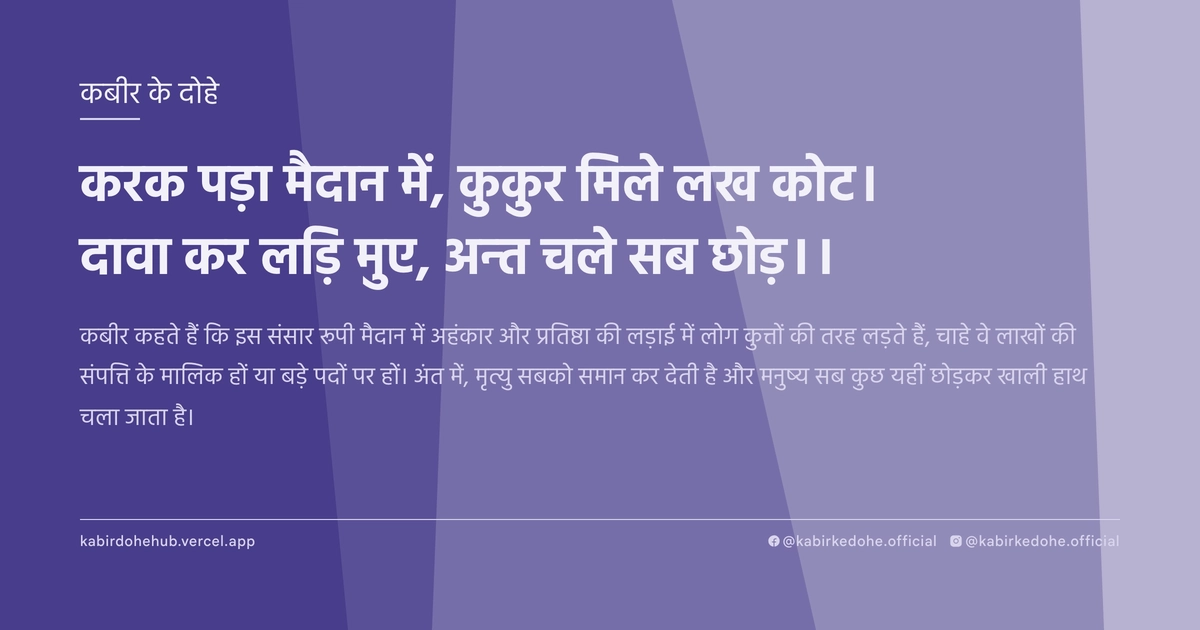
करक पड़ा मैदान में, कुकुर मिले लख कोट।
दावा कर लड़ि मुए, अन्त चले सब छोड़।।
Karak pada maidan mein, kukur mile lakh kot. Dawa kar ladi mue, ant chale sab chhod.
इस पृष्ठ पर इस कबीर दोहे का अर्थ (meaning), हिंदी व्याख्या और अंग्रेज़ी अनुवाद, दार्शनिक विश्लेषण और व्यावहारिक जीवन सीख दी गई है। यह दोहा अहंकार (The Ego) विषय से जुड़ा है — Kabir doha meaning and explanation in Hindi and English.
अर्थ (Meaning):
कबीर कहते हैं कि इस संसार रूपी मैदान में अहंकार और प्रतिष्ठा की लड़ाई में लोग कुत्तों की तरह लड़ते हैं, चाहे वे लाखों की संपत्ति के मालिक हों या बड़े पदों पर हों। अंत में, मृत्यु सबको समान कर देती है और मनुष्य सब कुछ यहीं छोड़कर खाली हाथ चला जाता है।
Kabir observes that in the open field of this world, people clash like dogs over pride and possession, regardless of whether they possess millions or hold high status. Ultimately, death is the great equalizer, forcing every soul to abandon all earthly claims and depart empty-handed.
व्याख्या (Interpretation):
इसका शाब्दिक अर्थ है कि सांसारिक संघर्ष व्यर्थ है। रूपकात्मक रूप से, 'मैदान' माया के प्रभाव क्षेत्र को दर्शाता है जहाँ जीव अपनी पहचान (अहंकार) को बचाने के लिए लड़ता है। 'कुकुर' शब्द यहाँ उस आदिम वृत्ति का प्रतीक है जो केवल स्वामित्व और क्षेत्र की रक्षा करना जानती है। यह निर्गुण भक्ति का संदेश है कि जब तक आत्मा स्वयं को शरीर और संपत्ति से जोड़कर देखती है, वह इस अंतहीन संघर्ष का हिस्सा बनी रहती है। अद्वैत वेदांत के अनुसार, यह द्वैत का भ्रम है जो हमें यह विश्वास दिलाता है कि 'मेरा' और 'तेरा' वास्तव में मौजूद है। अंततः, यह विरोधाभास है कि जिसे हम जीवन भर संचित करते हैं, वही मृत्यु के समय सबसे बड़ा बोझ बन जाता है।
Literally, it warns that worldly conflict is futile. Metaphorically, the 'field' represents the realm of Maya, where the soul struggles to protect its perceived identity (ego). The term 'dog' symbolizes the primal instinct of territoriality and ownership. This aligns with Nirgun Bhakti, suggesting that as long as the soul identifies with the body and possessions, it remains trapped in this endless cycle. According to Advaita Vedanta, this is the illusion of duality—the false belief in 'mine' and 'thine.' The central paradox lies in the fact that the very things we spend a lifetime accumulating become the heaviest burdens at the moment of departure.
दार्शनिक विश्लेषण (Philosophical Analysis):
कबीर का यह दोहा उनके समय के सामाजिक और धार्मिक पाखंड पर एक तीखा प्रहार है। उन्होंने देखा कि कैसे लोग जाति, धर्म और धन के नाम पर एक-दूसरे के रक्तपात करते थे, जबकि आध्यात्मिक सत्य इन सब से परे है। यह विश्लेषण सूफी मत के 'फना' (अहंकार का विनाश) के करीब है, जहाँ साधक को अपनी व्यक्तिगत पहचान को ईश्वर की इच्छा में विलीन करना होता है।
यहाँ कबीर ritualism (कर्मकांड) का विरोध करते हुए यह समझाते हैं कि बाहरी दिखावे या धार्मिक पहचान से मोक्ष नहीं मिलता। वे तर्क देते हैं कि अहंकार (Ego) ही वह पर्दा है जो आत्मा को ब्रह्म से अलग करता है। जब तक व्यक्ति स्वयं को एक 'विजेता' या 'स्वामी' के रूप में देखता है, वह वास्तव में अपनी आध्यात्मिक दासता को बढ़ा रहा होता है।
अद्वैत वेदांत के परिप्रेक्ष्य में, यह संघर्ष 'अविद्या' (अज्ञान) का परिणाम है। मनुष्य यह भूल जाता है कि वह शुद्ध चेतना है और स्वयं को एक सीमित शरीर मान लेता है। यह भ्रम ही उसे प्रतिस्पर्धा और ईर्ष्या की ओर धकेलता है। कबीर यहाँ मनोवैज्ञानिक रूपांतरण की बात कर रहे हैं, जहाँ व्यक्ति को यह बोध होना चाहिए कि भौतिक जगत एक क्षणभंगुर स्वप्न है।
ऐतिहासिक रूप से, कबीर ने बुनकर समुदाय से होते हुए समाज के सबसे निचले और सबसे ऊपरी स्तरों को देखा था। उन्होंने अनुभव किया कि सत्ता का मद और गरीबी की हताशा, दोनों ही मनुष्य को अंधा कर देते हैं। उनका संदेश यह है कि शांति बाहरी जीत में नहीं, बल्कि आंतरिक समर्पण में है।
अंततः, यह दोहा हमें याद दिलाता है कि मृत्यु केवल शरीर का अंत नहीं, बल्कि सभी कृत्रिम पहचानों का विलोपन है। जो व्यक्ति जीवन में ही इस सत्य को स्वीकार कर लेता है, वह मृत्यु के समय विलाप नहीं करता, बल्कि मुक्त होकर विलीन हो जाता है।
This couplet is a sharp critique of the social and religious hypocrisy of Kabir's era. He witnessed how people shed blood over caste, creed, and wealth, while the spiritual truth remains far beyond these constructs. This analysis resonates with the Sufi concept of 'Fana' (annihilation of the ego), where the seeker must dissolve their individual identity into the Divine Will.
Kabir rejects ritualism, explaining that salvation does not come through outward displays or religious labels. He argues that the ego is the veil separating the Atman from Brahman. As long as an individual views themselves as a 'conqueror' or 'owner,' they are merely deepening their spiritual bondage.
From the perspective of Advaita Vedanta, this struggle is a result of 'Avidya' (ignorance). Man forgets that he is pure consciousness and instead identifies with a limited physical body. This delusion drives the cycle of competition and envy. Kabir is calling for a psychological transformation where one realizes that the material world is a fleeting dream.
Historically, coming from a weaver's background, Kabir observed both the intoxication of power and the desperation of poverty. He realized that both extremes blind the human spirit. His message is that peace is found not in external victory, but in internal surrender.
Ultimately, the doha reminds us that death is not just the end of the body, but the erasure of all artificial identities. One who accepts this truth during life does not lament at the end but merges into the infinite with liberation.
मूल संदेश (Core Message):
- अहंकार एक ऐसा भ्रम है जो आत्मा को कैद करता है।
- सांसारिक जीत वास्तव में आध्यात्मिक हार है।
- मृत्यु ही अंतिम सत्य है, बाकी सब नाटक है।
- विनम्रता ही वह द्वार है जिससे परमात्मा मिलते हैं।
- स्वयं को शून्य करना ही पूर्णता की ओर पहला कदम है।
- Ego is a delusion that imprisons the eternal soul.
- Worldly victory is often a spiritual defeat.
- Death is the only absolute truth; the rest is a play.
- Humility is the only gateway to the Divine.
- Becoming zero is the first step toward becoming whole.
व्यावहारिक उदाहरण (Practical Example):
वाराणसी के एक पुराने घाट पर रहने वाले रामदीन नाम के एक वृद्ध कुम्हार थे। उनके पास मिट्टी के बर्तनों का एक छोटा सा कारखाना था, लेकिन उनका स्वभाव अत्यंत क्रोधी था।
रामदीन अपने पड़ोस के अन्य कुम्हारों के साथ हमेशा इस बात पर लड़ते रहते थे कि किसका चाक बेहतर है और किसकी मिट्टी अधिक शुद्ध है।
वे अक्सर छोटी-छोटी बातों पर चिल्लाते और खुद को शहर का सबसे बड़ा कलाकार मानते थे। उनका अहंकार उनके काम से बड़ा हो गया था।
एक दिन उन्होंने देखा कि उनके सबसे बड़े प्रतिद्वंद्वी, जो उनसे भी अधिक समृद्ध थे, की अचानक मृत्यु हो गई।
शमशान में जब उन्होंने देखा कि उस व्यक्ति की सारी संपत्ति, उसके पुरस्कार और उसका घमंड आग की लपटों में जलकर राख हो रहा था, तो रामदीन स्तब्ध रह गए।
उन्हें महसूस हुआ कि जिस 'मैदान' में वे जीवन भर लड़ते रहे, वहाँ अंत में केवल राख बचती है।
उस रात रामदीन ने अपने चाक पर मिट्टी को आकार देते समय महसूस किया कि वे भी उसी मिट्टी के हैं और एक दिन इसी में मिल जाएंगे।
उन्होंने अगले दिन अपने प्रतिद्वंद्वियों से माफी मांगी और अपनी कला को अहंकार के बजाय सेवा का माध्यम बनाया।
अब वे केवल बर्तन नहीं बनाते थे, बल्कि अपनी विनम्रता से लोगों के दिलों को जीतते थे।
रामदीन का जीवन अब संघर्ष से मुक्त था क्योंकि उन्होंने 'जीतने' की इच्छा को त्याग दिया था।
In the ancient ghats of Varanasi lived an elderly potter named Ramdeen. He owned a small workshop of clay pottery, but his nature was intensely volatile and arrogant.
Ramdeen constantly fought with neighboring potters over whose wheel was superior and whose clay was purer, treating his craft as a battlefield of ego.
He would scream over trivial matters, believing himself to be the greatest artist in the city. His pride had grown larger than his actual art.
One day, he witnessed the sudden death of his fiercest rival, a man who was even wealthier and more renowned than he was.
At the cremation ground, as he watched the rival's wealth, awards, and arrogance turn into ash in the funeral pyre, Ramdeen stood frozen in shock.
He realized that in the 'field' where they had spent their entire lives fighting, the only final outcome was a pile of gray ash.
That night, while shaping clay on his wheel, he felt the profound truth that he too was made of this earth and would eventually return to it.
The next morning, Ramdeen apologized to his rivals and transformed his art from a tool of ego into a medium of service.
He no longer just crafted pots; he crafted peace and humility, winning hearts instead of arguments.
Ramdeen's life became free from conflict because he had finally abandoned the desire to 'win' in a game that ends in loss.
अभ्यास मार्गदर्शन (Practice Guidance):
- प्रतिदिन 15 मिनट मौन ध्यान करें, जहाँ आप स्वयं को एक नाम, पद या संपत्ति के बिना केवल एक 'साक्षी' के रूप में देखें।
- एक डायरी लिखें जिसमें उन क्षणों को दर्ज करें जब आपका अहंकार (Ego) आपको दूसरों से श्रेष्ठ या निम्न महसूस कराता है।
- सचेत व्यवहार: जब भी किसी विवाद में पड़ें, स्वयं से पूछें—'क्या यह मुद्दा मेरी मृत्यु के बाद मायने रखेगा?'
- निदान चेकलिस्ट: यदि आप दूसरों की सफलता से जलते हैं या अपनी उपलब्धियों पर गर्व करते हैं, तो आप अभी भी 'मैदान' में लड़ रहे हैं।
- Practice 15 minutes of silent meditation daily, viewing yourself not as a name, title, or owner, but simply as a 'witness'.
- Maintain a journal recording moments where your ego makes you feel superior or inferior to others.
- Conscious Behavior: Whenever engaged in a conflict, ask yourself—'Will this issue matter after my death?'
- Diagnostic Checklist: If you feel envy at others' success or pride in your own achievements, you are still fighting in the 'field'.
चिंतन प्रश्न (Reflection Questions):
- यदि आज आपकी सारी सामाजिक पहचान (नाम, डिग्री, पद) छीन ली जाए, तो आपका 'स्व' क्या बचेगा?
- आप अपनी डिजिटल पहचान (Social Media) को बनाए रखने के लिए मानसिक रूप से कितना संघर्ष कर रहे हैं?
- क्या आपकी नैतिकता केवल दूसरों की नजरों में 'अच्छा' दिखने का एक मुखौटा है?
- वह कौन सी चीज है जिसे आप इतनी मजबूती से पकड़े हुए हैं कि उसे छोड़ने का विचार ही आपको डराता है?
- क्या आप वास्तव में शांति चाहते हैं, या आप केवल अपनी शर्तों पर जीत चाहते हैं?
- If all your social identifiers (name, degree, status) were stripped away today, what would remain of your 'self'?
- How much mental energy do you expend maintaining your digital persona on social media?
- Is your morality merely a mask designed to appear 'good' in the eyes of others?
- What is the one thing you are clinging to so tightly that the thought of letting go terrifies you?
- Do you truly desire peace, or do you simply want to win on your own terms?