
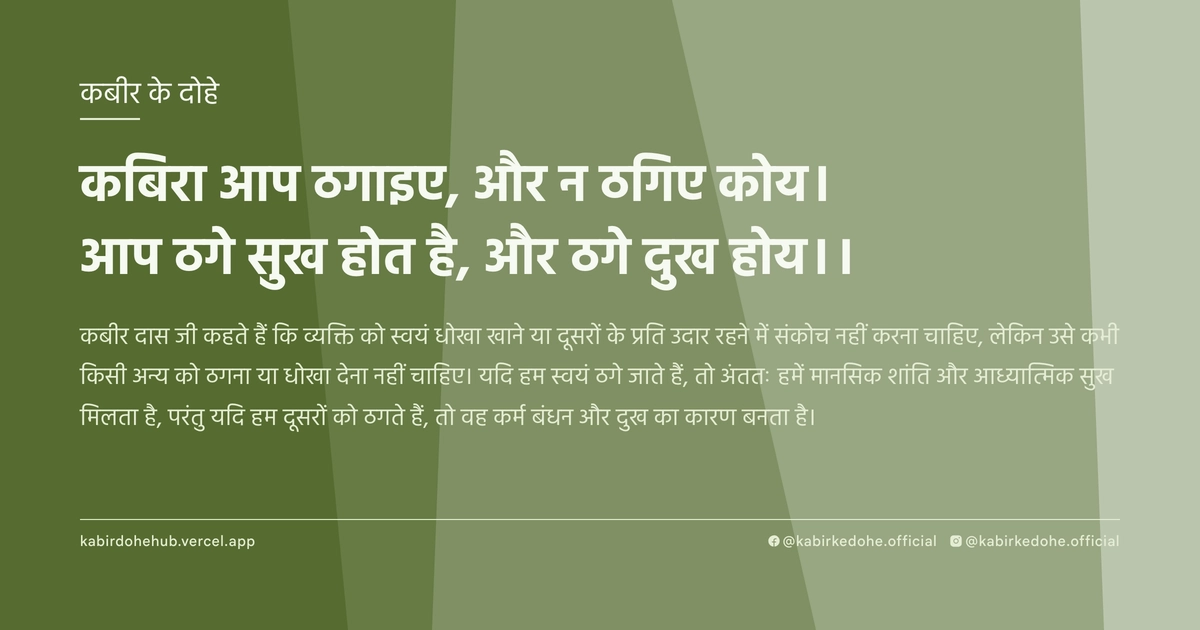
कबिरा आप ठगाइए, और न ठगिए कोय।
आप ठगे सुख होत है, और ठगे दुख होय।।
Kabira aap thagaiye, aur na thagiye koy. Aap thage sukh hot hai, aur thage dukh hoye.
इस पृष्ठ पर इस कबीर दोहे का अर्थ (meaning), हिंदी व्याख्या और अंग्रेज़ी अनुवाद, दार्शनिक विश्लेषण और व्यावहारिक जीवन सीख दी गई है। यह दोहा विनम्रता (Humility) विषय से जुड़ा है — Kabir doha meaning and explanation in Hindi and English.
अर्थ (Meaning):
कबीर दास जी कहते हैं कि व्यक्ति को स्वयं धोखा खाने या दूसरों के प्रति उदार रहने में संकोच नहीं करना चाहिए, लेकिन उसे कभी किसी अन्य को ठगना या धोखा देना नहीं चाहिए। यदि हम स्वयं ठगे जाते हैं, तो अंततः हमें मानसिक शांति और आध्यात्मिक सुख मिलता है, परंतु यदि हम दूसरों को ठगते हैं, तो वह कर्म बंधन और दुख का कारण बनता है।
Kabir suggests that one should be willing to be cheated or wronged themselves rather than becoming the perpetrator of deceit. He posits that accepting a loss or being 'duped' leads to inner peace and spiritual liberation, whereas deceiving others creates a karmic burden that inevitably leads to suffering and mental unrest.
व्याख्या (Interpretation):
इस दोहे का शाब्दिक अर्थ है कि स्वयं को ठगा जाने दो। गहरे स्तर पर, 'ठगे जाने' का अर्थ है अपने अहंकार (Ego) का विसर्जन करना। जब हम किसी के द्वारा ठगे जाते हैं और उसे क्षमा कर देते हैं, तो हम वास्तव में अपने 'मैं' को मिटा रहे होते हैं। यह निर्गुण भक्ति का मार्ग है जहाँ साधक अपनी पहचान को ईश्वर की इच्छा में विलीन कर देता है। माया हमें यह विश्वास दिलाती है कि लाभ कमाना ही सफलता है, लेकिन अद्वैत वेदांत के अनुसार, वास्तविक लाभ वह है जो हमें द्वैत (दो होने का भाव) से मुक्त करे। यहाँ 'सुख' का अर्थ भौतिक सुख नहीं, बल्कि वह आध्यात्मिक आनंद है जो तब आता है जब व्यक्ति प्रतिशोध की भावना से मुक्त हो जाता है।
Literally, the verse advises accepting deceit. Metaphorically, 'being cheated' represents the voluntary dissolution of the ego. When one accepts a loss without resentment, they are practicing the annihilation of the 'I-consciousness.' This aligns with Nirgun Bhakti, where the seeker merges their identity into the formless Divine. Maya creates the illusion that material gain or 'winning' an argument is success, but Advaita Vedanta teaches that true gain is the removal of duality. The 'happiness' mentioned here is not sensory pleasure, but the profound peace (Shanti) that arises when the soul is liberated from the cycle of retaliation and the grip of the possessive ego.
दार्शनिक विश्लेषण (Philosophical Analysis):
कबीर का यह दर्शन उस समय के सामाजिक ढांचे पर प्रहार करता है जहाँ चतुराई और छल को बुद्धिमानी माना जाता था। वे ritualism और बाहरी आडंबरों के बजाय आंतरिक शुद्धि पर जोर देते हैं। यहाँ 'ठगे जाने' का दर्शन सूफीवाद के 'फना' (Fana) के समान है, जहाँ प्रेमी अपने अस्तित्व को मिटाकर परमात्मा में लीन हो जाता है।
यह विचार अद्वैत वेदांत के इस सिद्धांत पर आधारित है कि हम सब एक ही चेतना का हिस्सा हैं। यदि मैं किसी और को ठगता हूँ, तो मैं वास्तव में स्वयं को ही ठग रहा हूँ क्योंकि दूसरा कोई है ही नहीं। अतः, दूसरों को धोखा देना आत्म-विनाश के समान है।
कबीर यहाँ मनोवैज्ञानिक रूपांतरण की बात कर रहे हैं। जब हम ठगे जाते हैं, तो हमारा अहंकार चोटिल होता है। यदि हम उस चोट को स्वीकार कर लें, तो अहंकार टूट जाता है और सत्य का उदय होता है। यह 'अहंकार का विसर्जन' ही मोक्ष का द्वार है।
ऐतिहासिक रूप से, कबीर ने जाति और धर्म के भेदभाव को नकारते हुए एक ऐसे मानवीय धर्म की स्थापना की जो करुणा और ईमानदारी पर आधारित था। वे सिखाते हैं कि धर्म मंदिर या मस्जिद में नहीं, बल्कि इस बात में है कि आप दूसरे के साथ कैसा व्यवहार करते हैं।
अतः, यह दोहा केवल नैतिकता की बात नहीं करता, बल्कि यह एक आध्यात्मिक तकनीक है। यह हमें सिखाता है कि बाहरी नुकसान को स्वीकार करना आंतरिक लाभ (शांति) प्राप्त करने का सबसे तेज़ तरीका है। यह भौतिक जगत की नश्वरता और आत्मा की अमरता के बीच के संतुलन को दर्शाता है।
Kabir's philosophy strikes at the heart of a societal structure where cunning and deceit were often mistaken for intelligence. He emphasizes internal purification over ritualism and external displays of piety. The concept of 'being cheated' mirrors the Sufi concept of 'Fana' (annihilation), where the lover dissolves their existence to merge with the Beloved.
This teaching is rooted in the Advaita Vedanta principle of non-duality. If I deceive another, I am essentially deceiving myself, for there is no separate 'other' in the ultimate reality of Brahman. Thus, harming another is an act of self-destruction.
Psychologically, Kabir addresses the mechanism of the ego. When we are wronged, our ego feels attacked. By consciously choosing to accept this 'loss' without bitterness, we break the ego's hold over us. This dissolution of the 'I' is the prerequisite for spiritual awakening.
Historically, Kabir rejected caste and religious silos, proposing a universal humanism based on compassion. He asserts that true religion is not found in temples or mosques, but in the integrity of one's interactions with fellow beings.
Ultimately, this Doha is not merely a moral lesson but a spiritual technology. It teaches that accepting external loss is the fastest route to internal gain (peace). It highlights the tension between the transient nature of the material world and the eternal nature of the soul.
मूल संदेश (Core Message):
- अहंकार का त्याग ही वास्तविक लाभ है।
- दूसरों को ठगना स्वयं के विनाश का मार्ग है।
- क्षमा और उदारता आत्मा को हल्का करती हैं।
- भौतिक हानि आध्यात्मिक उन्नति का अवसर है।
- शांति बाहरी जीत में नहीं, आंतरिक समर्पण में है।
- The surrender of ego is the only true profit.
- Deceiving others is a path to self-destruction.
- Forgiveness and generosity lighten the soul's burden.
- Material loss is often a gateway to spiritual growth.
- Peace lies not in external victory, but in internal surrender.
व्यावहारिक उदाहरण (Practical Example):
वाराणसी के घाटों पर रहने वाली एक वृद्ध विधवा, जानकी, अपनी छोटी सी सिलाई की दुकान चलाती थी। वह बहुत सरल और दयालु थी। एक दिन एक शहर का व्यापारी आया और उसने जानकी से बहुत सारे रेशमी कपड़े कम दाम में सिलवाए। जब काम पूरा हुआ, तो व्यापारी ने जानकी को भुगतान करने के बजाय उसे यह कहकर ठग लिया कि सिलाई में गलतियाँ हैं, और केवल आधा पैसा देकर चला गया।
जानकी के पड़ोसियों ने उसे बहुत समझाया कि वह उस व्यापारी के पीछे जाए, शोर मचाए और अपना हक मांगे। उन्होंने कहा कि जानकी बहुत मूर्ख है जो इतनी आसानी से ठगी गई। लेकिन जानकी शांत रही। उसने मुस्कुराते हुए कहा, 'उस व्यक्ति को पैसों की ज़रूरत मुझसे ज़्यादा होगी, और मुझे शांति की ज़रूरत उससे ज़्यादा।'
कुछ समय बाद, वह व्यापारी वापस आया। वह बहुत परेशान था। उसने बताया कि उसने कई लोगों को इसी तरह ठगा था, लेकिन अब उसे रात में नींद नहीं आती और उसका मन हमेशा डर और ग्लानि से भरा रहता है। उसने देखा कि जानकी के चेहरे पर एक अद्भुत संतोष और चमक थी, जबकि उसके पास भौतिक सुखों का अभाव था।
व्यापारी ने जानकी से पूछा, 'आप इतनी शांत कैसे हैं जबकि मैंने आपके साथ अन्याय किया?' जानकी ने उत्तर दिया, 'जब आपने मुझे ठगा, तो आपने मेरा धन लिया, लेकिन मुझे उस बोझ से मुक्त कर दिया जो आपके मन पर है। मैंने अपना नुकसान स्वीकार किया, इसलिए मेरा मन हल्का हो गया। आपने मेरा धन लिया, लेकिन अपनी शांति खो दी।'
यह सुनकर व्यापारी की आँखों में आँसू आ गए। उसे समझ आया कि जानकी 'मूर्ख' नहीं थी, बल्कि वह उस सत्य को जानती थी जिसे वह अपनी चतुराई में भूल गया था। उसने जानकी के पैर छुए और अपना सारा अहंकार त्याग दिया।
जानकी का यह व्यवहार कबीर के 'आप ठगाइए' के सिद्धांत का जीवंत उदाहरण था। उसने भौतिक हानि को आध्यात्मिक लाभ में बदल दिया।
व्यापारी ने उस दिन के बाद से ईमानदारी का मार्ग अपनाया और अपनी संपत्ति का एक बड़ा हिस्सा गरीबों की सेवा में लगा दिया।
इस कहानी का 'कबीर ट्विस्ट' यह है कि जानकी की उदारता ने व्यापारी के भीतर के उस कठोर अहंकार को तोड़ दिया जिसे कोई कानून या दंड नहीं तोड़ सकता था।
Janaki, an elderly widow living on the ghats of Varanasi, ran a tiny tailoring shop. She was profoundly simple and kind. One day, a merchant from the city came and had several silk garments stitched at a low price. Once the work was completed, the merchant cheated Janaki, claiming the stitching was flawed, and paid her only half the agreed amount before leaving.
Janaki's neighbors urged her to pursue the merchant, create a scene, and demand her rightful money. They called her a fool for being so easily duped. However, Janaki remained serene. She smiled and said, 'That man must need the money more than I do, and I need peace more than he does.'
After some time, the merchant returned. He was visibly distressed. He confessed that he had cheated many people in a similar fashion, but now he suffered from insomnia, and his mind was perpetually clouded by fear and guilt. He noticed that Janaki's face radiated a divine contentment, despite her lack of material luxuries.
The merchant asked, 'How are you so peaceful when I committed such an injustice against you?' Janaki replied, 'When you cheated me, you took my money, but you freed me from the burden that now weighs upon your heart. I accepted my loss, and thus my mind became light. You took my wealth, but you lost your peace.'
Hearing this, the merchant burst into tears. He realized that Janaki was not 'foolish' but possessed a truth that he had overlooked in his pursuit of cleverness. He fell at her feet and renounced his arrogance.
Janaki's behavior was a living embodiment of Kabir's principle of 'being cheated.' She transformed a material loss into a spiritual victory.
The merchant subsequently adopted a path of honesty and dedicated a significant portion of his wealth to the service of the poor.
The 'Kabir Twist' here is that Janaki's willingness to be wronged acted as a mirror, shattering the merchant's ego in a way that no legal punishment or social shaming ever could.
अभ्यास मार्गदर्शन (Practice Guidance):
- दैनिक अभ्यास: दिन में कम से कम एक बार ऐसी स्थिति खोजें जहाँ आप अपनी बात मनवाने के बजाय दूसरे की बात मान लें, भले ही वह गलत हो।
- आत्म-चिंतन: रात को सोने से पहले जर्नल में लिखें कि आज आपने कहाँ अपने अहंकार को 'ठगे जाने' दिया और उससे आपको कैसी मानसिक शांति मिली।
- व्यवहार परिवर्तन: जब कोई आपके साथ अन्याय करे, तो तुरंत प्रतिक्रिया देने के बजाय 10 सेकंड रुकें और सोचें कि क्या इस नुकसान को स्वीकार करना आपके आंतरिक विकास के लिए बेहतर है।
- डायग्नोस्टिक चेकलिस्ट: क्या आप छोटी-छोटी बातों पर बहस करते हैं? क्या आप दूसरों की गलती पर घंटों सोचते रहते हैं? यदि हाँ, तो आप अभी भी 'ठगे जाने' के डर में जी रहे हैं।
- Daily Practice: Once a day, consciously choose to yield in a minor conflict or argument, prioritizing harmony over being 'right.'
- Self-Inquiry: In a nightly journal, record instances where you allowed your ego to be 'cheated' and observe the resulting sense of mental lightness.
- Behavioral Shift: When wronged, pause for 10 seconds before reacting. Ask yourself if accepting this loss is a faster route to inner peace than fighting for a material win.
- Diagnostic Checklist: Do you find yourself obsessing over minor slights? Do you spend hours rehearsing arguments to prove others wrong? If yes, you are still operating from a place of ego-preservation rather than spiritual liberation.
चिंतन प्रश्न (Reflection Questions):
- आपकी वह कौन सी 'छवि' है जिसे आप दुनिया के सामने बनाए रखने के लिए मानसिक तनाव झेलते हैं?
- क्या आप वास्तव में दूसरों की मदद करते हैं, या मदद के माध्यम से अपनी 'महानता' की पुष्टि करना चाहते हैं?
- जब कोई आपको धोखा देता है, तो आपको वास्तव में क्या दुख होता है—पैसे का जाना या आपके 'अहंकार' का चोटिल होना?
- क्या आप अपनी डिजिटल पहचान (Social Media) पर अपनी श्रेष्ठता सिद्ध करने के लिए अपनी वास्तविक शांति का बलिदान दे रहे हैं?
- यदि आज आपका सब कुछ छिन जाए, तो आपके भीतर ऐसा क्या बचेगा जिसे कोई नहीं ठग सकता?
- What is the specific 'image' of yourself that you struggle to maintain, and how much mental energy does it consume?
- Do you truly help others, or are you using acts of kindness to validate your own sense of superiority?
- When you are deceived, what actually hurts more—the loss of the resource or the wound to your ego's pride?
- Are you sacrificing your authentic peace to maintain a curated version of 'success' on your digital platforms?
- If everything you owned and every title you held were stripped away today, what remains within you that is untouchable and uncheatable?