
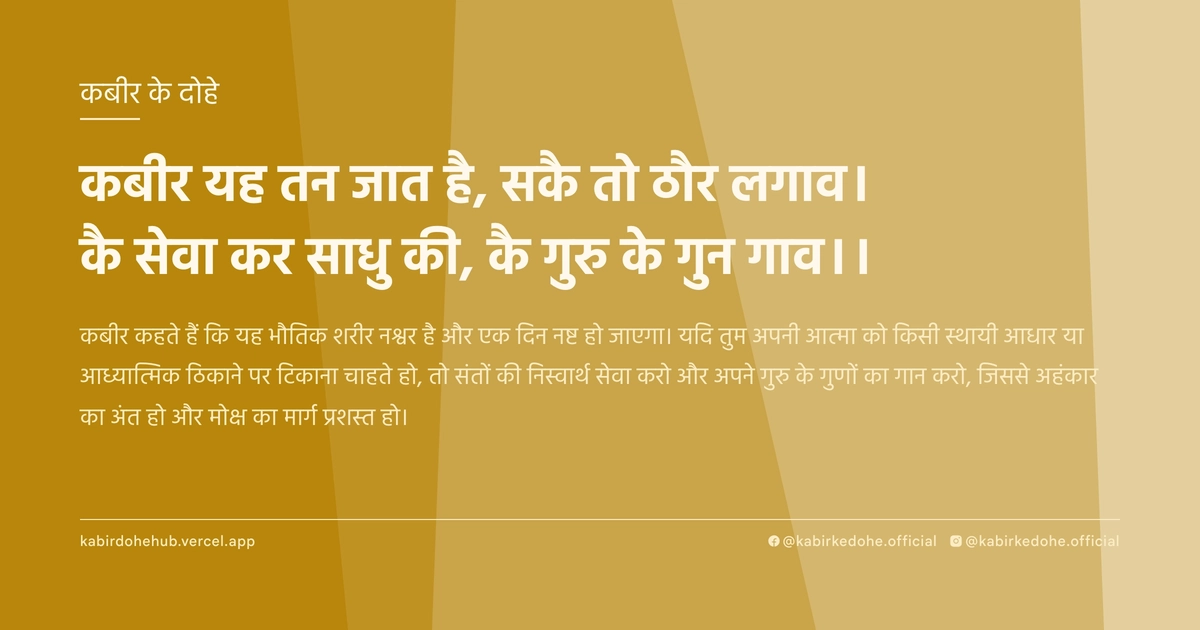
कबीर यह तन जात है, सकै तो ठौर लगाव।
कै सेवा कर साधु की, कै गुरु के गुन गाव।।
Kabir yeh tan jaat hai, sakai to thaur lagav. Kai seva kar sadhu ki, kai guru ke gun gav.
इस पृष्ठ पर इस कबीर दोहे का अर्थ (meaning), हिंदी व्याख्या और अंग्रेज़ी अनुवाद, दार्शनिक विश्लेषण और व्यावहारिक जीवन सीख दी गई है। यह दोहा गुरु महत्व (The Guru's Importance) विषय से जुड़ा है — Kabir doha meaning and explanation in Hindi and English.
अर्थ (Meaning):
कबीर कहते हैं कि यह भौतिक शरीर नश्वर है और एक दिन नष्ट हो जाएगा। यदि तुम अपनी आत्मा को किसी स्थायी आधार या आध्यात्मिक ठिकाने पर टिकाना चाहते हो, तो संतों की निस्वार्थ सेवा करो और अपने गुरु के गुणों का गान करो, जिससे अहंकार का अंत हो और मोक्ष का मार्ग प्रशस्त हो।
Kabir reminds us that the physical body is transient and destined for decay. If you wish to anchor your consciousness to a permanent spiritual foundation, engage in the selfless service of the realized souls and contemplate the virtues of the Guru, thereby dissolving the ego to attain liberation.
व्याख्या (Interpretation):
इस दोहे का शाब्दिक अर्थ शरीर की नश्वरता की चेतावनी है। गहरे स्तर पर, 'ठौर लगाव' का अर्थ है चेतना को माया के भटकाव से हटाकर सत्य (ब्रह्म) में स्थिर करना। कबीर यहाँ 'साधु' और 'गुरु' को केवल व्यक्ति नहीं, बल्कि उस दिव्य ऊर्जा के प्रतीक के रूप में देखते हैं जो साधक को अज्ञान से प्रकाश की ओर ले जाती है। यह निर्गुण भक्ति का मार्ग है जहाँ बाहरी कर्मकांडों के बजाय आंतरिक समर्पण और सेवा को प्राथमिकता दी गई है। यहाँ विरोधाभास यह है कि शरीर को खोकर ही आत्मा का वास्तविक 'ठिकाना' मिलता है। यह अद्वैत वेदांत के उस सिद्धांत को पुष्ट करता है जहाँ व्यक्ति अपनी सीमित पहचान (अहंकार) को मिटाकर अनंत में विलीन होता है।
Literally, the verse warns of the body's transience. Metaphorically, 'anchoring the soul' refers to shifting consciousness from the fluctuations of Maya to the stillness of Brahman. Kabir views the 'Saint' and 'Guru' not merely as humans, but as conduits of divine energy guiding the seeker from ignorance to enlightenment. This aligns with Nirgun Bhakti, prioritizing internal surrender and selfless service over ritualistic piety. The central paradox is that only by accepting the loss of the physical identity can one find the eternal abode. It reinforces the Advaita Vedanta principle where the individual ego must be annihilated to realize the non-duality of Atman and Brahman.
दार्शनिक विश्लेषण (Philosophical Analysis):
कबीर का यह दोहा उस कालखंड का है जब समाज कर्मकांडों, जातिगत भेदभाव और बाहरी आडंबरों में जकड़ा हुआ था। कबीर ने पुरजोर तरीके से इस बात का विरोध किया कि मोक्ष केवल तीर्थयात्राओं या कठिन तपस्या से मिलता है। उनके लिए, वास्तविक धर्म 'सेवा' और 'समर्पण' में निहित है। यह दृष्टिकोण सूफी मत के 'फना' (अहंकार का विनाश) और अद्वैत वेदांत के 'अहं ब्रह्मास्मि' के बीच एक सेतु बनाता है।
यहाँ 'साधु की सेवा' का अर्थ किसी व्यक्ति की चापलूसी करना नहीं, बल्कि उस ईश्वरीय अंश को पहचानना है जो हर जीव में मौजूद है। जब हम किसी संत की सेवा करते हैं, तो हम वास्तव में अपने भीतर के अहंकार को छोटा कर रहे होते हैं। यह मनोवैज्ञानिक रूपांतरण की प्रक्रिया है जहाँ 'मैं' का भाव 'हम' या 'वह' (परमात्मा) में बदल जाता है।
कबीर का दर्शन यह है कि शरीर एक किराए का घर है। यदि हम अपना पूरा जीवन इस अस्थायी ढांचे को सजाने में बिता देंगे, तो हम उस शाश्वत सत्य को भूल जाएंगे। गुरु के गुणों का गान करना वास्तव में उन दैवीय गुणों को अपने भीतर आत्मसात करने का प्रयास है।
यह शिक्षण हमें सिखाता है कि आध्यात्मिक प्रगति बाहरी उपलब्धियों से नहीं, बल्कि आंतरिक शून्यता से आती है। जब साधक पूरी तरह रिक्त हो जाता है, तभी वह परमात्मा से भर पाता है। यह 'शून्यवाद' और 'भक्ति' का एक अनूठा संगम है।
अंततः, यह दोहा हमें याद दिलाता है कि मृत्यु अपरिहार्य है, लेकिन चेतना का विकास हमारे हाथ में है। सेवा और गुरु-भक्ति वे उपकरण हैं जो हमारी चेतना को भौतिकता के कीचड़ से निकालकर दिव्यता के शिखर तक ले जाते हैं।
This Doha emerges from an era where society was stifled by rigid rituals, caste hierarchies, and superficial piety. Kabir vehemently rejected the notion that liberation was reserved for those performing elaborate pilgrimages or ascetic penance. For him, true religion resided in 'Seva' (selfless service) and 'Samarpan' (surrender).
This perspective creates a bridge between the Sufi concept of 'Fana' (annihilation of the self) and the Advaita Vedanta realization of 'Aham Brahmasmi'. The 'service of the saint' is not an act of sycophancy toward a person, but a recognition of the divine spark residing within every living being. By serving a realized soul, the seeker systematically dismantles their own ego.
Kabir’s philosophy posits the body as a rented dwelling. If one spends their entire existence decorating this temporary structure, they overlook the eternal truth. Chanting the virtues of the Guru is actually a process of internalizing those divine attributes within oneself.
This teaching emphasizes that spiritual progress is not achieved through external acquisitions but through internal emptiness. Only when the seeker becomes completely void of 'I-ness' can they be filled with the Divine. It is a unique synthesis of 'Shunyata' (voidness) and 'Bhakti' (devotion).
Ultimately, the verse reminds us that while death is inevitable, the evolution of consciousness is within our control. Service and devotion are the tools that lift consciousness from the mire of materiality to the peak of divinity.
मूल संदेश (Core Message):
- शरीर नश्वर है, इसे मोह करना व्यर्थ है।
- अहंकार का विसर्जन ही वास्तविक आध्यात्मिक प्रगति है।
- सेवा के माध्यम से हम स्वयं को शून्य करना सीखते हैं।
- गुरु केवल व्यक्ति नहीं, बल्कि सत्य का मार्गदर्शक है।
- शाश्वत ठिकाना बाहरी दुनिया में नहीं, आंतरिक समर्पण में है।
- The body is transient; clinging to it is futile.
- The dissolution of ego is the only true spiritual progress.
- Through service, we learn the art of becoming void.
- The Guru is not a person, but a guide to the Absolute Truth.
- The eternal abode lies not in the world, but in inner surrender.
व्यावहारिक उदाहरण (Practical Example):
वाराणसी के एक पुराने घाट पर रामदीन नाम का एक वृद्ध नाविक रहता था। उसका पूरा जीवन नाव चलाने और पर्यटकों को घुमाने में बीता। वह स्वभाव से क्रोधी था और अपनी छोटी सी नाव पर अपना पूर्ण अधिकार समझता था। वह मानता था कि उसकी मेहनत ही उसकी पहचान है और वह किसी के आगे झुकना पसंद नहीं करता था।
एक दिन उसकी नाव एक भीषण तूफान में फंस गई। उसने अपनी पूरी ताकत लगा दी, लेकिन लहरें उसे डुबोने पर उतारू थीं। तभी उसने देखा कि पास ही एक फकीर शांत भाव से बैठा था, जिसकी आँखों में एक अजीब सी स्थिरता थी। रामदीन ने घबराकर उनसे मदद मांगी। फकीर ने केवल इतना कहा, 'तू नाव को बचाने की कोशिश कर रहा है, लेकिन तू खुद को डूबने से नहीं बचा पा रहा क्योंकि तेरा अहंकार तुझे भारी कर रहा है।'
रामदीन को पहले तो गुस्सा आया, लेकिन जब मौत सामने दिखी, तो उसे एहसास हुआ कि उसकी नाव, उसकी कमाई और उसका घमंड सब बेकार हैं। उसने पहली बार महसूस किया कि वह इस ब्रह्मांड में कितना छोटा है। उसने फकीर के चरणों में गिरकर क्षमा मांगी और उनकी सेवा करने का संकल्प लिया।
अगले कुछ महीनों तक, रामदीन ने अपनी नाव चलाना कम कर दिया और उस फकीर के आश्रम में बिना किसी स्वार्थ के काम करना शुरू किया। वह उनके कपड़े धोता, उनके लिए पानी लाता और उनकी बातों को ध्यान से सुनता। उसने पाया कि जब वह दूसरों की सेवा करता है, तो उसके भीतर का क्रोध धीरे-धीरे शांत होने लगा।
उसने महसूस किया कि अब उसे अपनी नाव के खोने का डर नहीं था। वह अब केवल एक नाविक नहीं था, बल्कि एक जिज्ञासु बन गया था। उसने फकीर के गुणों को अपने जीवन में उतारना शुरू किया—धैर्य, करुणा और मौन।
एक दिन, एक अमीर व्यापारी उसकी नाव पर आया और उसे बहुत सारे पैसे देने का वादा किया ताकि वह उसे एक गुप्त स्थान पर ले जाए। पहले वाला रामदीन लालच में आ जाता, लेकिन अब वह शांत था। उसने विनम्रता से मना कर दिया क्योंकि वह उस समय एक बीमार वृद्ध की सेवा कर रहा था।
उस व्यापारी ने रामदीन की इस निस्वार्थता को देखकर आश्चर्य जताया। रामदीन ने मुस्कुराकर कहा, 'साहब, मैंने अपनी नाव तो बहुत पहले खो दी थी, अब मैंने खुद को पा लिया है।'
इस 'कबीर ट्विस्ट' ने रामदीन के जीवन को बदल दिया। उसने सीखा कि शरीर और संपत्ति तो केवल साधन हैं, असली ठिकाना तो उस प्रेम और सेवा में है जो हमें अहंकार से मुक्त करती है। अब वह घाट का सबसे सम्मानित व्यक्ति था, न इसलिए कि उसके पास सबसे बड़ी नाव थी, बल्कि इसलिए कि उसके पास सबसे बड़ा हृदय था।
On an ancient ghat in Varanasi lived an elderly boatman named Ramdeen. His entire life was spent rowing boats and guiding tourists. He was temperamental and viewed his small boat as his absolute domain. He believed his hard work was his sole identity and refused to bow before anyone.
One day, his boat was caught in a violent storm. He exerted all his strength, but the waves were relentless. Nearby, he saw a Fakir sitting in profound stillness, his eyes reflecting an uncanny calm. In a panic, Ramdeen cried out for help. The Fakir simply said, 'You are trying to save the boat, but you cannot save yourself because your ego is making you sink.'
Ramdeen was initially enraged, but facing imminent death, he realized that his boat, his earnings, and his pride were useless. For the first time, he felt his insignificance in the vastness of the universe. He fell at the Fakir's feet, seeking forgiveness and vowing to serve him.
For the next few months, Ramdeen reduced his rowing and began working selflessly at the Fakir's ashram. He washed the Fakir's clothes, fetched water, and listened intently to his words. He discovered that as he served others, his inner rage began to dissipate.
He realized he no longer feared losing his boat. He was no longer just a boatman; he had become a seeker. He began integrating the Fakir's virtues—patience, compassion, and silence—into his own life.
One day, a wealthy merchant offered him a vast sum of money to take him to a secret location. The old Ramdeen would have been consumed by greed, but the new Ramdeen remained poised. He politely declined because he was tending to a sick elderly man at that moment.
The merchant was astonished by this selflessness. Ramdeen smiled and said, 'Sir, I lost my boat long ago, but I have finally found myself.'
This 'Kabir Twist' transformed Ramdeen's existence. He learned that the body and possessions are mere tools; the true 'abode' is found in the love and service that liberate us from the ego. He became the most respected man on the ghat, not because he had the largest boat, but because he possessed the largest heart.
अभ्यास मार्गदर्शन (Practice Guidance):
- दैनिक चिंतन: प्रतिदिन 15 मिनट मौन बैठें और विचार करें कि आपकी कौन सी पहचान (पद, संपत्ति, रूप) अस्थायी है और कौन सी शाश्वत।
- निस्वार्थ सेवा: सप्ताह में एक बार किसी ऐसे व्यक्ति की मदद करें जिससे आपको बदले में कुछ न मिले, और इस प्रक्रिया में अपने 'कर्ता' भाव को मिटाएं।
- गुरु-तत्व का ध्यान: किसी ऐसे व्यक्ति के गुणों की सूची बनाएं जिन्हें आप आदर्श मानते हैं, और उन गुणों को अपने व्यवहार में उतारने का प्रयास करें।
- डायग्नोस्टिक चेकलिस्ट: क्या मैं अभी भी अपनी उपलब्धियों पर गर्व कर रहा हूँ? क्या मैं दूसरों की सेवा में छोटा महसूस करता हूँ? यदि हाँ, तो अहंकार अभी जीवित है।
- Daily Contemplation: Spend 15 minutes in silence reflecting on which parts of your identity (status, wealth, appearance) are transient and which are eternal.
- Selfless Service: Once a week, help someone from whom you expect nothing in return, consciously erasing the sense of being the 'doer'.
- Guru-Element Meditation: List the virtues of a realized soul or mentor you admire, and consciously attempt to embody those traits in your daily interactions.
- Diagnostic Checklist: Am I still clinging to pride in my achievements? Do I feel diminished when serving others? If yes, the ego is still active.
चिंतन प्रश्न (Reflection Questions):
- यदि आज आपकी सारी सामाजिक पहचान और संपत्ति छीन ली जाए, तो आपके पास क्या बचेगा?
- आप जिसे 'सेवा' कहते हैं, क्या वह वास्तव में निस्वार्थ है या वह आपकी अपनी छवि को बेहतर बनाने का एक तरीका है?
- क्या आप किसी ऐसे व्यक्ति के सामने झुक सकते हैं जो आपसे सामाजिक स्तर पर बहुत नीचे है, लेकिन आध्यात्मिक रूप से आपसे ऊपर है?
- आपके जीवन में 'गुरु' का क्या अर्थ है—एक व्यक्ति, एक पुस्तक, या एक आंतरिक अनुभव?
- आपकी डिजिटल पहचान (सोशल मीडिया) आपके वास्तविक स्वरूप को कितना ढक रही है?
- If all your social identities and possessions were stripped away today, what would remain of you?
- Is what you call 'service' truly selfless, or is it a subtle tool to enhance your own image?
- Can you bow before someone who is socially inferior to you but spiritually far superior?
- What does 'Guru' mean in your life—a person, a book, or an internal experience?
- To what extent does your digital persona mask your authentic, raw self?