
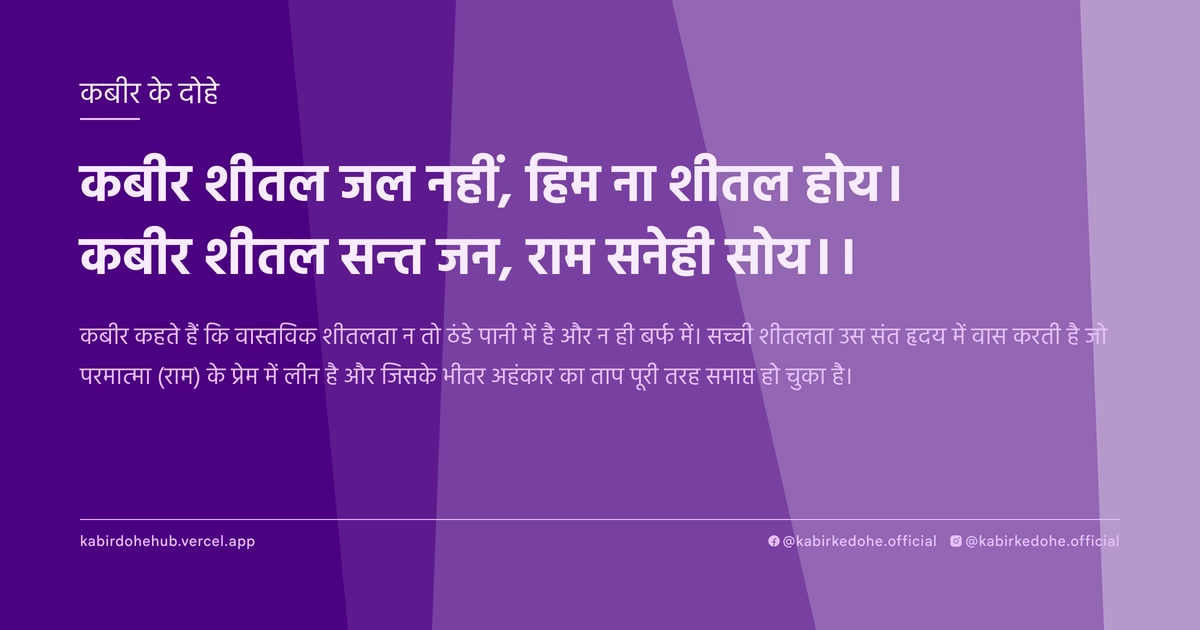
कबीर शीतल जल नहीं, हिम ना शीतल होय।
कबीर शीतल सन्त जन, राम सनेही सोय।।
Kabir sheetal jal nahi, him na sheetal hoye. Kabir sheetal sant jan, Ram sanehi soy.
इस पृष्ठ पर इस कबीर दोहे का अर्थ (meaning), हिंदी व्याख्या और अंग्रेज़ी अनुवाद, दार्शनिक विश्लेषण और व्यावहारिक जीवन सीख दी गई है। यह दोहा सत्संग (Satsang) विषय से जुड़ा है — Kabir doha meaning and explanation in Hindi and English.
अर्थ (Meaning):
कबीर कहते हैं कि वास्तविक शीतलता न तो ठंडे पानी में है और न ही बर्फ में। सच्ची शीतलता उस संत हृदय में वास करती है जो परमात्मा (राम) के प्रेम में लीन है और जिसके भीतर अहंकार का ताप पूरी तरह समाप्त हो चुका है।
Kabir asserts that true coolness is found neither in chilled water nor in ice. Genuine serenity and coolness reside within the heart of a saint who is immersed in the love of the Divine (Ram) and whose inner fire of ego has been completely extinguished.
व्याख्या (Interpretation):
इस दोहे में 'शीतलता' केवल तापमान का सूचक नहीं, बल्कि मानसिक शांति और आध्यात्मिक संतोष का प्रतीक है। भौतिक जल और हिम केवल शरीर को क्षणिक ठंडक देते हैं, लेकिन आत्मा की तपन केवल ईश्वरीय प्रेम से शांत होती है। यहाँ 'राम' सगुण ईश्वर नहीं, बल्कि निर्गुण ब्रह्म हैं जो कण-कण में व्याप्त हैं। जब साधक माया के मोह और क्रोध के ताप को त्याग देता है, तब वह 'संत जन' बनता है। यह अवस्था अद्वैत वेदांत की उस स्थिति के समान है जहाँ आत्मा और परमात्मा का मिलन होता है और द्वैत का अंत हो जाता है। अंततः, यह दोहा भौतिक सुखों की निस्सारता और आंतरिक रूपांतरण की अनिवार्यता को रेखांकित करता है।
In this couplet, 'coolness' is not a mere temperature but a metaphor for mental peace and spiritual contentment. While physical water and ice provide transient relief to the body, the burning restlessness of the soul is quenched only by Divine Love. 'Ram' here does not refer to the mythological king, but to the Nirgun Brahman—the formless, omnipresent consciousness. When a seeker relinquishes the heat of Maya (illusion), anger, and ego, they evolve into a 'Sant' (Saint). This state mirrors the Advaita Vedanta realization where the duality between the self and the Absolute dissolves. Ultimately, the verse highlights the futility of seeking external solace and emphasizes the necessity of internal alchemy.
दार्शनिक विश्लेषण (Philosophical Analysis):
कबीर का यह दर्शन भौतिकवाद और कर्मकांड के विरुद्ध एक सशक्त प्रहार है। उनके समय में लोग बाहरी तीर्थों और पवित्र नदियों में स्नान कर मोक्ष की आशा करते थे, जिसे कबीर ने 'पाखंड' कहा। वे तर्क देते हैं कि यदि मन में क्रोध और ईर्ष्या की अग्नि जल रही है, तो गंगा का जल भी उसे शीतल नहीं कर सकता। यह दृष्टिकोण सूफी मत के 'इश्क-ए-हकीकी' (ईश्वरीय प्रेम) से मेल खाता है, जहाँ प्रेमी अपने अस्तित्व को मिटाकर परमात्मा में विलीन हो जाता है।
दार्शनिक स्तर पर, यह दोहा 'ताप' और 'शीतलता' के द्वंद्व के माध्यम से अहंकार की चर्चा करता है। अहंकार (Ego) वह अग्नि है जो मनुष्य को अशांत रखती है। जब व्यक्ति यह जान लेता है कि वह शरीर नहीं बल्कि शुद्ध चैतन्य है, तब वह बाहरी दुनिया की उथल-पुथल से अप्रभावित रहता है। यह निर्गुण भक्ति का सार है—बिना किसी मूर्ति या मंदिर के, केवल हृदय की पवित्रता के माध्यम से सत्य का साक्षात्कार करना।
कबीर जाति और धर्म की सीमाओं को तोड़कर एक सार्वभौमिक मानवतावाद की बात करते हैं। उनके लिए 'संत' वह नहीं है जिसने गेरुआ वस्त्र पहना हो, बल्कि वह है जिसका व्यवहार करुणा से भरा हो। यह सामाजिक समानता का संदेश है, जहाँ आध्यात्मिक पात्रता केवल प्रेम और समर्पण पर आधारित है, न कि जन्म या कुल पर।
मनोवैज्ञानिक रूप से, यह दोहा हमें 'प्रोजेक्शन' (Projection) से बचने की चेतावनी देता है। हम अक्सर अपनी आंतरिक अशांति का समाधान बाहरी वस्तुओं (जैसे विलासिता या मनोरंजन) में खोजते हैं, जो केवल क्षणिक राहत देते हैं। वास्तविक शांति 'स्व' के भीतर उतरने से आती है।
अंततः, यह शिक्षण हमें सिखाता है कि भक्ति कोई बाहरी क्रिया नहीं, बल्कि एक आंतरिक स्थिति है। जब प्रेम की पराकाष्ठा होती है, तो व्यक्ति स्वयं एक 'शीतल स्रोत' बन जाता है, जिससे अन्य दुखी आत्माओं को भी शांति मिलती है। यह व्यक्तिगत मोक्ष से ऊपर उठकर सामूहिक कल्याण की ओर ले जाने वाला मार्ग है।
Kabir's philosophy here is a potent critique of materialism and ritualism. During his era, people sought salvation through external pilgrimages and ritual baths in holy rivers, which Kabir dismissed as 'hypocrisy.' He argues that if the fire of anger and jealousy burns within the mind, even the waters of the Ganges cannot provide coolness. This perspective aligns with the Sufi concept of 'Ishq-e-Haqiqi' (Divine Love), where the lover annihilates their identity to merge with the Beloved.
On a philosophical level, the verse discusses the ego through the duality of 'heat' and 'coolness.' The ego is the fire that keeps a human restless. Once an individual realizes they are not the physical body but pure consciousness, they remain unaffected by the turbulence of the external world. This is the essence of Nirgun Bhakti—experiencing Truth through the purity of the heart, without the need for idols or temples.
Kabir transcends the boundaries of caste and religion to advocate for a universal humanism. For him, a 'Saint' is not defined by saffron robes, but by a heart overflowing with compassion. This is a message of social equality, where spiritual eligibility is based solely on love and surrender, not on birth or lineage.
Psychologically, this couplet warns against 'projection.' We often seek solutions for our internal unrest in external objects—such as luxury or entertainment—which provide only fleeting relief. True peace comes from descending into the 'Self.'
Ultimately, this teaching suggests that devotion is not an external act but an internal state. When love reaches its zenith, the individual becomes a 'cool spring' themselves, providing solace to other suffering souls. This is a path that moves beyond individual liberation toward collective well-being.
मूल संदेश (Core Message):
- बाहरी अनुष्ठान आंतरिक अशांति का उपचार नहीं हैं।
- अहंकार वह अग्नि है जो आत्मा की शांति को भस्म करती है।
- ईश्वरीय प्रेम ही एकमात्र वास्तविक शीतलता है।
- सच्चा संत वह है जिसका हृदय करुणा से शीतल हो चुका है।
- शांति बाहर खोजने की वस्तु नहीं, भीतर विकसित करने की अवस्था है।
- External rituals are not a cure for internal unrest.
- Ego is the fire that consumes the peace of the soul.
- Divine Love is the only authentic source of coolness.
- A true saint is one whose heart has been cooled by compassion.
- Peace is not an object to be found outside, but a state to be cultivated within.
व्यावहारिक उदाहरण (Practical Example):
वाराणसी की तंग गलियों में रहने वाले एक वृद्ध बुनकर, माधव, अपनी पूरी जिंदगी रेशमी साड़ियों के धागों को सुलझाने में बिता चुके थे। लेकिन उनके निजी जीवन के धागे उलझे हुए थे। माधव का अपने छोटे बेटे के साथ गहरा मनमुटाव था, जिसके कारण घर में हमेशा तनाव और कड़वाहट का माहौल रहता था। माधव अक्सर मंदिर जाते, गंगा में डुबकी लगाते और दान-पुण्य करते, यह सोचकर कि शायद इससे उनके मन की अशांति दूर होगी और बेटा वापस लौट आएगा।
एक दिन माधव ने देखा कि एक छोटा बच्चा तपती धूप में एक प्यासे कुत्ते को अपने हिस्से का पानी पिला रहा है। बच्चे के चेहरे पर एक ऐसी शांति और संतोष था जिसे माधव ने अपने महंगे अनुष्ठानों में कभी नहीं पाया। माधव ने महसूस किया कि वे बाहरी शीतलता (गंगा स्नान) तो खोज रहे थे, लेकिन उनके भीतर क्रोध और 'सही होने के अहंकार' की अग्नि धधक रही थी।
उन्होंने तय किया कि वे अब बाहरी दिखावे को छोड़कर अपने भीतर के ताप को शांत करेंगे। उन्होंने अपने बेटे के प्रति अपनी शिकायतों की सूची जला दी और यह स्वीकार किया कि उनका अहंकार ही इस दूरी का कारण था। उन्होंने बेटे को पत्र लिखा, जिसमें कोई उपदेश नहीं था, बस एक सरल स्वीकारोक्ति थी: 'मैं अपनी गलती मानता हूँ, मुझे तुम्हारी याद आती है।'
जब बेटा वापस आया, तो माधव ने उसे कोई उपदेश नहीं दिया। उन्होंने बस उसे गले लगाया। उस स्पर्श में वह शीतलता थी जो किसी बर्फ या ठंडे जल में नहीं थी। माधव अब केवल एक बुनकर नहीं रहे, बल्कि उनके घर में आने वाला हर व्यक्ति उनकी शांत उपस्थिति से सुकून महसूस करने लगा।
गाँव के लोग अब माधव के पास विवाद सुलझाने आने लगे। माधव किसी का पक्ष नहीं लेते थे, बस अपनी शांत मुस्कान और प्रेमपूर्ण शब्दों से आग में घी डालने वालों को शांत कर देते थे।
उनकी यह रूपांतरण यात्रा यह दर्शाती है कि जब तक हम 'मैं सही हूँ' के ताप में जलते हैं, तब तक कोई भी बाहरी तीर्थ हमें शांति नहीं दे सकता।
माधव ने सीखा कि वास्तविक धर्म मंदिर की सीढ़ियों पर नहीं, बल्कि क्षमा और प्रेम के व्यवहार में है।
अंततः, माधव का जीवन एक ऐसे शीतल सरोवर की तरह हो गया, जहाँ हर कोई अपनी मानसिक थकान मिटाने आता था।
In the narrow lanes of Varanasi lived an elderly weaver named Madhav, who had spent his entire life untangling the threads of silk sarees. However, the threads of his personal life were hopelessly knotted. Madhav had a deep conflict with his younger son, leaving the home filled with tension and bitterness. Madhav frequently visited temples, bathed in the Ganges, and gave alms, believing these external rituals would erase his inner unrest and bring his son back.
One day, Madhav observed a small child giving his own share of water to a thirsty dog under the scorching sun. There was a serenity and contentment on the child's face that Madhav had never found in his expensive rituals. Madhav realized that while he was seeking external coolness (the Ganges), the fire of anger and the 'ego of being right' was raging within him.
He decided to stop the external pretenses and cool the heat within. He burned the list of grievances he held against his son and admitted that his own ego was the cause of the distance. He wrote a letter to his son—not a lecture, but a simple admission: 'I admit my mistake; I miss you.'
When the son returned, Madhav did not preach. He simply embraced him. In that touch was a coolness that existed in no ice or chilled water. Madhav was no longer just a weaver; everyone who entered his home began to feel a profound sense of peace from his mere presence.
Villagers started coming to Madhav to resolve their disputes. Madhav never took sides; he simply calmed those adding fuel to the fire with his serene smile and loving words.
His transformation journey demonstrated that as long as we burn in the heat of 'I am right,' no external pilgrimage can grant us peace.
Madhav learned that true religion is not found on the steps of a temple, but in the practice of forgiveness and love.
Ultimately, Madhav's life became like a cool spring, where anyone could come to wash away their mental exhaustion.
अभ्यास मार्गदर्शन (Practice Guidance):
- प्रतिदिन 20 मिनट 'साक्षी भाव' का अभ्यास करें: अपने भीतर उठने वाले क्रोध या चिड़चिड़ेपन को बिना प्रतिक्रिया दिए केवल देखें, जैसे आप किसी बाहरी आग को देख रहे हों।
- आत्म-पूछताछ जर्नल: प्रतिदिन लिखें कि आज किस बात पर मेरा 'अहंकार' (Ego) आहत हुआ और मैंने उसे शांत करने के लिए क्या किया।
- व्यवहारिक परिवर्तन: दिन में कम से कम एक बार किसी ऐसे व्यक्ति के प्रति करुणा दिखाएं जिससे आपकी वैचारिक सहमति नहीं है।
- निदान चेकलिस्ट: क्या मैं अभी भी अपनी शांति के लिए बाहरी परिस्थितियों (मौसम, लोग, वस्तुएं) पर निर्भर हूँ? क्या मेरा व्यवहार दूसरों के लिए 'शीतलता' प्रदान करता है या मैं तनाव बढ़ाता हूँ?
- Practice 'Witness Consciousness' for 20 minutes daily: Observe the anger or irritation arising within you without reacting, as if you are watching an external fire.
- Self-Inquiry Journal: Write daily about which instance bruised your 'Ego' today and what you did to extinguish that heat.
- Behavioral Shift: At least once a day, show genuine compassion toward someone with whom you fundamentally disagree.
- Diagnostic Checklist: Am I still depending on external circumstances (weather, people, objects) for my peace? Does my presence provide 'coolness' to others, or do I escalate tension?
चिंतन प्रश्न (Reflection Questions):
- क्या मेरी शांति मेरी परिस्थितियों की गुलाम है, या वह मेरे भीतर स्वतंत्र है?
- मैं अपनी छवि (Image) को बचाने के लिए कितनी बार अपने आंतरिक सत्य का गला घोंटता हूँ?
- मेरे जीवन में वह कौन सा 'ताप' (क्रोध या ईर्ष्या) है जिसे मैं बाहरी सुखों से ढकने की कोशिश कर रहा हूँ?
- यदि आज मेरा सामाजिक पद और पहचान छीन ली जाए, तो क्या मेरे भीतर कोई शीतलता शेष रहेगी?
- क्या मैं दूसरों को बदलने की कोशिश में अपनी स्वयं की शांति खो रहा हूँ?
- मेरे डिजिटल जीवन का अहंकार (Likes/Validation) मेरे वास्तविक मानसिक स्वास्थ्य को कैसे प्रभावित कर रहा है?
- Is my peace a slave to my circumstances, or is it independent within me?
- How often do I stifle my internal truth just to protect my public image?
- What is the specific 'heat' (anger or jealousy) in my life that I am trying to mask with external luxuries?
- If my social status and identity were stripped away today, would any coolness remain within me?
- Am I losing my own peace in the attempt to change others?
- How is the ego of my digital life (likes/validation) affecting my actual mental health?