
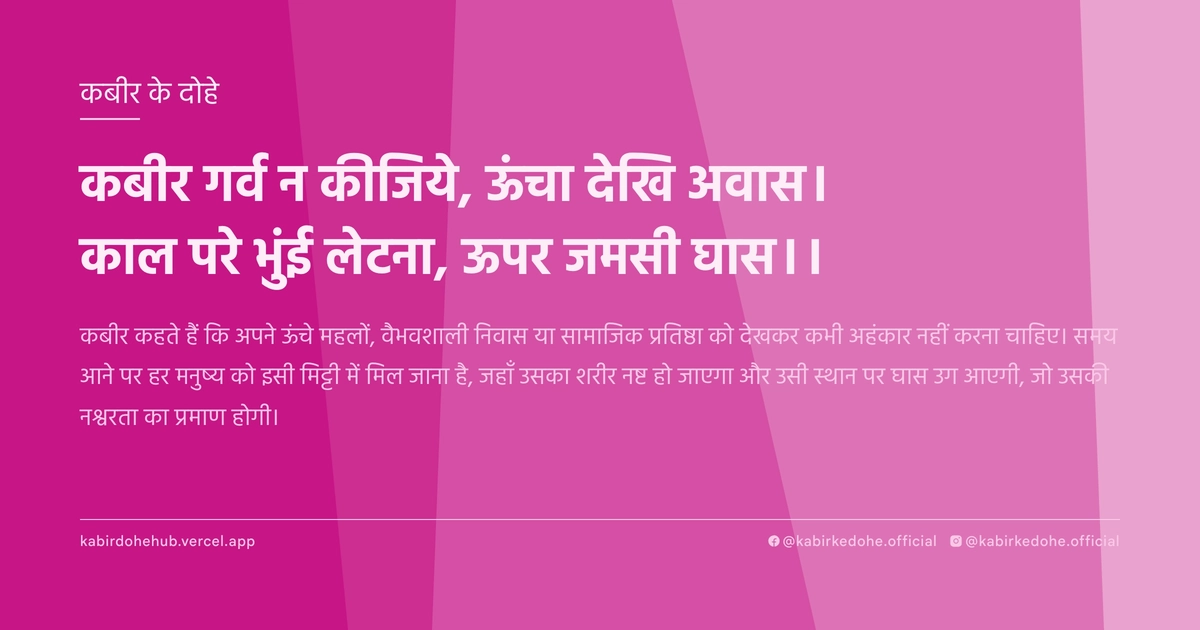
कबीर गर्व न कीजिये, ऊंचा देखि अवास।
काल परे भुंई लेटना, ऊपर जमसी घास।।
Kabir garv na kariye, uncha dekhi avas. Kaal pare bhunyi letna, upar jamsi ghas.
इस पृष्ठ पर इस कबीर दोहे का अर्थ (meaning), हिंदी व्याख्या और अंग्रेज़ी अनुवाद, दार्शनिक विश्लेषण और व्यावहारिक जीवन सीख दी गई है। यह दोहा पद-प्रतिष्ठा का अहंकार (The Vanity of Status) विषय से जुड़ा है — Kabir doha meaning and explanation in Hindi and English.
अर्थ (Meaning):
कबीर कहते हैं कि अपने ऊंचे महलों, वैभवशाली निवास या सामाजिक प्रतिष्ठा को देखकर कभी अहंकार नहीं करना चाहिए। समय आने पर हर मनुष्य को इसी मिट्टी में मिल जाना है, जहाँ उसका शरीर नष्ट हो जाएगा और उसी स्थान पर घास उग आएगी, जो उसकी नश्वरता का प्रमाण होगी।
Kabir warns against harboring pride based on one's grand residence, wealth, or high social standing. He reminds us that when the appointed time of death arrives, every human must return to the earth, where the body decomposes and grass grows over the grave, erasing all traces of earthly vanity.
व्याख्या (Interpretation):
इस दोहे का शाब्दिक अर्थ भौतिक संपत्ति के प्रति मोह का त्याग है। गहरे स्तर पर, 'ऊंचा अवास' केवल एक घर नहीं, बल्कि अहंकार (अहं) द्वारा निर्मित वह मानसिक किला है जिसमें मनुष्य स्वयं को दूसरों से श्रेष्ठ समझता है। यह निरगुण भक्ति का सार है, जहाँ बाहरी आडंबरों को माया का भ्रम माना गया है। अद्वैत वेदांत के अनुसार, आत्मा अविनाशी है, लेकिन शरीर और उससे जुड़ी पहचान क्षणभंगुर है। यहाँ 'घास जमना' इस बात का प्रतीक है कि प्रकृति अंततः सब कुछ आत्मसात कर लेती है, और केवल वही शेष रहता है जो अहंकार से मुक्त था। यह विरोधाभास है कि मनुष्य जिस ऊँचाई का गर्व करता है, अंततः वही उसे शून्य में ले जाती है।
Literally, this verse addresses the futility of material accumulation. Metaphorically, the 'high residence' represents the psychological fortress of the ego (Ahamkara), where an individual constructs a false identity of superiority. In the context of Nirgun Bhakti, these external markers are dismissed as Maya (cosmic illusion). According to Advaita Vedanta, while the Atman is eternal, the physical form and its associated status are transient. The image of 'grass growing over' symbolizes the absolute neutrality of nature, which reclaims all matter regardless of rank. The central paradox lies in the human tendency to build monuments of permanence in a world defined by impermanence, forgetting that the only true 'height' is spiritual liberation from the self.
दार्शनिक विश्लेषण (Philosophical Analysis):
कबीर का यह दोहा उस समय के सामाजिक परिवेश पर प्रहार करता है जहाँ जाति और संपत्ति के आधार पर ऊंच-नीच का भेदभाव चरम पर था। वे केवल भौतिक घरों की बात नहीं कर रहे, बल्कि उस 'मानसिक घर' की बात कर रहे हैं जिसे हम अपनी उपलब्धियों से सजाते हैं। कबीर का दृष्टिकोण सूफीवाद के 'फना' (अहंकार का विनाश) और वेदांत के 'अहं ब्रह्मास्मि' के बीच एक सेतु है, जहाँ व्यक्ति को यह समझना होता है कि वह ब्रह्मांड का एक छोटा हिस्सा है, न कि उसका स्वामी।
वे कर्मकांडों और बाहरी दिखावे का पुरजोर विरोध करते हैं। उनके लिए मोक्ष किसी मंदिर या महल में नहीं, बल्कि हृदय की सरलता और विनम्रता में है। यहाँ 'काल' (समय) को सबसे बड़े न्यायधीश के रूप में प्रस्तुत किया गया है, जो राजा और रंक के बीच के अंतर को समाप्त कर देता है। यह मनोवैज्ञानिक रूपांतरण की मांग करता है—एक ऐसी स्थिति जहाँ व्यक्ति अपनी पहचान को बाहरी वस्तुओं से जोड़ना बंद कर दे।
दार्शनिक रूप से, यह दोहा 'वैराग्य' की शिक्षा देता है। वैराग्य का अर्थ संसार को छोड़ना नहीं, बल्कि संसार के प्रति आसक्ति को छोड़ना है। जब मनुष्य यह स्वीकार कर लेता है कि उसका अंत मिट्टी में है, तो वह वर्तमान क्षण में अधिक करुणा और समानता के साथ जीना शुरू करता है।
अक्सर लोग इसे केवल मृत्यु के भय के रूप में देखते हैं, लेकिन कबीर इसे मुक्ति के अवसर के रूप में देखते हैं। मृत्यु वह अंतिम सत्य है जो मनुष्य के सारे मुखौटों को उतार देता है। जो व्यक्ति जीवित रहते हुए ही अपने अहंकार की मृत्यु कर लेता है, वह वास्तव में 'अमर' हो जाता है क्योंकि वह अब व्यक्तिगत पहचान के बंधन से मुक्त है।
अंततः, यह संदेश है कि वास्तविक गरिमा विनम्रता में है। जब हम यह समझते हैं कि हम सब एक ही तत्व (मिट्टी/चेतना) से बने हैं, तो घृणा और ईर्ष्या समाप्त हो जाती है। यही वह बिंदु है जहाँ व्यक्तिगत आत्मा (Atman) सार्वभौमिक चेतना (Brahman) में विलीन होने की तैयारी करती है।
Kabir’s verse strikes at the heart of a socio-cultural era defined by rigid caste hierarchies and the ostentatious display of wealth. The 'high residence' is not merely an architectural structure but a metaphor for the psychological construct of the ego, where humans build identities based on perceived superiority. Kabir’s philosophy bridges the Sufi concept of 'Fana' (annihilation of the self) and the Vedantic realization of non-duality, urging the seeker to recognize their infinitesimal place within the cosmic order.
He vehemently rejects ritualism and the belief that spiritual proximity to the Divine is linked to social status. For Kabir, liberation is found not in the grandeur of a temple or palace, but in the simplicity and humility of the heart. He presents 'Kaal' (Time/Death) as the ultimate equalizer, the only force capable of erasing the artificial distinctions between the sovereign and the beggar.
This teaching demands a profound psychological transformation. It challenges the practitioner to decouple their sense of worth from external acquisitions. By highlighting the inevitability of decay, Kabir encourages a shift from 'having' to 'being.' This is the essence of Vairagya (dispassion)—not the abandonment of the world, but the abandonment of attachment to the world's illusions.
Common literalist interpretations often view this as a morbid reminder of death. However, in the mystical tradition, this is a call to liberation. Death is the final truth that strips away all masks. One who achieves the 'death of the ego' while still alive attains a state of spiritual immortality, as they are no longer bound by the limitations of a fragile, separate identity.
Ultimately, the verse posits that true dignity resides in humility. When we acknowledge that we are all composed of the same elemental matter, hatred and envy dissolve. This realization is the gateway to the union of the individual soul (Atman) with the universal consciousness (Brahman), where the illusion of 'mine' and 'thine' finally vanishes.
मूल संदेश (Core Message):
- अहंकार एक भ्रम है जो समय की रेत में मिट जाता है।
- भौतिक ऊँचाई आध्यात्मिक पतन का कारण बन सकती है।
- मृत्यु ही अंतिम सत्य है, जो सबको समान करता है।
- विनम्रता ही वह एकमात्र आभूषण है जो शाश्वत है।
- मिट्टी से आए हैं और मिट्टी में ही मिल जाना है।
- सच्ची प्रतिष्ठा आत्मा की शुद्धता में है, बाहरी दिखावे में नहीं।
- Ego is a mirage that dissolves in the sands of time.
- Material height can often lead to spiritual descent.
- Death is the ultimate truth that renders all equal.
- Humility is the only ornament that remains eternal.
- Born of the earth, to the earth we shall return.
- True prestige lies in the purity of the soul, not in outward show.
व्यावहारिक उदाहरण (Practical Example):
वाराणसी के घाटों पर रहने वाले एक वृद्ध विधवा, जानकी, का जीवन अत्यंत अभावों में बीता। उनके पास रहने को एक छोटा सा कमरा था, लेकिन उनके मन में एक गहरी टीस थी कि उनके समय के संपन्न लोग अब भी शहर के बड़े बंगलों में याद किए जाते हैं। वे अक्सर अपनी गरीबी को अपनी नियति मानकर दुखी रहती थीं और उन लोगों से ईर्ष्या करती थीं जिनके पास वैभव था।
एक दिन उन्होंने देखा कि शहर के सबसे प्रतिष्ठित जमींदार का अंतिम संस्कार हो रहा था। वह जमींदार, जिसने जीवन भर अपने ऊंचे महलों और प्रभाव का प्रदर्शन किया था, अब एक साधारण लकड़ियों के ढेर पर लेटा था। जानकी ने देखा कि जिस शरीर ने कभी रेशमी वस्त्र पहने थे, वह अब अग्नि में भस्म हो रहा था और उसके पीछे बचे हुए लोग केवल उसकी संपत्ति के लिए आपस में लड़ रहे थे।
तभी उन्हें कबीर का यह दोहा याद आया। उन्होंने महसूस किया कि जिस 'ऊंचे अवास' की वे लालसा करती थीं, वह वास्तव में एक सुनहरा पिंजरा था। उन्होंने देखा कि जमींदार की मृत्यु के बाद उसकी सारी प्रतिष्ठा मिट्टी में मिल गई, जबकि एक साधारण व्यक्ति की दयालुता उसकी यादों में जीवित रहती है।
इस बोध ने जानकी के भीतर एक गहरा परिवर्तन किया। उन्होंने अपनी ईर्ष्या को त्याग दिया और यह स्वीकार किया कि उनकी सादगी ही उनकी सबसे बड़ी संपत्ति है। उन्होंने अपना समय अन्य असहाय वृद्ध महिलाओं की सेवा करने में लगाना शुरू किया।
अब वे अपने छोटे से कमरे को 'अभाव' की जगह 'शांति' का केंद्र मानने लगीं। उन्होंने पाया कि जब अहंकार और तुलना समाप्त हो गई, तो उनके मन का बोझ हल्का हो गया।
उनकी मुस्कान अब किसी भौतिक सुख पर निर्भर नहीं थी। वे घाट पर बैठकर आने-जाने वाले लोगों को देखते और मन ही मन उनके प्रति करुणा महसूस करते, यह जानते हुए कि अंततः सब एक ही मिट्टी में मिलेंगे।
गाँव के लोग जो पहले उन्हें एक 'बेचारी विधवा' समझते थे, अब उन्हें एक 'संत' के रूप में देखने लगे। उनकी आंतरिक शांति उनके चेहरे पर चमक बनकर उभर आई थी।
जानकी ने सीखा कि असली 'ऊँचाई' ईंट-पत्थरों के मकानों में नहीं, बल्कि आत्मा की विशालता और विनम्रता में होती है। उनका जीवन अब एक उदाहरण बन गया कि कैसे मृत्यु का स्मरण हमें जीवन को अधिक प्रेमपूर्वक जीने की प्रेरणा देता है।
Janaki, an elderly widow living on the ghats of Varanasi, spent her life in extreme poverty. She resided in a tiny, damp room, yet her heart harbored a lingering bitterness. She often felt a sense of inadequacy and envy toward the wealthy elite of the city, whose names were etched in stone on grand mansions and whose lives seemed devoid of struggle.
One afternoon, she witnessed the funeral procession of the city's most prestigious landlord. This man, who had spent his entire existence flaunting his towering palaces and social influence, was now lying on a simple pyre of wood. Janaki observed as the body that once wore the finest silks was consumed by fire, while his surviving heirs fought bitterly over the remnants of his estate.
In that moment, Kabir's words resonated within her. She realized that the 'high residence' she had longed for was actually a gilded cage. She saw that the landlord's prestige had vanished the moment he breathed his last, leaving behind nothing but a legacy of greed and conflict.
This realization triggered a profound internal shift. Janaki let go of her envy and accepted that her simplicity was her greatest asset. She stopped viewing her poverty as a curse and began spending her days serving other destitute elderly women in the community.
Her tiny room, once a symbol of lack, became a sanctuary of peace. She discovered that once the habit of comparison died, the heavy burden on her soul lifted, replaced by a lightness she had never known.
Her happiness no longer depended on material comfort. As she sat by the Ganges, watching the ebb and flow of pilgrims, she felt a deep compassion for all humans, knowing that regardless of their status, they were all heading toward the same earth.
The locals, who once pitied her as a 'helpless widow,' began to seek her out as a source of wisdom. A serene radiance emerged on her face, a direct result of her internal liberation from ego.
Janaki learned that true 'height' is not measured by the floors of a building, but by the depth of one's humility and the breadth of one's love. Her life became a living testament to how the contemplation of mortality can inspire one to live with more grace and kindness.
अभ्यास मार्गदर्शन (Practice Guidance):
- दैनिक चिंतन: प्रतिदिन 10 मिनट के लिए आँखें बंद करें और कल्पना करें कि आपका शरीर मिट्टी में मिल चुका है। विचार करें कि उस समय आपकी कौन सी उपलब्धि या संपत्ति आपके काम आएगी।
- आत्म-पूछताछ जर्नल: लिखें कि आप अपनी पहचान के लिए किन बाहरी चीजों (पद, पैसा, घर) का सहारा लेते हैं। पूछें—'यदि ये सब छिन जाएं, तो मैं वास्तव में कौन हूँ?'
- व्यवहार परिवर्तन: सप्ताह में एक बार किसी ऐसे व्यक्ति की निस्वार्थ सेवा करें जिसे समाज 'नीचा' समझता है, ताकि आपके भीतर का सूक्ष्म अहंकार नष्ट हो सके।
- निदान चेकलिस्ट: यदि आप किसी की सफलता से ईर्ष्या महसूस करते हैं या अपनी उपलब्धियों पर गर्व करते हैं, तो समझें कि आप 'माया' के प्रभाव में हैं। यदि आप दूसरों की प्रगति में शांति महसूस करते हैं, तो आप इस ज्ञान को जी रहे हैं।
- Daily Contemplation: Spend 10 minutes in silence, visualizing your physical form returning to the earth. Reflect on which of your current achievements or possessions will hold value in that final moment.
- Self-Inquiry Journaling: List the external markers (title, wealth, property) you use to define your identity. Ask yourself: 'If all these were stripped away, who would I be in essence?'
- Behavioral Shift: Once a week, perform a selfless act of service for someone marginalized by society to consciously dismantle the subtle ego of superiority.
- Diagnostic Checklist: You are failing to live this wisdom if you feel envy at another's success or pride in your own. You are embodying it when you feel genuine peace in the prosperity of others.
चिंतन प्रश्न (Reflection Questions):
- मेरा वह कौन सा 'मानसिक महल' है जिसे मैं दुनिया के सामने बनाए रखने की कोशिश कर रहा हूँ?
- क्या मेरी दयालुता वास्तव में करुणा है, या यह मेरी श्रेष्ठता दिखाने का एक तरीका है?
- यदि आज मेरी सारी सामाजिक पहचान छीन ली जाए, तो क्या मेरे पास कोई आंतरिक मूल्य बचेगा?
- मैं अपनी डिजिटल पहचान (सोशल मीडिया) के माध्यम से किस प्रकार के 'ऊंचे अवास' का निर्माण कर रहा हूँ?
- क्या मैं मृत्यु के विचार से डरता हूँ, या मैं इसे एक मुक्ति के रूप में देखता हूँ?
- मेरे जीवन का वह कौन सा हिस्सा है जहाँ मैं अभी भी दूसरों को खुद से छोटा समझता हूँ?
- What is the 'mental palace' I am desperately trying to maintain in the eyes of the world?
- Is my kindness genuine compassion, or is it a subtle tool to reinforce my own sense of superiority?
- If all my social identifiers were stripped away today, would any intrinsic value remain within me?
- How am I constructing a 'high residence' through my digital identity and social media presence?
- Do I fear the thought of death, or do I perceive it as a liberation from the ego?
- In which areas of my life do I still unconsciously perceive others as inferior to myself?