
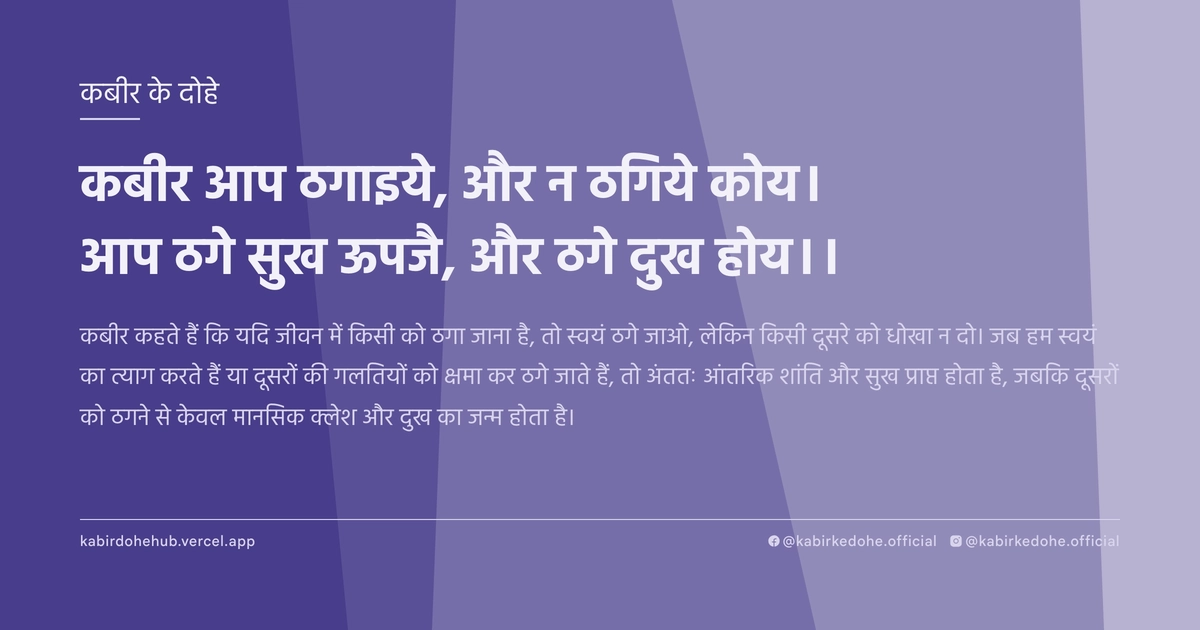
कबीर आप ठगाइये, और न ठगिये कोय।
आप ठगे सुख ऊपजै, और ठगे दुख होय।।
Kabir aap thagaiye, aur na thagiye koy. Aap thage sukh upjai, aur thage dukh hoye.
इस पृष्ठ पर इस कबीर दोहे का अर्थ (meaning), हिंदी व्याख्या और अंग्रेज़ी अनुवाद, दार्शनिक विश्लेषण और व्यावहारिक जीवन सीख दी गई है। यह दोहा विनम्रता (Humility) विषय से जुड़ा है — Kabir doha meaning and explanation in Hindi and English.
अर्थ (Meaning):
कबीर कहते हैं कि यदि जीवन में किसी को ठगा जाना है, तो स्वयं ठगे जाओ, लेकिन किसी दूसरे को धोखा न दो। जब हम स्वयं का त्याग करते हैं या दूसरों की गलतियों को क्षमा कर ठगे जाते हैं, तो अंततः आंतरिक शांति और सुख प्राप्त होता है, जबकि दूसरों को ठगने से केवल मानसिक क्लेश और दुख का जन्म होता है।
Kabir suggests that if one must be deceived or cheated in this world, it is better to be the victim than the perpetrator. By choosing to be the one who is 'cheated'—essentially practicing selfless surrender and forgiveness—one cultivates inner peace and spiritual joy, whereas deceiving others inevitably leads to suffering and spiritual decay.
व्याख्या (Interpretation):
शाब्दिक अर्थ में यह दोहा ईमानदारी और क्षमा की बात करता है, परंतु आध्यात्मिक स्तर पर यह 'अहंकार के विसर्जन' का संकेत है। यहाँ 'ठगे जाने' का अर्थ है अपनी इच्छाओं, अधिकारों और अहंकार का त्याग करना। यह निर्गुण भक्ति का वह मार्ग है जहाँ साधक अपनी 'मैं' को मिटाकर परमात्मा में लीन होना चाहता है। माया का खेल यह है कि हम हमेशा दूसरों से लाभ लेने की कोशिश करते हैं, जो हमें बंधन में बांधता है। जब हम स्वयं को 'ठगा हुआ' मानकर स्वीकार कर लेते हैं, तो हम वास्तव में माया के प्रभाव से मुक्त हो जाते हैं। यह अद्वैत वेदांत के उस सत्य को दर्शाता है जहाँ द्वैत (मैं और तू) समाप्त हो जाता है। अंततः, स्वयं का 'नुकसान' वास्तव में आत्मा का लाभ है क्योंकि यह ईगो की दीवारों को ढहा देता है।
Literally, the couplet advocates for honesty and forgiveness, but metaphorically, it signals the 'dissolution of the ego.' Being 'cheated' here refers to the voluntary surrender of one's claims, rights, and pride. In the path of Nirgun Bhakti, the seeker aims to annihilate the 'I' to merge with the Formless Divine. The illusion of Maya tricks us into seeking gain from others, which only tightens the bonds of karma. By accepting the role of the 'cheated,' the practitioner transcends the duality of winner and loser. This aligns with Advaita Vedanta, where the realization of non-duality removes the friction between the self and the other. Ultimately, the perceived loss of the worldly self is the actual gain of the spiritual Atman, as it shatters the walls of the ego.
दार्शनिक विश्लेषण (Philosophical Analysis):
कबीर का यह विचार उनके युग के सामाजिक और धार्मिक पाखंड के विरुद्ध एक सशक्त प्रहार है। उस समय धर्म के नाम पर कर्मकांडों और जातिगत श्रेष्ठता का बोलबाला था, जहाँ शक्तिशाली लोग कमजोरों को ठगते थे। कबीर इस सामाजिक ढांचे को व्यक्तिगत नैतिकता और आंतरिक रूपांतरण के माध्यम से चुनौती देते हैं। वे बताते हैं कि बाहरी दुनिया में जीत हासिल करना वास्तव में आंतरिक हार है।
दार्शनिक रूप से, यह सूफी मत के 'फना' (अहंकार का विनाश) के करीब है। जब व्यक्ति यह स्वीकार कर लेता है कि वह कुछ भी पाने का हकदार नहीं है, तो वह वास्तव में पूर्णता को प्राप्त करता है। यह विचार कि 'दूसरों को ठगने से दुख होता है', केवल नैतिक चेतावनी नहीं है, बल्कि यह कर्म के सिद्धांत (Law of Karma) की व्याख्या है। जो ऊर्जा हम दूसरों को चोट पहुँचाने में लगाते हैं, वह अंततः हमारे अपने चित्त को अशांत करती है।
अद्वैत वेदांत के परिप्रेक्ष्य में, जब हम दूसरों को ठगते हैं, तो हम यह मान रहे होते हैं कि दूसरा हमसे अलग है। यह 'भेद' ही दुख का मूल कारण है। यदि हम यह जान लें कि सामने वाला व्यक्ति भी वही ब्रह्म है जो मैं हूँ, तो ठगने का विचार ही समाप्त हो जाएगा। कबीर यहाँ 'स्व' के विलोपन की बात कर रहे हैं, जो मोक्ष का एकमात्र मार्ग है।
कबीर का दृष्टिकोण मनोवैज्ञानिक रूप से भी गहरा है। वे जानते हैं कि क्रोध, ईर्ष्या और लालच तभी तक जीवित रहते हैं जब तक हम अपने 'अधिकारों' की रक्षा करते रहते हैं। जैसे ही हम 'ठगे जाने' के लिए तैयार होते हैं, हम उन नकारात्मक भावनाओं के बोझ से मुक्त हो जाते हैं। यह एक प्रकार का 'सक्रिय समर्पण' है।
अंततः, यह दोहा हमें सिखाता है कि वास्तविक सुख भौतिक लाभ में नहीं, बल्कि मानसिक हल्कापन में है। जो व्यक्ति दुनिया की नजर में 'बेवकूफ' या 'ठगा हुआ' कहलाता है, वह वास्तव में सबसे बुद्धिमान है क्योंकि उसने उस खेल को समझ लिया है जहाँ जीतने वाला भी अंततः हारता है।
Kabir's insight is a powerful critique of the social and religious hypocrisy of his era. During his time, ritualism and caste superiority prevailed, where the powerful often exploited the marginalized. Kabir challenges this social structure not through political rebellion, but through individual ethics and internal transformation. He posits that winning in the external world is often an internal defeat.
Philosophically, this mirrors the Sufi concept of 'Fana' (the annihilation of the self). When a person accepts that they have no inherent claim to ownership or superiority, they paradoxically attain wholeness. The warning that 'deceiving others brings sorrow' is not merely a moral platitude but an explanation of the Law of Karma. The psychic energy spent on manipulation inevitably disturbs the practitioner's own peace of mind.
From the lens of Advaita Vedanta, the act of deceiving another is predicated on the illusion that the 'other' is separate from the self. This perceived separation (Dwaita) is the root of all suffering. If one realizes that the other person is the same Brahman as oneself, the very impulse to cheat vanishes. Kabir is advocating for the dissolution of the separate identity to achieve liberation.
Psychologically, Kabir understands that anger, jealousy, and greed are fueled by the constant need to protect and defend one's 'rights' and 'possessions.' By embracing the willingness to be 'cheated,' one releases the burden of these negative emotions. This is a form of 'active surrender' that liberates the mind from the stress of competition.
Ultimately, the doha teaches that true happiness lies not in material accumulation but in mental lightness. The person who is labeled a 'fool' or 'cheated' by the world is actually the wisest, having recognized that the game of worldly gain is a zero-sum game where even the winner loses their soul.
मूल संदेश (Core Message):
- अहंकार का त्याग ही वास्तविक लाभ है।
- दूसरों को ठगना स्वयं के चित्त को दूषित करना है।
- शांति भौतिक जीत से कहीं अधिक मूल्यवान है।
- क्षमा और उदारता आत्मा को हल्का बनाती हैं।
- संसार का खेल माया है; यहाँ हारना ही वास्तव में जीतना है।
- The surrender of ego is the only true gain.
- Deceiving others is an act of polluting one's own consciousness.
- Inner peace is far more valuable than any material victory.
- Forgiveness and generosity lighten the burden of the soul.
- The world is a play of Maya; here, losing is the only way to truly win.
व्यावहारिक उदाहरण (Practical Example):
एक समय की बात है, वाराणसी के घाटों पर माधव नाम का एक पुराना बुनकर रहता था। माधव बहुत सीधा था और कबीर की वाणी का अनुयायी था। उसके पास एक छोटी सी दुकान थी जहाँ वह बेहतरीन सूती कपड़े बुनता था। उसी गली में एक चतुर व्यापारी, सेठ धनीराम भी था, जो अपनी चालाकी के लिए मशहूर था।
एक बार धनीराम ने देखा कि माधव के पास एक बहुत ही दुर्लभ और सुंदर रेशमी वस्त्र है जिसे उसने महीनों की मेहनत से बनाया था। धनीराम ने माधव को विश्वास दिलाया कि बाजार में इस तरह के कपड़ों की मांग नहीं है और उसने माधव को बहुत कम कीमत पर वह वस्त्र खरीदने का लालच दिया। माधव जानता था कि वस्त्र की कीमत कहीं अधिक है, लेकिन उसने सोचा, 'यदि मैं इस लालच में पड़कर बहस करूँ, तो मेरा मन अशांत होगा। यदि सेठ जी को लगता है कि वह मुझे ठग रहे हैं, तो उन्हें यह सुख मिलने दें।'
माधव ने वह कीमती वस्त्र बहुत सस्ते दाम में धनीराम को दे दिया। धनीराम बहुत खुश था कि उसने एक 'बेवकूफ' बुनकर को ठग लिया है। वह उस वस्त्र को ऊँचे दाम पर बेचने के लिए शहर गया। लेकिन जैसे ही वह वस्त्र बेचने लगा, उसे महसूस हुआ कि वह वस्त्र केवल एक कपड़ा नहीं था, बल्कि उसमें माधव की शांति और प्रेम समाया हुआ था। धनीराम को अचानक अपनी चालाकी पर ग्लानि होने लगी।
उधर, माधव अपने घर में निश्चिंत था। उसने न तो किसी से झगड़ा किया, न ही किसी के प्रति द्वेष रखा। उसकी नींद गहरी थी और उसका मन शांत। उसने अपनी भौतिक हानि को आध्यात्मिक लाभ में बदल दिया था। उसने महसूस किया कि वस्त्र खोने से उसका बोझ कम हो गया है।
कुछ दिनों बाद, धनीराम वापस आया। वह बहुत परेशान था। उसने देखा कि माधव अब भी उतना ही खुश और शांत है, जबकि वह खुद अपनी जीत के बावजूद बेचैन है। धनीराम ने पूछा, 'माधव, मैंने तुम्हें ठगा, फिर भी तुम इतने प्रसन्न कैसे हो?'
माधव ने मुस्कुराकर कहा, 'सेठ जी, आपने मेरा कपड़ा लिया, लेकिन बदले में मुझे यह शांति दी कि मुझे अब उस कपड़े की सुरक्षा की चिंता नहीं करनी। आपने मुझे ठगा, लेकिन इस प्रक्रिया में मेरा अहंकार मर गया। वास्तव में, ठगा हुआ मैं नहीं, बल्कि आप हैं, क्योंकि आपने शांति के बदले एक टुकड़ा कपड़ा लिया।'
धनीराम की आँखें खुल गईं। उसे समझ आया कि असली संपत्ति वह नहीं जो तिजोरी में हो, बल्कि वह है जो मन के भीतर हो। उसने माधव से माफी मांगी और अपनी चालाकी छोड़कर ईमानदारी का मार्ग अपनाया।
माधव का जीवन इस बात का प्रमाण था कि जब हम दूसरों को 'जीतने' का मौका देते हैं, तो हम वास्तव में स्वयं को मुक्त करते हैं। उसने भौतिक नुकसान को स्वीकार कर मानसिक साम्राज्य जीत लिया था।
Once, on the ghats of Varanasi, lived an old weaver named Madhav. Madhav was a simple man and a devoted follower of Kabir's teachings. He ran a small shop where he wove exquisite cotton fabrics. In the same lane lived a cunning merchant, Seth Dhaniram, renowned for his shrewdness and manipulation.
One day, Dhaniram noticed that Madhav had created a rare and stunning silk garment, the result of months of meticulous labor. Dhaniram convinced Madhav that there was no market demand for such a piece and offered to buy it at a fraction of its true value. Madhav knew the garment was worth far more, but he thought, 'If I argue or fight for my right, my mind will be disturbed. If the Seth believes he is cheating me, let him have that fleeting pleasure.'
Madhav sold the precious garment for a pittance. Dhaniram was elated, believing he had swindled a 'foolish' weaver. He traveled to the city to sell the fabric at a massive profit. However, as he attempted to sell it, he felt that the garment was not just fabric, but was imbued with Madhav's peace and love. Suddenly, Dhaniram felt a profound sense of guilt for his deception.
Meanwhile, Madhav remained serene in his home. He had neither fought nor harbored resentment. His sleep was deep, and his mind was still. He had transmuted a material loss into a spiritual gain, feeling that the loss of the garment had lightened his emotional burden.
After a few days, Dhaniram returned, visibly troubled. He saw that Madhav was still as happy and peaceful as ever, while he, despite his 'victory,' was restless. Dhaniram asked, 'Madhav, I cheated you, yet how are you so content?'
Madhav smiled and replied, 'Seth ji, you took my cloth, but in return, you gave me the peace of no longer having to protect it. You cheated me, but in doing so, my ego was diminished. In truth, I am not the cheated one—you are, for you traded your inner peace for a piece of cloth.'
Dhaniram's eyes were opened. He realized that true wealth is not what is stored in a vault, but what resides within the heart. He apologized to Madhav and abandoned his cunning ways in favor of honesty.
Madhav's life proved that when we allow others to 'win,' we actually liberate ourselves. By accepting a material loss, he had conquered a mental empire.
अभ्यास मार्गदर्शन (Practice Guidance):
- दैनिक चिंतन: प्रतिदिन 15 मिनट मौन बैठें और विचार करें कि आज आपने कहाँ अपने 'अधिकारों' के लिए संघर्ष किया और कहाँ आप सहजता से छोड़ पाए।
- आत्म-पूछताछ जर्नल: लिखें कि जब कोई आपको धोखा देता है या आपका अपमान करता है, तो आपके भीतर कौन सा 'अहंकार' चोटिल होता है? उस चोटिल हिस्से को पहचानें।
- व्यवहारिक परिवर्तन: दिन में कम से कम एक बार किसी ऐसी स्थिति को चुनें जहाँ आप सही हैं, लेकिन शांति के लिए आप अपनी बात न कहें और दूसरे को 'जीतने' दें।
- निदान चेकलिस्ट: यदि आप छोटी बातों पर चिड़चिड़े हो रहे हैं या दूसरों की सफलता से जल रहे हैं, तो समझें कि आप अभी भी 'ठगे जाने' के डर में जी रहे हैं।
- Daily Contemplation: Spend 15 minutes in silence daily, reflecting on where you fought for your 'rights' today and where you were able to let go effortlessly.
- Self-Inquiry Journal: Document the specific part of your 'ego' that feels wounded when someone deceives or insults you. Identify the root of that attachment.
- Behavioral Shift: Once a day, consciously choose a situation where you are right, but for the sake of inner peace, refrain from arguing and allow the other person to 'win.'
- Diagnostic Checklist: If you find yourself irritable over trivial matters or envious of others' success, recognize that you are still living in the fear of being 'cheated.'
चिंतन प्रश्न (Reflection Questions):
- क्या मेरी 'ईमानदारी' वास्तव में नैतिकता है, या केवल इस बात का डर है कि मैं पकड़ा जाऊँगा?
- जब मैं किसी के द्वारा ठगा जाता हूँ, तो मुझे दुख वस्तु के खोने का होता है या मेरी 'श्रेष्ठता' के भ्रम के टूटने का?
- मेरे जीवन का वह कौन सा क्षेत्र है जहाँ मैं 'जीतने' की जिद में अपनी मानसिक शांति खो रहा हूँ?
- क्या मैं वास्तव में दूसरों की मदद करता हूँ, या मदद के माध्यम से अपनी 'दाता' वाली छवि (Digital/Social Ego) को पुष्ट करता हूँ?
- यदि कल मेरा सब कुछ छीन लिया जाए, तो मेरे भीतर क्या बचेगा जिसे 'मैं' कह सकूँ?
- Is my 'honesty' truly a moral choice, or is it merely a fear of being caught?
- When I am cheated, do I grieve the loss of the object, or the shattering of the illusion of my own superiority?
- In which area of my life am I sacrificing my mental peace for the stubborn need to 'win'?
- Do I truly help others, or am I using acts of charity to reinforce my image as a 'giver' (Digital/Social Ego)?
- If everything I possess were taken away tomorrow, what would remain within me that I could still call 'I'?