
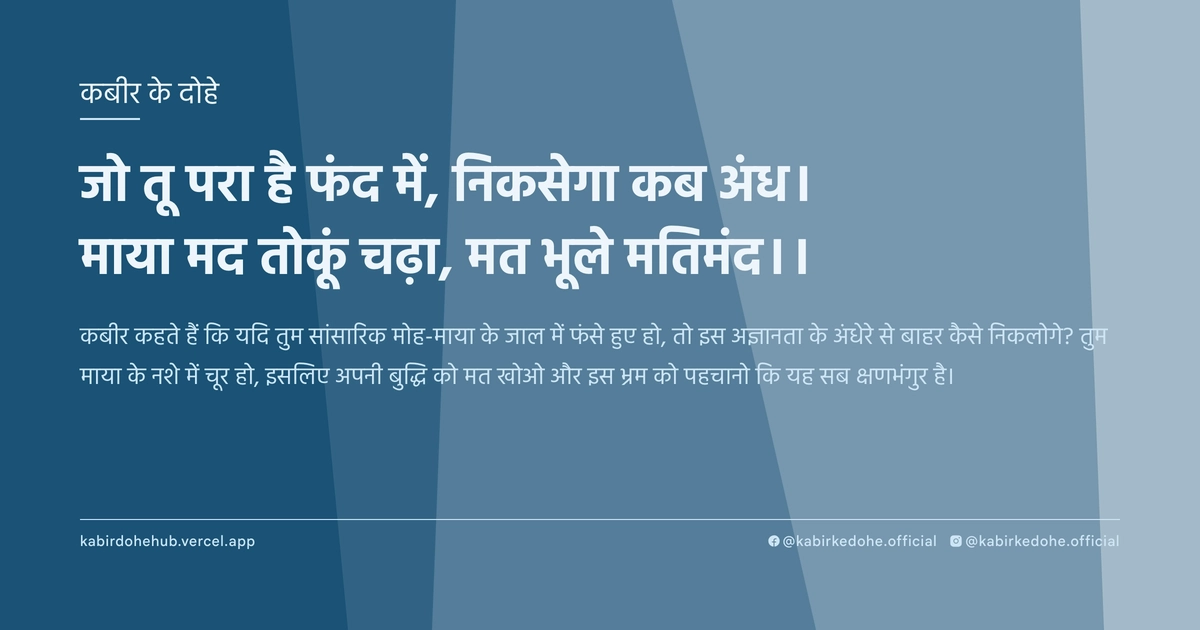
जो तू परा है फंद में, निकसेगा कब अंध।
माया मद तोकूं चढ़ा, मत भूले मतिमंद।।
Jo tu para hai phand me, niksega kab andh. Maya mad tokun chadha, mat bhule matimand.
इस पृष्ठ पर इस कबीर दोहे का अर्थ (meaning), हिंदी व्याख्या और अंग्रेज़ी अनुवाद, दार्शनिक विश्लेषण और व्यावहारिक जीवन सीख दी गई है। यह दोहा माया (Maya) विषय से जुड़ा है — Kabir doha meaning and explanation in Hindi and English.
अर्थ (Meaning):
कबीर कहते हैं कि यदि तुम सांसारिक मोह-माया के जाल में फंसे हुए हो, तो इस अज्ञानता के अंधेरे से बाहर कैसे निकलोगे? तुम माया के नशे में चूर हो, इसलिए अपनी बुद्धि को मत खोओ और इस भ्रम को पहचानो कि यह सब क्षणभंगुर है।
Kabir asks: if you remain trapped in the snare of worldly attachments, when will you emerge from this spiritual blindness? You are intoxicated by the illusion of Maya; do not let your intellect fade into stupidity by forgetting the eternal truth of your existence.
व्याख्या (Interpretation):
इस दोहे का शाब्दिक अर्थ है कि मनुष्य माया के जाल में फंसा हुआ है। गहरा विश्लेषण यह है कि 'फंद' या जाल केवल बाहरी वस्तुएं नहीं, बल्कि हमारे अहंकार और इच्छाएं हैं। कबीर यहाँ 'अंध' शब्द का प्रयोग केवल दृष्टिहीनता के लिए नहीं, बल्कि आध्यात्मिक चेतना के अभाव के लिए कर रहे हैं। यह निर्गुण भक्ति का सार है, जहाँ ईश्वर किसी मूर्ति में नहीं बल्कि स्वयं के भीतर है, लेकिन माया की परतें उसे ढक लेती हैं। जब तक साधक यह नहीं समझता कि वह शरीर नहीं बल्कि आत्मा है, वह अद्वैत वेदांत के 'अहं ब्रह्मास्मि' के सत्य से दूर रहता है। यह विरोधाभास है कि मनुष्य जिसे सुख समझकर पकड़ता है, वही उसके बंधन का कारण बनता है। अंततः, यह दोहा हमें चेतावनी देता है कि माया का नशा बुद्धि को जड़ बना देता है, जिससे मोक्ष का मार्ग अवरुद्ध हो जाता है।
Literally, the verse describes a person trapped in a net. Metaphorically, the 'phand' or snare represents the intricate web of ego, desire, and social conditioning. Kabir uses 'andh' (blind) not to denote physical sightlessness, but a profound spiritual ignorance. In the context of Nirgun Bhakti, the Divine is formless and omnipresent, yet obscured by the veils of Maya. This aligns with Advaita Vedanta, where the illusion of duality prevents the realization of Atman-Brahman non-duality. The central paradox is that the very things humans pursue for security and pleasure are the chains that bind them to the cycle of suffering. The 'intoxication' mentioned is the psychological state where the ego mistakes the transient for the eternal. Only by awakening the dormant intellect can one break the cycle of delusion and recognize the singular, formless truth.
दार्शनिक विश्लेषण (Philosophical Analysis):
कबीर का यह दोहा उस सामाजिक और धार्मिक परिवेश में लिखा गया था जहाँ कर्मकांड और बाहरी आडंबरों का बोलबाला था। उन्होंने देखा कि लोग तीर्थयात्राओं और कठिन व्रतों में उलझे हुए थे, जबकि उनकी आंतरिक चेतना सोई हुई थी। कबीर ने ritualism का पुरजोर विरोध किया क्योंकि उनका मानना था कि मोक्ष बाहरी क्रियाओं से नहीं, बल्कि आंतरिक रूपांतरण से मिलता है।
दार्शनिक स्तर पर, यह दोहा अद्वैत वेदांत के 'माया' सिद्धांत को प्रतिध्वनित करता है। माया वह शक्ति है जो सत्य को छुपाती है और असत्य को सत्य के रूप में प्रस्तुत करती है। कबीर इसे एक 'नशे' की तरह देखते हैं, जो मनुष्य की विवेक शक्ति (discrimination) को नष्ट कर देता है। जब व्यक्ति यह मान लेता है कि 'मैं यह शरीर हूँ' या 'यह संपत्ति मेरी है', तो वह माया के प्रभाव में होता है।
सूफीवाद के साथ इसका गहरा संबंध है, जहाँ 'नफ्स' (अहंकार) को मारने की बात कही गई है। जैसे सूफी संत 'फना' (अहंकार का विनाश) की बात करते हैं, कबीर भी 'मतिमंद' न होने की सलाह देते हैं, जिसका अर्थ है कि अपनी चेतना को जाग्रत कर अहंकार को मिटा देना।
कबीर जाति और वर्ग के भेदभाव को भी इसी माया का हिस्सा मानते थे। उनके अनुसार, ऊंच-नीच का भेद केवल एक मानसिक जाल है जो मनुष्य को उसकी वास्तविक ईश्वरीय प्रकृति से दूर रखता है। यदि कोई व्यक्ति खुद को किसी विशेष जाति का मानकर गर्व करता है, तो वह वास्तव में उसी 'फंद' में फंसा है जिसकी कबीर चर्चा कर रहे हैं।
मनोवैज्ञानिक रूप से, यह दोहा संज्ञानात्मक विसंगति (cognitive dissonance) को संबोधित करता है। हम जानते हैं कि मृत्यु निश्चित है, फिर भी हम इस तरह जीते हैं जैसे हम अमर हों। यह 'मद' या नशा ही है जो हमें वर्तमान क्षण की वास्तविकता से दूर ले जाता है। कबीर का उद्देश्य डराना नहीं, बल्कि एक झटके के साथ जगाना है ताकि साधक अपनी आंतरिक यात्रा शुरू कर सके।
Kabir composed this verse during an era dominated by rigid ritualism and caste hierarchies. He observed that people were obsessively pursuing external religious markers—pilgrimages, beads, and fasting—while their internal consciousness remained dormant. Kabir’s rejection of ritualism stems from the belief that liberation is an internal alchemy, not a result of external performance.
Philosophically, this doha resonates with the Advaita Vedanta concept of Maya. Maya is the cosmic illusion that conceals the Absolute Truth and projects a fragmented reality. Kabir describes this as an 'intoxication' (mad), which impairs the faculty of Viveka (spiritual discrimination). When an individual identifies with the transient body or social status, they are operating under the spell of Maya.
There is a strong parallel here with Sufism, specifically the concept of 'Nafs' (the lower self). Just as Sufis strive for 'Fana' (the annihilation of the ego) to achieve union with the Divine, Kabir urges the seeker not to be 'matimand' (dull-witted), meaning one must consciously dismantle the ego to see the Truth.
Kabir viewed caste and class distinctions as mere extensions of this illusory net. To him, the pride of lineage or the shame of low birth are both traps. By clinging to these identities, the individual remains imprisoned in a false narrative, preventing the realization of the universal soul.
Psychologically, the verse addresses the human tendency toward denial. We live in a state of spiritual sleep, ignoring the impermanence of life. This 'intoxication' is a defense mechanism that shields us from the terrifying reality of death, but it also prevents us from truly living. Kabir’s approach is a 'spiritual shock therapy,' designed to break the trance of the ego and redirect the seeker toward self-inquiry.
मूल संदेश (Core Message):
- सांसारिक मोह एक अदृश्य जाल है जो आत्मा को कैद करता है।
- अहंकार का नशा सत्य को देखने की दृष्टि छीन लेता है।
- असली स्वतंत्रता वस्तुओं के संचय में नहीं, बल्कि उनके त्याग में है।
- बुद्धि का उपयोग माया को पहचानने के लिए करें, न कि उसे और बढ़ाने के लिए।
- जब 'मैं' मिटता है, तभी 'वह' (परमात्मा) प्रकट होता है।
- Worldly attachment is an invisible snare that imprisons the soul.
- The intoxication of ego blinds one to the ultimate reality.
- True liberation lies not in accumulation, but in the act of letting go.
- Use the intellect to dismantle illusion, not to reinforce it.
- Only when the 'I' vanishes does the Universal Truth emerge.
व्यावहारिक उदाहरण (Practical Example):
एक समय की बात है, राजस्थान के एक छोटे से गाँव में रामू नाम का एक किसान था। रामू के पास गाँव की सबसे उपजाऊ जमीन थी, लेकिन वह हमेशा और अधिक जमीन पाने की लालसा में रहता था। वह दिन-रात इस चिंता में डूबा रहता कि कैसे अपने पड़ोसियों की जमीन को हड़पकर अपना साम्राज्य बढ़ाए।
उसकी इस लालसा ने उसे इतना अंधा कर दिया कि वह अपने परिवार की खुशियों को भूल गया। उसकी पत्नी और बच्चे उसके साथ थे, लेकिन रामू का मन हमेशा उन खेतों में रहता था जो उसके पास नहीं थे। वह रात भर सो नहीं पाता था, बस हिसाब लगाता रहता कि अगली फसल के बाद वह कितना अमीर होगा।
एक दिन गाँव में एक फकीर आया। उसने देखा कि रामू अपनी जमीन की बाड़ ठीक कर रहा है, लेकिन उसका चेहरा तनाव और क्रोध से भरा है। फकीर ने उससे पूछा, 'रामू, तुम इस बाड़ को इतना मजबूत क्यों कर रहे हो? क्या तुम इस जमीन को अपने साथ श्मशान ले जाओगे?'
रामू को यह बात चुभी। उसने गुस्से में कहा, 'बाबा, आप क्या जानें? यह मेरी प्रतिष्ठा है, मेरी पहचान है। जिसके पास जमीन है, वही इस गाँव का राजा है।'
फकीर मुस्कुराया और उसने रामू को एक छोटा सा आईना दिखाया। उसने कहा, 'देखो, इस आईने में तुम दिख रहे हो, लेकिन क्या तुम देख पा रहे हो कि तुम्हारी आँखों में शांति है या केवल एक अंतहीन प्यास?'
रामू ने आईने में देखा। उसे अपनी आँखों में वह लालच दिखा जिसने उसे एक ऐसे जाल में फंसा दिया था जहाँ वह जीत कर भी हार रहा था। उसे अहसास हुआ कि वह 'जमीन के नशे' में इतना चूर था कि वह यह भूल गया कि असली सुख संतोष में है, संचय में नहीं।
उस रात रामू को नींद नहीं आई, लेकिन इस बार वह हिसाब नहीं लगा रहा था। वह सोच रहा था कि उसने पिछले दस सालों में कितनी शामें अपने बच्चों के साथ हँसते हुए बिताई होंगी—शायद एक भी नहीं।
अगले दिन, रामू ने एक बड़ा निर्णय लिया। उसने अपनी जमीन का एक हिस्सा उन गरीब मजदूरों को दे दिया जिनके पास अपनी जमीन नहीं थी। जैसे ही उसने यह किया, उसके सीने से एक भारी बोझ उतर गया।
उसने महसूस किया कि जिस 'प्रतिष्ठा' के जाल में वह फंसा था, वह वास्तव में एक मानसिक कैद थी। अब वह वास्तव में स्वतंत्र था। उसने सीखा कि जब हम दूसरों के लिए जगह बनाते हैं, तभी हमारे भीतर ईश्वर के लिए जगह बनती है।
रामू अब भी खेती करता था, लेकिन अब वह जमीन का मालिक नहीं, बल्कि उसका सेवक बन गया था। उसकी आँखों का अंधापन मिट चुका था और वह जीवन के वास्तविक आनंद को देख पा रहा था।
Once in a small village in Rajasthan, there lived a farmer named Ramu. Ramu possessed the most fertile land in the village, yet he was consumed by an insatiable desire for more. He spent his days and nights plotting how to acquire his neighbors' plots to expand his empire.
This greed blinded him to the point where he neglected the happiness of his own family. Though his wife and children were by his side, Ramu’s mind was always wandering through fields he did not yet own. He suffered from insomnia, spending his nights calculating the wealth he would amass after the next harvest.
One day, a wandering fakir arrived in the village. He observed Ramu reinforcing his fences, his face etched with stress and anger. The fakir asked, 'Ramu, why do you make these fences so strong? Will you carry this land with you to the cremation ground?'
Ramu felt offended. He snapped, 'Baba, what do you know? This is my prestige, my identity. In this village, he who owns the land is the king.'
The fakir smiled and held up a small mirror. He said, 'Look, you see yourself in the mirror, but can you see if there is peace in your eyes, or only an endless thirst?'
Ramu looked. He saw the reflection of a greed that had trapped him in a snare where, even in winning, he was losing. He realized he was so intoxicated by the 'drug of ownership' that he had forgotten that true happiness lies in contentment, not accumulation.
That night, Ramu could not sleep, but he wasn't calculating profits. He was reflecting on how many evenings he had spent laughing with his children in the last decade—perhaps not a single one.
The next morning, Ramu made a radical decision. He gifted a portion of his land to the landless laborers of the village. The moment he did this, a heavy weight lifted from his chest.
He realized that the 'prestige' he had been chasing was actually a mental prison. For the first time, he felt truly free. He understood that only when we create space for others do we create space for the Divine within ourselves.
Ramu continued to farm, but he no longer saw himself as the owner of the land, but as its servant. The blindness of his ego had vanished, and he could finally see the genuine joy of existence.
His transformation was not in the amount of land he held, but in the release of the grip he had on it. He had broken the 'phand' (snare) and stepped out of the darkness.
अभ्यास मार्गदर्शन (Practice Guidance):
- प्रतिदिन 20 मिनट मौन ध्यान करें, जहाँ आप अपने विचारों को एक साक्षी (observer) की तरह देखें और पहचानें कि कौन सी इच्छाएँ आपको मानसिक रूप से बांध रही हैं।
- स्व-पूछताछ जर्नल: हर रात लिखें कि आज मैंने किस बात पर सबसे अधिक अहंकार या अधिकार जताया? क्या वह वस्तु वास्तव में मेरी है या मैं केवल उसका रक्षक हूँ?
- व्यवहारिक परिवर्तन: सप्ताह में एक बार ऐसी वस्तु या सेवा का त्याग करें जिससे आप अत्यधिक जुड़ाव महसूस करते हैं, ताकि आप 'अनासक्ति' (non-attachment) का अभ्यास कर सकें।
- डायग्नोस्टिक चेकलिस्ट: यदि आप छोटी बातों पर अत्यधिक क्रोधित होते हैं, दूसरों की सफलता से जलते हैं, या भविष्य की चिंता में वर्तमान को खो रहे हैं, तो समझें कि आप 'माया के मद' में हैं।
- Practice 20 minutes of silent meditation daily, observing your thoughts as a witness to identify which specific desires are creating mental bondage.
- Self-Inquiry Journaling: Every night, write down one instance where you felt a strong sense of ownership or ego. Ask yourself: 'Do I truly own this, or am I merely its temporary custodian?'
- Behavioral Shift: Once a week, consciously give away something you are deeply attached to, practicing the art of 'Anasakti' (non-attachment) to break the cycle of craving.
- Diagnostic Checklist: Recognize you are under the influence of 'Maya' if you experience disproportionate anger over trivialities, envy toward others' success, or a chronic inability to be present due to future anxieties.
चिंतन प्रश्न (Reflection Questions):
- मेरी वह कौन सी 'पहचान' है जिसे खोने के डर से मैं सबसे ज्यादा डरता हूँ?
- क्या मेरी उपलब्धियाँ मेरी अपनी हैं, या मैं केवल समाज द्वारा निर्धारित सफलता के मापदंडों का पीछा कर रहा हूँ?
- यदि आज मुझसे मेरी सारी संपत्ति और पद छीन लिए जाएँ, तो मेरे भीतर क्या बचेगा?
- मैं किन लोगों को अपने से छोटा समझता हूँ, और यह धारणा मेरे अहंकार को कैसे पोषित करती है?
- क्या मेरा आध्यात्मिक अभ्यास वास्तव में मुझे मुक्त कर रहा है, या यह केवल एक नया 'धार्मिक अहंकार' बन गया है?
- Which specific 'identity' am I most terrified of losing, and why does it define me?
- Are my achievements truly mine, or am I merely chasing success metrics defined by social conditioning?
- If all my possessions and titles were stripped away today, what essential part of me would remain?
- Who do I subconsciously perceive as 'lesser' than me, and how does this bias nourish my ego?
- Is my spiritual practice actually liberating me, or has it simply become a new form of 'spiritual ego'?