
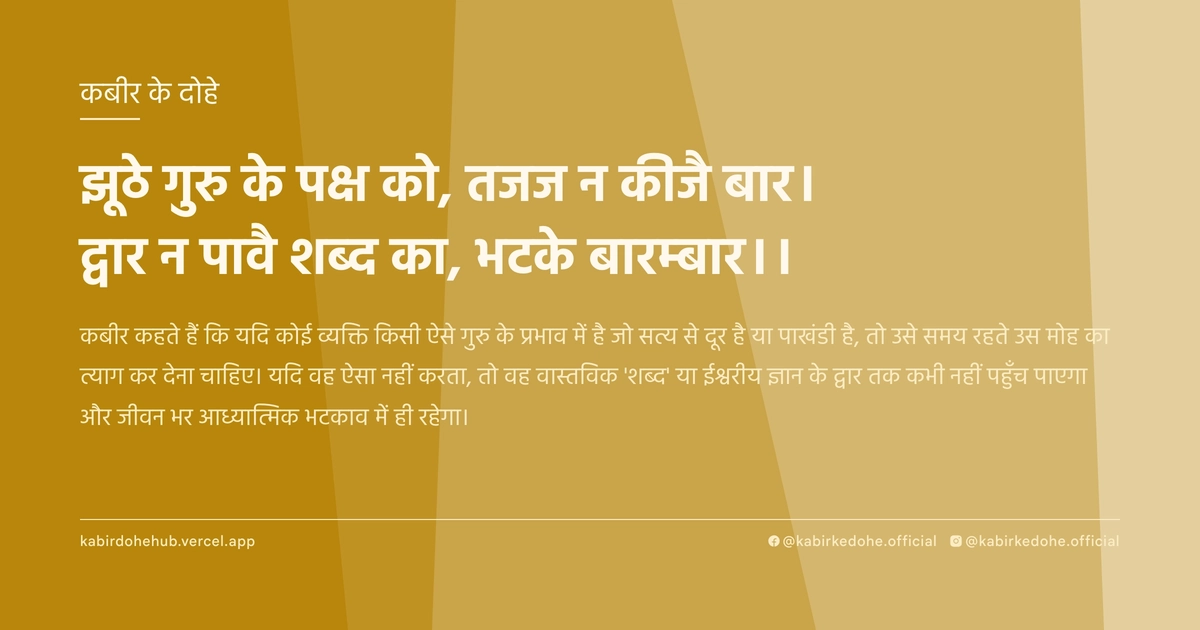
झूठे गुरु के पक्ष को, तजज न कीजै बार।
द्वार न पावै शब्द का, भटके बारम्बार।।
Jhoothe guru ke paksh ko, tajaj na keeje baar. Dwar na paave shabd ka, bhatke baarambar.
इस पृष्ठ पर इस कबीर दोहे का अर्थ (meaning), हिंदी व्याख्या और अंग्रेज़ी अनुवाद, दार्शनिक विश्लेषण और व्यावहारिक जीवन सीख दी गई है। यह दोहा गुरु महत्व (The Guru's Importance) विषय से जुड़ा है — Kabir doha meaning and explanation in Hindi and English.
अर्थ (Meaning):
कबीर कहते हैं कि यदि कोई व्यक्ति किसी ऐसे गुरु के प्रभाव में है जो सत्य से दूर है या पाखंडी है, तो उसे समय रहते उस मोह का त्याग कर देना चाहिए। यदि वह ऐसा नहीं करता, तो वह वास्तविक 'शब्द' या ईश्वरीय ज्ञान के द्वार तक कभी नहीं पहुँच पाएगा और जीवन भर आध्यात्मिक भटकाव में ही रहेगा।
Kabir warns that if one remains tethered to a false or pretentious guide, they must renounce that attachment without delay. Failure to do so prevents the seeker from discovering the 'Shabd' (the primordial sound or divine truth), leaving them to wander aimlessly in a cycle of spiritual confusion and ignorance.
व्याख्या (Interpretation):
इस दोहे का शाब्दिक अर्थ है कि मिथ्या गुरु का साथ छोड़ देना चाहिए। गहरे स्तर पर, 'झूठा गुरु' केवल एक बाहरी व्यक्ति नहीं, बल्कि हमारा अपना अहंकार या वे सामाजिक मान्यताएँ हैं जो हमें सत्य से दूर रखती हैं। यह निर्गुण भक्ति का सिद्धांत है जहाँ बाहरी आडंबरों के बजाय आंतरिक अनुभव को प्राथमिकता दी जाती है। 'शब्द' यहाँ केवल ध्वनि नहीं, बल्कि वह ब्रह्मांडीय चेतना है जो आत्मा और परमात्मा के अद्वैत को जोड़ती है। माया हमें ऐसे मार्गदर्शकों की ओर ले जाती है जो केवल कर्मकांड सिखाते हैं, जबकि वास्तविक मुक्ति केवल उस शब्द के साक्षात्कार से संभव है जो अहंकार का विसर्जन करता है। यह विरोधाभास है कि हम सत्य की खोज में उन लोगों के पीछे चलते हैं जो स्वयं सत्य से अनभिज्ञ हैं।
Literally, the verse advises abandoning a fraudulent teacher. Metaphorically, the 'false guru' represents not just an external person, but the internal ego and the societal conditioning that masquerades as truth. This aligns with Nirgun Bhakti, emphasizing internal realization over external ritualism. The 'Shabd' refers to the primordial vibration or the Logos—the bridge between the individual Atman and the universal Brahman. Maya creates an illusion of guidance, leading the seeker toward ritualistic shells rather than the core of existence. The central paradox lies in the human tendency to seek liberation through those who are themselves imprisoned by ignorance. True liberation requires the courage to discard false certainties to encounter the formless truth.
दार्शनिक विश्लेषण (Philosophical Analysis):
कबीर का यह दोहा उनके समय के धार्मिक पाखंड और जातिगत श्रेष्ठता के विरुद्ध एक तीखा प्रहार है। मध्यकालीन भारत में, गुरु की स्थिति सर्वोच्च थी, लेकिन कबीर ने तर्क दिया कि योग्यता के बिना केवल पद या वेशभूषा किसी को गुरु नहीं बनाती। यह दृष्टिकोण अद्वैत वेदांत के करीब है, जहाँ अविद्या (अज्ञान) को ही बंधन का मूल कारण माना गया है। जब एक शिष्य गलत मार्गदर्शन में होता है, तो वह अविद्या को ही सत्य मान लेता है, जिससे उसकी आध्यात्मिक प्रगति रुक जाती है।
सूफी मत के 'पीर' और भक्ति मार्ग के 'गुरु' की अवधारणा यहाँ मिलती है, जहाँ मार्गदर्शन अनिवार्य है, लेकिन वह मार्गदर्शन केवल तभी सार्थक है जब वह साधक को स्वयं के भीतर की दिव्यता से मिलाए। कबीर यहाँ कर्मकांडीय धर्म (Ritualism) का खंडन कर रहे हैं, जो केवल बाहरी दिखावे पर जोर देता है। उनके लिए, सत्य किसी मंदिर, मस्जिद या किसी व्यक्ति विशेष की जागीर नहीं है, बल्कि वह 'शब्द' है जो हर श्वास में मौजूद है।
मनोवैज्ञानिक स्तर पर, यह दोहा 'संज्ञानात्मक विसंगति' (Cognitive Dissonance) की बात करता है। जब हम किसी गलत विश्वास प्रणाली से जुड़ जाते हैं, तो हमारा अहंकार हमें यह मानने पर मजबूर करता है कि हम सही रास्ते पर हैं, जबकि हम वास्तव में सत्य से दूर जा रहे होते हैं। इस मानसिक जकड़न को तोड़ना ही वास्तविक साधना की शुरुआत है।
कबीर का दर्शन यह है कि मुक्ति के लिए सबसे पहले 'अस्वीकरण' (Negation) आवश्यक है। जब तक हम झूठ को नहीं त्यागते, तब तक सत्य के लिए स्थान नहीं बनता। यह 'नेति-नेति' (यह नहीं, वह नहीं) की प्रक्रिया है, जहाँ साधक हर उस परत को हटाता है जो उसे वास्तविक स्वरूप से अलग करती है।
अंततः, यह दोहा चेतावनी देता है कि आध्यात्मिक यात्रा में अंधविश्वास सबसे बड़ा अवरोध है। विवेक (Discernment) ही वह एकमात्र उपकरण है जो एक सच्चे मार्गदर्शक और एक पाखंडी के बीच अंतर कर सकता है। बिना विवेक के भक्ति केवल मानसिक गुलामी है, मुक्ति नहीं।
This Doha is a sharp critique of the religious hypocrisy and caste-based spiritual hierarchy prevalent during Kabir's era. In medieval India, the guru's position was absolute, but Kabir argued that status or attire does not confer authenticity. This aligns with Advaita Vedanta, where Avidya (ignorance) is seen as the root cause of bondage. When a disciple follows a false guide, they mistake ignorance for enlightenment, effectively halting their spiritual evolution.
There is a convergence here between the Sufi concept of the 'Pir' and the Bhakti 'Guru.' While guidance is essential, it is only valid if it leads the seeker back to the divinity within. Kabir rejects ritualism, which focuses on external forms, asserting that Truth is not the property of any temple, mosque, or specific individual, but is the 'Shabd' residing in every breath.
Psychologically, this verse addresses cognitive dissonance. Once attached to a false belief system, the ego convinces the individual that they are on the right path, even as they drift further from reality. Breaking this mental grip is the first step toward genuine spiritual practice.
Kabir’s philosophy emphasizes that liberation requires a process of 'Negation.' Until the lie is discarded, there is no space for the Truth to enter. This mirrors the 'Neti-Neti' (not this, not that) approach of the Upanishads, where the seeker strips away layers of false identity to reveal the core essence.
Ultimately, the Doha warns that blind faith is the greatest obstacle in the spiritual journey. Viveka (discernment) is the only tool capable of distinguishing a true guide from a pretender. Without discernment, devotion is merely mental servitude rather than liberation.
मूल संदेश (Core Message):
- अंधविश्वास सत्य के मार्ग में सबसे बड़ी दीवार है।
- बाहरी आडंबरों का त्याग ही आंतरिक जागृति की पहली सीढ़ी है।
- सच्चा मार्गदर्शन वह है जो आपको स्वयं के भीतर ले जाए।
- विवेक के बिना भक्ति केवल एक मानसिक भ्रम है।
- सत्य का अनुभव केवल अहंकार के विसर्जन से संभव है।
- Blind faith is the tallest wall blocking the path to Truth.
- Renouncing external pretension is the first step toward inner awakening.
- True guidance is that which leads you back to yourself.
- Devotion without discernment is merely a psychological illusion.
- The experience of Truth is possible only through the dissolution of ego.
व्यावहारिक उदाहरण (Practical Example):
वाराणसी के घाटों पर रहने वाला एक वृद्ध बुनकर था, जिसका नाम माधव था। माधव ने अपना पूरा जीवन एक ऐसे धर्मगुरु के चरणों में समर्पित कर दिया था जिसने उसे सिखाया था कि मोक्ष केवल कठिन उपवासों और महंगे अनुष्ठानों से मिलता है। माधव ने अपनी सारी जमापूंजी उन अनुष्ठानों में लगा दी और दिन-रात केवल बाहरी नियमों का पालन करता रहा, इस उम्मीद में कि उसका नाम स्वर्ग में लिखा जाएगा।
वह गुरु माधव को डराता था कि यदि उसने उसकी हर बात नहीं मानी, तो वह नरक की आग में जलेगा। माधव का मन अशांत था, लेकिन वह इस डर और विश्वास के जाल में फंसा रहा। वह अपनी बुनाई में भी अब आनंद नहीं पाता था, क्योंकि उसका ध्यान केवल इस बात पर था कि वह कितनी शुद्धता से पूजा कर रहा है।
एक दिन, घाट की सीढ़ियों पर एक साधारण सा फकीर बैठा था, जो केवल मौन रहकर मुस्कुरा रहा था। माधव ने उससे पूछा, "महाराज, मैं इतने अनुष्ठान करता हूँ, फिर भी मन में शांति क्यों नहीं है?"
फकीर ने केवल इतना कहा, "तूने बाहर के दरवाजों पर दस्तक दी, लेकिन अपने भीतर के द्वार को कभी खोला ही नहीं। तू उस व्यक्ति के पीछे चल रहा है जो खुद अंधेरे में है।"
माधव को पहले तो यह बात कड़वी लगी। उसे लगा कि उसकी वर्षों की श्रद्धा का अपमान हो रहा है। लेकिन उस रात, जब वह अकेला था, उसने महसूस किया कि वह गुरु जिसे वह पूजता था, वास्तव में उसकी श्रद्धा का उपयोग अपने विलासिता के लिए कर रहा था।
माधव ने महसूस किया कि वह 'शब्द' या सत्य बाहर नहीं, बल्कि उसकी अपनी ईमानदारी और सेवा में था। उसने उस गुरु के प्रभाव को त्यागने का कठिन निर्णय लिया। उसने अनुष्ठानों को छोड़कर अपने काम को ही पूजा बना लिया और गरीबों की मदद करना शुरू किया।
जैसे ही उसने उस झूठे सहारे को छोड़ा, उसके जीवन में एक अद्भुत शांति आई। उसे समझ आया कि वह अब तक एक ऐसे नक्शे के पीछे भाग रहा था जो गलत था।
अब माधव की बुनाई में एक नई चमक थी। वह अब स्वर्ग की लालसा में नहीं, बल्कि वर्तमान क्षण की पूर्णता में जीता था। उसने जान लिया था कि सच्चा गुरु वह है जो आपको आपकी अपनी आत्मा से मिलाए, न कि वह जो आपको अपना गुलाम बनाए।
उसकी यह रूपांतरण यात्रा यह दर्शाती है कि जब तक हम गलत धारणाओं को नहीं छोड़ते, तब तक सत्य का अनुभव असंभव है। माधव अब भटकना बंद कर चुका था क्योंकि उसने 'शब्द' को अपने भीतर सुन लिया था।
यह कहानी सिखाती है कि आध्यात्मिक साहस का अर्थ है—गलत रास्ते पर चलते हुए रुक जाना और वापस मुड़ना, चाहे वह रास्ता कितना भी परिचित क्यों न हो।
In the ghats of Varanasi lived an elderly weaver named Madhav. Madhav had dedicated his entire life to a religious leader who taught him that salvation could only be achieved through rigorous fasting and expensive rituals. Madhav spent all his savings on these ceremonies, obsessively following external rules in hopes that his name would be inscribed in heaven.
The guru kept Madhav in a state of fear, claiming that any disobedience would lead to the fires of hell. Madhav's mind was restless, yet he remained trapped in this web of fear and misplaced faith. He no longer found joy in his weaving, as his focus was entirely on the perceived purity of his rituals.
One day, he encountered a simple fakir sitting on the steps of the ghat, smiling in profound silence. Madhav asked, "Maharaj, I perform so many rituals, yet why is there no peace in my heart?"
The fakir replied simply, "You have knocked on every external door, but you have never opened the door within. You are following a man who is himself lost in the dark."
Initially, Madhav found these words harsh. He felt his years of devotion were being insulted. However, that night, in the stillness of his solitude, he realized that the guru he worshipped was merely using his faith to fund a luxurious lifestyle.
Madhav recognized that the 'Shabd' or Truth was not in the rituals, but in his own honesty and service to others. He made the difficult decision to renounce the influence of that false guide.
He stopped the performative rituals and turned his daily work into a form of worship, dedicating his time to helping the poor. As soon as he let go of that false crutch, a profound peace descended upon him.
He realized he had been following a map that was fundamentally flawed. Now, there was a new radiance in Madhav's weaving. He no longer lived for the promise of a future heaven, but in the fullness of the present moment.
He understood that a true guide is one who connects you to your own soul, not one who makes you a slave to their persona.
His transformation illustrates that spiritual courage means stopping on the wrong path and turning back, no matter how familiar that path has become.
This story teaches that until we discard false assumptions, the experience of Truth remains impossible. Madhav stopped wandering because he finally heard the 'Shabd' within.
अभ्यास मार्गदर्शन (Practice Guidance):
- प्रतिदिन 20 मिनट मौन अभ्यास करें, जहाँ आप अपने विचारों के प्रति केवल एक साक्षी (Observer) बनें, बिना किसी बाहरी निर्देश के।
- एक 'मान्यता डायरी' बनाएँ। उन सभी विश्वासों को लिखें जिन्हें आपने केवल इसलिए अपनाया क्योंकि कोई 'अधिकारी' व्यक्ति ऐसा कह रहा था। विश्लेषण करें कि क्या वे आपके आंतरिक सत्य से मेल खाते हैं।
- व्यवहार परिवर्तन: किसी भी आध्यात्मिक सलाह को आँख मूँदकर मानने के बजाय, उसे अपने जीवन के अनुभवों की कसौटी पर परखें।
- निदान चेकलिस्ट: क्या आप अपनी आध्यात्मिक प्रगति को बाहरी प्रशंसा या अनुष्ठानों की संख्या से माप रहे हैं? क्या आप गुरु के प्रति श्रद्धा और अंधभक्ति के बीच अंतर कर पा रहे हैं? क्या आप सत्य के विरुद्ध जाने वाली बातों पर प्रश्न उठाने का साहस रखते हैं?
- Practice 20 minutes of daily silence, acting as a pure observer of your thoughts without relying on any external guidance or scripts.
- Maintain a 'Belief Journal.' List all the convictions you adopted simply because an 'authority' figure suggested them. Analyze whether they align with your internal truth.
- Behavioral Shift: Instead of blindly accepting spiritual advice, test it against the reality of your own lived experience and intuition.
- Diagnostic Checklist: Are you measuring spiritual progress by external praise or the number of rituals performed? Can you distinguish between genuine reverence and blind obsession? Do you possess the courage to question things that contradict the Truth?
चिंतन प्रश्न (Reflection Questions):
- मेरे जीवन में ऐसा कौन सा 'गुरु' या 'आदर्श' है, जिसे मैं केवल इसलिए नहीं छोड़ पा रहा हूँ क्योंकि मैंने उस पर बहुत समय निवेश कर दिया है?
- क्या मेरी आध्यात्मिकता मुझे स्वतंत्र बना रही है, या यह मुझे नए प्रकार के मानसिक बंधनों में बाँध रही है?
- मैं अपनी सार्वजनिक छवि (Digital/Social Ego) को बनाए रखने के लिए किन झूठों का सहारा ले रहा हूँ?
- यदि मेरे सभी धार्मिक और सामाजिक लेबल छीन लिए जाएँ, तो मेरे पास क्या बचेगा?
- क्या मैं सत्य को सुनने के लिए तैयार हूँ, या मैं केवल वही सुनना चाहता हूँ जो मेरे मौजूदा विश्वासों की पुष्टि करे?
- Who is the 'guru' or 'ideal' in my life that I cannot let go of simply because I have invested too much time in them?
- Is my spirituality making me free, or is it binding me in new forms of mental servitude?
- What lies am I sustaining just to maintain my public image or digital ego?
- If all my religious and social labels were stripped away, what would remain of me?
- Am I actually ready to hear the Truth, or am I only seeking confirmation of my existing biases?