
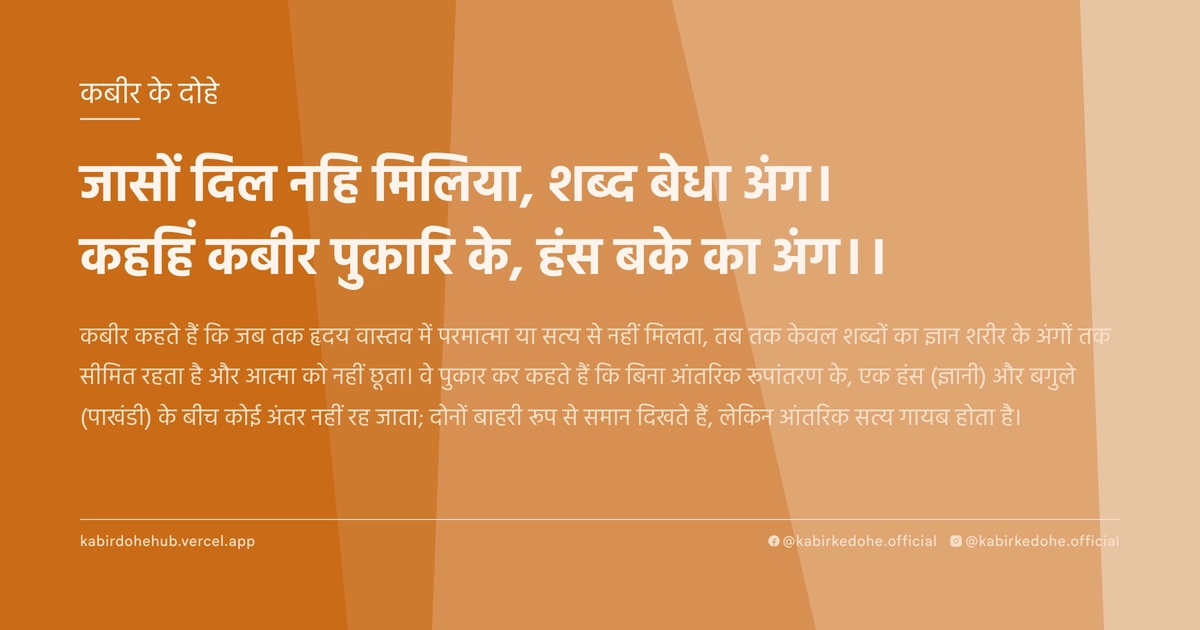
जासों दिल नहि मिलिया, शब्द बेधा अंग।
कहहिं कबीर पुकारि के, हंस बके का अंग।।
Jaason dil nahi miliya, shabd bedha ang. Kahahin kabir pukaari ke, hans bake ka ang.
इस पृष्ठ पर इस कबीर दोहे का अर्थ (meaning), हिंदी व्याख्या और अंग्रेज़ी अनुवाद, दार्शनिक विश्लेषण और व्यावहारिक जीवन सीख दी गई है। यह दोहा सहज योग (Sahaja Yoga) विषय से जुड़ा है — Kabir doha meaning and explanation in Hindi and English.
अर्थ (Meaning):
कबीर कहते हैं कि जब तक हृदय वास्तव में परमात्मा या सत्य से नहीं मिलता, तब तक केवल शब्दों का ज्ञान शरीर के अंगों तक सीमित रहता है और आत्मा को नहीं छूता। वे पुकार कर कहते हैं कि बिना आंतरिक रूपांतरण के, एक हंस (ज्ञानी) और बगुले (पाखंडी) के बीच कोई अंतर नहीं रह जाता; दोनों बाहरी रूप से समान दिखते हैं, लेकिन आंतरिक सत्य गायब होता है।
Kabir asserts that unless the heart truly unites with the Divine or the Ultimate Truth, the knowledge of sacred words remains a mere physical exercise, touching only the limbs and not the soul. He proclaims that without this internal alchemy, there is no distinction between the Swan (the true seeker) and the Heron (the hypocrite); though they may appear similar in ritual, the essence of purity is missing.
व्याख्या (Interpretation):
इस दोहे का शाब्दिक अर्थ है कि केवल शब्दों को रटने से हृदय का मिलन नहीं होता। रूपक के स्तर पर, 'हंस' शुद्ध आत्मा और विवेक का प्रतीक है, जबकि 'बगुला' उस व्यक्ति का प्रतीक है जो बाहरी रूप से शांत और आध्यात्मिक दिखता है लेकिन भीतर छल और अहंकार से भरा होता है। यह निर्गुण भक्ति के उस सिद्धांत को दर्शाता है जहाँ बाहरी आडंबरों (माया) का खंडन किया गया है। जब तक साधक 'शब्द' (नाद या आंतरिक ध्वनि) को अपने अस्तित्व के केंद्र में महसूस नहीं करता, वह केवल एक बगुले की तरह अभिनय कर रहा है। अद्वैत वेदांत के अनुसार, जब तक अहंकार का पर्दा नहीं हटता, आत्मा और ब्रह्म का मिलन असंभव है। यह विरोधाभास है कि व्यक्ति धर्म की बातें तो करता है, परंतु उसका हृदय अभी भी द्वैत और मोह में फंसा हुआ है।
Literally, the couplet suggests that reciting words does not guarantee a union of the heart. Metaphorically, the 'Swan' represents the purified soul and discernment, while the 'Heron' symbolizes the spiritual pretender who mimics peace but harbors deceit. This aligns with Nirgun Bhakti's rejection of external rituals (Maya) in favor of internal realization. Unless the seeker experiences the 'Shabd' (the primordial sound or inner vibration) at the core of their being, they remain a Heron—an actor in the theater of spirituality. According to Advaita Vedanta, the union of Atman and Brahman is blocked by the veil of ego. The central paradox lies in the human tendency to mistake the map (scripture) for the territory (experience), leading to a state where one speaks of liberation while remaining enslaved to the ego.
दार्शनिक विश्लेषण (Philosophical Analysis):
कबीर का यह दोहा उस सामाजिक और धार्मिक परिवेश की प्रतिक्रिया है जहाँ मध्यकालीन भारत में कर्मकांड और शास्त्रवाद चरम पर थे। कबीर ने देखा कि पंडित और मुल्ला केवल शब्दों के जाल बुन रहे थे, जबकि उनके जीवन में करुणा और सत्य का अभाव था। उन्होंने 'शब्द' को केवल भाषा नहीं, बल्कि एक आध्यात्मिक ऊर्जा के रूप में परिभाषित किया जो शरीर के अंगों को भेदकर आत्मा तक पहुँचती है। यह दृष्टिकोण सूफी मत के 'हाल' (आध्यात्मिक अवस्था) और 'मकाम' (स्तर) से मेल खाता है, जहाँ ज्ञान केवल तब सार्थक है जब वह अनुभव में बदल जाए।
यहाँ कबीर जाति और धर्म के बाहरी ढांचों को पूरी तरह नकार देते हैं। उनके लिए, एक ब्राह्मण जो केवल वेदों को रटता है लेकिन हृदय से कठोर है, वह उस बगुले के समान है जो मछली पकड़ने के लिए शांत खड़ा रहता है। यह विश्लेषण हमें बताता है कि आध्यात्मिक प्रगति का पैमाना बाहरी पहचान नहीं, बल्कि आंतरिक शुद्धि है।
अद्वैत वेदांत के परिप्रेक्ष्य में, यह दोहा 'अविद्या' (अज्ञान) पर प्रहार करता है। अविद्या वह पर्दा है जो हमें यह विश्वास दिलाता है कि हम शरीर या नाम हैं। जब कबीर 'दिल नहि मिलिया' कहते हैं, तो वे उस विच्छेद की बात कर रहे हैं जो अहंकार के कारण पैदा होता है। जब तक यह द्वैत बना रहता है, तब तक कोई भी मंत्र या प्रार्थना केवल ध्वनि तरंगें हैं, आध्यात्मिक औषधि नहीं।
मनोवैज्ञानिक स्तर पर, यह 'संज्ञानात्मक विसंगति' (Cognitive Dissonance) की स्थिति है, जहाँ व्यक्ति जो कहता है और जो वह वास्तव में है, उनके बीच एक गहरी खाई होती है। कबीर इस खाई को पाटने के लिए 'शब्द' के वास्तविक अनुभव की मांग करते हैं। यह केवल बौद्धिक समझ नहीं, बल्कि एक भावनात्मक और आध्यात्मिक विखंडन है जहाँ पुराना 'मैं' मरता है ताकि नया 'सत्य' जन्म ले सके।
अंततः, यह दोहा हमें चेतावनी देता है कि आध्यात्मिकता का सबसे बड़ा खतरा 'आध्यात्मिक अहंकार' है। जब कोई व्यक्ति सोचता है कि वह 'हंस' बन गया है क्योंकि उसने कुछ ग्रंथ पढ़ लिए हैं, तो वह वास्तव में बगुले की उच्चतम अवस्था में होता है। वास्तविक ज्ञान वह है जो व्यक्ति को विनम्र बनाता है और उसे यह एहसास कराता है कि वह अभी भी शून्य है।
This couplet is a visceral reaction to the socio-religious climate of medieval India, where ritualism and scriptural dogmatism had eclipsed genuine spirituality. Kabir observed that the clergy—both Pandits and Mullahs—were weaving webs of words while remaining devoid of compassion and truth. He defines 'Shabd' not as linguistic data, but as a spiritual vibration that must pierce through the physical layers of the body to awaken the soul. This mirrors the Sufi concepts of 'Hal' (spiritual state) and 'Maqam' (station), where knowledge is only valid when it is transmuted into lived experience.
Kabir systematically dismantles the external structures of caste and creed. To him, a scholar who recites the Vedas but remains heartless is akin to the Heron—standing still in a facade of peace only to devour the unsuspecting. This analysis emphasizes that the metric of spiritual progress is not external identity, but internal purification.
From the lens of Advaita Vedanta, this verse attacks 'Avidya' (ignorance). Avidya is the veil that convinces the individual they are the body or the social persona. When Kabir speaks of the heart not meeting the truth, he refers to the separation caused by the ego. As long as this duality persists, mantras and prayers remain mere acoustic waves rather than spiritual medicine.
Psychologically, this describes a state of profound cognitive dissonance, where a chasm exists between one's proclaimed values and their actual being. Kabir demands a reconciliation of this gap through the actualization of the 'Shabd'. This is not an intellectual exercise but an emotional and spiritual shattering where the false 'I' must perish for the Truth to emerge.
Ultimately, the verse warns against the most insidious trap: 'spiritual ego'. When a seeker believes they have become a 'Swan' simply by reading texts, they have reached the peak of 'Heron-hood'. True gnosis is that which renders the seeker humble, making them realize their own emptiness before the vastness of the Divine.
मूल संदेश (Core Message):
- शब्दों का संचय आध्यात्मिक प्रगति नहीं, बल्कि मानसिक बोझ है।
- सत्य वह नहीं जो पढ़ा जाए, बल्कि वह है जो जिया जाए।
- बाहरी पवित्रता एक भ्रम है यदि आंतरिक हृदय अशुद्ध है।
- अहंकार का विसर्जन ही हंस और बगुले के अंतर को मिटाता है।
- परमात्मा शब्दों में नहीं, बल्कि निस्वार्थ प्रेम के अनुभव में बसता है।
- The accumulation of words is not spiritual progress, but a mental burden.
- Truth is not that which is read, but that which is lived.
- External purity is an illusion if the internal heart remains impure.
- The dissolution of ego is the only way to bridge the gap between the Heron and the Swan.
- The Divine resides not in scriptures, but in the lived experience of selfless love.
व्यावहारिक उदाहरण (Practical Example):
वाराणसी के एक पुराने मोहल्ले में माधव नाम का एक कपड़ा रंगने वाला रहता था। माधव शहर के सबसे बड़े मंदिर का नियमित भक्त था और वह हर दिन घंटों धर्मग्रंथों का पाठ करता था। वह अपनी शुद्धता और ज्ञान के लिए पूरे मोहल्ले में प्रसिद्ध था। लोग उसे 'ज्ञानी माधव' कहते थे और उसकी सलाह लेने आते थे। माधव को इस बात का गर्व था कि वह शास्त्रों के हर श्लोक को कंठस्थ कर चुका था।
लेकिन माधव के घर के ठीक सामने एक बूढ़ा रिक्शावाला रहता था, जिसका नाम रहमत था। रहमत अनपढ़ था, उसने कभी कोई शास्त्र नहीं पढ़ा था, लेकिन उसका हृदय करुणा से भरा था। वह अपनी कमाई का एक हिस्सा चुपचाप उन लोगों को दे देता था जो उससे भी अधिक गरीब थे।
एक दिन, मोहल्ले में एक भीषण बाढ़ आई। पानी घरों में घुसने लगा। माधव अपनी कीमती किताबों और पोथियों को बचाने में व्यस्त था। वह चिल्ला रहा था कि उसकी पवित्र पुस्तकें गीली हो रही हैं। उसने अपने पड़ोसियों की मदद करने के बजाय अपनी 'ज्ञान की संपत्ति' को बचाने को प्राथमिकता दी।
तभी उसने देखा कि रहमत, जो खुद मुश्किल में था, अपनी जान जोखिम में डालकर एक डूबते हुए कुत्ते और एक छोटे बच्चे को बचाने के लिए पानी में कूद गया। रहमत के पास बचाने के लिए कोई किताब नहीं थी, केवल एक धड़कता हुआ हृदय था।
जब पानी उतरा, माधव ने देखा कि उसकी किताबें तो बच गईं, लेकिन उसकी नजरों में उसकी अपनी छवि एक बगुले जैसी थी—सफेद, शांत, लेकिन भीतर से शून्य। उसे एहसास हुआ कि वह अब तक केवल शब्दों का व्यापार कर रहा था, जबकि रहमत बिना शब्दों के उस सत्य को जी रहा था जिसे माधव केवल पढ़ रहा था।
माधव के भीतर एक गहरा विस्फोट हुआ। उसे समझ आया कि 'शब्द बेधा अंग' का अर्थ केवल पढ़ना नहीं, बल्कि उस सत्य को अपने व्यवहार में उतारना है। उसने अपनी किताबों को सम्मान दिया, लेकिन अब उसने उन्हें अपनी पहचान बनाना छोड़ दिया।
उसने रहमत के पास जाकर उसके पैर छुए। माधव ने पूछा, 'तुमने यह कहाँ से सीखा?' रहमत ने मुस्कुराकर कहा, 'मैंने कुछ नहीं सीखा, बस जो दिल में था, वही बाहर आ गया।'
इस घटना के बाद, माधव का जीवन बदल गया। वह अब केवल ग्रंथों का पाठ नहीं करता था, बल्कि उसने अपनी रंगाई की दुकान को एक ऐसी जगह बना दिया जहाँ कोई भी भूखा व्यक्ति मुफ्त में भोजन पा सकता था।
उसने सीखा कि जब तक ज्ञान हृदय को नहीं बदलता, वह केवल एक बोझ है। वह अब एक 'बगुला' नहीं, बल्कि वास्तव में एक 'हंस' बनने की यात्रा पर निकल पड़ा था, जहाँ उसकी भक्ति अब शब्दों में नहीं, बल्कि सेवा में झलकती थी।
माधव की यह रूपांतरण यात्रा यह सिद्ध करती है कि सत्य का अनुभव शास्त्रों के रटने में नहीं, बल्कि अहंकार के विसर्जन और निस्वार्थ प्रेम में निहित है।
In an ancient lane of Varanasi lived Madhav, a cloth dyer. Madhav was a regular devotee at the city's largest temple, spending hours daily reciting sacred scriptures. He was renowned throughout the neighborhood for his purity and knowledge; people called him 'Gnani Madhav' and sought his counsel. Madhav took immense pride in having memorized every shloka of the texts.
Right across from Madhav lived an elderly rickshaw-puller named Rehmat. Rehmat was illiterate and had never read a single scripture, yet his heart overflowed with compassion. He silently gave a portion of his meager earnings to those even poorer than himself.
One day, a devastating flood hit the neighborhood. Water surged into the homes. Madhav became frantically occupied with saving his precious books and manuscripts. He screamed in agony as his 'sacred' texts were getting wet, prioritizing the preservation of his 'intellectual wealth' over the safety of his neighbors.
Suddenly, he saw Rehmat, who was himself in peril, dive into the churning waters to rescue a drowning dog and a small child. Rehmat had no books to save, only a beating heart driven by instinctual love.
When the waters receded, Madhav looked at his saved books and realized that in the mirror of truth, his own image was that of a Heron—white and serene on the outside, but hollow within. He realized he had been trading in words, while Rehmat was living the very truth Madhav had only been reading about.
A profound explosion occurred within Madhav. He understood that 'Shabd Bedha Ang' did not mean reading, but embodying that truth in one's behavior. He continued to respect his books, but he ceased making them his identity.
He approached Rehmat and touched his feet, asking, 'Where did you learn this?' Rehmat smiled and replied, 'I learned nothing; whatever was in my heart simply flowed out.'
After this event, Madhav's life transformed. He no longer just recited texts; he turned his dyeing shop into a sanctuary where any hungry person could find a free meal.
He learned that until knowledge transforms the heart, it is merely a burden. He ceased being a 'Heron' and began the authentic journey of the 'Swan,' where his devotion was reflected not in words, but in service.
Madhav's transformation proves that the experience of Truth lies not in the rote memorization of scriptures, but in the dissolution of the ego and the practice of selfless love.
अभ्यास मार्गदर्शन (Practice Guidance):
- दैनिक आत्म-निरीक्षण: प्रतिदिन 15 मिनट मौन बैठें और विचार करें कि आपके कौन से कार्य केवल 'दिखावे' (बगुला व्यवहार) के लिए हैं और कौन से वास्तव में हृदय की करुणा से प्रेरित हैं।
- शब्द-से-कर्म रूपांतरण: किसी एक आध्यात्मिक विचार को चुनें (जैसे 'क्षमा' या 'प्रेम') और पूरे दिन उसे केवल शब्दों में न कहें, बल्कि कम से कम तीन ठोस कार्यों के माध्यम से उसे लागू करें।
- अहंकार की पहचान: जब भी आप किसी को अपनी आध्यात्मिक या बौद्धिक श्रेष्ठता का अनुभव कराएं, तुरंत रुकें और स्वयं से पूछें, 'क्या यह मेरा हंस रूप है या बगुले का मुखौटा?'
- डायग्नोस्टिक चेकलिस्ट: (1) क्या मेरी शांति केवल अकेले में रहती है या भीड़ में भी है? (2) क्या मैं दूसरों की गलतियों पर उपदेश देता हूँ या उनकी पीड़ा महसूस करता हूँ? (3) क्या मेरा ज्ञान मुझे विनम्र बना रहा है या अभिमानी?
- Daily Self-Audit: Spend 15 minutes in silence daily, analyzing which of your actions are mere 'performances' (Heron behavior) and which are genuinely driven by the heart's compassion.
- Word-to-Action Transmutation: Choose one spiritual concept (e.g., 'Forgiveness' or 'Love') and, for an entire day, avoid speaking about it; instead, implement it through at least three concrete actions.
- Ego Spotting: Whenever you feel the urge to project spiritual or intellectual superiority over someone, stop immediately and ask, 'Is this the nature of the Swan, or the mask of the Heron?'
- Diagnostic Checklist: (1) Does my peace exist only in solitude or also in the chaos of a crowd? (2) Do I offer lectures on others' mistakes or do I feel their pain? (3) Is my knowledge making me humble or arrogant?
चिंतन प्रश्न (Reflection Questions):
- मेरे जीवन का वह कौन सा 'पवित्र मुखौटा' है जिसे मैं दुनिया को दिखाने के लिए पहनता हूँ, जबकि भीतर मैं कुछ और हूँ?
- क्या मेरी आध्यात्मिक उपलब्धियाँ मुझे दूसरों से अलग करती हैं या मुझे पूरी मानवता से जोड़ती हैं?
- यदि आज मेरे पास कोई धार्मिक पहचान या ज्ञान की डिग्री न हो, तो मेरी आत्मा की वास्तविक गुणवत्ता क्या होगी?
- मैं कितनी बार सत्य को 'जानने' के अहंकार में सत्य को 'जीने' का अवसर खो देता हूँ?
- मेरे भीतर का 'बगुला' किन परिस्थितियों में सबसे अधिक सक्रिय होता है—प्रशंसा के समय या आलोचना के समय?
- क्या मेरा मौन वास्तव में शांति है, या यह केवल एक रणनीतिक चुप्पी है?
- What is the 'sacred mask' I wear for the world, while remaining something entirely different within?
- Do my spiritual achievements separate me from others or bind me more deeply to all of humanity?
- If I were stripped of all religious identities and intellectual degrees, what would be the actual quality of my soul?
- How often do I lose the opportunity to 'live' the truth because I am too busy 'knowing' it?
- In which situations does my inner 'Heron' become most active—during praise or during criticism?
- Is my silence truly a state of peace, or is it merely a strategic stillness?