
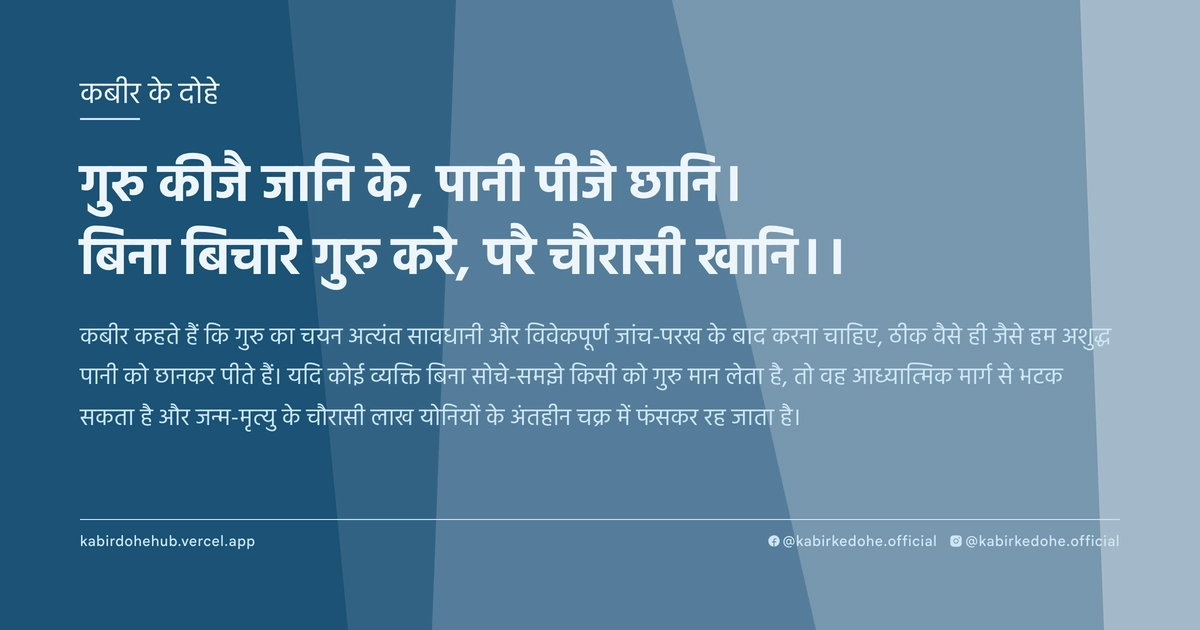
गुरु कीजै जानि के, पानी पीजै छानि।
बिना बिचारे गुरु करे, परै चौरासी खानि।।
Guru keeje jaani ke, paani peeje chhani. Bina bichare guru kare, pare chaurasi khani.
इस पृष्ठ पर इस कबीर दोहे का अर्थ (meaning), हिंदी व्याख्या और अंग्रेज़ी अनुवाद, दार्शनिक विश्लेषण और व्यावहारिक जीवन सीख दी गई है। यह दोहा गुरु महत्व (The Guru's Importance) विषय से जुड़ा है — Kabir doha meaning and explanation in Hindi and English.
अर्थ (Meaning):
कबीर कहते हैं कि गुरु का चयन अत्यंत सावधानी और विवेकपूर्ण जांच-परख के बाद करना चाहिए, ठीक वैसे ही जैसे हम अशुद्ध पानी को छानकर पीते हैं। यदि कोई व्यक्ति बिना सोचे-समझे किसी को गुरु मान लेता है, तो वह आध्यात्मिक मार्ग से भटक सकता है और जन्म-मृत्यु के चौरासी लाख योनियों के अंतहीन चक्र में फंसकर रह जाता है।
Kabir emphasizes that the selection of a spiritual guide must be made with utmost caution and discernment, much like one filters water before drinking to ensure purity. If a seeker accepts a guru blindly without critical reflection, they risk spiritual derailment, potentially remaining trapped in the grueling cycle of eighty-four thousand births and deaths.
व्याख्या (Interpretation):
इस दोहे का शाब्दिक अर्थ है कि जिस प्रकार गंदा पानी पीने से शरीर बीमार होता है, उसी प्रकार अयोग्य गुरु का सानिध्य आत्मा को दूषित करता है। यहाँ 'छानना' विवेक और बुद्धि का प्रतीक है। कबीर निर्गुण भक्ति के प्रणेता थे, जहाँ वे बाहरी आडंबरों के बजाय आंतरिक सत्य पर बल देते हैं। वे चेतावनी देते हैं कि अंधश्रद्धा (Blind Faith) वास्तव में अज्ञानता का एक रूप है। यदि गुरु स्वयं माया के प्रभाव में है, तो वह शिष्य को मुक्ति के बजाय और गहरे भ्रम में डाल देगा। यह द्वैत और अद्वैत के बीच का संघर्ष है; जहाँ एक सच्चा गुरु वह है जो शिष्य के भीतर के 'अहं' को मिटाकर उसे ब्रह्म से मिला दे। बिना विवेक के किया गया समर्पण केवल अहंकार का एक नया रूप है, जो साधक को चौरासी लाख योनियों के चक्र में बांधे रखता है।
Literally, the verse suggests that just as contaminated water sickens the body, the company of an unqualified guru pollutes the soul. 'Filtering' here serves as a metaphor for discernment and critical intellect. As a proponent of Nirgun Bhakti, Kabir emphasizes internal truth over external ritual. He warns that blind faith is merely another form of ignorance. If the guide is himself enslaved by Maya (illusion), he will lead the seeker deeper into delusion rather than toward liberation. This reflects the tension between duality and non-duality; a true guru is one who annihilates the disciple's ego to reveal the Atman-Brahman unity. Surrender without discernment is not devotion but a psychological trap, ensuring the soul remains bound to the cycle of eighty-four thousand transmigrations.
दार्शनिक विश्लेषण (Philosophical Analysis):
कबीर का यह दृष्टिकोण उनके समय के सामाजिक और धार्मिक परिवेश की एक तीखी प्रतिक्रिया थी, जहाँ धर्म के नाम पर पाखंड और अंधविश्वास चरम पर था। उन्होंने देखा कि कैसे लोग केवल तिलक, माला या ऊँची जाति के होने के कारण किसी को गुरु मान लेते थे। कबीर का दर्शन यहाँ 'विवेक' (Discernment) को भक्ति से ऊपर रखता है। वे तर्क देते हैं कि बिना बुद्धि के भक्ति केवल मानसिक गुलामी है।
अद्वैत वेदांत के परिप्रेक्ष्य में, गुरु वह सेतु है जो जीव को उसके वास्तविक स्वरूप (ब्रह्म) से मिलाता है। यदि सेतु ही टूटा हुआ या गलत दिशा में हो, तो गंतव्य कभी प्राप्त नहीं होगा। कबीर यहाँ 'गुरु' को एक व्यक्ति के बजाय एक 'तत्व' या 'प्रकाश' के रूप में देखने का संकेत देते हैं, जो सत्य की कसौटी पर खरा उतरे।
सूफीवाद के साथ इसका गहरा संबंध है, जहाँ 'पीर' या 'मुर्शिद' का चयन अत्यंत कठिन माना जाता था। सूफी परंपरा में भी यह माना जाता है कि गलत मार्गदर्शक आत्मा को भटका सकता है। कबीर इन दोनों धाराओं को मिलाकर एक ऐसा मार्ग बनाते हैं जहाँ सत्य की खोज व्यक्तिगत जिम्मेदारी है, न कि किसी संस्थागत धर्म का हिस्सा।
यहाँ 'चौरासी खानि' का उल्लेख केवल हिंदू पौराणिक कथाओं का संदर्भ नहीं है, बल्कि यह मनोवैज्ञानिक बंधन का प्रतीक है। जब हम बिना सोचे-समझे किसी के पीछे चलते हैं, तो हम अपनी चेतना को दूसरे के हवाले कर देते हैं, जिससे हमारी अपनी आध्यात्मिक विकास की प्रक्रिया रुक जाती है। यह मानसिक जड़ता ही पुनर्जन्म के चक्र का असली कारण है।
अंततः, कबीर ritualism (कर्मकांड) का खंडन करते हैं। वे कहते हैं कि गुरु की पहचान उसकी वेशभूषा या उसकी जाति से नहीं, बल्कि उसके शब्दों की सत्यता और उसके आचरण की पवित्रता से होनी चाहिए। यह विश्लेषण हमें सिखाता है कि आध्यात्मिक यात्रा में 'संदेह' और 'प्रश्न' शत्रु नहीं, बल्कि शुद्धिकरण के उपकरण हैं।
Kabir’s perspective is a sharp reaction to the socio-religious climate of his era, where hypocrisy and superstition flourished under the guise of religion. He observed how people blindly followed guides based on superficial markers like tilaks, beads, or high caste status. Kabir’s philosophy places 'Viveka' (discernment) above blind devotion, arguing that faith without intellect is merely mental servitude.
From the lens of Advaita Vedanta, the guru is the bridge connecting the Jiva (individual soul) to its true nature as Brahman. If the bridge is fractured or misaligned, the destination remains unreachable. Kabir suggests viewing the 'Guru' not as a mere person, but as a principle of light that must withstand the test of truth.
This aligns deeply with Sufism, where the selection of a 'Pir' or 'Murshid' was considered a critical spiritual juncture. Sufi traditions similarly warn that an unqualified guide can lead the seeker astray. Kabir synthesizes these streams, asserting that the search for truth is a personal responsibility rather than an institutional obligation.
The mention of 'Chouraasi Khaani' (the 84 lakh cycles) is not merely a mythological reference but a symbol of psychological bondage. When we follow blindly, we surrender our consciousness to another, halting our own spiritual evolution. This mental inertia is the true cause of the cycle of rebirth.
Ultimately, Kabir rejects ritualism. He posits that a guru's legitimacy is derived not from attire or lineage, but from the veracity of their words and the purity of their conduct. This analysis reveals that in the spiritual journey, 'doubt' and 'questioning' are not enemies, but essential tools for purification.
मूल संदेश (Core Message):
- अंधश्रद्धा आध्यात्मिक प्रगति की सबसे बड़ी बाधा है।
- विवेक ही वह छननी है जो सत्य को भ्रम से अलग करती है।
- सच्चा समर्पण बुद्धि के विनाश पर नहीं, बल्कि उसके परिष्कार पर आधारित होता है।
- बाहरी गुरु केवल एक संकेत है; वास्तविक मार्गदर्शक आपकी अपनी जागृत चेतना है।
- बिना जांच के किया गया विश्वास आत्मा को जन्म-मृत्यु के चक्र में बांधता है।
- Blind faith is the greatest obstacle to spiritual progress.
- Discernment is the filter that separates truth from illusion.
- True surrender is based on the refinement of intellect, not its destruction.
- An external guru is merely a signpost; the real guide is your own awakened consciousness.
- Belief without verification binds the soul to the cycle of birth and death.
व्यावहारिक उदाहरण (Practical Example):
वाराणसी के एक पुराने मोहल्ले में माधव नाम का एक बुनकर रहता था। वह स्वभाव से सरल था और जीवन के दुखों से मुक्ति चाहता था। एक दिन उसने शहर में एक नए साधु को देखा जो रेशमी वस्त्र पहनता था और बड़ी प्रभावशाली वाणी में बात करता था। साधु ने माधव से कहा कि यदि वह अपनी सारी जमा पूँजी उसे दे दे और उसकी सेवा करे, तो वह उसे मोक्ष का गुप्त रास्ता बता देगा। माधव उसकी बातों से मंत्रमुग्ध हो गया और बिना सोचे-समझे उसे अपना गुरु मान लिया।
अगले दो वर्षों तक माधव ने अपनी सारी मेहनत की कमाई उस साधु पर लुटा दी। उसने अपने परिवार की जरूरतों को नजरअंदाज किया और साधु के हर आदेश का पालन किया, चाहे वह कितना भी अतार्किक क्यों न हो। माधव को लगा कि यह 'परीक्षा' है और समर्पण ही एकमात्र मार्ग है। लेकिन जैसे-जैसे समय बीता, उसने देखा कि साधु का व्यवहार केवल विलासिता की ओर था और उसकी बातों में कोई वास्तविक आध्यात्मिक गहराई नहीं थी।
एक दिन माधव की मुलाकात एक साधारण से वृद्ध व्यक्ति से हुई जो पास के घाट पर चुपचाप बैठे रहते थे। उस वृद्ध ने माधव की स्थिति देखी और उससे बस एक सवाल पूछा, "क्या तुम्हारे गुरु ने तुम्हें स्वयं के भीतर झांकना सिखाया, या केवल बाहर की दुनिया को त्यागना?"
यह सवाल माधव के लिए एक बिजली की तरह था। उसने महसूस किया कि उसने 'श्रद्धा' के नाम पर अपनी 'बुद्धि' को मार दिया था। उसने याद किया कि कैसे उसने पानी को बिना छाने पी लिया था—यानी उसने साधु के शब्दों को बिना परखे स्वीकार कर लिया था।
माधव ने उस साधु का साथ छोड़ दिया। उसने महसूस किया कि असली गुरु वह नहीं जो आपसे आपकी संपत्ति मांगे, बल्कि वह है जो आपको आपकी अपनी चेतना का परिचय कराए।
उसने फिर से अपने करघे पर काम करना शुरू किया, लेकिन अब उसका काम ही उसकी साधना बन गया। वह अब किसी बाहरी चमत्कार की तलाश नहीं करता था।
उसने सीखा कि समर्पण का अर्थ अंधापन नहीं, बल्कि पूर्ण जागरूकता है। उसने अपने जीवन में विवेक को प्राथमिकता दी।
अब माधव केवल शब्दों को नहीं, बल्कि उनके पीछे के सत्य को परखता था। उसका जीवन शांत हो गया और वह वास्तव में आंतरिक शांति का अनुभव करने लगा।
उसकी यह यात्रा उसे सिखा गई कि बिना विवेक के किया गया समर्पण केवल एक नया बंधन है, मुक्ति नहीं।
In an old neighborhood of Varanasi lived a weaver named Madhav. Simple-hearted, he longed for liberation from life's sufferings. One day, he encountered a new monk in the city who wore shimmering silk robes and spoke with an imposing, magnetic voice. The monk told Madhav that if he surrendered all his savings and served him devotedly, he would reveal the secret path to Moksha.
Enchanted by the rhetoric, Madhav accepted him as his guru without a second thought. For the next two years, Madhav poured his hard-earned money into the monk's luxuries. He ignored his family's needs and obeyed every command, no matter how irrational, believing these were 'tests' of his devotion.
As time passed, Madhav noticed that the monk's lifestyle was purely hedonistic and his teachings lacked any genuine spiritual depth. One day, Madhav met an elderly man who sat silently by the river ghats. Observing Madhav's state, the old man asked a single question: "Did your guru teach you to look within yourself, or only to renounce the world outside?"
This question struck Madhav like a bolt of lightning. He realized that in the name of 'faith,' he had murdered his 'intellect.' He remembered the metaphor of drinking unfiltered water—he had swallowed the monk's words without any discernment.
Madhav severed his ties with the monk. He realized that a true guru does not demand your wealth but introduces you to your own consciousness.
He returned to his loom, but now his weaving became his meditation. He stopped searching for external miracles.
He learned that surrender does not mean blindness; it means total awareness. He began to prioritize discernment in every aspect of his life.
Madhav no longer listened to words; he looked for the truth behind them. His life became serene, and he finally experienced genuine inner peace.
His journey taught him that surrender without discernment is not liberation, but merely a new form of bondage.
अभ्यास मार्गदर्शन (Practice Guidance):
- दैनिक चिंतन: प्रतिदिन 15 मिनट मौन बैठें और अपने जीवन में लिए गए उन निर्णयों पर विचार करें जहाँ आपने बिना सोचे-समझे दूसरों का अनुसरण किया।
- आत्म-पूछताछ जर्नल: एक डायरी लिखें जिसमें आप अपने विश्वासों को चुनौती दें। लिखें: 'मैं इस बात को क्यों मानता हूँ? क्या यह मेरा अपना अनुभव है या केवल किसी और की कही बात?'
- व्यवहार परिवर्तन: किसी भी आध्यात्मिक या मानसिक सलाह को अपनाने से पहले उसे अपने जीवन के अनुभवों और तर्क की कसौटी पर कसें।
- निदान चेकलिस्ट: यदि आप किसी के प्रति अत्यधिक मोह महसूस करते हैं, उनके हर शब्द को सत्य मानते हैं, और अपने तर्क करने की क्षमता खो रहे हैं, तो आप 'बिना बिचारे' की स्थिति में हैं।
- Daily Contemplation: Spend 15 minutes in silence daily, reflecting on decisions where you followed others without critical thought.
- Self-Inquiry Journal: Keep a journal to challenge your beliefs. Write: 'Why do I believe this? Is it based on my own experience or merely someone else's word?'
- Behavioral Shift: Before adopting any spiritual or psychological advice, test it against your own life experiences and logical reasoning.
- Diagnostic Checklist: If you feel an obsessive attachment to a guide, accept every word as absolute truth, and find yourself losing the ability to reason, you are in the state of 'blind following'.
चिंतन प्रश्न (Reflection Questions):
- मेरे जीवन में ऐसे कौन से 'गुरु' या प्रभाव हैं जिन्हें मैंने बिना किसी प्रश्न के स्वीकार कर लिया है?
- क्या मेरी भक्ति वास्तव में सत्य की खोज है, या यह केवल जिम्मेदारी से बचने का एक तरीका है?
- जब मैं किसी प्रभावशाली व्यक्ति की बात सुनता हूँ, तो क्या मेरा अहंकार उसकी प्रशंसा करके संतुष्ट होता है, या मेरी बुद्धि सत्य की जांच करती है?
- मेरे डिजिटल जीवन में (सोशल मीडिया/इन्फ्लुएंसर्स), मैं किन 'छाननी रहित' विचारों को आत्मसात कर रहा हूँ?
- क्या मैं अपनी गलतियों की जिम्मेदारी लेने के बजाय उन्हें किसी बाहरी मार्गदर्शन की विफलता मानकर टाल देता हूँ?
- Who are the 'gurus' or influences in my life that I have accepted without any questioning?
- Is my devotion truly a search for truth, or is it merely a way to escape personal responsibility?
- When I listen to an influential person, does my ego feel satisfied by praising them, or does my intellect investigate the truth?
- In my digital life (social media/influencers), what 'unfiltered' ideas am I absorbing?
- Do I avoid taking responsibility for my mistakes by blaming them on the failure of external guidance?