
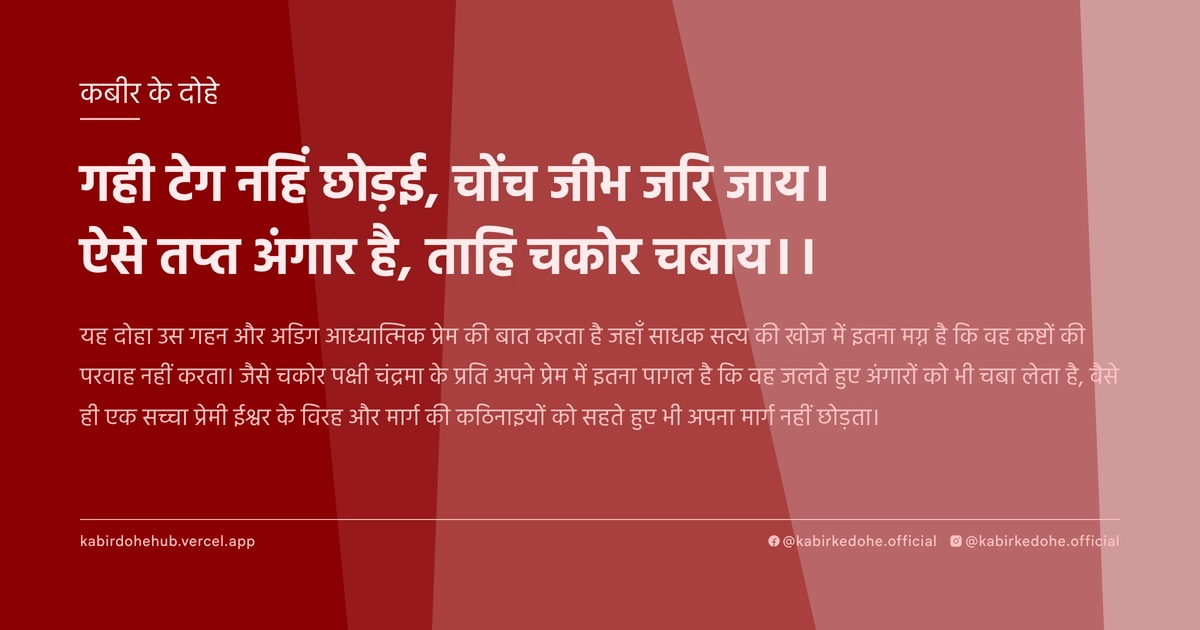
गही टेग नहिं छोड़ई, चोंच जीभ जरि जाय।
ऐसे तप्त अंगार है, ताहि चकोर चबाय।।
Gahi teg nahin chhodai, chonch jeebh jari jaaye. Aise tapt angaar hai, taahi chakor chabay.
इस पृष्ठ पर इस कबीर दोहे का अर्थ (meaning), हिंदी व्याख्या और अंग्रेज़ी अनुवाद, दार्शनिक विश्लेषण और व्यावहारिक जीवन सीख दी गई है। यह दोहा भक्ति (Bhakti) विषय से जुड़ा है — Kabir doha meaning and explanation in Hindi and English.
अर्थ (Meaning):
यह दोहा उस गहन और अडिग आध्यात्मिक प्रेम की बात करता है जहाँ साधक सत्य की खोज में इतना मग्न है कि वह कष्टों की परवाह नहीं करता। जैसे चकोर पक्षी चंद्रमा के प्रति अपने प्रेम में इतना पागल है कि वह जलते हुए अंगारों को भी चबा लेता है, वैसे ही एक सच्चा प्रेमी ईश्वर के विरह और मार्ग की कठिनाइयों को सहते हुए भी अपना मार्ग नहीं छोड़ता।
This couplet speaks of an intense and unwavering spiritual love where the seeker is so absorbed in the pursuit of Truth that they become indifferent to suffering. Just as the mythical Chakora bird, in its obsessive love for the moon, would chew upon burning embers, a true devotee endures the agony of separation and the hardships of the path without ever abandoning their divine quest.
व्याख्या (Interpretation):
शाब्दिक रूप से, यह चकोर पक्षी की एक मिथकीय स्थिति का वर्णन है। रूपक के स्तर पर, 'तप्त अंगार' उन सांसारिक दुखों, सामाजिक तिरस्कार और आंतरिक संघर्षों का प्रतीक हैं जो एक साधक को सत्य की प्राप्ति के दौरान झेलने पड़ते हैं। यहाँ 'टेग' का अर्थ है वह पकड़ या संकल्प जो आत्मा ने परमात्मा के साथ बनाया है। यह निरगुण भक्ति की उस अवस्था को दर्शाता है जहाँ द्वैत समाप्त हो जाता है और केवल प्रेम शेष रहता। माया का पर्दा जब हटता है, तो सत्य की अग्नि अहंकार को जला देती है, जिसे साधक स्वेच्छा से स्वीकार करता है। यह विरोधाभास है कि विनाशकारी अग्नि ही यहाँ शुद्धिकरण का साधन बनती है। अंततः, यह आत्मा और ब्रह्म के अद्वैत मिलन की तड़प है।
Literally, this describes a mythical state of the Chakora bird. Metaphorically, the 'burning embers' symbolize the worldly sorrows, social ostracization, and internal conflicts a seeker encounters while pursuing Truth. 'Teg' refers to the grip or the solemn resolve the soul has forged with the Divine. This reflects a state of Nirgun Bhakti where duality vanishes, leaving only pure love. When the veil of Maya is lifted, the fire of Truth incinerates the ego, a process the seeker willingly embraces. It is a profound paradox: the destructive fire becomes the instrument of purification. Ultimately, it depicts the agonizing longing for the non-dual union of Atman and Brahman.
दार्शनिक विश्लेषण (Philosophical Analysis):
कबीर का यह दोहा मध्यकालीन भारत के उस सामाजिक परिवेश से उपजा है जहाँ धर्म केवल कर्मकांडों और बाहरी आडंबरों तक सीमित था। कबीर ने इन बाहरी ढांचों को नकारते हुए 'प्रेम' को ही एकमात्र मार्ग बताया। यहाँ 'अंगारों को चबाना' केवल शारीरिक पीड़ा नहीं, बल्कि अहंकार के विसर्जन की प्रक्रिया है। यह सूफी मत के 'फना' (स्वयं को मिटा देना) और अद्वैत वेदांत के 'अहं ब्रह्मास्मि' के बीच का सेतु है।
कबीर तर्क देते हैं कि जब तक साधक में 'मैं' की भावना रहती है, वह सत्य को नहीं पा सकता। जिस प्रकार अग्नि सोने को तपाकर शुद्ध करती है, उसी प्रकार विरह की अग्नि साधक के भीतर के विकारों को जला देती है। यह मार्ग कठिन है क्योंकि यह समाज द्वारा स्थापित 'सुरक्षित' रास्तों के विपरीत है।
यहाँ ritualism का पूर्ण विरोध है। कबीर कहते हैं कि मंदिर या मस्जिद जाने से अधिक महत्वपूर्ण है वह आंतरिक तड़प जो आपको सत्य के प्रति समर्पित कर दे। यह मनोवैज्ञानिक रूपांतरण की वह अवस्था है जहाँ भय समाप्त हो जाता है और केवल समर्पण बचता है।
दार्शनिक रूप से, यह दोहा 'साधना' और 'साध्य' के एकीकरण को दर्शाता है। जब साधक स्वयं को मिटा देता है, तो वह स्वयं ही वह सत्य बन जाता है जिसे वह खोज रहा था। यह विरह की पराकाष्ठा है जहाँ दर्द ही आनंद बन जाता है।
अक्सर लोग इसे केवल एक कठिन तपस्या के रूप में देखते हैं, लेकिन वास्तव में यह चेतना के विस्तार की बात है। यह उस बिंदु की ओर संकेत करता है जहाँ व्यक्तिगत पहचान (ego) सार्वभौमिक चेतना (universal consciousness) में विलीन हो जाती है, जिससे जन्म-मृत्यु का चक्र समाप्त हो जाता है।
This couplet emerges from the socio-religious landscape of medieval India, where religion was largely confined to rituals and outward displays. Kabir rejected these structures, proposing 'Love' as the only authentic path. 'Chewing embers' is not merely physical pain, but the process of dissolving the ego.
It serves as a bridge between the Sufi concept of 'Fana' (annihilation of the self) and the Advaita Vedanta realization of 'Aham Brahmasmi'. Kabir argues that as long as the sense of 'I' persists, Truth remains elusive. Just as fire purifies gold, the fire of longing incinerates the seeker's internal impurities.
This path is arduous because it defies the 'safe' routes established by society. There is a total rejection of ritualism here; Kabir asserts that the internal yearning for Truth is far more significant than visiting temples or mosques. This is a psychological transformation where fear is replaced by absolute surrender.
Philosophically, the verse illustrates the unification of the 'means' (Sadhana) and the 'end' (Sadhya). When the seeker annihilates themselves, they become the very Truth they were searching for. It is the pinnacle of longing where pain is transmuted into ecstasy.
Common literalist interpretations mistake this for a call to ascetic hardship. In reality, it refers to the expansion of consciousness. It points toward the moment when individual identity merges into universal consciousness, thereby breaking the cycle of birth and death.
मूल संदेश (Core Message):
- अहंकार का विनाश ही सत्य की पहली सीढ़ी है।
- पीड़ा जब प्रेम में बदलती है, तो वह मोक्ष बन जाती है।
- बाहरी आडंबरों को त्यागकर आंतरिक तड़प को अपनाएं।
- सत्य का मार्ग कठिन है, लेकिन संकल्प ही एकमात्र सहारा है।
- द्वैत का अंत तभी होता है जब 'मैं' पूरी तरह मिट जाता है।
- The annihilation of ego is the first step toward Truth.
- When pain is transmuted into love, it becomes liberation.
- Abandon outward rituals and embrace the internal longing.
- The path to Truth is arduous; resolve is the only anchor.
- Duality ends only when the 'I' is completely erased.
व्यावहारिक उदाहरण (Practical Example):
एक समय की बात है, वाराणसी के घाटों पर एक वृद्ध विधवा रहती थी जिसका नाम जानकी थी। समाज ने उसे हाशिए पर धकेल दिया था और वह अत्यंत गरीबी में जीवन व्यतीत कर रही थी। उसके पास न रहने को घर था, न कोई सहारा, केवल एक पुरानी फटी साड़ी और ईश्वर के प्रति अटूट विश्वास था।
जानकी हर दिन घंटों तक गंगा किनारे बैठकर मौन साधना करती थी। लोग उसे पागल कहते थे, कुछ उसे उपहास के पात्र मानते थे। उसके जीवन में दुख के अंगारे थे—अकेलापन, भूख और समाज की कड़वाहट।
एक दिन शहर के एक बड़े पंडित ने उसे देखा और उपहास करते हुए कहा, 'तुम इस तरह भूखी-प्यासी रहकर क्या पा लोगी? असली धर्म तो विधि-विधान और दान-पुण्य में है।' जानकी ने केवल मुस्कुराकर उनकी ओर देखा।
पंडित को लगा कि वह डर गई है, लेकिन जानकी की आँखों में एक ऐसी शांति थी जो पंडित ने अपने बड़े-बड़े ग्रंथों में भी नहीं पाई थी। जानकी के लिए वह भूख और तिरस्कार अब दुख नहीं, बल्कि परमात्मा से मिलने की एक सीढ़ी बन गए थे।
उसने पंडित से कहा, 'महाराज, जिसे आप दुख कह रहे हैं, वह मेरे लिए वह अग्नि है जो मेरे भीतर के अहंकार को जला रही है। मैं इस पीड़ा को चबा रही हूँ ताकि केवल सत्य बचे।'
पंडित हैरान रह गए। उन्होंने देखा कि जानकी के पास भौतिक कुछ नहीं था, फिर भी वह आंतरिक रूप से इतनी समृद्ध थी कि उसे दुनिया की कोई कमी महसूस नहीं होती थी।
यह 'कबीर ट्विस्ट' था—जहाँ दुनिया जिसे 'नरक' समझ रही थी, जानकी ने उसे 'मोक्ष' का मार्ग बना लिया था। उसने अपनी पीड़ा को शिकायत में नहीं, बल्कि समर्पण में बदल दिया था।
धीरे-धीरे पंडित का अहंकार टूटने लगा। उन्होंने महसूस किया कि उनकी सारी पूजा-पाठ केवल बाहरी दिखावा थी, जबकि जानकी का मौन और उसकी पीड़ा वास्तविक साधना थी।
पंडित ने अपनी सारी विलासिता छोड़कर जानकी के चरणों में बैठकर सत्य को समझना शुरू किया। उन्होंने सीखा कि जब हम दुख को स्वीकार कर लेते हैं और उसे प्रेम में बदल देते हैं, तो वह दुख ही हमारा उद्धारक बन जाता है।
अंततः, जानकी की वह अडिग पकड़ (टेग) सत्य पर थी, जिसने उसे समाज की बेड़ियों से मुक्त कर दिया और उसे एक ऐसी अवस्था में पहुँचा दिया जहाँ केवल आनंद का वास था।
Once, on the ghats of Varanasi, lived an elderly widow named Janaki. Society had pushed her to the margins, and she lived in extreme poverty. She possessed nothing but a tattered saree and an unwavering faith in the Divine.
Janaki spent hours every day in silent meditation by the Ganges. People called her mad; some mocked her. Her life was filled with 'burning embers'—loneliness, hunger, and the bitterness of social rejection.
One day, a prominent priest of the city saw her and mocked, 'What will you achieve by starving yourself like this? True religion lies in rituals and charitable donations.' Janaki merely smiled at him.
The priest assumed she was intimidated, but in Janaki's eyes was a peace that the priest had never found in his vast scriptures. For Janaki, hunger and scorn were no longer sufferings, but steps toward the Divine.
She told the priest, 'Maharaj, what you call suffering is the fire that is burning away my ego. I am chewing these embers so that only Truth remains.'
The priest was stunned. He realized that while Janaki had nothing materially, she was internally so rich that she felt no lack. This was the 'Kabir Twist'—where the world saw hell, Janaki found the path to liberation.
She had transformed her pain from a complaint into a surrender. Slowly, the priest's ego began to crumble. He realized his rituals were mere outward displays, while Janaki's silence and pain were genuine spiritual practice.
He abandoned his luxuries and began sitting at Janaki's feet to understand Truth. He learned that when we accept suffering and transmute it into love, that very pain becomes our redeemer.
Ultimately, Janaki's unwavering grip (Teg) was on the Truth, which freed her from social shackles and led her to a state of pure, eternal bliss.
अभ्यास मार्गदर्शन (Practice Guidance):
- दैनिक चिंतन: प्रतिदिन 20 मिनट मौन बैठें और अपने जीवन के सबसे कठिन अनुभव को याद करें। उसे 'दुख' के बजाय 'शुद्धिकरण की अग्नि' के रूप में देखने का प्रयास करें।
- आत्म-पूछताछ जर्नल: लिखें कि 'मेरा अहंकार किन परिस्थितियों में सबसे अधिक चोटिल होता है?' और विश्लेषण करें कि वह चोट वास्तव में आपको कैसे मुक्त कर रही है।
- व्यवहारिक परिवर्तन: जब भी जीवन में कोई अप्रिय स्थिति आए, तो तुरंत प्रतिक्रिया देने के बजाय कहें, 'यह सत्य की अग्नि है जो मुझे तराश रही है' और शांत रहें।
- डायग्नोस्टिक चेकलिस्ट: क्या मैं अभी भी अपनी समस्याओं के लिए दूसरों को दोष दे रहा हूँ? (यदि हाँ, तो अहंकार अभी जीवित है)। क्या मैं अपनी पीड़ा में भी एक आंतरिक शांति महसूस कर रहा हूँ? (यदि हाँ, तो आप सही मार्ग पर हैं)।
- Daily Contemplation: Sit in silence for 20 minutes daily. Recall your most difficult life experience and try to perceive it not as 'suffering' but as a 'fire of purification'.
- Self-Inquiry Journal: Write down: 'In which situations does my ego feel most wounded?' Analyze how that wound is actually liberating you.
- Behavioral Shift: Whenever an unpleasant situation arises, instead of reacting immediately, tell yourself, 'This is the fire of Truth refining me,' and remain calm.
- Diagnostic Checklist: Am I still blaming others for my problems? (If yes, the ego is still alive). Do I feel an inner peace even amidst my pain? (If yes, you are on the right path).
चिंतन प्रश्न (Reflection Questions):
- मेरा वह कौन सा 'अहंकार' है जिसे मैं खोने से सबसे ज्यादा डरता हूँ?
- क्या मेरी आध्यात्मिक खोज केवल मानसिक शांति के लिए है, या मैं वास्तव में स्वयं को मिटाने के लिए तैयार हूँ?
- मैं अपनी सार्वजनिक छवि (Digital/Social Ego) को बनाए रखने के लिए कितनी ऊर्जा व्यर्थ करता हूँ?
- क्या मैं वास्तव में सत्य को चाहता हूँ, या मैं केवल सत्य की 'कहानी' सुनना पसंद करता हूँ?
- मेरे जीवन के 'तप्त अंगार' क्या हैं, और मैं उन्हें कैसे स्वीकार कर रहा हूँ?
- यदि मेरा सारा सामाजिक सम्मान छीन लिया जाए, तो मेरे भीतर क्या बचेगा?
- What is that specific 'ego' I am most afraid to lose?
- Is my spiritual quest merely for mental peace, or am I truly ready to annihilate myself?
- How much energy do I waste maintaining my public image (Digital/Social Ego)?
- Do I actually desire the Truth, or do I simply enjoy the 'story' of Truth?
- What are the 'burning embers' of my life, and how am I accepting them?
- If all my social prestige were stripped away, what would remain within me?