
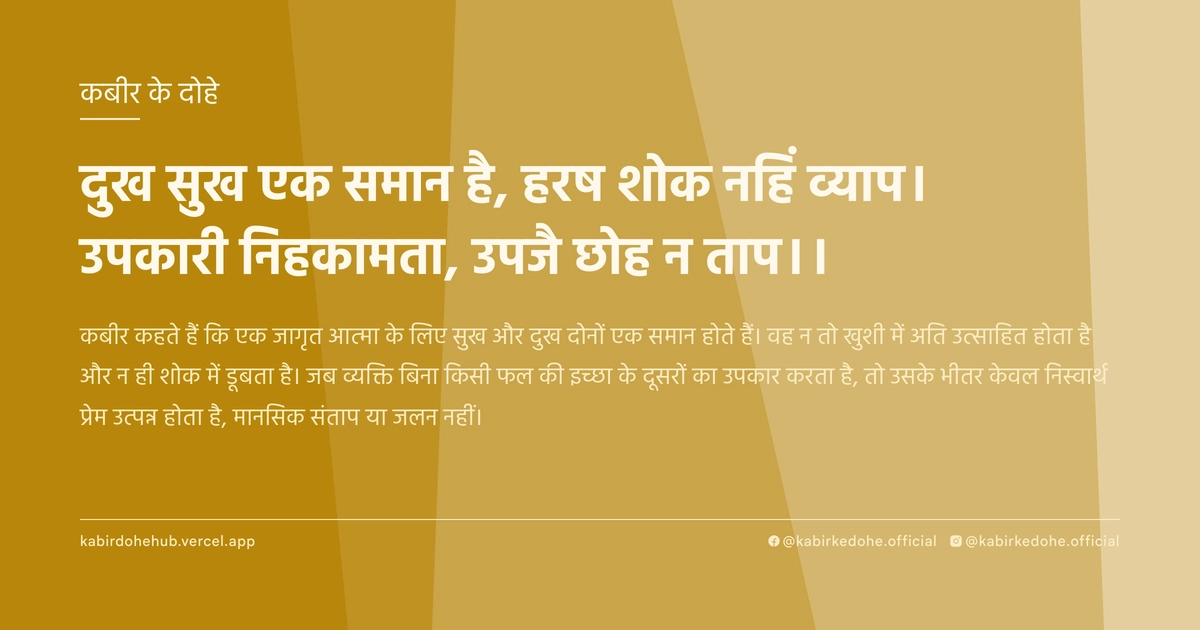
दुख सुख एक समान है, हरष शोक नहिं व्याप।
उपकारी निहकामता, उपजै छोह न ताप।।
Dukh sukh ek saman hai, harsh shok nahin vyap. Upkari nihkamta, upjai chhoh na taap.
इस पृष्ठ पर इस कबीर दोहे का अर्थ (meaning), हिंदी व्याख्या और अंग्रेज़ी अनुवाद, दार्शनिक विश्लेषण और व्यावहारिक जीवन सीख दी गई है। यह दोहा दुख और सुख (Sorrow and Joy) विषय से जुड़ा है — Kabir doha meaning and explanation in Hindi and English.
अर्थ (Meaning):
कबीर कहते हैं कि एक जागृत आत्मा के लिए सुख और दुख दोनों एक समान होते हैं। वह न तो खुशी में अति उत्साहित होता है और न ही शोक में डूबता है। जब व्यक्ति बिना किसी फल की इच्छा के दूसरों का उपकार करता है, तो उसके भीतर केवल निस्वार्थ प्रेम उत्पन्न होता है, मानसिक संताप या जलन नहीं।
Kabir teaches that for an awakened soul, pleasure and pain are perceived as identical. Such a person is neither overwhelmed by joy nor consumed by grief. When one performs acts of kindness without any expectation of reward, a pure, selfless love emerges, freeing the heart from the burning agony of attachment and desire.
व्याख्या (Interpretation):
इस दोहे का शाब्दिक अर्थ है कि सुख-दुख की द्वैतता से ऊपर उठना। आध्यात्मिक स्तर पर, यह 'स्थितप्रज्ञ' होने की अवस्था है। कबीर यहाँ निर्गुण भक्ति का संदेश दे रहे हैं, जहाँ साधक माया के खेल को समझ जाता है। जब हम यह जान लेते हैं कि सुख और दुख केवल मन की लहरें हैं, तो हम उनसे प्रभावित होना बंद कर देते हैं। यह अद्वैत वेदांत के उस सिद्धांत से जुड़ा है जहाँ आत्मा को ब्रह्म का अंश माना गया है, और ब्रह्म न तो सुख का अनुभव करता है न दुख का, वह केवल शुद्ध चैतन्य है। यहाँ 'निहकामता' का अर्थ है इच्छाओं का विसर्जन, जो मनुष्य को मानसिक ताप (तनाव) से मुक्त कर उसे शाश्वत शांति की ओर ले जाता है।
Literally, this verse advocates for the transcendence of the duality of pleasure and pain. Spiritually, it describes the state of 'Sthitaprajna' or the equanimous mind. Kabir invokes the essence of Nirgun Bhakti, where the seeker recognizes the illusory nature of Maya. By understanding that joy and sorrow are merely transient ripples on the surface of consciousness, the seeker ceases to be swayed by them. This aligns with Advaita Vedanta, asserting that the Atman, being one with Brahman, is pure consciousness, untouched by worldly fluctuations. The term 'Nihkamta' refers to the annihilation of desire, which liberates the individual from the 'burning' heat of emotional turmoil, leading to a state of serene, unconditional love.
दार्शनिक विश्लेषण (Philosophical Analysis):
कबीर का यह दर्शन उनके समय के कट्टरपंथी कर्मकांडों और बाहरी आडंबरों के विरुद्ध एक सशक्त प्रहार था। उन्होंने सिखाया कि ईश्वर मंदिर या मस्जिद में नहीं, बल्कि मन की इस समता में है। यह दृष्टिकोण सूफीवाद के 'फना' (अहंकार का मिटना) और वेदांत के 'अद्वैत' का संगम है। कबीर का तर्क है कि जब तक मनुष्य 'मैं' और 'मेरा' के जाल में फंसा है, वह सुख-दुख के चक्र में घूमेगा।
ऐतिहासिक रूप से, कबीर ने जाति और धर्म की दीवारों को तोड़कर एक ऐसी मानवतावादी आध्यात्मिकता पेश की जो आंतरिक रूपांतरण पर केंद्रित थी। उनके लिए मोक्ष का अर्थ मृत्यु के बाद स्वर्ग जाना नहीं, बल्कि जीवित रहते हुए अपनी वासनाओं और अहंकार पर विजय पाना था।
मनोवैज्ञानिक स्तर पर, यह दोहा 'इमोशनल रेगुलेशन' की पराकाष्ठा है। जब हम किसी की मदद इस उम्मीद में करते हैं कि बदले में हमें सम्मान या लाभ मिलेगा, तो हम वास्तव में एक व्यापार कर रहे होते हैं। यदि वह लाभ नहीं मिलता, तो दुख होता है। कबीर इस व्यापार को बंद करने की सलाह देते हैं।
यह दर्शन हमें सिखाता है कि संसार एक रंगमंच है। जो व्यक्ति इस खेल को समझ जाता है, वह न तो जीत में अहंकारी होता है और न हार में निराश। यह तटस्थता ही वास्तविक स्वतंत्रता है।
अंततः, कबीर यह स्पष्ट करते हैं कि निस्वार्थ सेवा ही वह एकमात्र मार्ग है जो हृदय के संताप को शांत कर सकता है। जब कर्ता का भाव मिट जाता है और केवल कर्म रह जाता है, तब मनुष्य ईश्वरीय चेतना के साथ एकाकार हो जाता है।
Kabir's philosophy serves as a potent critique of the rigid ritualism and external pomposity prevalent during his era. He posits that the Divine resides not in temples or mosques, but within the equanimity of the mind. This perspective is a synthesis of the Sufi concept of 'Fana' (the annihilation of the ego) and the Vedantic principle of 'Advaita' (non-duality).
Historically, Kabir dismantled the barriers of caste and creed to introduce a humanistic spirituality centered on internal transformation. For him, liberation was not a post-mortem journey to a celestial paradise, but the act of conquering one's cravings and ego while still inhabiting the physical body.
Psychologically, this verse represents the pinnacle of emotional regulation. When we assist others with the expectation of reward or recognition, we are engaged in a spiritual transaction. The absence of such a return inevitably leads to suffering. Kabir advises the cessation of this transactional existence.
This philosophy teaches that the world is a cosmic play. One who recognizes the nature of this drama remains neither arrogant in victory nor despondent in defeat. This neutrality is the only true form of liberation.
Ultimately, Kabir clarifies that selfless service is the sole mechanism capable of extinguishing the fires of mental agony. When the sense of 'doership' vanishes and only the act remains, the individual merges with the universal consciousness.
मूल संदेश (Core Message):
- सुख और दुख एक ही सिक्के के दो पहलू हैं।
- अपेक्षा ही मानसिक संताप का मूल कारण है।
- निस्वार्थ कर्म अहंकार का विसर्जन करता है।
- स्थिरता ही वास्तविक आध्यात्मिक उपलब्धि है।
- प्रेम जब शर्त-रहित होता है, तब वह मुक्ति बन जाता है।
- Joy and sorrow are but two sides of the same coin.
- Expectation is the root cause of all mental agony.
- Selfless action leads to the dissolution of the ego.
- Equanimity is the ultimate spiritual achievement.
- Love, when unconditional, becomes the path to liberation.
व्यावहारिक उदाहरण (Practical Example):
एक समय की बात है, वाराणसी के घाटों पर रामदीन नाम का एक वृद्ध नाविक रहता था। उसका जीवन अत्यंत कठिन था; कभी नाव चलती, कभी नहीं। लेकिन रामदीन के भीतर एक अजीब सी शांति थी।
एक दिन एक धनी व्यापारी उसकी नाव में सवार हुआ। व्यापारी बहुत क्रोधित था क्योंकि उसका व्यापार में भारी नुकसान हुआ था। वह चिल्ला रहा था और भाग्य को कोस रहा था।
रामदीन चुपचाप पतवार चला रहा था। उसने देखा कि व्यापारी का गुस्सा उसके मानसिक ताप को बढ़ा रहा है। रामदीन ने मुस्कुराते हुए कहा, 'साहब, लहरें तो आती-जाती रहेंगी, पर अगर आप नाव के अंदर हलचल मचाएंगे, तो नाव डूब सकती है।'
व्यापारी ने चिढ़कर पूछा, 'तुम्हें क्या पता दुख क्या होता है? तुम्हारी तो जिंदगी ही गरीबी में बीती है।'
रामदीन ने शांति से जवाब दिया, 'साहब, मैंने गरीबी को भी देखा है और कभी-कभी मिलने वाले छोटे सुखों को भी। पर मैंने यह सीखा है कि दोनों ही मेहमान हैं। जो आता है, वह जाता भी है।'
उस दिन रामदीन ने देखा कि एक गरीब वृद्ध महिला घाट पर भूख से बेहाल थी। रामदीन के पास केवल दो रोटियां थीं। उसने बिना किसी हिचकिचाहट या इस उम्मीद के कि वह महिला उसे दुआ देगी, अपनी रोटियां उसे दे दीं।
व्यापारी यह सब देख रहा था। उसने देखा कि रामदीन ने अपनी भूख की चिंता नहीं की, न ही उसने इस उपकार का कोई प्रदर्शन किया। उसके चेहरे पर एक अलौकिक संतोष था।
व्यापारी ने महसूस किया कि वह लाखों रुपये खोने के दुख में डूबा था, जबकि रामदीन के पास कुछ न होते हुए भी वह उससे कहीं अधिक समृद्ध था।
रामदीन की इस 'निहकामता' और समता ने व्यापारी के अहंकार को झकझोर दिया। उसने महसूस किया कि उसका दुख उसकी परिस्थितियों से नहीं, बल्कि उसकी अपेक्षाओं से था।
उस दिन के बाद, व्यापारी ने दान देना शुरू किया, लेकिन दिखावे के लिए नहीं, बल्कि उस निस्वार्थ भाव से जिसे उसने रामदीन में देखा था। उसने सीखा कि सुख और दुख केवल मन की अवस्थाएं हैं, वास्तविकता नहीं।
Once, on the ghats of Varanasi, lived an elderly boatman named Ramdeen. His life was precarious; some days the boat was full, other days empty. Yet, Ramdeen possessed a strange, unshakable peace.
One day, a wealthy merchant boarded his boat. The merchant was consumed by rage, having suffered a massive financial loss in his business. He was shouting and cursing his fate.
Ramdeen continued to row in silence. He observed that the merchant's anger was intensifying his internal mental heat. Ramdeen smiled and said, 'Sir, the waves will come and go, but if you create a storm inside the boat, the boat itself may sink.'
The merchant snapped, 'What do you know of suffering? Your entire life has been spent in poverty.'
Ramdeen replied calmly, 'Sir, I have seen poverty, and I have seen the small joys that occasionally visit. But I have learned that both are merely guests. Whatever arrives must eventually depart.'
That day, Ramdeen noticed an elderly poor woman on the ghat, trembling with hunger. Ramdeen had only two rotis for his meal. Without hesitation, and without any expectation of a blessing or gratitude, he gave his food to her.
The merchant witnessed this. He saw that Ramdeen did not fret over his own hunger, nor did he perform this act of kindness for show. There was a transcendental contentment on his face.
The merchant realized that while he was drowning in the grief of losing millions, Ramdeen, who possessed nothing, was infinitely wealthier in spirit.
Ramdeen's 'Nihkamta' (desirelessness) and equanimity shattered the merchant's ego. He understood that his suffering stemmed not from his circumstances, but from his attachments and expectations.
From that day forward, the merchant began to give to the poor, not for social prestige, but with the selfless intent he had witnessed in Ramdeen. He learned that joy and sorrow are merely states of mind, not the ultimate reality.
अभ्यास मार्गदर्शन (Practice Guidance):
- प्रतिदिन 20 मिनट 'साक्षी भाव' का अभ्यास करें: अपने विचारों और भावनाओं को बिना किसी निर्णय के केवल देखें, जैसे आप किसी फिल्म को देख रहे हों।
- एक 'निस्वार्थ सेवा' डायरी लिखें: दिन भर में एक ऐसा कार्य करें जिससे किसी की मदद हो, लेकिन शर्त यह हो कि उस व्यक्ति को कभी पता न चले कि मदद आपने की है।
- जब भी तीव्र क्रोध या अत्यधिक खुशी महसूस हो, तो रुककर स्वयं से पूछें: 'क्या यह भावना स्थायी है या केवल एक लहर है?'
- डायग्नोस्टिक चेकलिस्ट: क्या मैं किसी की मदद करने के बाद प्रशंसा की उम्मीद करता हूँ? क्या मैं छोटी सी असफलता पर गहरे अवसाद में चला जाता हूँ? यदि हाँ, तो मैं अभी भी द्वैत में हूँ।
- Practice 'Witness Consciousness' for 20 minutes daily: Observe your thoughts and emotions without judgment, as if you are watching a movie of your own life.
- Maintain a 'Selfless Service' journal: Perform one act of kindness daily with the strict condition that the recipient never finds out you were the benefactor.
- Whenever intense anger or extreme euphoria arises, pause and ask yourself: 'Is this emotion permanent, or is it merely a passing wave?'
- Diagnostic Checklist: Do I expect praise after helping someone? Do I spiral into deep despair over a minor failure? If yes, I am still operating within the realm of duality.
चिंतन प्रश्न (Reflection Questions):
- मेरी कौन सी ऐसी इच्छाएं हैं जिन्हें मैं 'जरूरत' का नाम देकर अपने अहंकार को पाल रहा हूँ?
- यदि मुझे जीवन भर कोई श्रेय या सम्मान न मिले, तो क्या मैं फिर भी दूसरों की सेवा कर पाऊंगा?
- मेरे जीवन के सबसे दुखद क्षणों में, क्या मैं उस दर्द के पीछे छिपे किसी गहरे सत्य को देख पाया?
- मैं अपनी डिजिटल पहचान (सोशल मीडिया) पर जिस 'सुखी' जीवन का प्रदर्शन करता हूँ, वह मेरे आंतरिक शून्य को कैसे बढ़ा रहा है?
- क्या मेरा प्रेम वास्तव में निस्वार्थ है, या यह केवल एक अदृश्य सौदा है?
- Which of my desires am I masking as 'necessities' to feed my ego?
- If I were to receive no credit or recognition for the rest of my life, would I still serve others?
- In the most painful moments of my life, was I able to perceive the deeper truth hidden behind the suffering?
- How does the 'happy' life I project through my digital identity exacerbate my internal void?
- Is my love truly selfless, or is it merely an invisible transaction?