
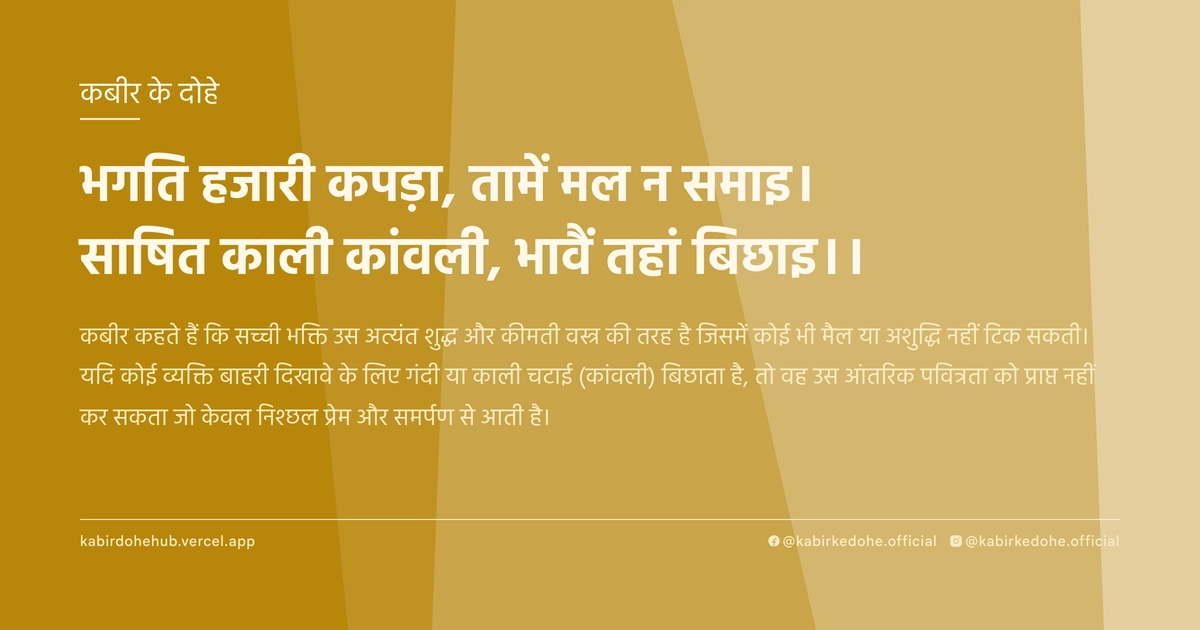
भगति हजारी कपड़ा, तामें मल न समाइ।
साषित काली कांवली, भावैं तहां बिछाइ।।
Bhagti hajari kapda, tame mal na samai. Sashit kali kanvali, bhavaye taha bichai.
इस पृष्ठ पर इस कबीर दोहे का अर्थ (meaning), हिंदी व्याख्या और अंग्रेज़ी अनुवाद, दार्शनिक विश्लेषण और व्यावहारिक जीवन सीख दी गई है। यह दोहा भक्ति (Bhakti) विषय से जुड़ा है — Kabir doha meaning and explanation in Hindi and English.
अर्थ (Meaning):
कबीर कहते हैं कि सच्ची भक्ति उस अत्यंत शुद्ध और कीमती वस्त्र की तरह है जिसमें कोई भी मैल या अशुद्धि नहीं टिक सकती। यदि कोई व्यक्ति बाहरी दिखावे के लिए गंदी या काली चटाई (कांवली) बिछाता है, तो वह उस आंतरिक पवित्रता को प्राप्त नहीं कर सकता जो केवल निश्छल प्रेम और समर्पण से आती है।
Kabir asserts that true devotion is like a priceless, pristine cloth that cannot harbor any stain of impurity. If one relies on external rituals or spreads a soiled mat of hypocrisy, they cannot attain that inner purity which is accessible only through selfless love and absolute surrender to the Divine.
व्याख्या (Interpretation):
इस दोहे का शाब्दिक अर्थ है कि भक्ति एक ऐसा वस्त्र है जो इतना शुद्ध है कि उसमें गंदगी नहीं समाती। रूपकात्मक रूप से, 'हजारी कपड़ा' उस उच्च चेतना का प्रतीक है जहाँ अहंकार का पूर्ण विलोपन हो चुका है। 'काली कांवली' यहाँ पाखंड, कर्मकांड और बाहरी दिखावे का संकेत है। यह निर्गुण भक्ति के उस सिद्धांत को दर्शाता है जहाँ ईश्वर किसी विशेष स्थान या बाहरी वस्तु में नहीं, बल्कि हृदय की शुद्धता में बसता है। माया हमें बाहरी आडंबरों में उलझाती है, जबकि आत्मा का वास्तविक मिलन केवल तब संभव है जब हम 'मैं' और 'मेरा' के मैल को त्याग दें। यह अद्वैत वेदांत के उस सत्य की पुष्टि करता है कि आत्मा और ब्रह्म एक ही हैं, और उनके बीच केवल अज्ञानता का पर्दा है।
Literally, the verse describes devotion as a fabric so pure that no filth can cling to it. Metaphorically, the "priceless cloth" symbolizes a state of heightened consciousness where the ego has been completely annihilated. The "soiled black mat" represents hypocrisy, rigid ritualism, and the superficiality of external religious displays. This aligns with Nirgun Bhakti, emphasizing that the Divine resides not in external objects or specific locations, but within the purity of the heart. Maya lures the seeker into the trap of outward appearances, whereas the union of Atman and Brahman occurs only when the grime of "I" and "mine" is discarded. It reinforces the Advaita Vedanta truth that the soul and the Absolute are one, separated only by the veil of ignorance.
दार्शनिक विश्लेषण (Philosophical Analysis):
कबीर का यह दोहा उनके युग के धार्मिक पाखंड और जातिगत श्रेष्ठता के विरुद्ध एक सशक्त प्रहार है। उस समय धर्म केवल बाहरी प्रतीकों, जैसे कि विशेष वस्त्रों या पूजा स्थलों तक सीमित हो गया था। कबीर ने इस विचार को चुनौती दी कि पवित्रता किसी बाहरी वस्तु से आती है। उन्होंने तर्क दिया कि यदि हृदय में द्वेष और अहंकार है, तो सोने के सिंहासन पर बैठकर भी व्यक्ति अशुद्ध ही रहेगा।
दार्शनिक स्तर पर, यह सूफी मत के 'फना' (अहंकार का विनाश) और अद्वैत वेदांत के 'माया' के सिद्धांत से जुड़ा है। सूफीवाद में हृदय की सफाई (तज़किया) को ईश्वर के मिलन की पहली शर्त माना गया है। कबीर यहाँ यह समझा रहे हैं कि भक्ति कोई ऐसी वस्तु नहीं है जिसे बाजार से खरीदा जा सके या किसी विशेष परंपरा के माध्यम से प्राप्त किया जा सके; यह एक आंतरिक रूपांतरण है।
कर्मकांडों का विरोध करते हुए कबीर यह स्पष्ट करते हैं कि ईश्वर 'निर्गुण' है, जिसका अर्थ है कि वह किसी रूप, रंग या भौतिक सीमा में नहीं बंधा है। जब कोई व्यक्ति यह मानता है कि वह किसी विशेष विधि से पवित्र हो जाएगा, तो वह वास्तव में अपने अहंकार को और अधिक पुष्ट कर रहा होता है।
मनोवैज्ञानिक दृष्टिकोण से, यह दोहा संज्ञानात्मक विसंगति (cognitive dissonance) की बात करता है। हम अक्सर अपनी बाहरी छवि को पवित्र दिखाने का प्रयास करते हैं जबकि भीतर क्रोध और ईर्ष्या का वास होता है। कबीर इस विरोधाभास को उजागर करते हुए कहते हैं कि वास्तविक शुद्धि केवल सत्य के साक्षात्कार से आती है।
अंततः, यह संदेश है कि भक्ति का अर्थ है स्वयं को मिटाना। जब तक 'मैं' जीवित है, तब तक भक्ति में 'मैल' रहेगा। जिस क्षण अहंकार विलीन होता है, वह 'हजारी कपड़ा' यानी शुद्ध चेतना स्वतः प्रकट हो जाती है, जिसे किसी बाहरी चटाई या सहारे की आवश्यकता नहीं होती।
This couplet is a potent critique of the religious hypocrisy and caste-based superiority prevalent during Kabir's era. At that time, religion had been reduced to external symbols, such as specific garments or designated places of worship. Kabir challenged the notion that purity is derived from external objects, arguing that if the heart harbors malice and ego, one remains impure even while sitting on a golden throne.
Philosophically, this connects to the Sufi concept of 'Fana' (annihilation of the self) and the Advaita Vedanta principle of 'Maya'. In Sufism, the purification of the heart (Tazkiyah) is the primary prerequisite for union with the Divine. Kabir explains that devotion is not a commodity to be purchased or a prize won through specific traditions; it is a profound internal transformation.
By rejecting ritualism, Kabir clarifies that the Divine is 'Nirgun' (formless), meaning God is not bound by shape, color, or physical limitations. When a person believes that a specific ritual will make them holy, they are inadvertently strengthening their own ego rather than dissolving it.
From a psychological perspective, the verse addresses cognitive dissonance. Humans often strive to project a pure external image while harboring anger and jealousy within. Kabir exposes this paradox, asserting that genuine purity emerges only through the realization of Truth.
Ultimately, the message is that devotion means the erasure of the self. As long as the 'I' persists, the 'grime' remains in the devotion. The moment the ego vanishes, the 'priceless cloth'—the pure consciousness—manifests spontaneously, requiring no external mat or artificial support.
मूल संदेश (Core Message):
- बाहरी शुद्धि एक भ्रम है; वास्तविक पवित्रता आंतरिक है।
- अहंकार वह मैल है जो ईश्वर और आत्मा के बीच बाधा है।
- दिखावे की भक्ति केवल अहंकार को पुष्ट करती है, मिटाती नहीं।
- सच्चा समर्पण वह है जहाँ 'मैं' पूरी तरह समाप्त हो जाए।
- प्रेम ही वह एकमात्र साधन है जो हृदय के मैल को धो सकता है।
- External purity is an illusion; true sanctity is internal.
- Ego is the grime that obstructs the union of Soul and Divine.
- Performative devotion reinforces the ego rather than dissolving it.
- True surrender is the state where the 'I' is completely extinguished.
- Love is the only solvent capable of washing away the heart's impurities.
व्यावहारिक उदाहरण (Practical Example):
वाराणसी के एक पुराने घाट पर रामदीन नाम का एक वृद्ध नाविक रहता था। वह स्वयं को बहुत धार्मिक मानता था और हर सुबह गंगा में स्नान कर घंटों मंदिर में समय बिताता था। वह दूसरों को उपदेश देता था कि धर्म के बिना जीवन व्यर्थ है और अक्सर उन लोगों की आलोचना करता था जो पूजा-पाठ नहीं करते थे।
रामदीन का जीवन बाहरी तौर पर अत्यंत पवित्र था, लेकिन उसके भीतर एक गहरा अहंकार था। वह मानता था कि उसकी धार्मिकता उसे अन्य लोगों से श्रेष्ठ बनाती है। वह अपने साथ एक विशेष रेशमी कपड़ा रखता था जिस पर वह बैठकर प्रार्थना करता था, यह विश्वास करते हुए कि यह कपड़ा उसे पवित्रता प्रदान करता है।
एक दिन, एक अत्यंत वृद्ध और फटेहाल साधु उसके पास आए। साधु के पास न तो कोई विशेष वस्त्र था और न ही कोई मंदिर का प्रमाण पत्र। उन्होंने रामदीन से केवल एक गिलास पानी माँगा। रामदीन ने उन्हें देखा और मन ही मन सोचा, "यह मैला व्यक्ति मेरे पवित्र आसन को छू लेगा तो वह अशुद्ध हो जाएगा।"
उसने साधु को पानी तो दिया, लेकिन उन्हें अपने आसन से दूर रहने का इशारा किया। साधु मुस्कुराए और शांति से बोले, "बेटा, तूने बाहर तो रेशम बिछा लिया, लेकिन भीतर की गंदगी को साफ करना भूल गया। तेरा यह कपड़ा तो चमक रहा है, पर तेरा मन अभी भी मैला है।"
रामदीन को पहले तो गुस्सा आया, लेकिन फिर उसे कबीर के शब्दों की याद आई। उसने महसूस किया कि उसकी पूरी धार्मिकता केवल एक मुखौटा थी। वह जिस पवित्रता का दावा कर रहा था, वह वास्तव में उसके अहंकार का एक विस्तार मात्र था।
उस रात रामदीन सो नहीं सका। उसने विचार किया कि कैसे वह मंदिर जाता था, लेकिन अपने मन में दूसरों के प्रति घृणा रखता था। उसने महसूस किया कि उसकी 'काली कांवली' उसका अहंकार था, जिसे वह रेशमी कपड़े से ढकने की कोशिश कर रहा था।
अगले दिन से रामदीन ने अपना व्यवहार बदल लिया। उसने उपदेश देना बंद कर दिया और सेवा करना शुरू किया। उसने देखा कि वह व्यक्ति जो सबसे अधिक 'अशुद्ध' दिखता था, उसके भीतर सबसे अधिक करुणा थी।
धीरे-धीरे, रामदीन का बाहरी दिखावा समाप्त हो गया। अब उसे किसी विशेष कपड़े या आसन की आवश्यकता नहीं थी। उसका हृदय ही वह 'हजारी कपड़ा' बन गया था, जहाँ अब कोई मैल नहीं था, केवल निस्वार्थ प्रेम था।
On an ancient ghat in Varanasi lived an elderly boatman named Ramdeen. He considered himself deeply religious, bathing in the Ganges every morning and spending hours in the temple. He frequently lectured others that life without religion was futile and criticized those who did not adhere to rituals.
Externally, Ramdeen's life was a picture of piety, but internally, he harbored a deep-seated ego. He believed his religious adherence made him superior to others. He kept a special silk cloth upon which he sat to pray, believing this fabric bestowed purity upon him.
One day, an elderly, ragged ascetic approached him. The ascetic possessed neither special garments nor any certification of temple authority. He simply asked Ramdeen for a glass of water.
Ramdeen provided the water but gestured for the ascetic to stay far away from his prayer mat, thinking, "If this filthy man touches my sacred cloth, it will become impure."
The ascetic smiled and spoke calmly, "My son, you have spread silk on the outside, but you forgot to clean the filth within. Your cloth shines, but your mind is still soiled."
Ramdeen was initially angered, but then he recalled the essence of Kabir's wisdom. He realized that his entire religious identity was merely a mask. The purity he claimed was actually just an extension of his ego.
That night, Ramdeen could not sleep. He reflected on how he visited the temple while harboring hatred for others in his heart. He realized that his 'soiled mat' was his ego, which he had been trying to hide under a silk cloth.
From the next day, Ramdeen transformed his behavior. He stopped preaching and began serving. He observed that the person who appeared most 'impure' often possessed the greatest amount of compassion.
Gradually, Ramdeen's external pretension vanished. He no longer needed a special cloth or a designated seat. His heart itself became the 'priceless cloth,' where no grime remained, only selfless love.
अभ्यास मार्गदर्शन (Practice Guidance):
- दैनिक आत्म-निरीक्षण: प्रतिदिन 15 मिनट मौन बैठें और विचार करें कि आज आपने कितनी बार अपनी श्रेष्ठता सिद्ध करने के लिए बाहरी प्रतीकों या शब्दों का सहारा लिया।
- अहंकार का विसर्जन: किसी ऐसे व्यक्ति की निस्वार्थ सेवा करें जिसे समाज 'अशुद्ध' या 'निम्न' मानता है, और अनुभव करें कि क्या आपका मन अभी भी भेदभाव कर रहा है।
- जर्नलिंग प्रॉम्प्ट: "यदि मेरी सभी धार्मिक और सामाजिक पहचानें छीन ली जाएं, तो मेरे भीतर क्या बचेगा? क्या वह शेष हिस्सा वास्तव में शुद्ध है?"
- डायग्नोस्टिक चेकलिस्ट: क्या मैं दूसरों की गलतियों पर तुरंत प्रतिक्रिया देता हूँ? क्या मुझे अपनी धार्मिकता पर गर्व है? क्या मैं केवल दिखावे के लिए दान करता हूँ? यदि हाँ, तो 'मैल' अभी भी मौजूद है।
- Daily Self-Observation: Sit in silence for 15 minutes daily and reflect on how many times you relied on external symbols or words to prove your superiority.
- Dissolution of Ego: Perform selfless service for someone whom society deems 'impure' or 'inferior,' and observe if your mind still clings to discrimination.
- Journaling Prompt: "If all my religious and social identities were stripped away, what would remain within me? Is that remaining essence truly pure?"
- Diagnostic Checklist: Do I react instantly to others' mistakes? Do I feel pride in my religiosity? Do I give charity only for visibility? If yes, the 'grime' still persists.
चिंतन प्रश्न (Reflection Questions):
- क्या मेरी धार्मिक पहचान वास्तव में मुझे विनम्र बनाती है, या यह मुझे दूसरों से श्रेष्ठ महसूस कराने का एक साधन है?
- मैं अपनी डिजिटल पहचान (सोशल मीडिया) पर जो 'पवित्र' या 'नैतिक' छवि प्रस्तुत करता हूँ, वह मेरे वास्तविक निजी जीवन से कितनी भिन्न है?
- क्या मैं उन लोगों को स्वीकार कर सकता हूँ जिनके विश्वास और जीवनशैली मेरे पूर्णतः विपरीत हैं, बिना उन्हें 'सुधारने' की इच्छा के?
- मेरे जीवन में वह कौन सा 'रेशमी कपड़ा' (दिखावा) है जिसे मैं अपनी आंतरिक कमियों को छिपाने के लिए उपयोग कर रहा हूँ?
- यदि ईश्वर को केवल मेरे कर्मों की शुद्धता से मापना हो, तो मेरी वर्तमान स्थिति क्या होगी?
- Does my religious identity truly make me humble, or is it a tool to make me feel superior to others?
- How different is the 'pure' or 'ethical' image I project on my digital identity from my actual private life?
- Can I accept people whose beliefs and lifestyles are diametrically opposite to mine, without the urge to 'correct' them?
- What is the 'silk cloth' (pretension) in my life that I use to camouflage my internal shortcomings?
- If the Divine were to judge me solely by the purity of my actions, what would my current standing be?