
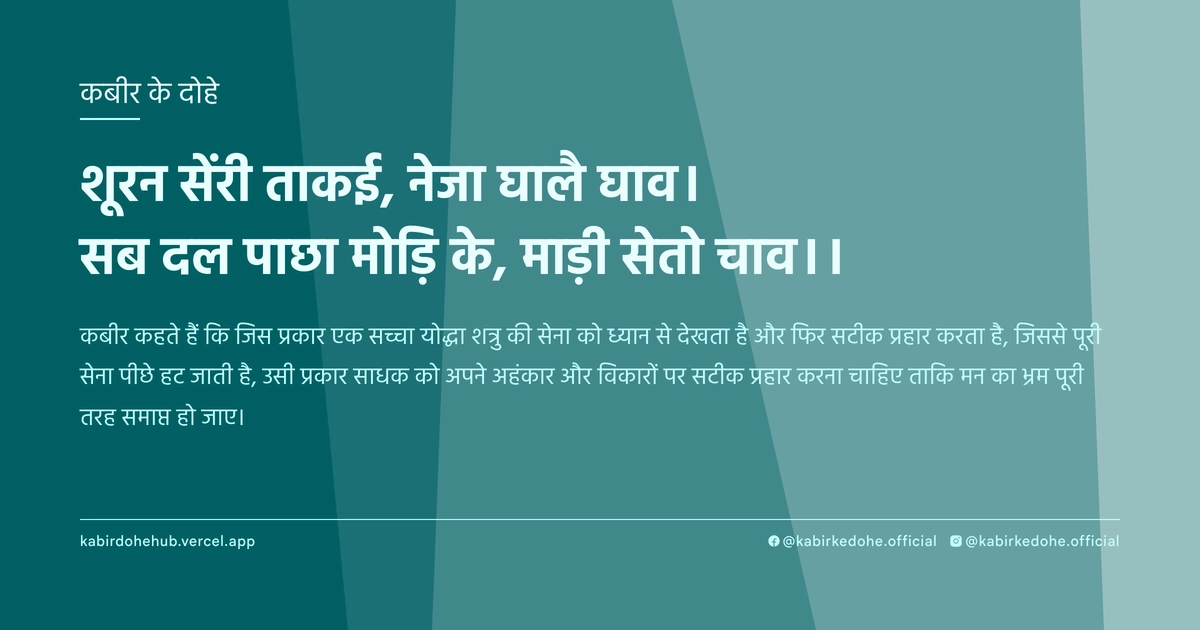
शूरन सेंरी ताकई, नेजा घालै घाव।
सब दल पाछा मोड़ि के, माड़ी सेतो चाव।।
Shooran senri taakai, neja ghalai ghaav. Sab dal paacha modike, maadi seto chaav.
इस पृष्ठ पर इस कबीर दोहे का अर्थ (meaning), हिंदी व्याख्या और अंग्रेज़ी अनुवाद, दार्शनिक विश्लेषण और व्यावहारिक जीवन सीख दी गई है। यह दोहा धैर्य (Patience) विषय से जुड़ा है — Kabir doha meaning and explanation in Hindi and English.
अर्थ (Meaning):
कबीर कहते हैं कि जिस प्रकार एक सच्चा योद्धा शत्रु की सेना को ध्यान से देखता है और फिर सटीक प्रहार करता है, जिससे पूरी सेना पीछे हट जाती है, उसी प्रकार साधक को अपने अहंकार और विकारों पर सटीक प्रहार करना चाहिए ताकि मन का भ्रम पूरी तरह समाप्त हो जाए।
Kabir suggests that just as a true warrior observes the enemy army with precision and delivers a single, decisive blow that forces the entire opposing force to retreat, a spiritual seeker must strike a precise blow against their own ego and delusions to dissolve the illusions of the mind completely.
व्याख्या (Interpretation):
इस दोहे का शाब्दिक अर्थ युद्ध कौशल से है, लेकिन आध्यात्मिक स्तर पर यह 'चित्त' की शुद्धि की बात करता है। यहाँ 'शूर' वह साधक है जो आत्म-साक्षात्कार की खोज में है, और 'शत्रु' उसके भीतर का अहंकार, काम, क्रोध और मोह है। 'नेजा घाव' का अर्थ है विवेक (Discrimination) का वह प्रहार जो सीधे अज्ञान की जड़ पर किया जाता है। जब साधक अपनी अंतर्दृष्टि से यह पहचान लेता है कि वह शरीर नहीं बल्कि आत्मा है, तो माया का पूरा दल (भ्रम) पीछे हट जाता है। यह निर्गुण भक्ति का सार है जहाँ बाहरी आडंबरों के बजाय आंतरिक युद्ध पर बल दिया गया है। यह अद्वैत वेदांत के उस सिद्धांत को दर्शाता है जहाँ ज्ञाता और ज्ञेय का भेद मिट जाता है।
Literally, the verse describes martial prowess, but spiritually, it addresses the purification of the consciousness. The 'warrior' is the seeker on the path of self-realization, and the 'enemy' represents the internal forces of ego, lust, anger, and attachment. The 'precise blow' symbolizes the strike of Viveka (spiritual discrimination) aimed directly at the root of ignorance. When the seeker realizes through inner insight that they are not the physical body but the eternal Atman, the entire army of Maya (illusion) is forced to retreat. This embodies the essence of Nirgun Bhakti, emphasizing internal struggle over external rituals. It reflects the Advaita Vedanta principle where the duality between the knower and the known is annihilated through a single realization of Truth.
दार्शनिक विश्लेषण (Philosophical Analysis):
कबीर का यह दोहा मध्यकालीन भारत के उस सामाजिक परिवेश में लिखा गया जहाँ धर्म के नाम पर केवल बाहरी कर्मकांडों और जातिगत श्रेष्ठता का बोलबाला था। कबीर ने इन कृत्रिम दीवारों को ढहाने के लिए 'आंतरिक युद्ध' की भाषा का प्रयोग किया। उनका दर्शन सूफीवाद के 'फना' (अहंकार का विनाश) और वेदांत के 'अहं ब्रह्मास्मि' का संगम है। वे समझाते हैं कि ईश्वर मंदिर या मस्जिद में नहीं, बल्कि उस बिंदु पर है जहाँ अहंकार समाप्त होता है।
यहाँ 'सटीक प्रहार' का अर्थ है कि आध्यात्मिक प्रगति के लिए केवल किताबी ज्ञान पर्याप्त नहीं है, बल्कि अनुभवजन्य सत्य की आवश्यकता है। अधिकांश लोग केवल सतह पर संघर्ष करते हैं, लेकिन कबीर 'नेजा घाव' यानी मूल कारण पर प्रहार करने की बात करते हैं। यह मनोवैज्ञानिक रूपांतरण की प्रक्रिया है जहाँ साधक अपनी कमियों को स्वीकार कर उन्हें विवेक की अग्नि में जला देता है।
यह दृष्टिकोण कर्मकांडवाद के विरुद्ध एक सशक्त प्रहार है। कबीर का मानना था कि माला जपने या तीर्थ यात्रा करने से वह शांति नहीं मिलती जो स्वयं के भीतर के अंधकार को मिटाने से मिलती है। यह एक प्रकार का 'मानसिक शल्य चिकित्सा' (Mental Surgery) है जहाँ विवेक रूपी शस्त्र से अज्ञान को काट दिया जाता है।
सूफी मत के अनुसार, जब तक 'मैं' (ego) मौजूद है, तब तक 'वह' (God) नहीं मिल सकता। कबीर इसी विरोधाभास को युद्ध के रूपक से समझाते हैं। जब साधक अपनी पहचान को शरीर और नाम से हटाकर शून्य में विलीन करता है, तब वह वास्तव में विजयी होता है।
अंततः, यह दोहा हमें सिखाता है कि आध्यात्मिक मार्ग पर साहस की आवश्यकता है। यह मार्ग केवल शांति का नहीं, बल्कि अपने पुराने स्वरूप को मारने और नए स्वरूप में जन्म लेने का है। यह विनाश सृजन की पहली शर्त है।
This Doha was composed during a medieval Indian era dominated by rigid ritualism and caste hierarchies. Kabir utilizes the metaphor of 'internal warfare' to dismantle these artificial barriers. His philosophy is a synthesis of the Sufi concept of 'Fana' (annihilation of the self) and the Vedantic realization of 'Aham Brahmasmi' (I am Brahman). He asserts that the Divine is not found in temples or mosques, but at the exact point where the ego ceases to exist.
The 'precise blow' signifies that spiritual progress requires more than intellectual knowledge; it demands experiential truth. Most seekers struggle on the surface, but Kabir advocates for striking the root cause of suffering. This is a process of psychological transformation where the seeker acknowledges their flaws and incinerates them in the fire of Viveka (discrimination).
This perspective is a potent critique of ritualism. Kabir believed that chanting beads or visiting pilgrimages does not yield the peace that comes from eradicating internal darkness. It is a form of 'spiritual surgery' where the instrument of awareness cuts through the layers of ignorance.
According to Sufi thought, as long as the 'I' (ego) persists, the 'He' (Divine) cannot be realized. Kabir explains this paradox through the imagery of battle. When the seeker shifts their identity from the body and name to the void of pure consciousness, they achieve true victory.
Ultimately, this verse teaches that the spiritual path requires immense courage. It is not merely a path of tranquility, but a journey of killing the old self to be reborn. Destruction of the ego is the prerequisite for the creation of the spirit.
मूल संदेश (Core Message):
- बाहरी युद्ध व्यर्थ हैं, असली विजय आंतरिक रूपांतरण में है।
- अहंकार की जड़ पर प्रहार करना ही वास्तविक ज्ञान है।
- कर्मकांड केवल आवरण हैं; आत्म-साक्षात्कार ही एकमात्र सत्य है।
- जब 'मैं' मिटता है, तब ब्रह्मांडीय चेतना का उदय होता है।
- सटीक जागरूकता ही अज्ञान के अंधकार को मिटाने वाला शस्त्र है।
- External battles are futile; true victory lies in internal transformation.
- Striking the root of the ego is the only path to genuine wisdom.
- Rituals are mere veils; self-realization is the sole truth.
- When the 'I' vanishes, universal consciousness emerges.
- Precise awareness is the only weapon capable of erasing the darkness of ignorance.
व्यावहारिक उदाहरण (Practical Example):
वाराणसी के एक पुराने घाट पर माधव नाम का एक वृद्ध बुनकर रहता था। माधव अपनी कला में निपुण था, लेकिन उसका स्वभाव अत्यंत क्रोधी था। वह छोटी-छोटी बातों पर अपने परिवार और पड़ोसियों पर चिल्लाता था। वह मानता था कि उसका क्रोध उसकी 'मजबूत शख्सियत' की निशानी है। वह घंटों मंदिर में पूजा करता और दान देता, फिर भी उसके मन की अशांति कम नहीं होती थी।
एक दिन उसने एक फकीर को देखा जो शांत भाव से बैठा था। माधव ने उससे पूछा, "मैं इतना पुण्य करता हूँ, फिर भी मेरा मन अशांत क्यों है?" फकीर ने मुस्कुराकर कहा, "तुम बाहर की सेना से लड़ रहे हो, जबकि युद्ध तुम्हारे भीतर है। तुम अपनी पूजा से अहंकार को पाल रहे हो, उसे मार नहीं रहे।"
माधव को पहले तो यह बात समझ नहीं आई। लेकिन फकीर ने उसे एक चुनौती दी: "अगली बार जब तुम्हें क्रोध आए, तो चिल्लाने के बजाय, उस क्रोध के ठीक पीछे छिपे उस डर या असुरक्षा को देखो जिसने इस क्रोध को जन्म दिया है।"
कुछ दिनों बाद, माधव के बेटे ने एक कीमती रेशमी कपड़ा खराब कर दिया। माधव का चेहरा लाल हो गया और वह चिल्लाने ही वाला था कि उसे फकीर की बात याद आई। उसने चिल्लाने के बजाय अपनी आँखें बंद कीं और गहराई से देखा। उसने पाया कि उसका क्रोध वास्तव में उसकी 'परफेक्शन' खोने के डर और अपनी श्रेष्ठता साबित करने की जिद से उपजा था।
यह वह 'नेजा घाव' था। जैसे ही उसने अपनी इस कमजोरी (अहंकार) को पहचान लिया, उसका क्रोध अचानक गायब हो गया। उसने महसूस किया कि वह अपने बेटे से ज्यादा अपने 'अहंकार' से प्यार करता था।
उस क्षण माधव के भीतर एक बड़ा बदलाव आया। उसने महसूस किया कि अब तक वह केवल बाहरी आडंबरों (पूजा-पाठ) के पीछे छिप रहा था, जबकि असली शत्रु उसका अपना अहंकार था।
उसने अपने बेटे को गले लगाया और पहली बार उसे महसूस हुआ कि शांति मंदिर की घंटियों में नहीं, बल्कि अपनी कमियों को स्वीकार करने में है।
माधव का जीवन बदल गया। वह अब भी बुनता था, लेकिन अब उसके कपड़ों में केवल धागे नहीं, बल्कि एक असीम शांति और करुणा झलकती थी।
उसने सीखा कि जब हम अपनी समस्या के मूल कारण (Root Cause) पर प्रहार करते हैं, तो जीवन की सारी उलझनें अपने आप सुलझ जाती हैं।
यह माधव की अपनी आंतरिक सेना पर विजय थी, जिसने उसे एक क्रोधित बुनकर से एक शांत साधक बना दिया।
In the ancient ghats of Varanasi lived an elderly weaver named Madhav. Madhav was a master of his craft, but his temperament was volatile. He would scream at his family and neighbors over trivial matters, believing his anger was a sign of a 'strong personality.' He spent hours in temple worship and gave generous donations, yet his inner turmoil never subsided.
One day, he encountered a wandering dervish sitting in profound silence. Madhav asked, "I perform so many virtuous acts, yet why is my mind so restless?" The dervish smiled and replied, "You are fighting an external army, while the real war is within. You are using your rituals to feed your ego, not to kill it."
Madhav was initially confused. However, the dervish gave him a challenge: "The next time anger rises, instead of shouting, look exactly behind that anger. Find the fear or insecurity that gave birth to it."
A few days later, Madhav's son accidentally ruined a piece of expensive silk cloth. Madhav's face turned red, and he was about to explode. Suddenly, he remembered the dervish's words. He closed his eyes and looked deep within. He discovered that his anger was actually born from a fear of losing his 'perfection' and a stubborn need to be seen as superior.
This was the 'precise blow.' The moment he identified this specific flaw (ego), the anger vanished instantly. He realized he loved his own image of perfection more than he loved his son.
In that moment, a profound shift occurred. He realized he had been hiding behind external rituals, while the true enemy was his own pride.
He embraced his son and felt for the first time that peace does not reside in temple bells, but in the honest acceptance of one's shadows.
Madhav's life transformed. He continued to weave, but now his fabrics reflected not just skill, but an infinite peace and compassion.
He learned that when one strikes at the root cause of a problem, all the complexities of life unravel naturally.
This was Madhav's victory over his own internal army, transforming him from a wrathful weaver into a serene seeker.
अभ्यास मार्गदर्शन (Practice Guidance):
- दैनिक आत्म-अवलोकन: दिन के अंत में 15 मिनट मौन बैठें और उन क्षणों को याद करें जब आपको क्रोध या ईर्ष्या महसूस हुई। यह विश्लेषण करें कि वह भावना किस 'अहंकार' से उपजी थी।
- विवेक अभ्यास: जब भी कोई विवाद हो, स्वयं से पूछें— "क्या मैं सत्य के लिए लड़ रहा हूँ या अपनी छवि (Image) को बचाने के लिए?"
- जर्नलिंग: एक डायरी लिखें जिसमें आप अपनी उन आदतों को लिखें जिन्हें आप 'गुण' समझते हैं, लेकिन वास्तव में वे आपके अहंकार का हिस्सा हैं।
- निदान चेकलिस्ट: यदि आप दूसरों को सुधारने की तीव्र इच्छा रखते हैं, तो यह संकेत है कि आपका अहंकार अभी भी सक्रिय है। यदि आप अपनी गलती पर मुस्कुरा सकते हैं, तो आप 'नेजा घाव' की ओर बढ़ रहे हैं।
- Daily Self-Observation: Spend 15 minutes in silence at the end of the day, recalling moments of anger or jealousy. Analyze which specific 'ego-facet' triggered that emotion.
- Viveka Practice: During any conflict, ask yourself— "Am I fighting for the Truth, or am I fighting to protect my self-image?"
- Shadow Journaling: Maintain a diary listing habits you perceive as 'virtues' but are actually manifestations of your ego.
- Diagnostic Checklist: If you feel an intense urge to 'correct' others, your ego is still dominant. If you can smile at your own mistakes, you are successfully delivering the 'precise blow' to your pride.
चिंतन प्रश्न (Reflection Questions):
- वह कौन सी 'छवि' है जिसे मैं दुनिया के सामने बनाए रखने के लिए सबसे अधिक संघर्ष करता हूँ?
- मेरे जीवन में वह कौन सा 'सटीक प्रहार' (सत्य) है जिसे स्वीकार करने से मैं डरता हूँ?
- क्या मेरी धार्मिकता वास्तव में आध्यात्मिक है, या यह केवल मेरे अहंकार को संतुष्ट करने का एक तरीका है?
- यदि मेरी सारी उपलब्धियाँ और पद छीन लिए जाएँ, तो मेरे भीतर क्या बचेगा?
- मैं किन लोगों को 'नीचा' समझता हूँ, और यह धारणा मेरे किस आंतरिक डर को छिपा रही है?
- What is the specific 'image' of myself that I struggle most to maintain in the eyes of the world?
- What is the 'precise blow' (truth) about my character that I am most afraid to acknowledge?
- Is my religiosity truly spiritual, or is it merely a sophisticated way to feed my ego?
- If all my achievements and titles were stripped away, what would actually remain of me?
- Who do I perceive as 'inferior,' and what internal fear is this perception attempting to mask?