
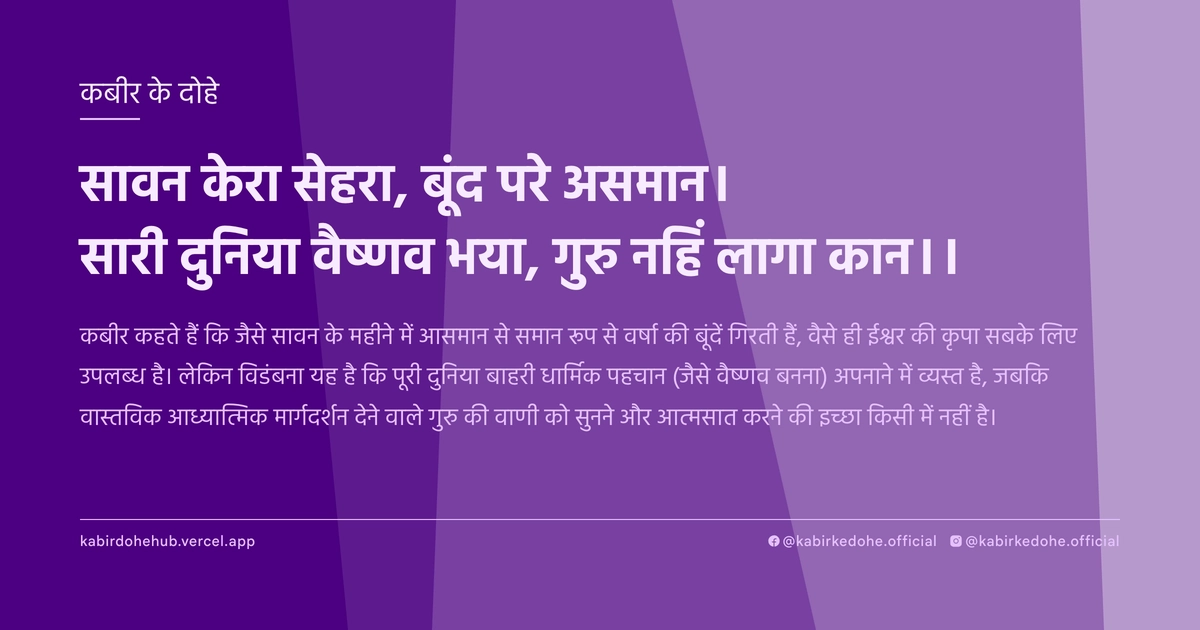
सावन केरा सेहरा, बूंद परे असमान।
सारी दुनिया वैष्णव भया, गुरु नहिं लागा कान।।
Sawan kera sehra, boond pare asaman. Sari duniya vaishnav bhaya, guru nahin laga kaan.
इस पृष्ठ पर इस कबीर दोहे का अर्थ (meaning), हिंदी व्याख्या और अंग्रेज़ी अनुवाद, दार्शनिक विश्लेषण और व्यावहारिक जीवन सीख दी गई है। यह दोहा गुरु महत्व (The Guru's Importance) विषय से जुड़ा है — Kabir doha meaning and explanation in Hindi and English.
अर्थ (Meaning):
कबीर कहते हैं कि जैसे सावन के महीने में आसमान से समान रूप से वर्षा की बूंदें गिरती हैं, वैसे ही ईश्वर की कृपा सबके लिए उपलब्ध है। लेकिन विडंबना यह है कि पूरी दुनिया बाहरी धार्मिक पहचान (जैसे वैष्णव बनना) अपनाने में व्यस्त है, जबकि वास्तविक आध्यात्मिक मार्गदर्शन देने वाले गुरु की वाणी को सुनने और आत्मसात करने की इच्छा किसी में नहीं है।
Kabir observes that just as the monsoon rains fall impartially from the sky upon everyone, Divine grace is universally available. However, he laments that while the entire world is preoccupied with adopting outward religious labels—such as becoming a 'Vaishnav' or a formal devotee—hardly anyone possesses the genuine will to listen to and embody the transformative instructions of a true spiritual master.
व्याख्या (Interpretation):
यहाँ 'सावन' और 'बूंदें' परमात्मा की सर्वव्यापी और निःशुल्क कृपा का प्रतीक हैं, जो बिना किसी भेदभाव के हर जीव पर बरसती हैं। 'वैष्णव' शब्द यहाँ केवल एक संप्रदाय नहीं, बल्कि उस बाहरी दिखावे और कर्मकांडीय पहचान का प्रतिनिधित्व करता है जिसे लोग सुरक्षा कवच की तरह पहनते हैं। कबीर एक गहरा विरोधाभास प्रस्तुत करते हैं: लोग ईश्वर के नाम का ढोंग तो कर रहे हैं, लेकिन उस 'गुरु' की उपेक्षा कर रहे हैं जो उन्हें अहंकार से मुक्त कर सकता है। यह निर्गुण भक्ति का सार है, जहाँ ईश्वर किसी विशेष पोशाक या संप्रदाय में नहीं, बल्कि आंतरिक जागरूकता में बसता है। माया यहाँ उस सामाजिक दबाव के रूप में है जो व्यक्ति को आंतरिक सत्य के बजाय बाहरी पहचान की ओर धकेलता है। अंततः, यह दोहा आत्मा और ब्रह्म की एकता के मार्ग में 'अहंकार' और 'दिखावे' को सबसे बड़ी बाधा बताता है।
In this verse, 'Sawan' and the 'raindrops' symbolize the omnipresent and unconditional grace of the Divine, which descends equally upon all beings. The term 'Vaishnav' does not merely refer to a sect, but represents the superficiality of outward religious identities that people adopt as a psychological shield. Kabir presents a profound paradox: the masses are eager to claim a label of devotion, yet they remain deaf to the 'Guru' who can actually dismantle their ego. This aligns with Nirgun Bhakti, suggesting that the Formless Truth is not found in ritualistic attire but in internal awakening. Maya manifests here as the social conditioning that prioritizes external validation over internal realization. Ultimately, the doha highlights that the perceived separation between the Atman and Brahman is maintained by the noise of religious vanity, which drowns out the silent guidance of the true teacher.
दार्शनिक विश्लेषण (Philosophical Analysis):
कबीर का यह दोहा उनके युग के धार्मिक पाखंड और संप्रदायवाद पर एक तीखा प्रहार है। उस समय समाज स्पष्ट रूप से हिंदू और मुस्लिम पहचानों में बंटा था, और लोग अपनी श्रेष्ठता सिद्ध करने के लिए बाहरी प्रतीकों का सहारा लेते थे। कबीर यहाँ 'वैष्णव' शब्द का प्रयोग एक मेटाफर के रूप में करते हैं ताकि वे यह समझा सकें कि केवल एक नाम धारण कर लेने से मोक्ष नहीं मिलता। यह दृष्टिकोण अद्वैत वेदांत के करीब है, जहाँ माना जाता है कि ब्रह्म एक है और उसे पाने के लिए किसी बाहरी संस्था की नहीं, बल्कि आत्म-ज्ञान की आवश्यकता है।
सूफीवाद के प्रभाव में, कबीर 'पीर' या 'गुरु' के महत्व पर जोर देते हैं, क्योंकि बिना एक योग्य मार्गदर्शक के, साधक माया के जाल में फंसकर केवल कर्मकांडों को ही सत्य मान बैठता है। यहाँ गुरु वह नहीं है जो केवल शास्त्र पढ़ाए, बल्कि वह है जो शिष्य के भीतर के 'मैं' (अहंकार) को नष्ट कर दे। कबीर का तर्क है कि जब तक व्यक्ति अपनी सामाजिक पहचान (Caste, Religion, Sect) को प्राथमिकता देता रहेगा, वह उस सार्वभौमिक सत्य को नहीं देख पाएगा जो सावन की बारिश की तरह सबके लिए समान है।
मनोवैज्ञानिक स्तर पर, यह दोहा 'कॉग्निटिव डिसोनेंस' की बात करता है—जहाँ व्यक्ति दावा तो करता है कि वह ईश्वर का भक्त है, लेकिन उसका व्यवहार अभी भी अहंकार और अलगाव से प्रेरित है। वह 'वैष्णव' तो बन गया, लेकिन उसका हृदय अभी भी संकीर्ण है। कबीर यहाँ चेतावनी दे रहे हैं कि बाहरी परिवर्तन (External Transformation) तब तक व्यर्थ है जब तक आंतरिक रूपांतरण (Internal Alchemy) न हो।
यह शिक्षण हमें यह समझने के लिए प्रेरित करता है कि धर्म वास्तव में एक व्यक्तिगत यात्रा है, न कि एक सामूहिक प्रदर्शन। जब हम किसी संप्रदाय का हिस्सा बनते हैं, तो अक्सर हम उस समूह की सामूहिक पहचान में अपनी व्यक्तिगत चेतना को खो देते हैं। कबीर चाहते हैं कि हम उस सामूहिक शोर से बाहर निकलकर उस मौन गुरु की आवाज सुनें जो हमारे भीतर गूंज रही है।
अंततः, यह दोहा ritualism (कर्मकांड) के पूर्ण बहिष्कार की वकालत करता है। कबीर के अनुसार, ईश्वर की कृपा (Grace) सबके लिए खुली है, लेकिन उसे प्राप्त करने की कुंजी 'श्रवण' (सुनना) और 'समर्पण' (Surrender) है। जो केवल बाहरी रूप बदलते हैं, वे केवल अपनी अज्ञानता को एक नया नाम दे रहे होते हैं।
This doha is a sharp critique of the religious hypocrisy and sectarianism prevalent during Kabir's era. Society was deeply fragmented into rigid Hindu and Muslim identities, where individuals used external symbols to assert spiritual superiority. Kabir uses the term 'Vaishnav' as a metaphor to illustrate that adopting a label of devotion does not equate to spiritual liberation. This perspective aligns closely with Advaita Vedanta, which posits that Brahman is one and the path to realization requires self-knowledge rather than institutional affiliation.
Influenced by Sufism, Kabir emphasizes the necessity of a 'Pir' or 'Guru'. Without a qualified guide, a seeker often mistakes ritualistic adherence for actual spiritual progress. The Guru here is not a mere lecturer of scriptures, but a catalyst who annihilates the 'I' (the ego) within the disciple. Kabir argues that as long as one prioritizes social identity—be it caste, religion, or sect—they remain blind to the universal truth that, like the monsoon rain, is available to all without discrimination.
On a psychological level, this verse addresses the gap between perceived identity and actual state of being. A person may claim the identity of a devotee, yet their actions remain driven by ego and separation. They have become a 'Vaishnav' in name, but their heart remains narrow. Kabir warns that external transformation is futile unless it is preceded by an internal alchemy of the soul.
This teaching urges us to recognize that spirituality is an individual journey, not a collective performance. When we merge into a sect, we often lose our individual consciousness to the collective ego of the group. Kabir invites us to step out of this social noise and listen to the silent voice of the inner Guru that resonates within every heart.
Ultimately, the doha advocates for the total rejection of ritualism. According to Kabir, Divine grace is an open invitation, but the key to accessing it is 'Shravana' (deep listening) and 'Prapatti' (total surrender). Those who only change their outward appearance are merely giving their ignorance a new name, failing to realize that the truth is formless and beyond all labels.
मूल संदेश (Core Message):
- बाहरी धार्मिक पहचान अक्सर आंतरिक जागृति के मार्ग में बाधा बनती है।
- ईश्वर की कृपा सार्वभौमिक है, लेकिन अहंकार उसे ग्रहण करने से रोकता है।
- सच्चा गुरु वह है जो हमें हमारी पहचानों से मुक्त कर शून्य बना दे।
- कर्मकांड केवल एक मुखौटा है; वास्तविक भक्ति विनम्रता और सेवा में है।
- अद्वैत का सत्य यह है कि हम सब उसी एक बारिश की बूंदें हैं।
- External religious identity often becomes an obstacle to internal awakening.
- Divine grace is universal, but the ego prevents us from absorbing it.
- A true Guru is one who liberates us from our identities and makes us void.
- Ritualism is merely a mask; true devotion lies in humility and service.
- The truth of Non-duality is that we are all droplets of the same rain.
व्यावहारिक उदाहरण (Practical Example):
एक समय की बात है, वाराणसी के घाटों पर माधव नाम का एक वृद्ध नाविक रहता था। माधव अपनी पूरी जिंदगी नाव चलाने में बिता चुका था, लेकिन उसका मन हमेशा अशांत रहता था। वह शहर के सबसे बड़े मंदिरों में जाता, महंगे वस्त्र पहनता और खुद को एक 'परम भक्त' घोषित करता। वह हर किसी को बताता कि वह कितना बड़ा वैष्णव है और कैसे उसने शास्त्रों का अध्ययन किया है। लेकिन उसके व्यवहार में विनम्रता नहीं थी; वह अपने छोटे नाविक साथियों को तुच्छ समझता था और अपनी धार्मिक श्रेष्ठता का प्रदर्शन करता था।
एक दिन, घाट की एक छोटी सी कुटिया में एक फकीर बैठा था, जिसके पास न कोई तिलक था, न कोई माला। वह बस मौन रहकर लोगों को देख रहा था। माधव उसके पास गया और अपनी विद्वत्ता का बखान करने लगा। उसने फकीर को बताया कि वह कैसे घंटों पूजा करता है और कैसे उसने मोक्ष के सभी मार्ग जान लिए हैं। फकीर ने उसकी बातें शांति से सुनीं और फिर बस एक बात कही, "माधव, तुम बारिश की बूंदों को गिनने में इतने व्यस्त हो कि तुम्हें यह महसूस ही नहीं हो रहा कि तुम पूरी तरह भीग चुके हो। तुम्हारी यह 'वैष्णव' की पोशाक तुम्हें उस सत्य से दूर रख रही है जो तुम्हारे भीतर है।"
माधव को पहले तो यह बात चुभी। उसे लगा कि एक साधारण फकीर उसकी भक्ति का अपमान कर रहा है। लेकिन उस रात, जब वह अपनी नाव पर अकेला था, फकीर के शब्द उसके कानों में गूंजने लगे। उसने महसूस किया कि उसकी सारी पूजा, उसके सारे वस्त्र और उसकी सारी पहचान केवल उसके अहंकार को पोषण दे रहे थे। वह 'भक्त' तो बन गया था, लेकिन उसने कभी उस 'गुरु' (आंतरिक आवाज) को नहीं सुना था जो उसे दूसरों के प्रति करुणा और विनम्रता सिखाता था।
अगले दिन से माधव ने अपनी बाहरी पहचान का प्रदर्शन करना छोड़ दिया। उसने महंगे वस्त्र त्याग दिए और साधारण सूती कपड़े पहनने लगा। उसने यह महसूस किया कि असली भक्ति मंदिर की सीढ़ियों पर नहीं, बल्कि उस नाव में है जहाँ वह एक दुखी यात्री की मदद करता है। उसने अपनी श्रेष्ठता का भाव त्याग कर सबके साथ समानता का व्यवहार करना शुरू किया।
उसने देखा कि जब उसने 'वैष्णव' होने का दावा छोड़ दिया, तब वह वास्तव में भक्ति का अनुभव करने लगा। अब वह केवल पूजा नहीं करता था, बल्कि वह हर इंसान में उस निराकार ईश्वर को देखने लगा। उसकी नाव अब केवल यात्रियों को पार नहीं करा रही थी, बल्कि वह लोगों के दिलों में प्रेम और शांति बाँट रहा था।
गाँव के लोग हैरान थे कि माधव इतना बदल कैसे गया। वह अब बहस नहीं करता था, न ही अपनी विद्वत्ता दिखाता था। वह बस मुस्कुराता और सबकी सेवा करता। उसने जान लिया था कि ईश्वर की कृपा सावन की बारिश की तरह सबके लिए है, बस जरूरत है तो उस अहंकार की दीवार को गिराने की जो हमें दूसरों से अलग करती है।
एक बार एक अहंकारी पंडित ने उससे पूछा, "तुमने अपनी धार्मिक पहचान क्यों छोड़ दी?"
माधव ने विनम्रता से उत्तर दिया, "मैंने पहचान नहीं छोड़ी, मैंने उस पर्दे को हटाया है जिसने मुझे खुद से और आपसे अलग किया था। अब मैं केवल एक इंसान हूँ, और यही मेरी सबसे बड़ी उपलब्धि है।"
इस प्रकार, माधव ने बाहरी धार्मिकता के भ्रम को तोड़कर वास्तविक आध्यात्मिक मार्ग को अपनाया। उसने सीखा कि गुरु की वाणी सुनना केवल शब्दों को सुनना नहीं, बल्कि अपने अहंकार को विसर्जित करना है।
Once, on the ghats of Varanasi, lived an elderly boatman named Madhav. Madhav had spent his entire life rowing boats, yet his mind was perpetually restless. He frequented the city's largest temples, wore expensive religious attire, and proclaimed himself a 'supreme devotee.' He told everyone how great a Vaishnav he was and how deeply he had studied the scriptures. However, there was no humility in his conduct; he looked down upon his fellow boatmen and flaunted his religious superiority.
One day, a fakir sat in a small hut by the river, wearing no tilak and carrying no beads. He simply observed the world in silence. Madhav approached him and began boasting about his spiritual scholarship. He detailed his hours of prayer and his knowledge of the paths to salvation. The fakir listened patiently and then said, "Madhav, you are so busy counting the raindrops that you fail to realize you are already drenched. This 'Vaishnav' cloak you wear is actually distancing you from the truth that resides within."
Initially, Madhav felt insulted. He believed a simple fakir was mocking his devotion. But that night, as he sat alone on his boat, the fakir's words echoed in his mind. He realized that all his rituals, his expensive clothes, and his identity as a devotee were merely feeding his ego. He had become a 'devotee' in name, but he had never listened to the 'Guru'—the inner voice—that taught compassion and humility toward others.
From the next day, Madhav stopped flaunting his external identity. He discarded his expensive robes and returned to simple cotton clothes. He realized that true devotion was not found on the steps of a temple, but in the boat where he could help a distressed traveler. He abandoned his sense of superiority and began treating everyone with genuine equality.
He discovered that once he stopped claiming the identity of a 'Vaishnav,' he actually began to experience true devotion. He no longer just performed worship; he began to see the Formless Divine in every human being. His boat was no longer just transporting passengers; it was distributing love and peace among the people.
The villagers were astonished by Madhav's transformation. He no longer argued or displayed his learning. He simply smiled and served others. He understood that Divine grace is like the monsoon rain, available to all, provided one tears down the wall of ego that separates them from others.
Once, a proud priest asked him, "Why did you abandon your religious identity?"
Madhav replied humbly, "I did not abandon an identity; I removed the veil that separated me from myself and from you. Now, I am simply a human being, and that is my greatest achievement."
Thus, Madhav broke the illusion of external religiosity and embraced the true spiritual path. He learned that listening to the Guru is not about hearing words, but about the dissolution of the ego.
अभ्यास मार्गदर्शन (Practice Guidance):
- दैनिक आत्म-निरीक्षण: हर रात सोने से पहले 10 मिनट बैठें और विचार करें कि आज आपने कितनी बार अपनी 'पहचान' (पद, धर्म, ज्ञान) का उपयोग दूसरों को छोटा दिखाने के लिए किया।
- मौन श्रवण अभ्यास: दिन में एक बार किसी ऐसे व्यक्ति की बात सुनें जिसे आप 'अज्ञानी' या 'निम्न' समझते हैं, बिना उन्हें जज किए। यह आपके भीतर के 'वैष्णव' (अहंकारी पहचान) को चुनौती देगा।
- जर्नलिंग प्रॉम्प्ट: "यदि मेरी सारी सामाजिक और धार्मिक पहचानें छीन ली जाएं, तो मैं वास्तव में कौन हूँ?" इस प्रश्न पर गहराई से लिखें।
- डायग्नोस्टिक चेकलिस्ट: यदि आप किसी की आलोचना करते समय अपनी धार्मिक या नैतिक श्रेष्ठता का हवाला देते हैं, तो समझ लें कि आप अभी भी 'बाहरी पोशाक' में फंसे हैं और गुरु की वाणी नहीं सुन रहे हैं।
- Daily Self-Inquiry: Spend 10 minutes before sleep reflecting on how many times today you used your 'identity' (status, religion, knowledge) to feel superior to others.
- Silent Listening Practice: Once a day, listen to someone you perceive as 'ignorant' or 'inferior' without judging them. This challenges the 'Vaishnav' (egoic identity) within you.
- Journaling Prompt: "If all my social and religious identities were stripped away, who would I truly be?" Write deeply on this question.
- Diagnostic Checklist: If you find yourself citing your religious or moral superiority while criticizing someone, recognize that you are still trapped in the 'external cloak' and are not listening to the Guru's guidance.
चिंतन प्रश्न (Reflection Questions):
- क्या मेरी आध्यात्मिक साधना मुझे दूसरों से अधिक 'पवित्र' महसूस करा रही है? यदि हाँ, तो क्या यह साधना है या अहंकार का पोषण?
- मैं अपनी धार्मिक या सामाजिक पहचान को कितनी मजबूती से पकड़े हुए हूँ कि मैं किसी भिन्न विचार को स्वीकार नहीं कर पाता?
- क्या मैं वास्तव में सत्य की खोज कर रहा हूँ, या मैं केवल एक ऐसी पहचान चाहता हूँ जिससे समाज मुझे सम्मान दे?
- मेरे जीवन में 'गुरु' की भूमिका क्या है—एक व्यक्ति जिसे मैं पूजता हूँ, या एक सिद्धांत जो मुझे चुनौती देता है?
- यदि आज मुझे पता चले कि मेरा धर्म पूरी तरह गलत है, तो क्या मेरी आंतरिक शांति बनी रहेगी?
- Does my spiritual practice make me feel more 'pure' than others? If so, is this a practice or the feeding of the ego?
- How tightly am I clinging to my religious or social identity that I cannot accept a differing perspective?
- Am I truly seeking the Truth, or am I merely seeking an identity that earns me social respect?
- What is the role of the 'Guru' in my life—a person I worship, or a principle that challenges me?
- If I discovered today that my religion was entirely wrong, would my inner peace remain intact?