
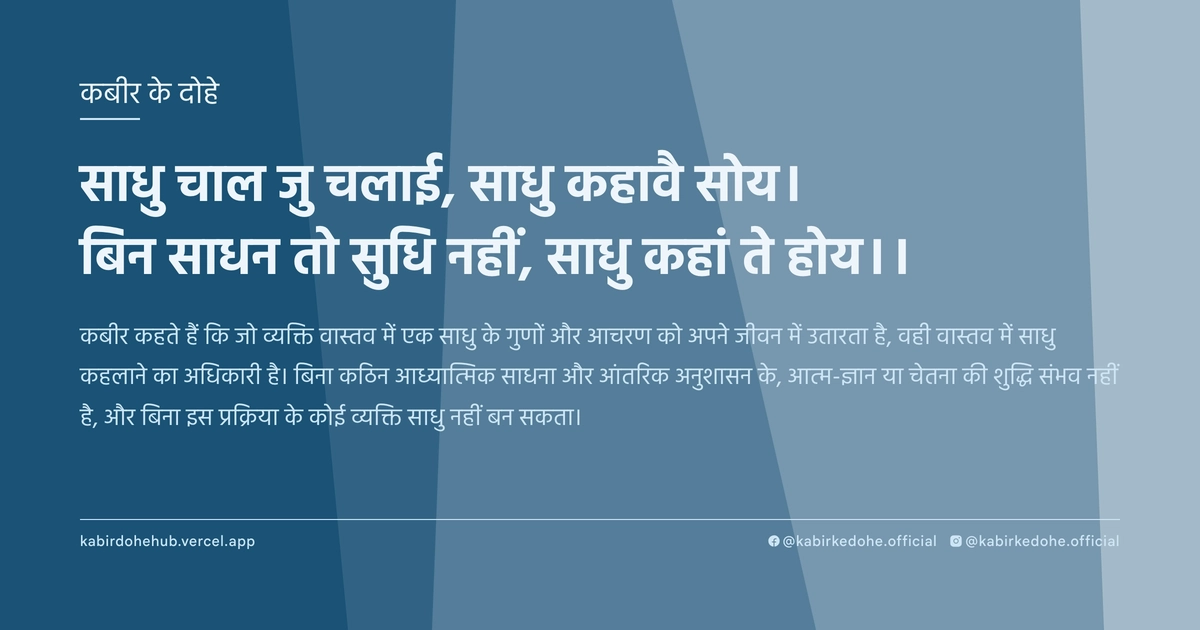
साधु चाल जु चलाई, साधु कहावै सोय।
बिन साधन तो सुधि नहीं, साधु कहां ते होय।।
Sadhu chaal ju chalayi, sadhu kahaave soy. Bin sadhan to sudhi nahi, sadhu kahan te hoye.
इस पृष्ठ पर इस कबीर दोहे का अर्थ (meaning), हिंदी व्याख्या और अंग्रेज़ी अनुवाद, दार्शनिक विश्लेषण और व्यावहारिक जीवन सीख दी गई है। यह दोहा सहज योग (Sahaja Yoga) विषय से जुड़ा है — Kabir doha meaning and explanation in Hindi and English.
अर्थ (Meaning):
कबीर कहते हैं कि जो व्यक्ति वास्तव में एक साधु के गुणों और आचरण को अपने जीवन में उतारता है, वही वास्तव में साधु कहलाने का अधिकारी है। बिना कठिन आध्यात्मिक साधना और आंतरिक अनुशासन के, आत्म-ज्ञान या चेतना की शुद्धि संभव नहीं है, और बिना इस प्रक्रिया के कोई व्यक्ति साधु नहीं बन सकता।
Kabir asserts that only the one who embodies the conduct and virtues of a seeker in their daily life truly deserves the title of a 'Sadhu'. Without rigorous spiritual practice (Sadhana) and inner discipline, the awakening of consciousness or purity of mind cannot occur; therefore, one cannot attain the state of a realized soul through mere labels.
व्याख्या (Interpretation):
इस दोहे का शाब्दिक अर्थ है कि बाहरी वेशभूषा किसी को संत नहीं बनाती, बल्कि उसका आचरण बनाता है। रूपक के स्तर पर, 'चाल' का अर्थ है जीवन जीने का तरीका और 'साधन' का अर्थ है वह निरंतर प्रयास जिससे अहंकार का क्षय होता है। यह निर्गुण भक्ति के उस सिद्धांत को रेखांकित करता है जहाँ ईश्वर किसी मंदिर या मूर्ति में नहीं, बल्कि शुद्ध आचरण में बसता है। माया का पर्दा तभी हटता है जब साधक अपनी इंद्रियों पर नियंत्रण पाता है। यहाँ विरोधाभास यह है कि साधु बनना एक गंतव्य नहीं, बल्कि एक निरंतर चलने वाली प्रक्रिया है। अंततः, यह आत्मा और ब्रह्म की एकता की ओर ले जाने वाला मार्ग है, जहाँ 'मैं' का विलोपन ही वास्तविक उपलब्धि है।
Literally, the verse argues that external attire does not make a saint; rather, it is their conduct. Metaphorically, 'chaal' refers to the lived experience of truth, and 'sadhan' represents the relentless effort to dissolve the ego. This aligns with Nirgun Bhakti, where the Divine is not found in idols but in the purity of one's actions. The veil of Maya is lifted only when the seeker masters their senses. The central paradox presented is that becoming a 'Sadhu' is not a destination but a perpetual process of becoming. Ultimately, it points toward the non-duality of Atman and Brahman, suggesting that the annihilation of the individual 'I' is the only true achievement of a spiritual practitioner.
दार्शनिक विश्लेषण (Philosophical Analysis):
कबीर का यह दोहा उस युग की प्रतिक्रिया है जहाँ धर्म केवल कर्मकांडों और बाहरी प्रतीकों (जैसे तिलक, माला, या गेरुआ वस्त्र) तक सीमित हो गया था। कबीर ने पुरोहितवाद और जातिगत श्रेष्ठता को चुनौती देते हुए यह स्थापित किया कि पवित्रता जन्म से नहीं, बल्कि कर्म और साधना से आती है। यह दृष्टिकोण अद्वैत वेदांत के करीब है, जहाँ अज्ञानता (Avidya) को दूर करने के लिए 'साधना' अनिवार्य है।
सूफी मत के 'नफ्स' (अहंकार) के विनाश की अवधारणा यहाँ स्पष्ट दिखती है। कबीर का मानना था कि जब तक मनुष्य अपने भीतर के विकारों को नहीं जलाता, तब तक वह केवल एक ढोंगी है। उनके लिए 'साधु' वह नहीं जो संसार छोड़ दे, बल्कि वह है जो संसार में रहकर भी उससे अछूता रहे।
यह विश्लेषण हमें बताता है कि आध्यात्मिक प्रगति के लिए अनुशासन (Sadhana) प्राथमिक है। बिना अनुशासन के, विचार केवल बौद्धिक विलासिता बनकर रह जाते हैं। कबीर यहाँ 'सुधि' (चेतना) की बात करते हैं, जो केवल तभी जागृत होती है जब मन की चंचलता समाप्त हो जाती है।
ऐतिहासिक रूप से, कबीर ने समाज को यह संदेश दिया कि ईश्वर तक पहुँचने का मार्ग किसी विशेष धर्म या संप्रदाय के माध्यम से नहीं, बल्कि व्यक्तिगत ईमानदारी और सत्य के मार्ग से होकर गुजरता है। उन्होंने ritualism को पूरी तरह खारिज कर दिया क्योंकि वह आत्मा को सुला देता है और अहंकार को पोषण देता है।
मनोवैज्ञानिक स्तर पर, यह दोहा हमें आत्म-धोखे (Self-deception) से बचने की चेतावनी देता है। हम अक्सर खुद को 'आध्यात्मिक' मान लेते हैं क्योंकि हम कुछ किताबें पढ़ते हैं या पूजा करते हैं, लेकिन वास्तविक परिवर्तन तब होता है जब हमारा व्यवहार क्रोध, लोभ और मोह से मुक्त हो जाता है।
This couplet is a direct response to an era where religion had devolved into mere rituals and external symbols, such as tilaks, beads, or saffron robes. Kabir challenged the priestly hegemony and caste superiority, establishing that sanctity is derived from action and discipline, not birth. This perspective mirrors Advaita Vedanta, where 'Sadhana' is essential to dispel the darkness of ignorance (Avidya).
The Sufi concept of the annihilation of the 'Nafs' (ego) is vividly present here. Kabir believed that unless a person burns away their inner vices, they remain a pretender. For him, a 'Sadhu' is not one who renounces the world physically, but one who remains untouched by the world while living within it.
This analysis reveals that discipline is the primary catalyst for spiritual evolution. Without it, spiritual thoughts remain mere intellectual luxuries. Kabir speaks of 'Sudhi' (consciousness), which awakens only when the restlessness of the mind is silenced.
Historically, Kabir messaged that the path to the Divine is not through a specific religion or sect, but through personal integrity and the path of Truth. He rejected ritualism entirely because it puts the soul to sleep while feeding the ego.
Psychologically, the verse warns against self-deception. We often label ourselves as 'spiritual' based on the books we read or the prayers we recite, but true transformation occurs only when our behavior is liberated from anger, greed, and attachment.
मूल संदेश (Core Message):
- पहचान शब्दों में नहीं, आचरण में होती है।
- बिना अनुशासन के ज्ञान केवल अहंकार बढ़ाता है।
- सच्ची आध्यात्मिकता बाहरी दिखावे का त्याग है।
- सेवा ही सबसे बड़ी साधना है।
- अहंकार का विलोपन ही वास्तविक शुद्धि है।
- Identity resides in conduct, not in labels.
- Knowledge without discipline only fuels the ego.
- True spirituality is the shedding of external pretension.
- Selfless service is the highest form of Sadhana.
- The dissolution of the 'I' is the only true purification.
व्यावहारिक उदाहरण (Practical Example):
एक समय की बात है, वाराणसी के घाटों पर माधव नाम का एक वृद्ध बुनकर रहता था। माधव बहुत कम कमाता था, लेकिन उसका स्वभाव अत्यंत शांत और दयालु था। उसी शहर में एक प्रसिद्ध पंडित थे जो बड़े-बड़े प्रवचन देते थे और स्वयं को महान साधु कहते थे। पंडित जी हमेशा रेशमी वस्त्र पहनते और सोने की माला धारण करते थे।
एक दिन शहर में भीषण अकाल पड़ा। लोग दाने-दाने को तरसने लगे। पंडित जी ने अपने घर के दरवाजे बंद कर लिए और कहा कि यह ईश्वर की इच्छा है, जिसे भुगतना होगा। वहीं दूसरी ओर, माधव ने अपनी छोटी सी झोपड़ी में जो कुछ भी अनाज बचा था, उसे मोहल्ले के भूखे बच्चों और वृद्धों में बाँटना शुरू कर दिया।
माधव के पास न तो कोई शास्त्र था, न ही वह किसी मंदिर में घंटों बैठता था। वह बस अपना काम करता और चुपचाप दूसरों की सेवा में लगा रहता। एक दिन पंडित जी ने माधव को देखा और उपहास करते हुए कहा, 'तुम एक साधारण बुनकर हो, तुम्हें शास्त्रों का ज्ञान नहीं, तुम साधु कैसे बन सकते हो?'
माधव ने विनम्रता से उत्तर दिया, 'महाराज, मैं साधु नहीं हूँ। मैं तो बस वह कर रहा हूँ जो मेरा मन मुझे सही बताता है। क्या भूख मिटाना शास्त्र पढ़ने से बड़ा नहीं है?'
पंडित जी को लगा कि माधव उन्हें चुनौती दे रहा है, लेकिन तभी उन्होंने देखा कि पूरा गाँव माधव के पास शांति और सुकून के लिए आता था, जबकि उनके पास लोग केवल प्रशंसा करने आते थे। पंडित जी को अहसास हुआ कि उनकी सारी विद्या और वेशभूषा केवल एक मुखौटा थी।
उन्होंने देखा कि माधव की 'चाल' (आचरण) में वह पवित्रता थी जो उनके शास्त्रों के पाठ में नहीं थी। माधव ने बिना किसी दिखावे के, केवल सेवा के माध्यम से अपनी चेतना को शुद्ध कर लिया था।
पंडित जी का अहंकार टूट गया। उन्होंने महसूस किया कि वे केवल 'साधु' कहलाना चाहते थे, लेकिन उन्होंने कभी 'साधु' जैसा जीवन नहीं जिया था। उन्होंने अपने रेशमी वस्त्र त्याग दिए और माधव के साथ मिलकर गरीबों की सेवा करने लगे।
इस प्रकार, माधव की निस्वार्थ सेवा ने एक अहंकारी विद्वान को वास्तविक साधु बनने की राह दिखाई। यह बदलाव किसी प्रवचन से नहीं, बल्कि एक साधारण मनुष्य के असाधारण आचरण से आया।
Once in the ghats of Varanasi, there lived an elderly weaver named Madhav. Madhav earned very little, but his nature was profoundly calm and compassionate. In the same city lived a renowned priest who delivered grand discourses and called himself a great Sadhu. The priest always wore silk robes and gold beads.
One year, a severe famine struck the city. People began to starve. The priest locked the doors of his house, claiming that this was the will of God and must be endured. Conversely, Madhav began distributing whatever meager grains he had left in his small hut to the hungry children and elderly of the neighborhood.
Madhav possessed no scriptures, nor did he spend hours in temples. He simply did his work and quietly served others. One day, the priest saw Madhav and mocked him, saying, 'You are a mere weaver, ignorant of the scriptures; how can you possibly be a Sadhu?'
Madhav replied humbly, 'Maharaj, I am no Sadhu. I am simply doing what my heart tells me is right. Is quenching hunger not greater than reading scriptures?'
The priest felt challenged, but then he noticed that the entire village sought peace and solace in Madhav's presence, while people came to the priest only to offer empty praise.
He realized that Madhav's 'chaal' (conduct) possessed a purity that was absent in his own scholarly recitations. Madhav, without any ostentation, had purified his consciousness through simple service.
The priest's ego shattered. He realized he only wanted to be *called* a Sadhu, but he had never *lived* as one. He discarded his silk robes and began serving the poor alongside Madhav.
Thus, Madhav's selfless service showed an arrogant scholar the path to becoming a true seeker. This transformation came not from a sermon, but from the extraordinary conduct of an ordinary man.
अभ्यास मार्गदर्शन (Practice Guidance):
- दैनिक आत्म-निरीक्षण: हर रात सोने से पहले विचार करें कि क्या आपके आज के कार्यों में अहंकार था या सेवा भाव।
- मौन का अभ्यास: दिन में कम से कम एक घंटा पूर्ण मौन रहें ताकि आप बाहरी शोर के बजाय आंतरिक चेतना (सुधि) को सुन सकें।
- निस्वार्थ कर्म: सप्ताह में एक बार ऐसा कार्य करें जिससे किसी अन्य को लाभ हो, लेकिन उस कार्य का श्रेय किसी को न दें और न ही किसी को बताएं।
- निदान चेकलिस्ट: क्या मैं अपनी पहचान अपने पद, ज्ञान या वेशभूषा से जोड़ रहा हूँ? क्या मेरा व्यवहार मेरे शब्दों से भिन्न है? यदि हाँ, तो साधना की कमी है।
- Daily Self-Audit: Before sleeping, reflect on whether your actions today were driven by ego or a spirit of service.
- Practice of Silence: Spend at least one hour in total silence daily to listen to the inner consciousness (Sudhi) rather than external noise.
- Anonymous Service: Once a week, perform an act of kindness that benefits another, ensuring you take no credit and tell no one about it.
- Diagnostic Checklist: Am I attaching my identity to my title, knowledge, or appearance? Is my behavior inconsistent with my words? If yes, the 'Sadhana' is missing.
चिंतन प्रश्न (Reflection Questions):
- यदि मुझसे मेरी सभी उपाधियाँ और सामाजिक पहचान छीन ली जाए, तो मेरे पास क्या बचेगा?
- क्या मैं दूसरों के सामने जो 'आध्यात्मिक' चेहरा दिखाता हूँ, वही मैं अकेले में भी हूँ?
- मेरे जीवन का कौन सा हिस्सा केवल दूसरों को प्रभावित करने के लिए बनाया गया है?
- क्या मेरी प्रार्थनाएँ मुझे विनम्र बना रही हैं या मुझे दूसरों से श्रेष्ठ महसूस करा रही हैं?
- मैं अपनी 'सुधि' (चेतना) को जगाने के लिए किस वास्तविक कष्ट या त्याग को सहने के लिए तैयार हूँ?
- If all my titles and social identities were stripped away, what would remain of me?
- Is the 'spiritual' persona I project to the world the same person I am in solitude?
- Which parts of my life are constructed solely to impress others?
- Do my prayers make me humble, or do they make me feel superior to others?
- What actual hardship or sacrifice am I truly willing to endure to awaken my consciousness (Sudhi)?