
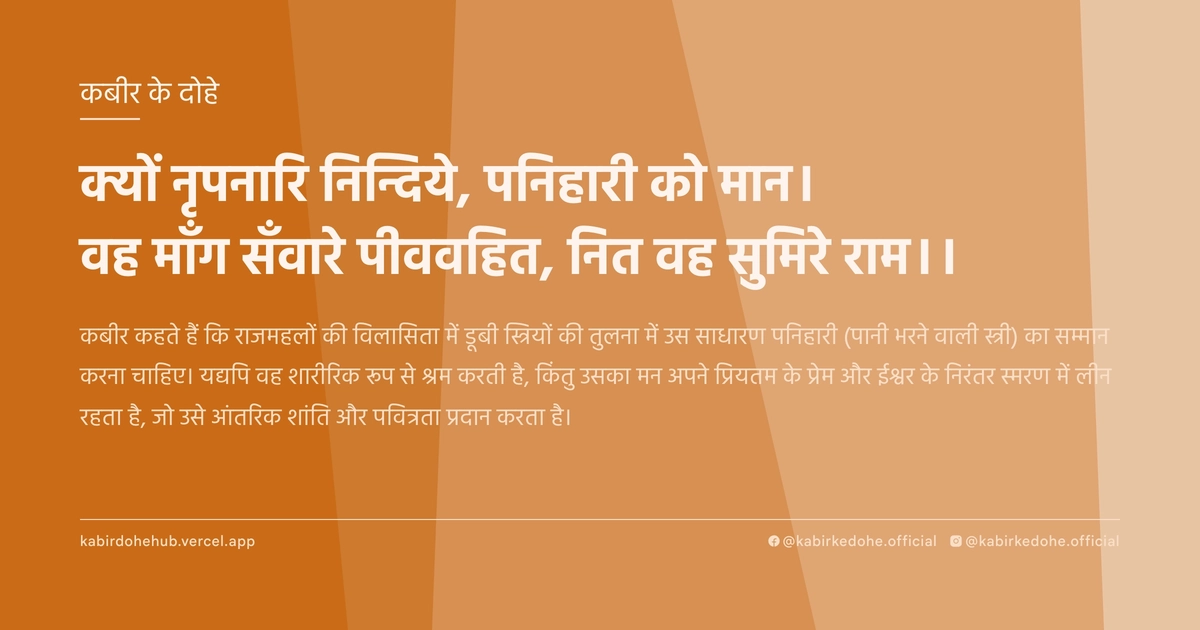
क्यों नृपनारि निन्दिये, पनिहारी को मान।
वह माँग सँवारे पीववहित, नित वह सुमिरे राम।।
Kyon nripnari nindiye, panihari ko maan. Vah maang sanware peevvahit, nit vah sumire Ram.
इस पृष्ठ पर इस कबीर दोहे का अर्थ (meaning), हिंदी व्याख्या और अंग्रेज़ी अनुवाद, दार्शनिक विश्लेषण और व्यावहारिक जीवन सीख दी गई है। यह दोहा विनम्रता (Humility) विषय से जुड़ा है — Kabir doha meaning and explanation in Hindi and English.
अर्थ (Meaning):
कबीर कहते हैं कि राजमहलों की विलासिता में डूबी स्त्रियों की तुलना में उस साधारण पनिहारी (पानी भरने वाली स्त्री) का सम्मान करना चाहिए। यद्यपि वह शारीरिक रूप से श्रम करती है, किंतु उसका मन अपने प्रियतम के प्रेम और ईश्वर के निरंतर स्मरण में लीन रहता है, जो उसे आंतरिक शांति और पवित्रता प्रदान करता है।
Kabir suggests that one should not disparage the simple water-carrier woman in favor of the opulent women of royal courts. While the latter live in luxury, the water-carrier, despite her toil, keeps her heart anchored in the love of her beloved and the constant remembrance of the Divine, achieving a spiritual purity that gold cannot buy.
व्याख्या (Interpretation):
यह दोहा बाहरी वैभव और आंतरिक पवित्रता के बीच के विरोधाभास को दर्शाता है। 'नृपनारि' यहाँ सांसारिक अहंकार, सत्ता और माया के मोह का प्रतीक है, जबकि 'पनिहारी' उस साधक का प्रतीक है जो जीवन के कठिन कर्तव्यों (पानी भरना) को निभाते हुए भी परमात्मा से जुड़ा रहता है। यह निर्गुण भक्ति का सार है, जहाँ ईश्वर किसी मंदिर या महल में नहीं, बल्कि सरल हृदय और निरंतर सुमिरन में मिलता है। यहाँ 'राम' शब्द केवल एक नाम नहीं, बल्कि उस सर्वव्यापी चेतना का प्रतीक है जो हर सांस में बसी है। कबीर यह स्पष्ट करते हैं कि आध्यात्मिक उपलब्धि सामाजिक स्तर या भौतिक सुखों पर निर्भर नहीं करती, बल्कि हृदय की सरलता और समर्पण पर टिकी होती है।
This couplet illuminates the paradox between external opulence and internal sanctity. The 'royal woman' symbolizes worldly ego, power, and the entrapment of Maya, whereas the 'water-carrier' represents the spiritual seeker who performs mundane duties while remaining anchored in the Divine. This is the essence of Nirgun Bhakti—the realization that the Formless Absolute is found not in palaces or rituals, but in a simple heart and constant mindfulness. The term 'Ram' here transcends a specific deity, signifying the universal consciousness pervading all existence. Kabir emphasizes that spiritual attainment is independent of social hierarchy or material wealth; it is rooted in the purity of intention and the annihilation of the ego through love.
दार्शनिक विश्लेषण (Philosophical Analysis):
ऐतिहासिक रूप से, कबीर का समय जातिगत और श्रेणीबद्ध भेदभाव से ग्रस्त था। इस दोहे के माध्यम से वे सामाजिक पदानुक्रम पर प्रहार करते हैं। वे बताते हैं कि आध्यात्मिक श्रेष्ठता का पैमाना 'कुल' या 'संपत्ति' नहीं, बल्कि 'भाव' है। यह विचार अद्वैत वेदांत के करीब है, जहाँ आत्मा की एकता को बाहरी आवरणों से ऊपर माना गया है।
कबीर यहाँ कर्मयोग और भक्ति का समन्वय करते हैं। पनिहारी का पानी भरना एक शारीरिक श्रम है, लेकिन उसका 'सुमिरन' उसे एक योगी बना देता है। यह सूफी मत के 'इश्क-ए-हकीकी' (ईश्वरीय प्रेम) के समान है, जहाँ सांसारिक प्रेम (प्रियतम) को ईश्वरीय प्रेम के सेतु के रूप में उपयोग किया जाता है।
वे ritualism (कर्मकांड) का खंडन करते हैं। महलों की स्त्रियाँ शायद महंगे वस्त्र पहनती हों और कठिन अनुष्ठान करती हों, लेकिन बिना हृदय की सरलता के वे शून्य हैं। कबीर का तर्क है कि ईश्वर केवल उन्हीं को मिलता है जो अहंकार का त्याग कर 'शून्य' हो जाते हैं।
मनोवैज्ञानिक स्तर पर, यह दोहा 'तुलना' के जाल को तोड़ता है। जब हम दूसरों की बाहरी चमक देखते हैं, तो हम अपनी आंतरिक शांति खो देते हैं। पनिहारी की शांति उसकी संतोषी प्रवृत्ति और निरंतर जागरूकता (Mindfulness) से आती है।
अंततः, यह विश्लेषण हमें सिखाता है कि मुक्ति किसी विशेष स्थान या स्थिति में नहीं है। यदि एक साधारण स्त्री अपने दैनिक संघर्षों के बीच परमात्मा को पा सकती है, तो कोई भी व्यक्ति अपनी वर्तमान स्थिति में जागृत हो सकता है। यह 'सहज मार्ग' की वकालत है।
Historically, Kabir’s era was riddled with rigid caste and class hierarchies. Through this doha, he strikes a blow against social stratification, asserting that spiritual superiority is measured by 'Bhava' (inner disposition) rather than lineage or wealth. This aligns with Advaita Vedanta, which posits that the unity of the Atman transcends all external labels.
Kabir synthesizes Karma Yoga with Bhakti. The water-carrier’s act of fetching water is physical labor, yet her 'Sumiran' (remembrance) transforms her into a yogi. This mirrors the Sufi concept of 'Ishq-e-Haqiqi' (Divine Love), where worldly love serves as a bridge to the Ultimate Reality.
He vehemently rejects ritualism. The royal women may wear expensive silks and perform complex rituals, but without the simplicity of heart, such acts are hollow. Kabir argues that the Divine is accessible only to those who dissolve their ego and become 'empty' or 'zero'.
Psychologically, this verse dismantles the trap of social comparison. When we obsess over the external luster of others, we forfeit our internal peace. The water-carrier’s tranquility stems from her contentment and a state of constant spiritual mindfulness.
Ultimately, this analysis reveals that liberation is not tied to a specific location or status. If a simple woman can find the Absolute amidst her daily struggles, anyone can awaken in their current circumstance. This is an advocacy for the 'Sahaj Marg'—the natural, effortless path to truth.
मूल संदेश (Core Message):
- बाहरी चमक अक्सर आंतरिक रिक्तता को छिपाने का एक मुखौटा होती है।
- सच्ची भक्ति महलों में नहीं, बल्कि हृदय की सरलता में निवास करती है।
- श्रम और सुमिरन का मिलन ही वास्तविक आध्यात्मिक प्रगति है।
- अहंकार वह पर्दा है जो हमें साधारण मनुष्यों में ईश्वर देखने से रोकता है।
- परमात्मा को पाने के लिए पद की नहीं, प्रेम की आवश्यकता है।
- External luster is often a mask hiding internal emptiness.
- True devotion resides in the simplicity of the heart, not in palaces.
- The union of mindful labor and remembrance is real spiritual progress.
- Ego is the veil that prevents us from seeing the Divine in ordinary people.
- Reaching the Absolute requires love, not social status.
व्यावहारिक उदाहरण (Practical Example):
एक समय की बात है, वाराणसी के घाटों पर माधव नाम का एक वृद्ध नाविक रहता था। माधव का जीवन अत्यंत कठिन था; वह दिन भर पर्यटकों को नाव की सैर कराता और बदले में मिलने वाले चंद सिक्कों से अपना गुजारा करता था। उसके कपड़े फटे थे और उसके चेहरे पर उम्र की गहरी झुर्रियां थीं।
उसी शहर में एक धनी सेठ का परिवार रहता था, जो बड़े-बड़े मंदिरों में दान देता था और स्वयं को धर्म का रक्षक मानता था। सेठ का पुत्र, जो बहुत अहंकारी था, अक्सर माधव जैसे गरीबों का उपहास करता था। वह मानता था कि केवल शास्त्र पढ़ने वाले और समृद्ध लोग ही ईश्वर के करीब हो सकते हैं।
एक दिन, सेठ का पुत्र नाव में सवार होकर गंगा की सैर कर रहा था। उसने देखा कि माधव नाव चलाते समय धीरे-धीरे कुछ गुनगुना रहा था। उसके चेहरे पर एक ऐसी असीम शांति और मुस्कान थी, जो सेठ के पुत्र ने अपने पिता के आलीशान बंगले या महंगे अनुष्ठानों में कभी नहीं देखी थी।
जिज्ञासावश उसने पूछा, "बाबा, आप इतने गरीब हैं, दिन भर इतनी मेहनत करते हैं, फिर भी आपके चेहरे पर यह संतोष कहाँ से आता है? क्या आप जानते भी हैं कि मोक्ष क्या होता है?"
माधव ने सहजता से उत्तर दिया, "बेटा, मैं तो अनपढ़ हूँ। बस जब मैं चप्पू चलाता हूँ, तो मुझे लगता है कि यह नाव मैं नहीं, बल्कि वह परमात्मा चला रहा है। मैं तो बस उसका एक छोटा सा यंत्र हूँ। मेरा हर सांस उसका नाम है, और मेरी हर लहर उसकी कृपा।"
यह सुनकर सेठ का पुत्र स्तब्ध रह गया। उसे एहसास हुआ कि वह जिसे 'गरीबी' कह रहा था, वह वास्तव में 'समृद्धि' थी—आंतरिक समृद्धि। उसने देखा कि माधव का श्रम उसे थकाता नहीं था, बल्कि उसे परमात्मा से जोड़ता था।
उस रात, वह युवक सो नहीं सका। उसने महसूस किया कि उसकी अपनी शिक्षा और धन उसके और ईश्वर के बीच एक दीवार बन गए थे। उसका अहंकार उसे यह विश्वास दिला रहा था कि वह 'श्रेष्ठ' है, जबकि वह वास्तव में आध्यात्मिक रूप से रिक्त था।
अगले दिन, वह युवक वापस माधव के पास गया। उसने अपनी महंगी पोशाक त्याग कर एक साधारण सूती वस्त्र पहना और माधव से प्रार्थना की कि वह उसे 'समर्पण' का अर्थ सिखाए। उसने सीखा कि ईश्वर को पाने के लिए महलों की ज़रूरत नहीं, बल्कि एक समर्पित हृदय की आवश्यकता है।
माधव की सरलता ने उस युवक के अहंकार को नष्ट कर दिया। उसने अब दूसरों को उनकी सामाजिक स्थिति से नहीं, बल्कि उनके भीतर की मानवता और शांति से आंकना शुरू किया।
यह 'कबीर ट्विस्ट' था—जहाँ एक साधारण नाविक का जीवन एक अहंकारी युवक के लिए सबसे बड़ा आध्यात्मिक ग्रंथ बन गया। युवक ने जाना कि सच्ची भक्ति कर्म के साथ जुड़ी होती है, न कि कर्म से भागकर।
Once, on the ghats of Varanasi, lived an elderly boatman named Madhav. Madhav's life was grueling; he spent his days rowing tourists across the Ganges, earning a few meager coins to survive. His clothes were tattered, and his face was etched with the deep wrinkles of time.
In the same city lived a wealthy merchant's family, known for their lavish donations to temples and their self-proclaimed role as protectors of Dharma. The merchant's son, consumed by arrogance, often mocked the poor like Madhav, believing that only the scholarly and the wealthy could be close to God.
One day, while riding in Madhav's boat, the son noticed the old man humming a soft tune. There was an expression of infinite peace and a gentle smile on Madhav's face—a serenity the youth had never witnessed in his father's opulent mansion or during expensive religious ceremonies.
Curious, he asked, "Baba, you are so poor, you toil all day, yet where does this contentment come from? Do you even know what liberation is?"
Madhav replied simply, "Son, I am unlettered. But as I pull these oars, I feel that it is not I who rows this boat, but the Divine. I am merely a small instrument. Every breath I take is His name, and every ripple in the water is His grace."
The young man was stunned. He realized that what he had labeled as 'poverty' was actually 'abundance'—an internal spiritual wealth. He saw that Madhav's labor did not exhaust him; rather, it connected him to the Absolute.
That night, the youth could not sleep. He realized that his education and wealth had become walls between him and the Divine. His ego had convinced him he was 'superior,' while he was, in truth, spiritually void.
The next day, the youth returned to Madhav. He cast aside his expensive attire for a simple cotton cloth and begged the boatman to teach him the meaning of 'surrender.' He learned that reaching God requires no palaces, only a devoted heart.
Madhav's simplicity shattered the youth's ego. He stopped judging others by their social status and began recognizing the humanity and peace within them.
This was the 'Kabir Twist'—where the life of a simple boatman became the greatest spiritual scripture for an arrogant youth. He understood that true devotion is integrated with action, not an escape from it.
अभ्यास मार्गदर्शन (Practice Guidance):
- दैनिक चिंतन: दिन भर में किसी भी एक साधारण कार्य (जैसे बर्तन धोना या चलना) को करते समय यह महसूस करें कि आप और वह कार्य अलग नहीं हैं, और यह सब उस परमात्मा की इच्छा से हो रहा है।
- आत्म-पूछताछ जर्नल: प्रतिदिन लिखें कि आज आपने किस व्यक्ति को उसकी सामाजिक स्थिति या बाहरी दिखावे के कारण कमतर आंका, और फिर विचार करें कि उस व्यक्ति के भीतर कौन सी ऐसी मानवीय गुणवत्ता हो सकती है जो आपसे श्रेष्ठ है।
- व्यवहार परिवर्तन: सचेत रूप से उन लोगों के साथ समय बिताएं जिन्हें समाज 'निम्न' मानता है। उनकी सरलता से सीखने का प्रयास करें और उनके प्रति सम्मान का भाव विकसित करें।
- डायग्नोस्टिक चेकलिस्ट: क्या आप अपनी उपलब्धियों पर गर्व महसूस करते हैं? क्या आप दूसरों की सादगी को 'अज्ञानता' समझते हैं? यदि हाँ, तो आप अभी भी 'नृपनारि' (अहंकार) के प्रभाव में हैं। यदि आप श्रम में आनंद और सादगी में सुंदरता देखते हैं, तो आप 'पनिहारी' के मार्ग पर हैं।
- Daily Contemplation: While performing a mundane task (like washing dishes or walking), consciously feel that you and the action are not separate, and that the entire process is driven by the Divine Will.
- Self-Inquiry Journal: Daily record instances where you judged someone based on their social status or appearance. Then, reflect on what human quality that person might possess that is spiritually superior to your own.
- Behavioral Shift: Intentionally spend time with those whom society deems 'lowly.' Attempt to learn from their simplicity and cultivate a genuine sense of reverence for their existence.
- Diagnostic Checklist: Do you feel pride in your achievements? Do you mistake others' simplicity for ignorance? If yes, you are still under the influence of the 'Royal Ego.' If you find joy in labor and beauty in simplicity, you are walking the path of the 'Water-Carrier.'
चिंतन प्रश्न (Reflection Questions):
- मेरी वह कौन सी 'डिजिटल पहचान' या सामाजिक छवि है जिसे मैं अपनी वास्तविक आत्मा से अधिक महत्व देता हूँ?
- क्या मैं वास्तव में सादगी का सम्मान करता हूँ, या मैं केवल 'सादगी का दिखावा' करने वाले लोगों को पसंद करता हूँ?
- मेरे जीवन का वह कौन सा 'कठिन श्रम' है जिसे मैं अभी भी बोझ समझता हूँ, जबकि वह मेरी मुक्ति का साधन बन सकता था?
- यदि मेरी सारी उपाधियाँ और संपत्ति छीन ली जाए, तो मेरे पास ऐसा क्या बचेगा जिसे मैं 'ईश्वर' या 'शांति' कह सकूँ?
- मैं किन लोगों को अपनी श्रेष्ठता सिद्ध करने के लिए अपने जीवन में उपयोग करता हूँ?
- Which 'digital identity' or social image do I value more than my authentic soul?
- Do I truly respect simplicity, or do I merely admire those who 'perform' simplicity?
- What 'hard labor' in my life do I still perceive as a burden, when it could actually be a vehicle for my liberation?
- If all my titles and assets were stripped away, what would remain that I could call 'God' or 'Peace'?
- Which people do I use as benchmarks to prove my own superiority?