
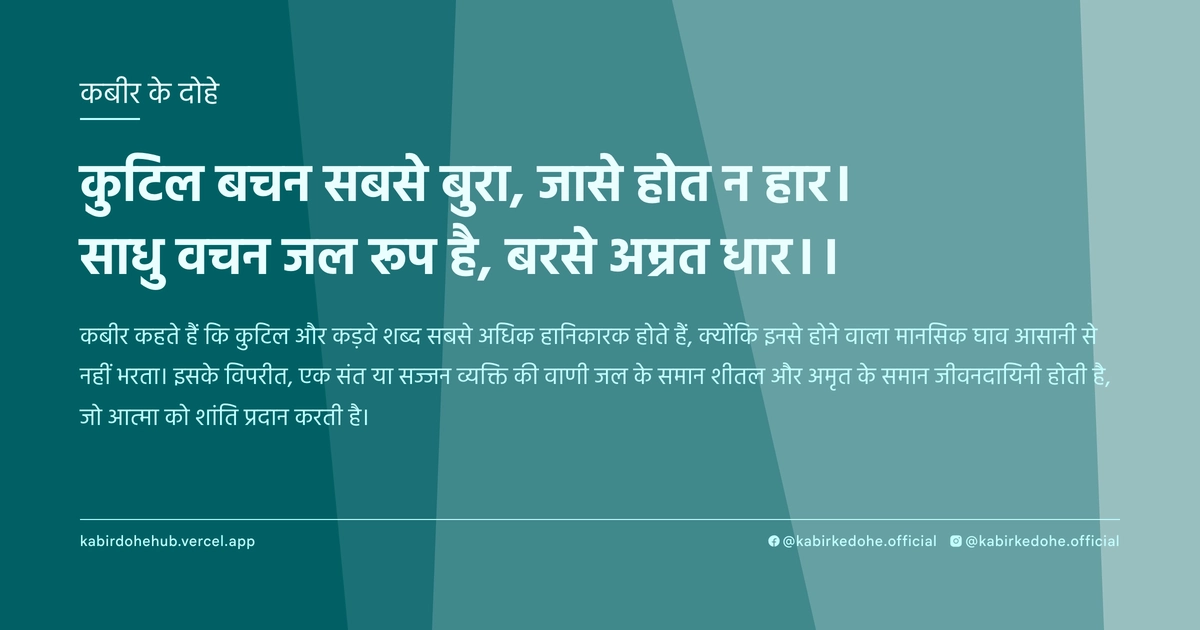
कुटिल बचन सबसे बुरा, जासे होत न हार।
साधु वचन जल रूप है, बरसे अम्रत धार।।
Kutil bachan sabse bura, jaase hot na haar. Sadhu vachan jal roop hai, barse amrat dhaar.
इस पृष्ठ पर इस कबीर दोहे का अर्थ (meaning), हिंदी व्याख्या और अंग्रेज़ी अनुवाद, दार्शनिक विश्लेषण और व्यावहारिक जीवन सीख दी गई है। यह दोहा विनम्रता (Humility) विषय से जुड़ा है — Kabir doha meaning and explanation in Hindi and English.
अर्थ (Meaning):
कबीर कहते हैं कि कुटिल और कड़वे शब्द सबसे अधिक हानिकारक होते हैं, क्योंकि इनसे होने वाला मानसिक घाव आसानी से नहीं भरता। इसके विपरीत, एक संत या सज्जन व्यक्ति की वाणी जल के समान शीतल और अमृत के समान जीवनदायिनी होती है, जो आत्मा को शांति प्रदान करती है।
Kabir asserts that crooked and malicious words are the most destructive, for the wounds they inflict on the psyche do not heal easily. Conversely, the speech of a realized soul is like cool water and a stream of nectar, offering profound healing and spiritual sustenance to the listener.
व्याख्या (Interpretation):
इस दोहे का शाब्दिक अर्थ वाणी की शुद्धता और अशुद्धता के बीच के अंतर को स्पष्ट करना है। गहरे स्तर पर, 'कुटिल बचन' केवल शब्दों का खेल नहीं, बल्कि अहंकार (Ahamkara) और द्वेष का प्रकटीकरण है, जो माया के प्रभाव में व्यक्ति को दूसरों से अलग करता है। जब कबीर 'साधु' की बात करते हैं, तो उनका तात्पर्य किसी बाहरी व्यक्ति से नहीं, बल्कि उस 'अंतर्यामी' से है जो अपनी इंद्रियों पर विजय पा चुका है। यह निर्गुण भक्ति का मार्ग है जहाँ शब्द केवल संचार का साधन नहीं, बल्कि चेतना के विस्तार का माध्यम बनते हैं। यहाँ 'अमृत' का अर्थ उस अद्वैत सत्य से है जो व्यक्ति को उसके सीमित स्वरूप से मुक्त कर ब्रह्म के साथ एकाकार करता है। इस प्रकार, वाणी का रूपांतरण वास्तव में चेतना का रूपांतरण है।
Literally, the couplet contrasts the destructive nature of malicious speech with the healing power of a saint's words. Metaphorically, 'kutil bachan' represents the externalization of the ego (Ahamkara) and the veil of Maya, which creates separation and suffering. When Kabir refers to the 'Sadhu,' he is not merely speaking of a religious ascetic, but of the awakened consciousness within every human that has transcended duality. In the context of Nirgun Bhakti, speech becomes a vehicle for the formless truth; it is no longer about linguistic precision but about vibrational alignment with the Divine. The 'nectar' symbolizes the realization of Advaita (non-duality), where the distinction between the speaker, the spoken, and the listener dissolves. Thus, the transformation of one's speech is a direct reflection of the annihilation of the false self.
दार्शनिक विश्लेषण (Philosophical Analysis):
कबीर का यह दोहा उस सामाजिक और धार्मिक परिवेश में रचा गया था जहाँ कर्मकांड और बाहरी आडंबरों का बोलबाला था। उन्होंने देखा कि लोग तीर्थों और मंत्रों में विश्वास करते थे, लेकिन उनके व्यवहार में करुणा का अभाव था। कबीर ने इस पाखंड पर प्रहार करते हुए बताया कि वास्तविक धर्म बाहरी अनुष्ठानों में नहीं, बल्कि वाणी की सौम्यता और हृदय की पवित्रता में निहित है।
दार्शनिक रूप से, यह सूफीवाद के 'इश्क-ए-हकीकी' (ईश्वरीय प्रेम) और वेदांत के 'अद्वैत' के करीब है। यदि हम सभी एक ही परमात्मा के अंश हैं, तो किसी को कटु वचन कहना स्वयं को चोट पहुँचाने के समान है। कुटिलता वास्तव में अज्ञानता का परिणाम है, जहाँ व्यक्ति स्वयं को दूसरों से अलग मानता है।
यहाँ अहंकार के विनाश की बात की गई है। जब तक 'मैं' का भाव रहता है, वाणी में अहंकार और क्रोध का मिश्रण होता है। जैसे ही साधक अपनी पहचान को सार्वभौमिक चेतना में विलीन करता है, उसकी वाणी स्वतः ही 'अमृत' बन जाती है क्योंकि उसमें अब केवल करुणा शेष रहती है।
कबीर का दृष्टिकोण मनोवैज्ञानिक भी है। वे जानते थे कि शब्द केवल ध्वनि नहीं होते, बल्कि वे मानसिक बीज होते हैं। एक कड़वा शब्द सुनने वाले के अवचेतन में गहरे घाव करता है, जबकि प्रेमपूर्ण शब्द मानसिक अवरोधों को तोड़कर हृदय के द्वार खोल देते हैं।
अंततः, यह दोहा हमें यह सिखाता है कि आध्यात्मिक उन्नति का पैमाना यह नहीं है कि आपने कितने शास्त्र पढ़े हैं, बल्कि यह है कि आपकी वाणी दूसरों के जीवन में कितनी शांति और शीतलता लाती है। यह ritualism के विरुद्ध एक सशक्त तर्क है, जो आंतरिक शुद्धि को प्राथमिकता देता है।
Kabir composed this verse during an era dominated by rigid ritualism and superficial religious adherence. He observed a profound disconnect where individuals performed elaborate penances yet remained cruel in their interpersonal dealings. By emphasizing the impact of speech, Kabir shifts the locus of spirituality from the temple or mosque to the human heart and tongue, asserting that true divinity is found in compassion, not ceremony.
Philosophically, this aligns with the Sufi concept of 'Ishq-e-Haqiqi' (Divine Love) and the Vedantic principle of Non-duality. If the Atman (soul) is identical in all beings, then causing pain through malicious words is an act of self-harm. Crooked speech is a symptom of 'Avidya' (ignorance), where the illusion of separation—Maya—convinces the individual that there is an 'other' to be attacked.
Central to this teaching is the annihilation of the ego. As long as the 'I' persists, speech is weaponized by pride and anger. However, when the seeker dissolves their identity into the universal consciousness, their words naturally transform into 'Amrit' (nectar), for the ego is replaced by unconditional compassion.
From a psychological perspective, Kabir recognizes that words are not mere sounds but energetic seeds. Malicious speech creates psychic trauma and mental blocks in the listener, whereas benevolent speech acts as a catalyst for emotional healing and spiritual awakening, clearing the path for the listener's own inner growth.
Ultimately, this doha establishes a new metric for spiritual progress. The measure of a realized soul is not the volume of scriptures memorized, but the degree of peace and coolness their presence and speech bring to others. It is a radical rejection of ritualism in favor of an ethics of kindness.
मूल संदेश (Core Message):
- कठोर शब्द आत्मा के लिए विष के समान हैं।
- वाणी की मधुरता ही वास्तविक आध्यात्मिक उपलब्धि है।
- अहंकार का अंत ही शब्दों को अमृत बनाता है।
- सच्चा संत वह है जिसकी वाणी घावों को भरती है।
- बाहरी पूजा से अधिक महत्वपूर्ण आंतरिक करुणा है।
- शब्द केवल ध्वनि नहीं, बल्कि चेतना के वाहक हैं।
- Harsh words act as a slow poison to the soul.
- The sweetness of speech is the true mark of spiritual attainment.
- Only the annihilation of ego can turn words into nectar.
- A true sage is one whose speech heals the broken.
- Inner compassion outweighs all external religious rituals.
- Words are not mere sounds, but carriers of consciousness.
व्यावहारिक उदाहरण (Practical Example):
वाराणसी के घाटों पर रहने वाले एक वृद्ध बुनकर, माधव, अपनी कठोरता के लिए जाने जाते थे। उनकी वाणी इतनी तीखी थी कि उनके अपने बच्चे और पड़ोसी उनसे बात करने से कतराते थे। माधव का मानना था कि अनुशासन केवल सख्ती से आता है, और वे अक्सर दूसरों की छोटी गलतियों पर उन्हें बुरी तरह कोसते थे।
एक दिन, माधव की मुलाकात एक घुमक्कड़ फकीर से हुई जो घाट की सीढ़ियों पर बैठा था। फकीर ने माधव को गुस्से में चिल्लाते देखा और बस इतना कहा, 'माधव, तुम अपने शब्दों से दूसरों के घर तो जला रहे हो, पर क्या तुमने देखा है कि तुम्हारी अपनी आत्मा उस आग में झुलस रही है?'
माधव को पहले तो यह बात चुभी, लेकिन उस रात उन्हें नींद नहीं आई। उन्होंने महसूस किया कि उनके कड़वे शब्दों के कारण उनके जीवन में एक गहरा अकेलापन व्याप्त है। उनके पास धन था, कौशल था, लेकिन कोई ऐसा नहीं था जो उनसे प्रेम करे।
अगले दिन, माधव ने एक प्रयोग करने का निर्णय लिया। जब उनके सबसे नालायक शिष्य ने धागा गलत काटा, तो माधव ने चिल्लाने के बजाय धीरे से कहा, 'कोई बात नहीं, हम इसे मिलकर ठीक कर लेंगे।'
शिष्य यह सुनकर दंग रह गया। उसकी आँखों में आँसू आ गए और उसने पहली बार माधव के प्रति गहरा सम्मान और समर्पण महसूस किया। वह शिष्य, जो पहले डर के कारण काम करता था, अब प्रेम के कारण उत्कृष्ट कार्य करने लगा।
धीरे-धीरे माधव ने अपनी वाणी को बदलना शुरू किया। उन्होंने पाया कि जब वे दूसरों की प्रशंसा करते या उन्हें धीरज से समझाते, तो उनके अपने मन का तनाव कम होने लगा। उनकी आंतरिक अशांति, जो वर्षों से क्रोध के रूप में बाहर निकलती थी, अब शांत होने लगी।
पड़ोस के लोग, जो उनसे डरते थे, अब उनके पास सलाह लेने आने लगे। माधव का घर, जो कभी सन्नाटे और तनाव का केंद्र था, अब हंसी और चर्चाओं से भर गया।
एक शाम, माधव ने महसूस किया कि उनकी वाणी का बदलना वास्तव में उनके हृदय का बदलना था। उन्होंने समझा कि 'कुटिल बचन' केवल दूसरों को नहीं, बल्कि सबसे पहले बोलने वाले को ही दूषित करते हैं।
माधव अब केवल एक कुशल बुनकर नहीं थे, बल्कि एक ऐसे मार्गदर्शक बन गए थे जिनकी वाणी वास्तव में 'अमृत धार' की तरह लोगों के दुखों को धो देती थी। उनकी जीवन यात्रा का यह मोड़ उन्हें एक कठोर व्यक्ति से एक करुणामयी आत्मा में बदल गया।
In the bustling ghats of Varanasi lived an elderly weaver named Madhav, renowned for his exceptional skill but feared for his caustic tongue. His words were like shards of glass, cutting through the confidence of his children and neighbors. Madhav believed that perfection could only be achieved through rigor and harsh correction, and he frequently berated anyone who faltered.
One afternoon, Madhav encountered a wandering Sufi dervish resting on the stone steps. The dervish watched as Madhav unleashed a torrent of insults upon a young apprentice. After the boy left in tears, the dervish softly remarked, 'Madhav, you are burning others' houses with your words, but have you noticed that your own soul is being scorched by the same fire?'
Initially, Madhav felt offended, but the words haunted him throughout the night. He realized that despite his mastery of the loom, his life was woven with threads of loneliness. He had authority, but no intimacy; he had respect born of fear, but no love.
The following morning, Madhav decided to conduct an experiment. When his most clumsy apprentice accidentally ruined a piece of expensive silk, Madhav felt the familiar surge of rage. Instead of shouting, he paused, breathed, and said softly, 'It is alright; we shall learn how to fix this together.'
The apprentice was stunned. For the first time, he felt seen and valued rather than judged. The fear that had paralyzed his creativity vanished, replaced by a profound sense of loyalty and a sudden drive to excel for his master's sake.
Gradually, Madhav began to consciously refine his speech. He discovered a startling correlation: as he replaced criticism with encouragement, the chronic tension in his own shoulders and the acidity in his stomach began to vanish. His internal turmoil was subsiding.
Neighbors who had avoided him for decades began to seek his company. His home, once a fortress of silence and stress, became a sanctuary of laughter and meaningful conversation.
One evening, while watching the sunset over the Ganges, Madhav realized that the transformation of his speech was actually a transformation of his heart. He understood that 'kutil bachan' (crooked words) poison the speaker long before they reach the listener.
Madhav was no longer just a master weaver of cloth, but a weaver of hearts. His words had truly become 'Amrit Dhaar'—a stream of nectar that healed the wounds of those around him, proving that the smallest change in expression can lead to the greatest shift in existence.
अभ्यास मार्गदर्शन (Practice Guidance):
- मौन का अभ्यास: प्रतिदिन 30 मिनट पूर्ण मौन रहें। जब भी कुछ बोलने की इच्छा हो, पहले विचार करें कि क्या यह शब्द किसी के हृदय में शीतलता लाएगा या अग्नि।
- वाणी का आत्म-निरीक्षण: सोने से पहले एक डायरी में लिखें कि आज आपने कितनी बार कठोर शब्दों का प्रयोग किया और उन शब्दों के पीछे छिपा हुआ डर या अहंकार क्या था।
- करुणा का संकल्प: दिन में कम से कम तीन लोगों को ऐसी सच्ची प्रशंसा दें जो उनके व्यक्तित्व के सकारात्मक पहलू को उजागर करे, बिना किसी स्वार्थ के।
- निदान चेकलिस्ट: यदि आप निम्नलिखित महसूस कर रहे हैं, तो आपकी वाणी अभी भी 'कुटिल' है: 1. बोलने के बाद पछतावा होना। 2. दूसरों के प्रति सूक्ष्म निर्णय (Judgment) रखना। 3. बातचीत में अपनी श्रेष्ठता सिद्ध करने की इच्छा। 4. दूसरों की गलती पर तुरंत प्रतिक्रिया देना।
- Practice of Silence: Dedicate 30 minutes daily to absolute silence. Before speaking, pause to evaluate whether your words will bring coolness or ignite a fire in the listener's heart.
- Speech Self-Inquiry: Keep a nightly journal recording instances where you used harsh words. Analyze the underlying fear, insecurity, or ego that triggered the reaction.
- Vow of Compassion: Commit to offering at least three genuine compliments daily that highlight the inherent goodness in others, without any expectation of return.
- Diagnostic Checklist: You are still operating in 'Kutil' (crooked) speech if: 1. You frequently feel regret after speaking. 2. You harbor subtle judgments during conversations. 3. You feel a compulsive need to prove your superiority. 4. You react impulsively to others' mistakes.
चिंतन प्रश्न (Reflection Questions):
- क्या मेरी वाणी दूसरों को नियंत्रित करने का साधन है या उन्हें मुक्त करने का?
- जब मैं किसी की आलोचना करता हूँ, तो मैं वास्तव में उस व्यक्ति की गलती सुधार रहा होता हूँ या अपने भीतर के किसी अधूरेपन को संतुष्ट कर रहा होता हूँ?
- मेरे डिजिटल संवाद (सोशल मीडिया) में कितनी विनम्रता है और कितनी 'अदृश्य' कुटिलता?
- क्या मैं उन लोगों के प्रति भी दयालु रह सकता हूँ जो मेरे प्रति अत्यंत कठोर रहे हैं?
- यदि आज मेरी वाणी का सारा प्रभाव एक दर्पण की तरह मुझे दिखे, तो क्या मैं उस प्रतिबिंब को देखकर प्रसन्न होऊँगा?
- मेरे शब्दों के पीछे का 'मैं' कौन है—एक प्रेमी या एक न्यायाधीश?
- Is my speech a tool for controlling others or a medium for liberating them?
- When I criticize another, am I truly correcting a mistake or merely satisfying a void within myself?
- How much genuine humility exists in my digital interactions versus hidden 'invisible' malice?
- Can I remain compassionate toward those who have been relentlessly harsh toward me?
- If the impact of my words were reflected back to me as a mirror, would I be pleased with the image?
- Who is the 'I' behind my words—a lover or a judge?