
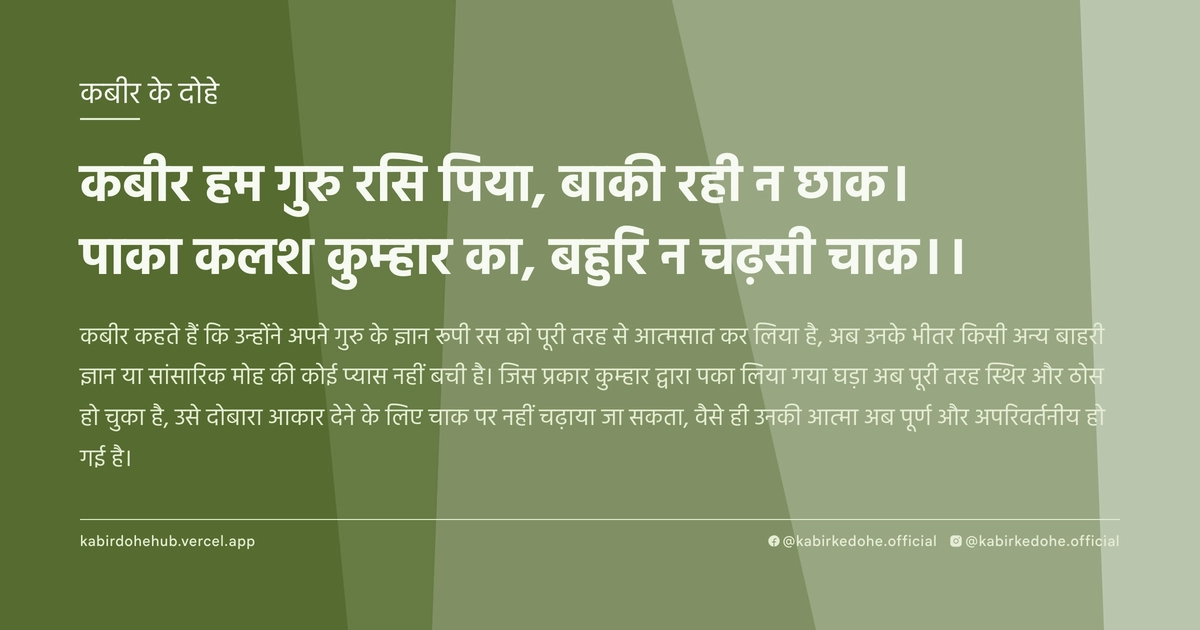
कबीर हम गुरु रसि पिया, बाकी रही न छाक।
पाका कलश कुम्हार का, बहुरि न चढ़सी चाक।।
Kabir hum guru rasi piya, baaki rahi na chaak. Paaka kalash kumhaar ka, bahuri na chadhsi chaak.
इस पृष्ठ पर इस कबीर दोहे का अर्थ (meaning), हिंदी व्याख्या और अंग्रेज़ी अनुवाद, दार्शनिक विश्लेषण और व्यावहारिक जीवन सीख दी गई है। यह दोहा गुरु महत्व (The Guru's Importance) विषय से जुड़ा है — Kabir doha meaning and explanation in Hindi and English.
अर्थ (Meaning):
कबीर कहते हैं कि उन्होंने अपने गुरु के ज्ञान रूपी रस को पूरी तरह से आत्मसात कर लिया है, अब उनके भीतर किसी अन्य बाहरी ज्ञान या सांसारिक मोह की कोई प्यास नहीं बची है। जिस प्रकार कुम्हार द्वारा पका लिया गया घड़ा अब पूरी तरह स्थिर और ठोस हो चुका है, उसे दोबारा आकार देने के लिए चाक पर नहीं चढ़ाया जा सकता, वैसे ही उनकी आत्मा अब पूर्ण और अपरिवर्तनीय हो गई है।
Kabir declares that he has fully imbibed the essence of his Guru's wisdom, leaving no room for further longing or external influence. Just as a pot, once fired in the kiln by the potter, becomes solid and permanent and can no longer be reshaped on the potter's wheel, Kabir's soul has reached a state of spiritual completion and immutability.
व्याख्या (Interpretation):
यह दोहा पूर्णता और आध्यात्मिक रूपांतरण की स्थिति का वर्णन करता है। 'गुरु रसि पिया' का अर्थ है कि शिष्य ने गुरु के ज्ञान को केवल सुना नहीं, बल्कि उसे अपने अस्तित्व में घोल लिया है। यहाँ 'छाक' (प्यास या इच्छा) का समाप्त होना माया के प्रभाव के अंत का प्रतीक है। कुम्हार का उदाहरण एक गहरा रूपक है: कच्ची मिट्टी लचीली होती है, जिसे अहंकार और बाहरी प्रभाव आसानी से बदल सकते हैं, लेकिन 'पाका कलश' उस अवस्था को दर्शाता है जहाँ आत्मा आत्म-साक्षात्कार (Self-realization) के माध्यम से स्थिर हो गई है। यह निर्गुण भक्ति की उस पराकाष्ठा को दर्शाता है जहाँ साधक और साध्य का भेद मिट जाता है और अद्वैत की स्थिति प्राप्त होती है, जहाँ अब किसी बाहरी सुधार या संस्कार की आवश्यकता नहीं रहती।
This couplet describes the state of spiritual culmination and irreversible transformation. 'Drinking the essence of the Guru' signifies that the disciple has not merely heard the teachings but has integrated them into their very being. The disappearance of 'chaak' (longing or thirst) symbolizes the end of Maya's influence. The potter's analogy is a profound metaphor: raw clay is malleable, easily shaped by ego and external pressures, but the 'fired pot' represents the soul that has become stable through Self-realization. It illustrates the pinnacle of Nirgun Bhakti, where the duality between the seeker and the sought vanishes, achieving a state of Advaita (non-duality) where no further external molding or ritualistic correction is required.
दार्शनिक विश्लेषण (Philosophical Analysis):
कबीर का यह कथन उनके युग के कर्मकांडीय और बाहरी दिखावे के विरुद्ध एक सशक्त प्रहार है। उस समय धर्म केवल बाहरी अनुष्ठानों और जातिगत श्रेष्ठता तक सीमित था। कबीर यहाँ 'पाका कलश' के माध्यम से यह तर्क दे रहे हैं कि वास्तविक आध्यात्मिक प्रगति आंतरिक रूपांतरण में है, न कि बाहरी क्रियाओं में। यह विचार अद्वैत वेदांत के करीब है, जहाँ जीव का ब्रह्म में विलय हो जाना ही अंतिम लक्ष्य है। जब एक बार 'अहं' का विसर्जन हो जाता है, तो व्यक्ति उस अवस्था में पहुँच जाता है जहाँ वह संसार के द्वंद्वों से ऊपर उठ जाता है।
सूफीवाद के संदर्भ में, यह 'फना' (Fana) की स्थिति है, जहाँ साधक अपनी व्यक्तिगत पहचान को ईश्वर की इच्छा में विलीन कर देता है। कबीर यहाँ यह स्पष्ट कर रहे हैं कि गुरु की कृपा केवल सूचना देना नहीं है, बल्कि शिष्य के भीतर के कच्चेपन को मिटाकर उसे 'पक्का' करना है। यह मनोवैज्ञानिक रूपांतरण की वह प्रक्रिया है जहाँ व्यक्ति अपनी असुरक्षाओं और वासनाओं से मुक्त होकर पूर्णता का अनुभव करता है।
कबीर का विरोध उन लोगों से है जो जीवन भर केवल 'चाक' पर घूमते रहते हैं—अर्थात जो केवल सिद्धांतों की चर्चा करते हैं लेकिन उन्हें जीवन में उतारकर ठोस अनुभव में नहीं बदलते। उनके लिए ज्ञान एक उत्पाद नहीं, बल्कि एक अनुभव है। जब अनुभव पूर्ण हो जाता है, तो तर्क और बहस की आवश्यकता समाप्त हो जाती है।
यहाँ 'कुम्हार' स्वयं उस परमात्मा या पूर्ण गुरु का प्रतीक है जो अग्नि (तपस्या और ज्ञान) के माध्यम से आत्मा को शुद्ध करता है। यह अग्नि वासनाओं को जला देती है और केवल शुद्ध चेतना को शेष रखती है। यह प्रक्रिया दर्दनाक हो सकती है, लेकिन परिणाम एक ऐसा व्यक्तित्व होता है जो अब बाहरी परिस्थितियों से विचलित नहीं होता।
अंततः, यह दोहा इस सत्य को स्थापित करता है कि मोक्ष कोई ऐसी चीज़ नहीं है जिसे बाहर से प्राप्त किया जाए, बल्कि यह स्वयं के भीतर की पूर्णता की पहचान है। जब साधक यह जान लेता है कि वह स्वयं ही वह 'पाका कलश' है, तो वह संसार की सारी कृत्रिमता से मुक्त हो जाता है।
Kabir's assertion is a powerful critique of the ritualism and external ostentation prevalent in his era. At that time, religion was largely confined to outward ceremonies and caste hierarchies. Through the metaphor of the 'fired pot,' Kabir argues that true spiritual progress lies in internal transformation rather than external acts. This aligns closely with Advaita Vedanta, where the merging of the individual soul (Jiva) into the Universal Consciousness (Brahman) is the ultimate goal. Once the 'ego' is dissolved, the individual transcends the dualities of the world.
In the context of Sufism, this represents the state of 'Fana' (annihilation), where the seeker dissolves their personal identity into the Divine Will. Kabir clarifies that the Guru's grace is not merely the transmission of information, but the process of removing the 'rawness' of the disciple to make them 'fired' or stable. This is a psychological transformation where the individual is liberated from insecurities and cravings, experiencing a sense of wholeness.
Kabir opposes those who spend their entire lives spinning on the 'wheel'—those who discuss theories endlessly but never translate them into concrete lived experiences. For him, knowledge is not a product but an experience. Once the experience is complete, the need for logic and debate vanishes.
Here, the 'potter' symbolizes the Divine or the Perfect Master who purifies the soul through the fire of austerity and knowledge. This fire incinerates desires, leaving only pure consciousness. While this process can be agonizing, the result is a personality that is no longer shaken by external circumstances.
Ultimately, this couplet establishes that liberation is not something to be acquired from the outside, but a recognition of the completeness within. When the seeker realizes they are the 'fired pot,' they are liberated from all the artificiality of the world.
मूल संदेश (Core Message):
- बाहरी खोज को त्यागकर आंतरिक पूर्णता को पहचानें।
- गुरु का ज्ञान केवल सूचना नहीं, बल्कि रूपांतरण है।
- अहंकार का अंत ही वास्तविक स्थिरता की शुरुआत है।
- सत्य का अनुभव व्यक्ति को अपरिवर्तनीय और अडिग बनाता है।
- जब आत्मा जागृत होती है, तो सांसारिक इच्छाएं स्वतः समाप्त हो जाती हैं।
- Abandon external searches to recognize inner completeness.
- The Guru's wisdom is not mere information, but transformation.
- The end of ego is the beginning of true stability.
- The experience of Truth makes a person immutable and steadfast.
- When the soul awakens, worldly desires naturally vanish.
व्यावहारिक उदाहरण (Practical Example):
वाराणसी के एक पुराने घाट पर रामदीन नाम का एक वृद्ध कुम्हार रहता था। वह अपनी कला में निपुण था, लेकिन उसका मन हमेशा अशांत रहता था। उसे लगता था कि उसकी कला में अभी भी कुछ कमी है, इसलिए वह हर दिन नए प्रयोग करता, मिट्टी को बार-बार गूँथता और चाक पर अलग-अलग आकार बनाता, लेकिन वह कभी संतुष्ट नहीं होता था। वह हमेशा इस खोज में रहता था कि 'पूर्णता' क्या है।
एक दिन उसकी मुलाकात एक घुमक्कड़ संत से हुई, जो कबीर के पदों का गान कर रहे थे। संत ने रामदीन के चाक पर घूमते हुए अनगिनत कच्चे बर्तनों को देखा और मुस्कुराकर बोले, 'रामदीन, तुम मिट्टी को आकार तो दे रहे हो, लेकिन क्या तुमने कभी उस अग्नि को महसूस किया है जो इस मिट्टी को पत्थर जैसा मजबूत बना देती है?'
रामदीन ने हैरानी से पूछा, 'अग्नि तो केवल बर्तन पकाने के लिए होती है, वह आकार नहीं बदलती।' संत ने उत्तर दिया, 'यही तो रहस्य है। जब तक बर्तन कच्चा है, वह चाक पर बार-बार बदल सकता है, वह अस्थिर है। लेकिन जब वह आग से गुजरकर पक जाता है, तो वह अपनी अंतिम पहचान पा लेता है। फिर उसे किसी चाक की जरूरत नहीं होती। तुम्हारा जीवन भी इसी कच्चे बर्तन की तरह है, तुम बाहरी बदलावों में उलझे हो, लेकिन भीतर की अग्नि—सत्य की खोज—को नजरअंदाज कर रहे हो।'
यह बात रामदीन के हृदय में गहरे तक उतर गई। उसने महसूस किया कि वह अब तक केवल बाहरी स्वरूप (प्रतिष्ठा, धन, तकनीक) को सुधारने की कोशिश कर रहा था, जबकि उसका आंतरिक स्वभाव अभी भी कच्चा और डरा हुआ था। उसने तय किया कि वह अब बाहरी दिखावे के बजाय अपने भीतर के क्रोध और अहंकार की अग्नि में खुद को तपाएगा।
अगले कुछ वर्षों में, रामदीन का व्यवहार पूरी तरह बदल गया। वह अब अपनी कला के प्रति जुनूनी नहीं था, बल्कि शांत था। उसने अपनी कार्यशाला को एक साझा स्थान बना दिया जहाँ वह गरीब बच्चों को मुफ्त में मिट्टी का काम सिखाने लगा। अब उसे इस बात की चिंता नहीं थी कि दुनिया उसके बर्तनों की कितनी प्रशंसा करती है।
एक बार एक अमीर व्यापारी ने उसे बहुत बड़ी रकम का प्रस्ताव दिया कि वह उसके लिए विशेष प्रकार के बर्तन बनाए, लेकिन रामदीन ने विनम्रता से मना कर दिया क्योंकि वह उस समय एक बीमार पड़ोसी की सेवा कर रहा था। व्यापारी हैरान था कि एक साधारण कुम्हार इतना निडर और संतुष्ट कैसे हो सकता है।
रामदीन ने मुस्कुराते हुए कहा, 'भाई, मैं अब चाक पर नहीं चढ़ता। मैं पक चुका हूँ।' व्यापारी को समझ नहीं आया, लेकिन रामदीन की आँखों की शांति ने उसे सोचने पर मजबूर कर दिया।
रामदीन ने अब अपनी पहचान एक 'कुम्हार' के रूप में नहीं, बल्कि एक 'सेवक' के रूप में देखनी शुरू की। उसने जान लिया था कि जब व्यक्ति अपनी आंतरिक पूर्णता को पा लेता है, तो वह बाहरी दुनिया के उतार-चढ़ाव से अप्रभावित रहता है।
उसका जीवन अब एक 'पाका कलश' बन गया था—स्थिर, उपयोगी और पवित्र। उसने अपनी पूरी जिंदगी की भागदौड़ को एक शांत मुस्कान में बदल दिया था।
On an old ghat in Varanasi lived an elderly potter named Ramdin. He was skilled in his craft, but his mind was always restless. He felt something was missing in his art, so he experimented daily, kneading the clay repeatedly and creating various shapes on the wheel, yet he was never satisfied. He was forever searching for what 'perfection' meant.
One day, he met a wandering saint who was singing the verses of Kabir. The saint observed the countless raw pots spinning on Ramdin's wheel and smiled, saying, 'Ramdin, you are shaping the clay, but have you ever felt the fire that makes this clay as strong as stone?'
Ramdin asked in surprise, 'The fire is only for baking the pots; it doesn't change the shape.' The saint replied, 'That is the secret. As long as the pot is raw, it can be changed again and again on the wheel; it is unstable. But once it passes through the fire and is baked, it attains its final identity. Then, it no longer needs the wheel. Your life is like this raw pot; you are entangled in external changes, but you are ignoring the inner fire—the search for Truth.'
These words penetrated deep into Ramdin's heart. He realized that he had been trying to improve only the external form (prestige, wealth, technique), while his inner nature remained raw and fearful. He decided that instead of external appearances, he would temper himself in the fire of his own anger and ego.
Over the next few years, Ramdin's behavior changed completely. He was no longer obsessed with his art but was peaceful. He turned his workshop into a community space where he taught poor children pottery for free. He no longer cared how much the world praised his pots.
Once, a wealthy merchant offered him a huge sum to create special pots, but Ramdin politely declined because he was tending to a sick neighbor. The merchant was astonished that a simple potter could be so fearless and content.
Ramdin smiled and said, 'Brother, I no longer climb the wheel. I have been baked.' The merchant didn't understand, but the peace in Ramdin's eyes forced him to reflect.
Ramdin began to see his identity not as a 'potter,' but as a 'servant.' He had learned that when a person finds their inner completeness, they remain unaffected by the fluctuations of the external world.
His life had now become a 'fired pot'—stable, useful, and pure. He had transformed a lifetime of restlessness into a single, serene smile.
अभ्यास मार्गदर्शन (Practice Guidance):
- दैनिक आत्म-निरीक्षण: प्रतिदिन 20 मिनट मौन बैठें और विचार करें कि आप किन बाहरी प्रशंसाओं या आलोचनाओं के कारण अभी भी 'चाक' पर घूम रहे हैं (अस्थिर हैं)।
- अहंकार का विसर्जन: दिन में कम से कम एक बार ऐसा कार्य करें जहाँ आप अपनी पहचान या श्रेय को पूरी तरह त्याग दें और केवल सेवा भाव रखें।
- ज्ञान का आंतरिककरण: किसी आध्यात्मिक ग्रंथ के एक श्लोक को केवल पढ़ें नहीं, बल्कि उसे अपने व्यवहार में तब तक उतारें जब तक वह आपकी आदत न बन जाए।
- डायग्नोस्टिक चेकलिस्ट: क्या आप अभी भी दूसरों की राय से विचलित होते हैं? क्या आप अपनी पुरानी गलतियों पर पछताते रहते हैं? यदि हाँ, तो आप अभी भी 'कच्ची मिट्टी' हैं। यदि आप शांत हैं और वर्तमान में स्थिर हैं, तो आप 'पाके कलश' की ओर बढ़ रहे हैं।
- Daily Self-Inquiry: Sit in silence for 20 minutes daily and contemplate which external praises or criticisms are still keeping you 'on the wheel' (unstable).
- Dissolution of Ego: At least once a day, perform an act where you completely surrender your identity or credit and act solely from a spirit of service.
- Internalization of Wisdom: Do not merely read a verse from a spiritual text; embody it in your behavior until it becomes a natural habit.
- Diagnostic Checklist: Do you still get agitated by others' opinions? Do you dwell on past mistakes? If yes, you are still 'raw clay.' If you are calm and stable in the present, you are moving toward becoming the 'fired pot.'
चिंतन प्रश्न (Reflection Questions):
- मेरी वह कौन सी 'कच्ची' आदतें हैं जिन्हें मैं बदलने का नाटक करता हूँ, लेकिन वास्तव में उन्हें पकड़ कर बैठा हूँ?
- यदि मेरी सामाजिक पहचान (पद, नाम, प्रतिष्ठा) छीन ली जाए, तो मेरे भीतर क्या शेष बचेगा?
- मैं अपनी आध्यात्मिक यात्रा में 'ज्ञान' को केवल एक बौद्धिक उपलब्धि मानता हूँ या एक जीवित अनुभव?
- क्या मेरा 'शांति' का दावा केवल एक मुखौटा है, या मैं वास्तव में विपरीत परिस्थितियों में भी स्थिर हूँ?
- मेरे जीवन का वह 'अग्नि-परीक्षण' क्या था जिसने मुझे वास्तव में बदला, और मैंने उससे क्या सीखा?
- What are those 'raw' habits that I pretend to change but actually cling to?
- If my social identity (position, name, prestige) were stripped away, what would remain within me?
- Do I treat 'knowledge' in my spiritual journey as a mere intellectual achievement or a living experience?
- Is my claim of 'peace' merely a mask, or am I truly stable even in adverse circumstances?
- What was the 'trial by fire' in my life that actually changed me, and what did I learn from it?