
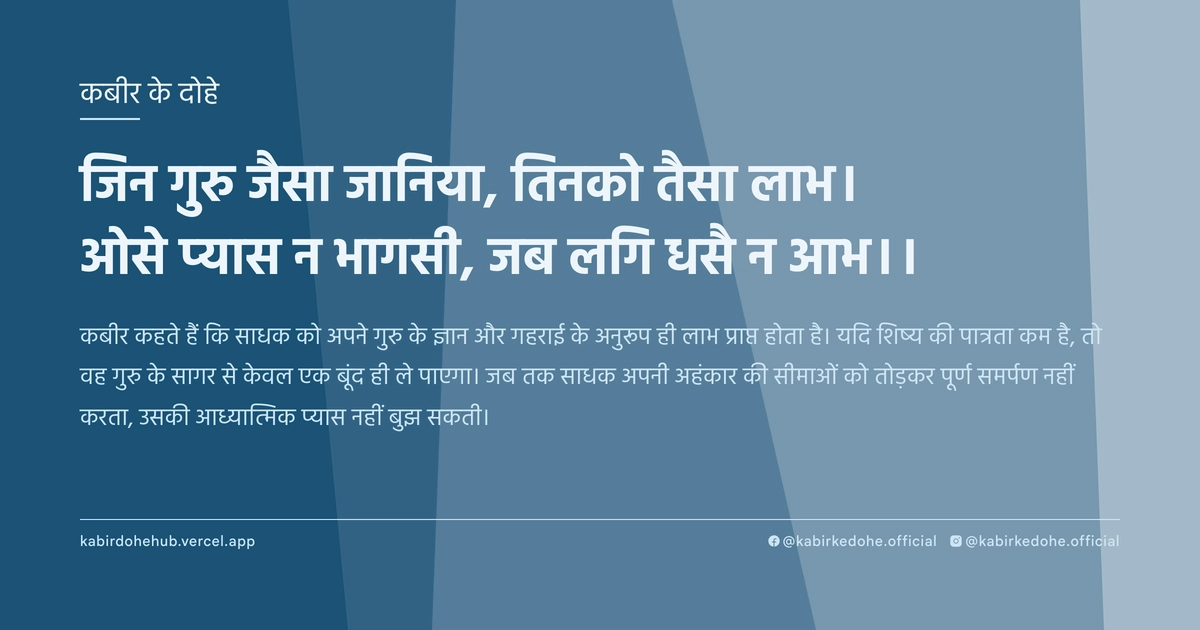
जिन गुरु जैसा जानिया, तिनको तैसा लाभ।
ओसे प्यास न भागसी, जब लगि धसै न आभ।।
Jin guru jaisa jaaniya, tinko taisa laabh. Ose pyaas na bhagsi, jab lagi dhasai na aabh.
इस पृष्ठ पर इस कबीर दोहे का अर्थ (meaning), हिंदी व्याख्या और अंग्रेज़ी अनुवाद, दार्शनिक विश्लेषण और व्यावहारिक जीवन सीख दी गई है। यह दोहा गुरु महत्व (The Guru's Importance) विषय से जुड़ा है — Kabir doha meaning and explanation in Hindi and English.
अर्थ (Meaning):
कबीर कहते हैं कि साधक को अपने गुरु के ज्ञान और गहराई के अनुरूप ही लाभ प्राप्त होता है। यदि शिष्य की पात्रता कम है, तो वह गुरु के सागर से केवल एक बूंद ही ले पाएगा। जब तक साधक अपनी अहंकार की सीमाओं को तोड़कर पूर्ण समर्पण नहीं करता, उसकी आध्यात्मिक प्यास नहीं बुझ सकती।
Kabir asserts that a seeker gains spiritual benefit only in proportion to how they perceive and internalize the Guru's wisdom. If the disciple's receptivity is limited, they receive only a fraction of the truth. The thirst for ultimate liberation remains unquenched until the seeker shatters the illusions of the ego and dives deep into the infinite.
व्याख्या (Interpretation):
यह दोहा गुरु और शिष्य के बीच के सूक्ष्म संबंध को दर्शाता है। 'जैसा जानिया' का अर्थ केवल बौद्धिक समझ नहीं, बल्कि अनुभवजन्य बोध है। यहाँ 'आभ' (आकाश/अहंकार का आवरण) उस मानसिक पर्दे को दर्शाता है जो आत्मा को परमात्मा से अलग करता है। जब तक यह पर्दा नहीं गिरता, ज्ञान केवल सूचना बनकर रह जाता है। यह निर्गुण भक्ति का सार है जहाँ गुरु केवल एक माध्यम है, वास्तविक लक्ष्य स्वयं के भीतर स्थित शून्य या पूर्ण को पहचानना है। यह अद्वैत वेदांत के उस सिद्धांत की पुष्टि करता है जहाँ ज्ञाता और ज्ञेय का भेद मिट जाता है। अंततः, प्यास का न बुझना इस बात का संकेत है कि साधक अभी भी 'मैं' और 'मेरा' के भ्रम में जी रहा है।
This couplet elucidates the subtle alchemy between the Guru and the disciple. 'Jaisa jaaniya' refers not to intellectual comprehension, but to experiential realization. The term 'aabh' (sky/veil of ego) symbolizes the psychological barrier separating the individual soul from the Universal Consciousness. Until this veil is pierced, spiritual knowledge remains mere information. This aligns with Nirgun Bhakti, where the Guru is a catalyst, but the destination is the formless void within. It echoes Advaita Vedanta's non-duality, where the distinction between the knower and the known dissolves. The persistent 'thirst' signifies that the seeker is still clinging to the illusion of a separate identity, preventing the flow of divine grace.
दार्शनिक विश्लेषण (Philosophical Analysis):
कबीर का यह विचार उनके युग के कर्मकांडीय और औपचारिक गुरु-शिष्य परंपरा पर एक प्रहार है। उस समय गुरु को केवल एक पद माना जाता था, जबकि कबीर गुरु को एक 'जीवंत दर्पण' मानते हैं। वे तर्क देते हैं कि यदि शिष्य केवल बाहरी सम्मान (चरण स्पर्श, पूजा) करता है लेकिन आंतरिक रूपांतरण के लिए तैयार नहीं है, तो उसे कोई लाभ नहीं होगा। यह दृष्टिकोण सूफी मत के 'पीर-मुरीद' संबंध से मिलता-जुलता है, जहाँ पूर्ण समर्पण (Fana) के बिना सत्य की प्राप्ति असंभव है।
दार्शनिक स्तर पर, यह दोहा 'पात्रता' (Receptivity) की बात करता है। जैसे एक छोटा बर्तन पूरे समुद्र को नहीं समा सकता, वैसे ही एक संकुचित अहंकार वाला मन अनंत सत्य को नहीं ग्रहण कर सकता। कबीर यहाँ यह स्पष्ट कर रहे हैं कि ज्ञान गुरु द्वारा दिया नहीं जाता, बल्कि शिष्य द्वारा 'खोदा' जाता है। यह ज्ञान की सक्रिय खोज है, न कि निष्क्रिय प्राप्ति।
अद्वैत वेदांत के संदर्भ में, 'आभ' वह माया है जो हमें यह विश्वास दिलाती है कि हम अलग हैं। जब तक यह भ्रम बना रहता है, हम सत्य की खोज में भटकते रहते हैं। कबीर का संदेश है कि गुरु केवल इशारा करता है, लेकिन उस इशारे को वास्तविकता में बदलना शिष्य का काम है।
सामाजिक रूप से, कबीर ने जाति और धर्म की दीवारों को तोड़कर 'सत्य' को ही सर्वोच्च गुरु माना। उन्होंने सिखाया कि सच्चा गुरु वह है जो आपको आपके स्वयं के अहंकार से परिचित कराए और फिर उसे नष्ट करने का मार्ग दिखाए।
मनोवैज्ञानिक रूप से, यह दोहा संज्ञानात्मक विसंगति (Cognitive Dissonance) को संबोधित करता है। हम अक्सर वह सत्य नहीं देखते जो हमारे सामने होता है क्योंकि हम उसे अपने पूर्वग्रहों के चश्मे से देखते हैं। जब तक वह चश्मा (अहंकार) नहीं टूटता, सत्य का अनुभव नहीं होता।
Kabir’s insight is a critique of the ritualistic and formalistic Guru-disciple traditions of his era. At a time when the Guru was often viewed as a mere social rank, Kabir envisioned the Guru as a 'living mirror.' He argues that if a disciple engages only in external gestures of respect—such as bowing or ritual offerings—without seeking internal transformation, the spiritual benefit remains null.
Philosophically, this couplet addresses the concept of 'Adhikara' or receptivity. Just as a small vessel cannot contain the entire ocean, a mind constricted by ego cannot absorb the infinite Truth. Kabir clarifies that knowledge is not 'delivered' by the Guru; rather, it is 'unearthed' by the disciple. It is an active pursuit of truth, not a passive reception of dogma.
In the context of Advaita Vedanta, 'aabh' represents Maya—the cosmic illusion that sustains the feeling of separation. As long as this illusion persists, the seeker wanders in a state of perpetual longing. Kabir suggests that the Guru only points the way; the act of traversing that path and dissolving the ego is the disciple's sole responsibility.
Socially, Kabir dismantled the barriers of caste and creed, establishing 'Truth' as the supreme Guru. He taught that a true teacher is one who makes you confront your own ego and then guides you toward its annihilation.
Psychologically, this verse addresses cognitive dissonance. We often fail to perceive the truth standing right before us because we view it through the lens of our prejudices. Until that lens—the ego—is shattered, the experience of the Absolute remains elusive.
मूल संदेश (Core Message):
- अहंकार वह पर्दा है जो सत्य को ओझल करता है।
- पात्रता के बिना ज्ञान केवल बोझ बन जाता है।
- समर्पण का अर्थ है अपनी पुरानी पहचान का विसर्जन।
- सच्ची प्यास बौद्धिक नहीं, बल्कि आत्मिक होती है।
- गुरु केवल द्वार दिखाता है, पार शिष्य को स्वयं करना होता है।
- शून्यता ही पूर्णता का एकमात्र मार्ग है।
- Ego is the veil that obscures the Absolute Truth.
- Without receptivity, knowledge becomes a mere intellectual burden.
- True surrender is the dissolution of the perceived identity.
- Genuine thirst is spiritual, not intellectual curiosity.
- The Guru points to the door; the disciple must walk through it.
- Emptiness is the only gateway to wholeness.
व्यावहारिक उदाहरण (Practical Example):
वाराणसी के एक पुराने घाट पर माधव नाम का एक वृद्ध बुनकर रहता था। वह अपनी कला में निपुण था, लेकिन उसका मन हमेशा अशांत रहता था। उसने कई बड़े विद्वानों से शास्त्र पढ़े और कई प्रसिद्ध संतों के चरणों में समय बिताया, लेकिन उसे शांति नहीं मिली। वह हर जगह शिकायत करता था कि उसे सही मार्गदर्शन नहीं मिल रहा है।
एक दिन उसकी मुलाकात एक फकीर से हुई जो नदी किनारे चुपचाप बैठा था। माधव ने उससे अपनी समस्या कही, 'मैंने सब कुछ पढ़ लिया, सब संतों से मिला, फिर भी मेरी प्यास नहीं बुझी।' फकीर ने मुस्कुराते हुए माधव को एक मिट्टी का घड़ा दिया जो ऊपर तक भरा था और कहा, 'इसे पकड़ो और तब तक मत छोड़ना जब तक मैं न कहूँ।'
माधव ने घड़ा पकड़ लिया। फकीर ने धीरे-धीरे घड़े में और पानी डालना शुरू किया। पानी माधव के हाथों और कपड़ों पर गिरने लगा। माधव चिल्लाया, 'यह क्या कर रहे हैं? घड़ा तो पहले से ही भरा है, अब इसमें और पानी नहीं समा सकता!'
फकीर ने शांति से कहा, 'यही तुम्हारी समस्या है, माधव। तुम्हारा मन उस घड़े की तरह है जो अपनी पुरानी मान्यताओं, अपनी विद्वत्ता और अपने अहंकार से पहले ही भरा हुआ है। तुम गुरुओं के पास तो जाते हो, लेकिन तुम उन्हें सुनने नहीं, बल्कि अपनी जानकारी की पुष्टि करने जाते हो। जब तक तुम खुद को खाली नहीं करोगे, नया ज्ञान कहाँ जाएगा?'
माधव को एक गहरा झटका लगा। उसे समझ आया कि वह अब तक केवल 'जानने' का ढोंग कर रहा था, 'सीखने' की विनम्रता नहीं अपना रहा था। उसने महसूस किया कि उसका अहंकार ही वह 'आभ' या पर्दा था जिसने उसे सत्य से दूर रखा था।
अगले कुछ महीनों तक, माधव ने अपनी सारी बौद्धिक श्रेष्ठता को त्याग दिया। उसने सवाल पूछना बंद किया और केवल अवलोकन करना शुरू किया। उसने देखा कि कैसे उसकी बुनाई की कला भी वास्तव में एक ध्यान है, जहाँ धागे का हर खिंचाव उसके धैर्य की परीक्षा है।
उसने अपनी ईगो को इस बात में लगाया कि वह 'सबसे बड़ा बुनकर' है, और उसे धीरे-धीरे नष्ट किया। उसने अपनी कला को सेवा में बदल दिया और गरीबों के लिए कपड़े बुनने लगा बिना किसी प्रशंसा की इच्छा के।
जैसे-जैसे उसका अहंकार कम हुआ, उसे महसूस हुआ कि वह शांति जिसे वह किताबों और संतों में ढूँढ रहा था, वास्तव में उसके भीतर ही थी। उसकी प्यास बुझ गई क्योंकि उसने अंततः उस 'आभ' को तोड़ दिया था।
On an ancient ghat in Varanasi lived an elderly weaver named Madhav. He was a master of his craft, yet his mind was a storm of restlessness. He had studied scriptures under great scholars and spent years at the feet of renowned saints, but peace remained elusive. He constantly complained that he had not found a 'true' guide.
One day, he encountered a wandering fakir sitting silently by the river. Madhav poured out his grief: 'I have read everything, visited every saint, yet my spiritual thirst remains unquenched.' The fakir smiled and handed Madhav a clay pot filled to the brim, instructing him to hold it tightly.
As Madhav held the pot, the fakir began pouring more water into it. Water spilled over the rim, soaking Madhav’s hands and clothes. Madhav shouted, 'What are you doing? The pot is already full! It cannot hold another drop!'
The fakir replied calmly, 'This is your predicament, Madhav. Your mind is like this pot—already full of old beliefs, intellectual pride, and the ego of your own learning. You approach Gurus not to listen, but to seek confirmation of what you already think you know. Until you empty yourself, where will the new truth reside?'
Madhav felt a profound shock. He realized he had been pretending to 'know' while lacking the humility to 'learn.' He understood that his ego was the 'aabh'—the veil—that had kept him separated from the Truth.
Over the following months, Madhav consciously discarded his intellectual superiority. He stopped asking questions to prove his knowledge and began simply observing. He discovered that his weaving was actually a form of meditation, where every tug of the thread was a test of his patience.
He dismantled the identity of being the 'greatest weaver' and transformed his art into service, weaving clothes for the poor without seeking any recognition.
As his ego diminished, he realized that the peace he had sought in books and saints had always been within him. His thirst was finally quenched because he had shattered the veil of his own perceived importance.
अभ्यास मार्गदर्शन (Practice Guidance):
- प्रतिदिन 20 मिनट 'शून्य ध्यान' का अभ्यास करें, जहाँ आप किसी भी विचार या पहचान (नाम, पद, रिश्ता) को पकड़े बिना केवल अपनी श्वास को देखें।
- एक 'अहंकार डायरी' बनाएँ। दिन भर में जब भी आपको लगे कि आप किसी से श्रेष्ठ हैं या किसी को सही साबित करने की कोशिश कर रहे हैं, उसे लिखें और विश्लेषण करें कि वह कौन सा 'आभ' था।
- सक्रिय श्रवण (Active Listening) का अभ्यास करें। किसी से बात करते समय अपनी प्रतिक्रिया पहले से तैयार न रखें; केवल सामने वाले की बात को बिना किसी निर्णय के सुनें।
- निदान चेकलिस्ट: क्या मैं गुरु/शिक्षक की बात इसलिए सुन रहा हूँ क्योंकि मैं सहमत हूँ, या इसलिए क्योंकि मैं वास्तव में बदलना चाहता हूँ? क्या मेरी प्यास ज्ञान की है या केवल बौद्धिक संतुष्टि की?
- Practice 20 minutes of 'Shunya Meditation' daily, observing the breath without clinging to any identity (name, status, or relationship).
- Maintain an 'Ego Journal.' Record moments throughout the day when you felt superior to others or felt a compulsive need to be right, analyzing which specific 'veil' was operating.
- Practice Active Listening. When engaging with others, avoid preparing your response while they are speaking; listen without judgment or the intent to correct.
- Diagnostic Checklist: Am I listening to my guide because I agree with them, or because I genuinely wish to transform? Is my thirst for Truth, or merely for intellectual validation?
चिंतन प्रश्न (Reflection Questions):
- मेरे जीवन में वह कौन सा 'सत्य' है जिसे मैं स्वीकार नहीं कर पा रहा हूँ क्योंकि वह मेरे अहंकार को चोट पहुँचाता है?
- क्या मैं वास्तव में एक गुरु की तलाश में हूँ, या मैं केवल ऐसे व्यक्ति की तलाश में हूँ जो मेरी गलतियों को सही ठहराए?
- मेरी डिजिटल पहचान (सोशल मीडिया) मेरे वास्तविक आंतरिक शून्य को कितना ढक रही है?
- यदि आज मेरी सारी उपलब्धियाँ और पद छीन लिए जाएँ, तो क्या मेरे पास कोई ऐसा सत्य बचेगा जो मुझे परिभाषित करे?
- मैं अपनी 'बौद्धिक श्रेष्ठता' का उपयोग दूसरों की मदद के लिए करता हूँ या उन्हें छोटा महसूस कराने के लिए?
- वह कौन सा डर है जो मुझे पूरी तरह से समर्पित होने से रोकता है?
- What is the one truth in my life that I refuse to accept because it bruises my ego?
- Am I truly seeking a Guru, or am I searching for someone who validates my existing biases?
- To what extent does my digital persona mask the internal void I feel within?
- If all my achievements and titles were stripped away today, would there be any truth left to define me?
- Do I use my intellectual superiority to uplift others or to make them feel diminished?
- What is the specific fear that prevents me from surrendering completely to the flow of existence?