
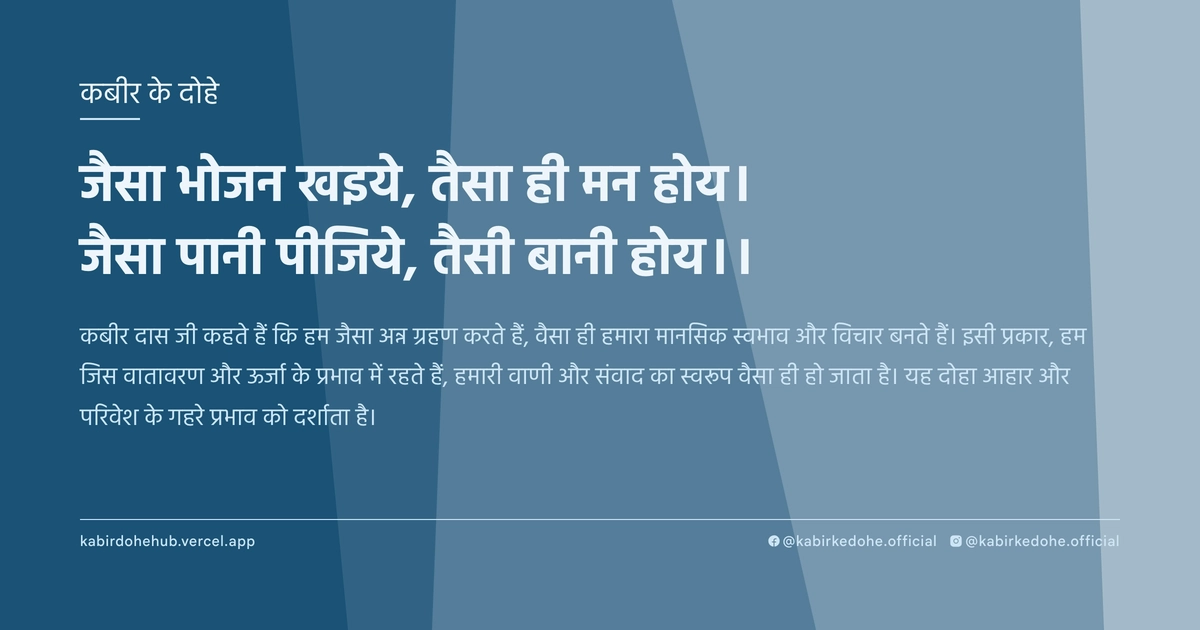
जैसा भोजन खइये, तैसा ही मन होय।
जैसा पानी पीजिये, तैसी बानी होय।।
Jaisa bhojan khaiye, taisa hi man hoye. Jaisa paani peejie, taisi bani hoye.
इस पृष्ठ पर इस कबीर दोहे का अर्थ (meaning), हिंदी व्याख्या और अंग्रेज़ी अनुवाद, दार्शनिक विश्लेषण और व्यावहारिक जीवन सीख दी गई है। यह दोहा संयम (Self-discipline) विषय से जुड़ा है — Kabir doha meaning and explanation in Hindi and English.
अर्थ (Meaning):
कबीर दास जी कहते हैं कि हम जैसा अन्न ग्रहण करते हैं, वैसा ही हमारा मानसिक स्वभाव और विचार बनते हैं। इसी प्रकार, हम जिस वातावरण और ऊर्जा के प्रभाव में रहते हैं, हमारी वाणी और संवाद का स्वरूप वैसा ही हो जाता है। यह दोहा आहार और परिवेश के गहरे प्रभाव को दर्शाता है।
Kabir suggests that the food we consume directly shapes our mental state and thoughts. Similarly, the essence of the water we drink—symbolizing the environment and influences we absorb—determines the quality and tone of our speech. It emphasizes the profound connection between external intake and internal output.
व्याख्या (Interpretation):
शाब्दिक अर्थ में यह आहार विज्ञान की बात करता है, परंतु आध्यात्मिक स्तर पर यह 'सात्विक', 'राजसिक' और 'तामसिक' प्रवृत्तियों का विश्लेषण है। भोजन यहाँ केवल अन्न नहीं, बल्कि उन विचारों और संस्कारों का प्रतीक है जिन्हें हम आत्मसात करते हैं। जब हम क्रोध, ईर्ष्या या अहंकार से भरे वातावरण का 'पानी' पीते हैं, तो हमारी वाणी में वही कड़वाहट उतर आती है। यह निर्गुण भक्ति का संकेत है जहाँ बाहरी शुद्धता से अधिक आंतरिक शुद्धि महत्वपूर्ण है। माया हमें बाहरी आडंबरों में उलझाती है, जबकि यह दोहा हमें सचेत करता है कि हमारी चेतना हमारे चयन का परिणाम है। अंततः, यह आत्मा और ब्रह्म की एकता की ओर ले जाता है, जहाँ शुद्ध विचार ही शुद्ध अस्तित्व का निर्माण करते हैं।
Literally, this refers to dietary science, but spiritually, it analyzes 'Sattvic', 'Rajasic', and 'Tamasic' tendencies. Food here is a metaphor for the thoughts and impressions (Samskaras) we assimilate. When we 'drink' from an environment saturated with anger or ego, our speech reflects that toxicity. This aligns with Nirgun Bhakti, where internal purity outweighs external ritual. Maya lures us into superficiality, but this verse warns that consciousness is a product of our choices. Ultimately, it points toward the non-duality of Atman and Brahman, suggesting that only pure consciousness can manifest as pure existence.
दार्शनिक विश्लेषण (Philosophical Analysis):
कबीर का यह दोहा उस समय के सामाजिक परिवेश में एक क्रांतिकारी विचार था, जहाँ धर्म को केवल कर्मकांडों और जातिगत शुद्धता से जोड़ा जाता था। कबीर ने यह स्थापित किया कि शुद्धता बाहरी स्नान या मंत्रोच्चार से नहीं, बल्कि उस 'भोजन' (विचारों) से आती है जिसे हम मानसिक रूप से ग्रहण करते हैं। यह अद्वैत वेदांत के उस सिद्धांत से मेल खाता है जहाँ यह माना जाता है कि व्यक्ति और ब्रह्मांड एक ही तत्व से बने हैं; अतः जो हम ग्रहण करते हैं, वही हम बन जाते हैं।
सूफीवाद के परिप्रेक्ष्य में, यह 'नफ्स' (अहंकार) के शोधन की प्रक्रिया है। यदि मन तामसिक भोजन (नकारात्मकता) से भरा है, तो वह ईश्वर के नूर को प्रतिबिंबित नहीं कर सकता। कबीर यहाँ भौतिक और आध्यात्मिक पोषण के बीच के अंतर को मिटा रहे हैं, यह तर्क देते हुए कि हमारी वाणी हमारे आंतरिक आध्यात्मिक स्वास्थ्य का दर्पण है।
ऐतिहासिक रूप से, कबीर ने जाति व्यवस्था को चुनौती दी क्योंकि जाति केवल एक सामाजिक 'लेबल' है, जबकि वास्तविक 'जाति' या स्वभाव व्यक्ति के आंतरिक संस्कारों से निर्धारित होता है। उन्होंने सिखाया कि एक निम्न जाति का व्यक्ति भी सात्विक विचारों के माध्यम से उच्च आध्यात्मिक अवस्था प्राप्त कर सकता है।
मनोवैज्ञानिक स्तर पर, यह 'कंडीशनिंग' की बात करता है। हम जो सूचनाएँ और भावनाएँ अवशोषित करते हैं, वे हमारे अवचेतन मन में बैठ जाती हैं और अनजाने में हमारे व्यवहार और वाणी के रूप में प्रकट होती हैं। यह अहंकार के विलीनीकरण की प्रक्रिया है, जहाँ व्यक्ति यह पहचानता है कि उसकी कड़वाहट बाहरी दुनिया का प्रतिबिंब है।
अंततः, कबीर यह संदेश देते हैं कि मोक्ष केवल ध्यान में बैठने से नहीं, बल्कि अपने दैनिक जीवन के हर छोटे चुनाव—चाहे वह भोजन हो या संगति—में जागरूकता लाने से प्राप्त होता है। यह एक समग्र जीवन दर्शन है जो शरीर, मन और आत्मा को एक सूत्र में पिरोता है।
Kabir's verse was a revolutionary thought in an era where religion was tethered to rituals and caste-based purity. He established that purity does not stem from external ablutions or chanting, but from the 'food' (thoughts) we mentally assimilate. This resonates with Advaita Vedanta, which posits that the individual and the universe are of the same essence; thus, what we consume, we become.
From a Sufi perspective, this is the process of purifying the 'Nafs' (ego). If the mind is filled with Tamasic food (negativity), it cannot reflect the divine light (Noor). Kabir bridges the gap between physical and spiritual nourishment, arguing that speech is the mirror of one's internal spiritual health.
Historically, Kabir challenged the caste system by asserting that caste is merely a social label, while true nature is determined by internal impressions. He taught that anyone, regardless of social standing, could achieve high spiritual states through Sattvic thoughts.
Psychologically, this addresses 'conditioning'. The information and emotions we absorb settle in the subconscious and manifest as behavior and speech. This is a process of ego-annihilation, where the individual realizes their bitterness is a reflection of the environment they have allowed into themselves.
Ultimately, Kabir suggests that liberation is not found solely in meditation, but in bringing mindfulness to every small choice—be it food or company. It is a holistic philosophy that weaves together the body, mind, and soul into a single thread of awareness.
मूल संदेश (Core Message):
- मानसिक आहार ही व्यक्तित्व का निर्माण करता है।
- नकारात्मक संगति वाणी में विष घोलती है।
- सचेत चुनाव ही आंतरिक शांति का मार्ग है।
- बाहरी व्यवहार आंतरिक अवस्था का प्रतिबिंब है।
- शुद्ध विचार ही शुद्ध जीवन का आधार हैं।
- Mental intake defines the architecture of personality.
- Negative associations infuse poison into one's speech.
- Conscious choice is the only path to inner peace.
- External behavior is a mirror of internal states.
- Pure thoughts are the foundation of a pure life.
व्यावहारिक उदाहरण (Practical Example):
वाराणसी के एक पुराने घाट पर रामदीन नाम का एक वृद्ध नाविक रहता था। वह स्वभाव से अत्यंत क्रोधी था और अक्सर अपने साथी नाविकों और पर्यटकों पर चिल्लाता था। उसकी वाणी में इतनी कड़वाहट थी कि लोग उससे नाव लेने में कतराते थे। रामदीन का मानना था कि दुनिया ही बुरी है और लोग उसे परेशान करते हैं।
एक दिन उसकी मुलाकात एक शांत संन्यासी से हुई, जिसने रामदीन की कड़वाहट को देखा। संन्यासी ने उसे टोकने के बजाय एक सरल प्रयोग करने को कहा। उन्होंने कहा, 'रामदीन, अगले सात दिनों तक तुम केवल वही शब्द बोलोगे जो तुम दूसरों से सुनना चाहते हो, और अपने भोजन में केवल सादगी और प्रेम रखोगे।'
शुरुआत में रामदीन को यह हास्यास्पद लगा। लेकिन उसने गौर किया कि वह दिन भर उन लोगों के साथ बैठता था जो केवल शिकायतें करते थे और गालियाँ देते थे। वह मानसिक रूप से उसी 'कड़वे पानी' को पी रहा था। उसने धीरे-धीरे अपनी संगति बदली और शांत लोगों के साथ समय बिताना शुरू किया।
उसने अपने भोजन में तामसिक उत्तेजनाओं को कम किया और शांत मन से अन्न ग्रहण करना शुरू किया। जैसे-जैसे उसके मानसिक आहार में बदलाव आया, उसके भीतर का क्रोध कम होने लगा। उसने महसूस किया कि उसकी वाणी का जहर वास्तव में उसके आसपास के नकारात्मक वातावरण का परिणाम था।
एक दोपहर, जब एक पर्यटक ने उसकी नाव पर सामान गिरा दिया, रामदीन ने चिल्लाने के बजाय मुस्कुराकर कहा, 'कोई बात नहीं, यह तो बस एक छोटी सी घटना है।' यह उसके जीवन का पहला ऐसा क्षण था जब उसने प्रतिक्रिया नहीं, बल्कि प्रतिक्रिया का चुनाव किया।
धीरे-धीरे उसकी वाणी में मिठास घुल गई। जो लोग पहले उससे डरते थे, अब वे उसके पास शांति की तलाश में आने लगे। उसकी नाव अब केवल नदी पार कराने का साधन नहीं, बल्कि सुकून का एक छोटा सा केंद्र बन गई थी।
रामदीन ने अनुभव किया कि जब उसने अपने 'मानसिक भोजन' और 'वातावरण के पानी' को बदला, तो उसका पूरा व्यक्तित्व बदल गया। उसने सीखा कि बाहरी दुनिया केवल एक दर्पण है; यदि हम भीतर कड़वाहट पालेंगे, तो बाहर केवल विवाद ही मिलेंगे।
इस 'कबीर ट्विस्ट' ने रामदीन को यह समझाया कि हम जो ग्रहण करते हैं, वही हम बन जाते हैं। उसकी शांति अब किसी बाहरी परिस्थिति पर निर्भर नहीं थी, बल्कि उसके अपने सचेत चुनावों का परिणाम थी।
On an ancient ghat in Varanasi lived an elderly boatman named Ramdeen. He was notoriously temperamental, often shouting at fellow boatmen and tourists. His speech was so caustic that people hesitated to hire his boat. Ramdeen believed the world was inherently cruel and people enjoyed provoking him.
One day, he met a serene monk who observed Ramdeen's bitterness. Instead of criticizing him, the monk suggested a simple experiment: 'Ramdeen, for the next seven days, speak only the words you wish to hear from others, and keep your food and thoughts simple and loving.'
Initially, Ramdeen found this absurd. However, he began to notice that he spent his entire day with people who did nothing but complain and curse. He realized he was mentally 'drinking' that bitter water. He slowly shifted his company and started spending time with peaceful individuals.
He reduced the stimulants in his diet and began eating with a calm mind. As his 'mental diet' changed, the fire of anger within him began to subside. He realized that the poison in his speech was actually a byproduct of the negative environment he absorbed.
One afternoon, when a tourist accidentally dropped luggage on his boat, instead of screaming, Ramdeen smiled and said, 'It is no matter, just a small accident.' This was the first time in his life he chose a response over a reaction.
Gradually, sweetness infused his voice. People who once feared him now sought his company for peace. His boat ceased to be just a means of transport and became a small sanctuary of tranquility.
Ramdeen experienced that by changing his 'mental food' and the 'water of his environment,' his entire personality transformed. He learned that the external world is merely a mirror; if we harbor bitterness within, we find only conflict outside.
This 'Kabir Twist' taught Ramdeen that we become what we consume. His peace was no longer dependent on external circumstances but was the result of his own conscious choices.
अभ्यास मार्गदर्शन (Practice Guidance):
- दैनिक मनन: प्रतिदिन 15 मिनट मौन बैठें और विचार करें कि आज आपने किन शब्दों और विचारों का 'भोजन' किया।
- वाणी का शोधन: जब भी क्रोध आए, बोलने से पहले तीन गहरी सांसें लें और सोचें कि क्या यह शब्द आपके आंतरिक स्वरूप को दर्शाता है या बाहरी प्रभाव को।
- संगति विश्लेषण: उन लोगों की सूची बनाएं जो आपको मानसिक रूप से नकारात्मक बनाते हैं और धीरे-धीरे उनके प्रभाव को कम करें।
- नैदानिक चेकलिस्ट: क्या आप छोटी बातों पर चिड़चिड़े हो रहे हैं? क्या आपकी वाणी में बिना कारण कड़वाहट है? यदि हाँ, तो अपने मानसिक आहार (सोशल मीडिया, समाचार, नकारात्मक चर्चाएं) की समीक्षा करें।
- Daily Contemplation: Spend 15 minutes in silence daily, reflecting on the 'food' of thoughts and words you consumed throughout the day.
- Speech Purification: Whenever anger arises, take three deep breaths before speaking and ask if the words reflect your true essence or an external influence.
- Association Analysis: List the people who mentally drain you or trigger negativity and consciously reduce their influence on your psyche.
- Diagnostic Checklist: Are you becoming irritable over trivialities? Is there unexplained bitterness in your speech? If yes, audit your mental diet (social media, news, negative gossip).
चिंतन प्रश्न (Reflection Questions):
- मेरे डिजिटल उपभोग (सोशल मीडिया) का मेरी वास्तविक वाणी और स्वभाव पर क्या प्रभाव पड़ रहा है?
- मैं दूसरों की आलोचना करते समय किस प्रकार के 'मानसिक भोजन' का उपयोग कर रहा हूँ?
- क्या मेरी वाणी मेरी अपनी है, या मैं केवल अपने परिवेश की प्रतिध्वनि हूँ?
- मेरे भीतर की कड़वाहट वास्तव में किसकी है—मेरी, या उन लोगों की जिन्हें मैं नफरत करता हूँ?
- यदि मेरी वाणी एक दर्पण है, तो वह मेरे भीतर के किस अंधेरे हिस्से को उजागर कर रही है?
- How is my digital consumption (social media) affecting my real-world speech and temperament?
- What kind of 'mental food' am I consuming when I criticize others?
- Is my voice truly my own, or am I merely an echo of my environment?
- Whose bitterness do I actually carry—my own, or that of the people I despise?
- If my speech is a mirror, which hidden shadow of my interior is it revealing?