
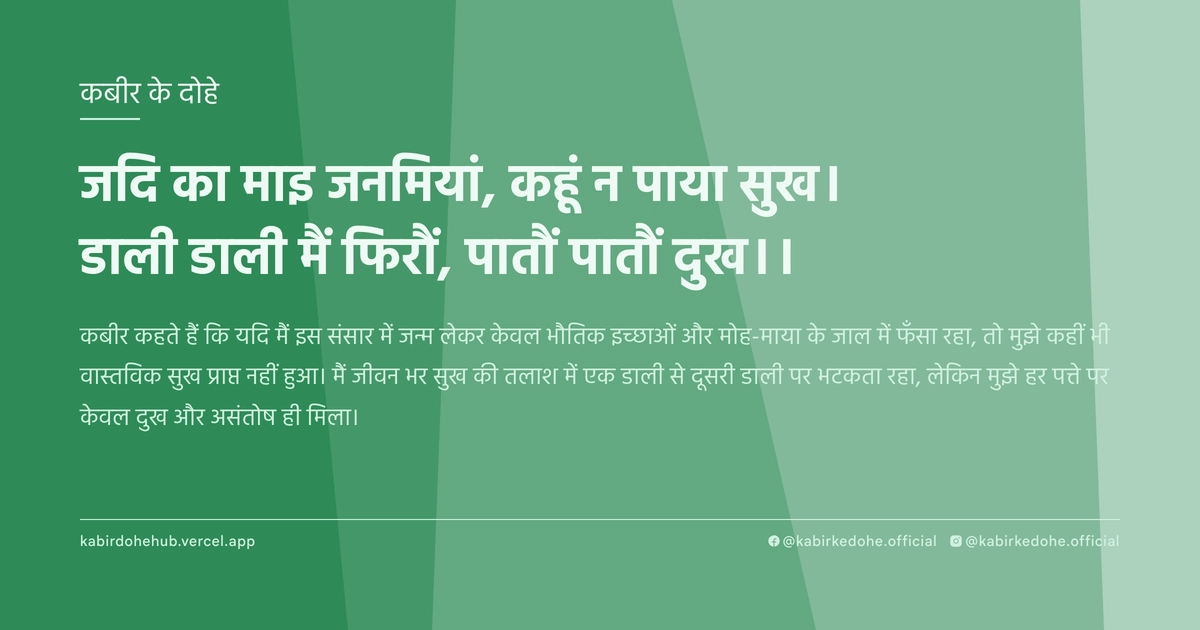
जदि का माइ जनमियां, कहूं न पाया सुख।
डाली डाली मैं फिरौं, पातौं पातौं दुख।।
Jadi ka mai janmiyan, kahun na paaya sukh. Daali daali main phiraun, paaton paaton dukh.
इस पृष्ठ पर इस कबीर दोहे का अर्थ (meaning), हिंदी व्याख्या और अंग्रेज़ी अनुवाद, दार्शनिक विश्लेषण और व्यावहारिक जीवन सीख दी गई है। यह दोहा पुनर्जन्म (Reincarnation) विषय से जुड़ा है — Kabir doha meaning and explanation in Hindi and English.
अर्थ (Meaning):
कबीर कहते हैं कि यदि मैं इस संसार में जन्म लेकर केवल भौतिक इच्छाओं और मोह-माया के जाल में फँसा रहा, तो मुझे कहीं भी वास्तविक सुख प्राप्त नहीं हुआ। मैं जीवन भर सुख की तलाश में एक डाली से दूसरी डाली पर भटकता रहा, लेकिन मुझे हर पत्ते पर केवल दुख और असंतोष ही मिला।
Kabir laments that if one is born into this world merely to chase worldly desires and the illusions of Maya, true peace remains elusive. He describes a restless journey, wandering from branch to branch in search of happiness, only to find that every single leaf bears the weight of sorrow and dissatisfaction.
व्याख्या (Interpretation):
इसका शाब्दिक अर्थ जीवन की निरर्थक खोज है। रूपकात्मक रूप से, 'डाली' और 'पत्ता' मानवीय इच्छाओं और सांसारिक संबंधों के प्रतीक हैं। कबीर यहाँ निर्गुण भक्ति के उस सत्य को उजागर कर रहे हैं जहाँ आत्मा (Atman) अपनी वास्तविक प्रकृति को भूलकर बाहरी दुनिया में सुख खोजती है। यह द्वैतवाद का भ्रम है जहाँ मनुष्य स्वयं को ब्रह्म से अलग मानकर बाहरी वस्तुओं में पूर्णता खोजता है। जब तक अहंकार (Ego) जीवित है, तब तक हर उपलब्धि एक नए दुख का बीज बन जाती है। यह विरोधाभास है कि हम जिसे सुख समझते हैं, वह वास्तव में हमारी अंतहीन तृष्णा का विस्तार मात्र है।
Literally, this describes the futility of worldly pursuit. Metaphorically, the 'branches' and 'leaves' symbolize the endless cycle of human desires and transient attachments. Kabir highlights the core of Nirgun Bhakti, where the soul (Atman) forgets its divine essence and seeks fulfillment in the external world. This is the illusion of duality, where the individual perceives themselves as separate from the Absolute (Brahman). As long as the ego persists, every perceived achievement merely plants a new seed of sorrow. It is the central paradox of the human condition: the very things we chase for happiness are the sources of our deepest unrest.
दार्शनिक विश्लेषण (Philosophical Analysis):
कबीर का यह दोहा उस कालखंड का प्रतिबिंब है जब समाज कर्मकांडों और बाहरी आडंबरों में उलझा था। वे स्पष्ट करते हैं कि मोक्ष किसी तीर्थ या मंदिर में नहीं, बल्कि आंतरिक रूपांतरण में है। यह विचार अद्वैत वेदांत के करीब है, जो कहता है कि संसार 'माया' है—एक ऐसा पर्दा जो हमें सत्य देखने से रोकता है। कबीर यहाँ सूफी मत के 'फना' (अहंकार का विनाश) की बात कर रहे हैं, जहाँ जब तक 'मैं' (ego) मौजूद है, तब तक दुख अनिवार्य है।
वे जाति और धर्म के भेदभाव को नकारते हुए यह समझाते हैं कि दुख सार्वभौमिक है और इसका कारण केवल अज्ञानता है। ritualism या बाहरी पूजा केवल मन को भ्रमित करती है, जबकि वास्तविक भक्ति शून्य में लीन होना है। कबीर का दर्शन यह है कि सुख कोई गंतव्य नहीं है जिसे पाया जाए, बल्कि यह एक अवस्था है जो तब आती है जब हम खोज बंद कर देते हैं।
मनोवैज्ञानिक स्तर पर, यह दोहा 'हेडोनिक अनुकूलन' (Hedonic Adaptation) की बात करता है, जहाँ मनुष्य एक सुख पाकर तुरंत दूसरे की ओर बढ़ता है। कबीर इस चक्र को तोड़ने का आह्वान करते हैं। वे कहते हैं कि जब तक आप 'पाने' की इच्छा रखेंगे, आप 'खोने' के डर और दुख से मुक्त नहीं हो सकते।
यह विश्लेषण स्पष्ट करता है कि कबीर केवल निराशावादी नहीं थे, बल्कि वे एक गहरे सत्य की ओर इशारा कर रहे थे। वे चाहते थे कि साधक बाहरी दुनिया की 'डालियों' को छोड़कर अपने भीतर के 'मूल' (Root) की ओर लौटे।
अंततः, यह दोहा हमें सिखाता है कि संसार की कोई भी वस्तु इतनी बड़ी नहीं है कि वह आत्मा की अनंत प्यास को बुझा सके। केवल उस निराकार ब्रह्म के साथ एकाकार होना ही एकमात्र स्थायी समाधान है।
This couplet reflects an era steeped in rigid ritualism and external piety. Kabir asserts that liberation is not found in pilgrimages or temples, but through internal alchemy. This aligns closely with Advaita Vedanta, which posits that the world is 'Maya'—a veil obscuring the ultimate truth of non-duality. Kabir echoes the Sufi concept of 'Fana' (annihilation of the self), suggesting that as long as the 'I' (ego) exists, suffering is inevitable.
By rejecting caste and religious dogma, he demonstrates that suffering is universal and rooted in ignorance. Ritualism serves only to distract the mind, whereas true devotion is the merging into the formless Void. Kabir's philosophy suggests that happiness is not a destination to be reached, but a state of being that emerges when the frantic search ceases.
Psychologically, the verse addresses 'Hedonic Adaptation,' where humans quickly return to a baseline of dissatisfaction after achieving a goal. Kabir calls for the breaking of this cycle. He argues that as long as one clings to the desire to 'acquire,' they remain enslaved to the fear of 'loss' and the pain of insufficiency.
This analysis clarifies that Kabir was not a pessimist, but a realist pointing toward a higher truth. He urges the seeker to stop leaping between the 'branches' of the external world and instead return to the 'root' of their own existence.
Ultimately, the verse teaches that no material object is vast enough to quench the infinite thirst of the soul. Only unification with the formless Brahman provides a permanent resolution to the human struggle.
मूल संदेश (Core Message):
- बाहरी खोज केवल भ्रम और अंतहीन दुख का मार्ग है।
- इच्छाओं का पीछा करना एक कभी न खत्म होने वाले चक्र जैसा है।
- सच्चा सुख किसी वस्तु में नहीं, बल्कि इच्छाओं के विसर्जन में है।
- अहंकार का त्याग ही दुख के मूल कारण को समाप्त करता है।
- आत्मा का मिलन निराकार ब्रह्म से ही एकमात्र स्थायी शांति है।
- External searching is a path leading only to illusion and endless sorrow.
- Chasing desires is like running on a treadmill of perpetual dissatisfaction.
- True bliss lies not in acquisition, but in the dissolution of desire.
- The annihilation of the ego is the only way to erase the root of suffering.
- Union with the formless Absolute is the sole source of permanent peace.
व्यावहारिक उदाहरण (Practical Example):
वाराणसी के घाटों पर रहने वाली एक वृद्ध विधवा, जानकी, का जीवन इसी द्वंद्व का उदाहरण था। उन्होंने अपना पूरा जीवन अपने बेटों की खुशी और उनकी उम्मीदों को पूरा करने में लगा दिया।
जब उनके बेटे बड़े हुए, तो उन्होंने उन्हें बड़े शहरों में भेजा, यह सोचकर कि अब जानकी का जीवन सुखमय होगा। लेकिन बेटों की सफलता ने उन्हें और अधिक दूर कर दिया।
जानकी ने अपने घर को सजाया, नए कपड़े पहने और समाज में अपनी प्रतिष्ठा बढ़ाने की कोशिश की, लेकिन उनके भीतर एक खालीपन था।
वे हर त्यौहार पर यह उम्मीद करती थीं कि इस बार उनके बच्चे उनके पास रहेंगे, लेकिन हर बार वे केवल कुछ दिनों के लिए आते और फिर चले जाते।
जानकी को लगता था कि यदि उनके पास और अधिक धन होता या उनके बेटे और अधिक आज्ञाकारी होते, तो वे सुखी होतीं। वे एक इच्छा से दूसरी इच्छा की 'डाली' पर कूदती रहीं।
एक दिन, घाट पर बैठे एक फकीर ने उनकी आँखों में वही पुराना दुख देखा और उनसे कहा, "माँ, तुम उन पत्तों को पकड़कर बैठी हो जो हर पतझड़ में गिर जाते हैं।"
इस बात ने जानकी को झकझोर दिया। उन्होंने महसूस किया कि उनका दुख उनके बेटों के कारण नहीं, बल्कि उनकी अपनी 'उम्मीदों' और 'मोह' के कारण था।
उन्होंने धीरे-धीरे अपनी खुशी को दूसरों की उपस्थिति से हटाकर अपने भीतर की शांति और सेवा में लगाना शुरू किया।
उन्होंने पास के अनाथालय में बच्चों को पढ़ाना शुरू किया और पाया कि जिस सुख को वे अपने बेटों में खोज रही थीं, वह निस्वार्थ प्रेम में छिपा था।
जानकी का जीवन अब 'डाली-डाली' भटकना बंद कर गया; वे उसी एक जगह स्थिर हो गईं जहाँ शांति का वास था।
Janaki, an elderly widow living on the ghats of Varanasi, embodied this struggle. She spent her entire life catering to the desires and expectations of her sons.
As her sons grew and moved to big cities, Janaki believed that their success would finally bring her the peace and happiness she craved.
She decorated her home and sought social prestige, yet a profound emptiness persisted within her heart.
Every festival, she clung to the hope that her children would stay longer, but they always left, leaving her in a void of longing.
Janaki believed that more wealth or more obedient children were the keys to her happiness, leaping from one desire's 'branch' to another.
One day, a wandering fakir on the ghats saw the familiar sorrow in her eyes and whispered, "Mother, you are clinging to leaves that fall with every autumn."
These words shook Janaki. She realized her suffering was not caused by her sons' absence, but by her own attachments and expectations.
Slowly, she shifted her source of happiness from the presence of others to internal stillness and selfless service.
She began teaching orphaned children nearby and discovered that the joy she sought in her sons was hidden in selfless love.
Janaki stopped wandering from 'branch to branch'; she became rooted in the present moment, where true peace resides.
अभ्यास मार्गदर्शन (Practice Guidance):
- दैनिक चिंतन: प्रतिदिन 20 मिनट मौन बैठें और विचार करें कि आपकी कौन सी इच्छाएं आपको मानसिक रूप से थका रही हैं।
- आत्म-पूछताछ जर्नल: लिखें कि "मैं क्या पाने की कोशिश कर रहा हूँ और क्या वह वास्तव में मुझे स्थायी शांति देगा?"
- व्यवहार परिवर्तन: जब भी आप किसी नई वस्तु या उपलब्धि की तीव्र इच्छा करें, तो रुकें और पूछें—"क्या यह मेरी आत्मा की प्यास बुझाएगा या केवल एक नया पत्ता होगा?"
- निदान चेकलिस्ट: यदि आप वर्तमान क्षण में असंतुष्ट हैं और भविष्य की किसी घटना में सुख खोज रहे हैं, तो समझें कि आप अभी भी 'डाली-डाली' भटक रहे हैं।
- Daily Contemplation: Spend 20 minutes in silence, observing which specific desires are causing you mental exhaustion and restlessness.
- Self-Inquiry Journaling: Write and reflect on the prompt: "What am I chasing, and will this achievement truly provide permanent peace or just a temporary high?"
- Behavioral Shift: Whenever a strong urge for a new possession or status arises, pause and ask: "Is this quenching the soul's thirst or just another transient leaf?"
- Diagnostic Checklist: If you are chronically dissatisfied with the present and projecting happiness onto a future event, recognize that you are still wandering 'branch to branch'.
चिंतन प्रश्न (Reflection Questions):
- आपकी वह कौन सी 'डाली' है जिसे आप छोड़ने से सबसे ज्यादा डरते हैं, भले ही वह आपको दुख दे रही हो?
- क्या आपकी डिजिटल पहचान (सोशल मीडिया) आपकी आंतरिक रिक्तता को भरने का एक आधुनिक प्रयास है?
- यदि आपसे आपकी सभी उपलब्धियां और रिश्ते छीन लिए जाएं, तो आपके भीतर क्या बचेगा?
- आप सुख की तलाश में कितनी बार अपनी वर्तमान शांति की बलि देते हैं?
- क्या आपका 'दुख' वास्तव में बाहरी परिस्थितियों के कारण है, या यह आपकी अपनी अपेक्षाओं का प्रतिबिंब है?
- Which 'branch' of your life are you most afraid to let go of, even though it brings you pain?
- Is your digital persona a modern attempt to fill an internal void of loneliness and insignificance?
- If all your achievements and relationships were stripped away, what essence of 'you' would remain?
- How often do you sacrifice your present peace at the altar of a future, imagined happiness?
- Is your suffering truly caused by external circumstances, or is it a mirror of your own rigid expectations?