
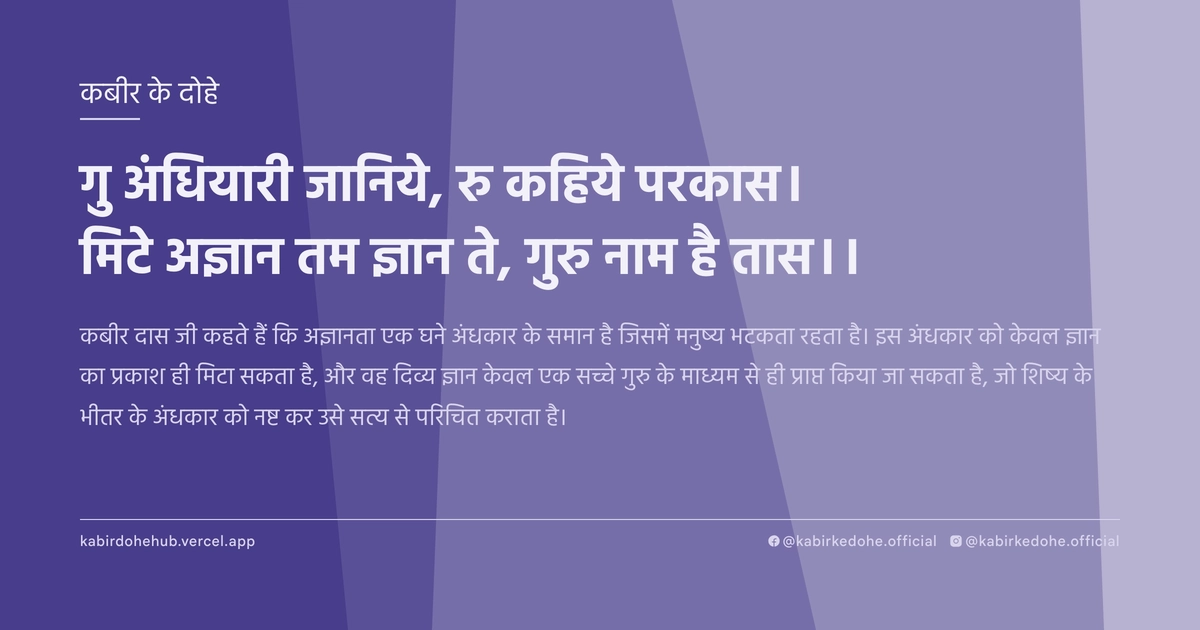
गु अंधियारी जानिये, रु कहिये परकास।
मिटे अज्ञान तम ज्ञान ते, गुरु नाम है तास।।
Gu andhiyari jaaniye, ru kahiye parkas. Mite agyaan tam gyaan te, guru naam hai taas.
इस पृष्ठ पर इस कबीर दोहे का अर्थ (meaning), हिंदी व्याख्या और अंग्रेज़ी अनुवाद, दार्शनिक विश्लेषण और व्यावहारिक जीवन सीख दी गई है। यह दोहा गुरु महत्व (The Guru's Importance) विषय से जुड़ा है — Kabir doha meaning and explanation in Hindi and English.
अर्थ (Meaning):
कबीर दास जी कहते हैं कि अज्ञानता एक घने अंधकार के समान है जिसमें मनुष्य भटकता रहता है। इस अंधकार को केवल ज्ञान का प्रकाश ही मिटा सकता है, और वह दिव्य ज्ञान केवल एक सच्चे गुरु के माध्यम से ही प्राप्त किया जा सकता है, जो शिष्य के भीतर के अंधकार को नष्ट कर उसे सत्य से परिचित कराता है।
Kabir explains that ignorance is akin to a dense, suffocating darkness in which a human soul wanders lost. This spiritual blindness can only be dispelled by the light of true knowledge. He emphasizes that the 'Guru' is the essential catalyst—the one who provides the illumination necessary to dissolve the shadows of ego and illusion, leading the seeker toward ultimate truth.
व्याख्या (Interpretation):
यहाँ 'अंधियारी' केवल बाहरी अंधेरे का नहीं, बल्कि 'माया' और 'अहंकार' के उस आवरण का प्रतीक है जो आत्मा को परमात्मा से अलग करता है। गुरु वह प्रकाशपुंज है जो शिष्य को यह अहसास कराता है कि वह स्वयं वह प्रकाश है जिसे वह बाहर खोज रहा था। यह निर्गुण भक्ति का सार है, जहाँ गुरु कोई व्यक्ति मात्र नहीं, बल्कि वह चेतना है जो अद्वैत वेदांत के अनुसार 'अहं ब्रह्मास्मि' (मैं ही ब्रह्म हूँ) के बोध को जाग्रत करती है। अज्ञान का मिटना वास्तव में द्वैत का अंत है। जब गुरु का ज्ञान हृदय में उतरता है, तो भक्त और भगवान के बीच की दूरी समाप्त हो जाती है। यह विरोधाभास है कि जिसे हम 'पाना' चाहते हैं, वह पहले से ही हमारे भीतर है, बस अज्ञान की धूल ने उसे ढका हुआ है।
In this verse, 'darkness' is not a physical absence of light but a metaphor for 'Maya' (illusion) and the 'Ahamkara' (ego) that veils the soul's innate divinity. The Guru represents the illuminating force—not necessarily a physical person, but the awakened consciousness that reveals the non-duality of Atman and Brahman. Within the framework of Nirgun Bhakti, the Guru acts as the mirror reflecting the seeker's own inner light. The central paradox presented is that the search for God is actually a journey back to the self. The 'darkness' is the false belief in separation; the 'light' is the realization of oneness. By dissolving the illusion of the 'I', the Guru facilitates the transition from a state of fragmented existence to a state of universal wholeness, aligning with the Advaita philosophy that the individual soul is identical to the supreme reality.
दार्शनिक विश्लेषण (Philosophical Analysis):
कबीर का यह दोहा उस सामाजिक और धार्मिक परिवेश में लिखा गया था जहाँ कर्मकांड और बाहरी आडंबरों का बोलबाला था। कबीर ने स्पष्ट किया कि मंदिर, मस्जिद या तीर्थयात्राएं अज्ञान के अंधकार को नहीं मिटा सकतीं, क्योंकि वे बाहरी क्रियाएं हैं। उनका दर्शन सूफीवाद के 'फना' (अहंकार का विनाश) और वेदांत के 'ज्ञान मार्ग' का एक अद्भुत संगम है। वे तर्क देते हैं कि जब तक व्यक्ति अपनी सीमित पहचान (जाति, धर्म, पद) से चिपका रहता है, वह अंधकार में है।
दार्शनिक स्तर पर, कबीर यहाँ 'अविद्या' पर प्रहार कर रहे हैं। अविद्या वह मानसिक स्थिति है जहाँ हम नश्वर को शाश्वत मान लेते हैं। गुरु का कार्य इस गलत धारणा को तोड़ना है। यह प्रक्रिया मनोवैज्ञानिक रूपांतरण की है, जहाँ साधक अपनी मानसिक प्रोग्रामिंग को त्याग कर शुद्ध चेतना में प्रवेश करता है।
कबीर का गुरु-तत्व किसी विशिष्ट संप्रदाय से नहीं जुड़ा है। उनके लिए गुरु वह है जो सत्य बोलने का साहस रखे और शिष्य को उसकी अपनी कमियों का दर्पण दिखाए। यह दृष्टिकोण जाति व्यवस्था और पुरोहितवाद की जड़ों पर प्रहार करता है, क्योंकि ज्ञान किसी विशेष कुल या भाषा की बपौती नहीं है, बल्कि यह सार्वभौमिक है।
सूफी परंपरा के 'पीर' और भारतीय परंपरा के 'गुरु' के समन्वय से कबीर एक ऐसा मार्ग प्रशस्त करते हैं जहाँ प्रेम और ज्ञान एक ही सिक्के के दो पहलू हैं। बिना ज्ञान के प्रेम अंधा है, और बिना प्रेम के ज्ञान शुष्क है।
अंततः, यह दोहा यह संदेश देता है कि मुक्ति बाहरी संसाधनों से नहीं, बल्कि आंतरिक बोध से मिलती है। जब 'मैं' (अहंकार) मिटता है, तभी 'वह' (परमात्मा) प्रकट होता है। यही वह बिंदु है जहाँ अज्ञान का अंधकार पूर्णतः समाप्त हो जाता है और केवल अनंत प्रकाश शेष रहता है।
Kabir composed this couplet during an era dominated by rigid ritualism and sectarian divides. He boldly asserts that external religious practices—such as pilgrimages, fasting, or idol worship—are incapable of dispelling the darkness of ignorance because they address the symptom, not the cause. His philosophy is a sophisticated synthesis of Sufi 'Fana' (the annihilation of the self) and the Vedantic 'Jnana Marga' (the path of knowledge), emphasizing that liberation is an internal psychological shift rather than a geographical or ritualistic achievement.
Philosophically, Kabir is targeting 'Avidya' (primordial ignorance). Avidya is the cognitive error of mistaking the transient, material world for the eternal reality. The Guru's role is to shatter this delusion. This is not mere academic learning but a profound psychological transformation where the seeker strips away the layers of social conditioning—caste, creed, and status—to uncover the raw, unadulterated consciousness beneath.
Kabir’s concept of the Guru transcends institutional boundaries. To him, the Guru is any catalyst that forces the seeker to confront their own shadows. This democratizes spirituality, challenging the monopoly of the priestly class over divine knowledge. He posits that truth is not the property of a specific language or lineage but is accessible to anyone with the sincerity to seek it.
By blending the Sufi concept of the 'Pir' with the Indian 'Guru', Kabir suggests that love and knowledge are interdependent. Knowledge without love is cold and intellectual; love without knowledge is blind and sentimental. The union of the two leads to 'Sahaja'—the state of natural, effortless enlightenment.
Ultimately, the verse argues that the 'darkness' is the ego's insistence on its own separate existence. The 'light' is the realization of non-duality. When the illusion of the separate 'I' dissolves, the universal 'One' is revealed. This is the ultimate alchemy of the soul: turning the lead of ignorance into the gold of spiritual awakening.
मूल संदेश (Core Message):
- अज्ञानता वह पर्दा है जो हमें हमारी वास्तविक दिव्यता देखने नहीं देता।
- बाहरी कर्मकांड केवल मानसिक सांत्वना हैं, वास्तविक मुक्ति आंतरिक ज्ञान से आती है।
- गुरु वह माध्यम है जो हमें हमारे स्वयं के भीतर छिपे प्रकाश से मिलाता है।
- अहंकार का विसर्जन ही वह एकमात्र द्वार है जिससे सत्य का प्रकाश प्रवेश करता है।
- जब 'मैं' मिटता है, तब ब्रह्मांड की अनंत चेतना का अनुभव होता है।
- Ignorance is the veil that prevents us from witnessing our own inherent divinity.
- External rituals are mere psychological comforts; true liberation stems from inner gnosis.
- The Guru is the catalyst who awakens the dormant light already residing within the seeker.
- The dissolution of the ego is the only gateway through which the light of truth can enter.
- When the illusion of the 'I' vanishes, the infinite consciousness of the universe is realized.
व्यावहारिक उदाहरण (Practical Example):
एक समय की बात है, वाराणसी के घाटों पर रहने वाली एक वृद्ध विधवा, जानकी, का जीवन केवल शोक और परंपराओं के बोझ तले दबा था। वह प्रतिदिन घंटों पूजा करती, लेकिन उसके मन में यह गहरा विश्वास था कि उसका जीवन एक अभिशाप है और वह केवल पापों के कारण इस दुख में है। वह स्वयं को 'अछूत' और 'अपशकुन' मानकर समाज के हाशिए पर सिमट गई थी।
एक दिन उसकी मुलाकात एक घुमंतू फकीर से हुई, जिसने जानकी को पूजा करते देखा। फकीर ने उससे पूछा, 'तुम इस पत्थर की मूर्ति में क्या खोज रही हो, जबकि तुम्हारा अपना हृदय ही सबसे बड़ा मंदिर है?' जानकी क्रोधित हुई और बोली कि वह एक पापी स्त्री है और उसे केवल दंड मिलना चाहिए।
फकीर ने मुस्कुराते हुए कहा, 'अंधेरा वह नहीं है जो बाहर है, अंधेरा वह है जो तुम्हें यह विश्वास दिलाता है कि तुम अलग और तुच्छ हो। जिस दिन तुम यह जान लोगी कि तुम और वह ईश्वर एक ही ज्योति के दो नाम हो, तुम्हारा सारा दुख मिट जाएगा।'
जानकी को पहले तो यह बात समझ नहीं आई, लेकिन वह फकीर के शब्दों के प्रभाव में रही। उसने धीरे-धीरे बाहरी कर्मकांडों के बजाय आत्म-चिंतन शुरू किया। उसने महसूस किया कि उसकी उदासी वास्तव में उसकी अपनी बनाई हुई एक पहचान थी, जिसे उसने समाज के डर से ओढ़ रखा था।
एक शाम, जब वह गंगा किनारे बैठी थी, उसे अचानक एक तीव्र बोध हुआ। उसने महसूस किया कि उसकी पीड़ा, उसकी जाति और उसकी विधवा की पहचान—ये सब केवल कपड़े थे जिन्हें उसने पहन रखा था। उसके भीतर एक ऐसी शांति उतरी जिसे उसने कभी अनुभव नहीं किया था।
उसने देखा कि वह अब दूसरों को उनकी जाति या स्थिति से नहीं, बल्कि उनकी आत्मा से देख रही है। उसने अपने घर के पास रहने वाले उन बच्चों को पढ़ाना शुरू किया जिन्हें समाज ने ठुकरा दिया था।
उसका व्यवहार पूरी तरह बदल गया। वह जो कभी झुककर चलती थी, अब गर्व और करुणा के साथ चलती थी। उसने महसूस किया कि फकीर वह 'गुरु' था जिसने उसके भीतर के अज्ञान के पर्दे को हटा दिया था।
जानकी की कहानी यह दिखाती है कि कैसे एक छोटा सा वैचारिक बदलाव—कि हम सब एक ही दिव्य प्रकाश का हिस्सा हैं—एक व्यक्ति के पूरे जीवन को अवसाद से आनंद की ओर मोड़ सकता है।
In the ancient lanes of Varanasi lived an elderly widow named Janaki. Her entire existence was consumed by the heavy burden of grief and rigid tradition. She spent hours in ritualistic prayer, yet her heart was anchored in the belief that her life was a curse and her suffering was a divine punishment for past sins. She had internalized the societal label of being 'inauspicious,' retreating into a shell of self-loathing.
One afternoon, she encountered a wandering Sufi mystic who observed her fervent prayers. The mystic asked her, 'What are you searching for in that stone image, when your own heart is the greatest temple?' Janaki responded with bitterness, claiming she was a sinful woman who deserved nothing but hardship.
The mystic smiled and replied, 'The darkness is not in the world around you, but in the belief that you are separate, small, and broken. The moment you realize that you and the Divine are but two names for the same light, your suffering will vanish.'
Initially, Janaki dismissed these words as heresy. However, the seed of doubt regarding her own misery was planted. She began to shift her focus from external rituals to internal inquiry, questioning why she clung to an identity of a victim.
One evening, while sitting by the Ganges, a sudden epiphany struck her. She realized that her grief, her social status, and her identity as a widow were merely garments she had been forced to wear. Beneath these layers lay a luminous consciousness that was untouched by social stigma or personal loss.
This realization triggered a profound transformation. She stopped seeing herself as a discarded object and started seeing the divine spark in everyone. She began teaching the street children of the ghats, those who were shunned by the formal schools.
Her posture changed; the stoop of defeat in her shoulders vanished, replaced by a quiet, radiant dignity. She no longer sought validation from the priests or the community, for she had found the source of light within herself.
Janaki's journey illustrates the 'Kabir Twist': the shift from seeing the Guru as a provider of rewards to seeing the Guru as the one who removes the blindness of the ego. Her liberation was not a change in her circumstances, but a change in her perception of reality.
अभ्यास मार्गदर्शन (Practice Guidance):
- प्रतिदिन 20 मिनट मौन ध्यान करें, जहाँ आप अपने विचारों को केवल एक साक्षी (observer) की तरह देखें, बिना किसी निर्णय के।
- एक 'अहंकार डायरी' लिखें: दिन भर में जब भी आपको क्रोध, ईर्ष्या या श्रेष्ठता का अनुभव हो, उसे लिखें और विश्लेषण करें कि वह कौन सा 'अंधेरा' था जिसने आपको भ्रमित किया।
- व्यवहार परिवर्तन: प्रतिदिन कम से कम एक ऐसा कार्य करें जो आपके सामाजिक या व्यक्तिगत पूर्वाग्रहों के विपरीत हो (जैसे किसी ऐसे व्यक्ति की मदद करना जिसे आप नापसंद करते हैं)।
- निदान चेकलिस्ट: क्या मैं अभी भी अपनी पहचान अपनी उपलब्धियों या दुखों से जोड़ रहा हूँ? क्या मैं दूसरों में केवल उनकी त्रुटियाँ देख रहा हूँ? यदि हाँ, तो अज्ञान का अंधकार अभी शेष है।
- Practice 20 minutes of silent mindfulness daily, observing your thoughts as a detached witness without judging or attaching to them.
- Maintain an 'Ego Journal': Record moments of anger, jealousy, or superiority, and analyze which specific 'darkness' or illusion triggered that reaction.
- Behavioral Shift: Perform one daily act that contradicts your ingrained biases (e.g., showing genuine kindness to someone you instinctively dislike).
- Diagnostic Checklist: Do I still define myself by my achievements or my traumas? Do I see others primarily through the lens of their flaws? If yes, the darkness of ignorance still persists.
चिंतन प्रश्न (Reflection Questions):
- मेरी वह कौन सी 'पवित्र' मान्यताएं हैं जो वास्तव में मेरे अहंकार को पोषण दे रही हैं?
- यदि मेरी सामाजिक पहचान (नाम, पद, धर्म) छीन ली जाए, तो मेरे पास क्या बचेगा?
- क्या मैं वास्तव में ज्ञान की खोज कर रहा हूँ, या मैं केवल अपनी मौजूदा मान्यताओं की पुष्टि चाहता हूँ?
- मेरे जीवन का वह कौन सा 'अंधेरा' है जिसे मैं स्वीकार करने से डरता हूँ?
- क्या मेरा 'आध्यात्मिक मार्ग' मुझे अधिक विनम्र बना रहा है या मुझे दूसरों से श्रेष्ठ महसूस करा रहा है?
- Which of my 'sacred' beliefs are actually serving as fuel for my ego?
- If my social identity—name, title, religion—were stripped away, what would truly remain of me?
- Am I genuinely seeking knowledge, or am I merely seeking confirmation of my existing biases?
- What is the specific 'darkness' in my life that I am most terrified to acknowledge?
- Is my spiritual practice making me more humble, or is it creating a new, subtler form of superiority?