
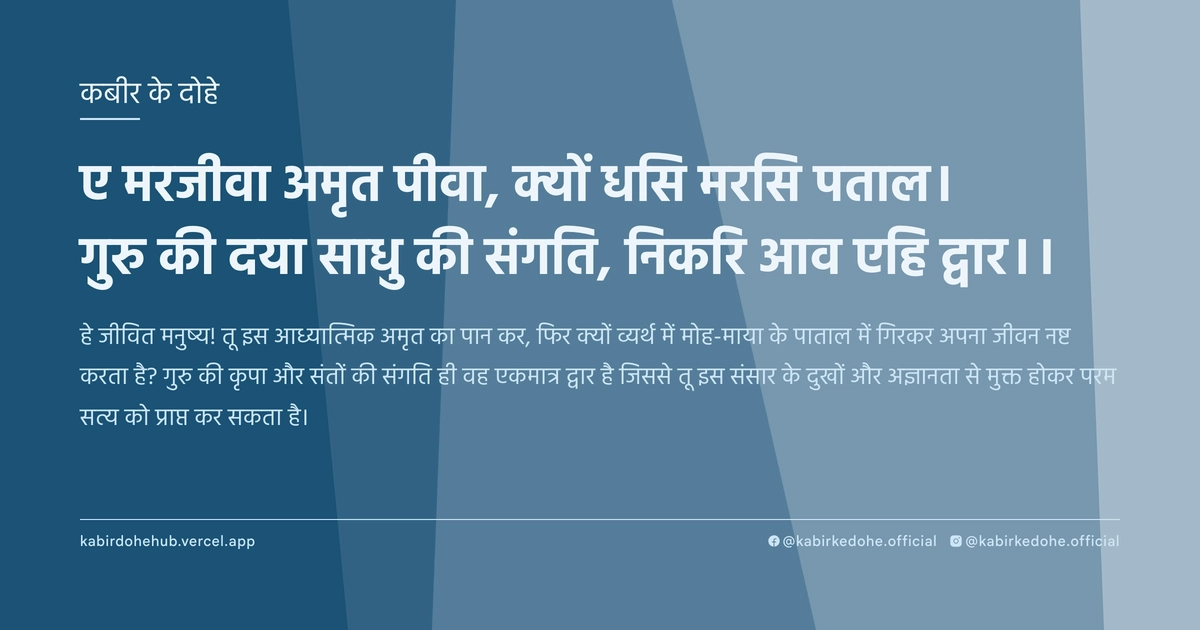
ए मरजीवा अमृत पीवा, क्यों धसि मरसि पताल।
गुरु की दया साधु की संगति, निकरि आव एहि द्वार।।
E marjiva amrit piva, kyon dhas marasi patal. Guru ki daya sadhu ki sangati, nikari aav ehi dwar.
इस पृष्ठ पर इस कबीर दोहे का अर्थ (meaning), हिंदी व्याख्या और अंग्रेज़ी अनुवाद, दार्शनिक विश्लेषण और व्यावहारिक जीवन सीख दी गई है। यह दोहा गुरु महत्व (The Guru's Importance) विषय से जुड़ा है — Kabir doha meaning and explanation in Hindi and English.
अर्थ (Meaning):
हे जीवित मनुष्य! तू इस आध्यात्मिक अमृत का पान कर, फिर क्यों व्यर्थ में मोह-माया के पाताल में गिरकर अपना जीवन नष्ट करता है? गुरु की कृपा और संतों की संगति ही वह एकमात्र द्वार है जिससे तू इस संसार के दुखों और अज्ञानता से मुक्त होकर परम सत्य को प्राप्त कर सकता है।
O living soul! Drink the nectar of spiritual awakening; why do you choose to sink and perish in the depths of worldly illusion? Through the grace of a true Guru and the company of the enlightened, there exists a gateway that leads you out of the abyss of ignorance toward eternal liberation.
व्याख्या (Interpretation):
इस दोहे में 'मरजीवा' शब्द एक विरोधाभास है, जो उस व्यक्ति को संबोधित करता है जो शारीरिक रूप से जीवित है लेकिन आध्यात्मिक रूप से मृत है। 'अमृत' यहाँ निर्गुण ब्रह्म के ज्ञान का प्रतीक है, जबकि 'पाताल' माया और अहंकार के गहरे गर्त को दर्शाता है। कबीर समझाते हैं कि मनुष्य अपनी इंद्रियों और सांसारिक आसक्तियों में इतना उलझा हुआ है कि वह अपने भीतर के दिव्य प्रकाश को भूल गया है। यह स्थिति अद्वैत वेदांत के उस सिद्धांत को दर्शाती है जहाँ जीव स्वयं को ब्रह्म से अलग मानकर दुख भोगता है। मुक्ति का मार्ग केवल बाहरी कर्मकांडों से नहीं, बल्कि एक समर्थ गुरु के मार्गदर्शन और सत्संग के माध्यम से संभव है, जो साधक के अहंकार को गलाकर उसे शून्य में विलीन कर देता है।
The term 'Marjeeva' presents a poignant paradox, addressing a human who is biologically alive yet spiritually dormant. 'Amrit' (nectar) symbolizes the realization of the Formless Divine (Nirgun Brahman), while 'Pataal' (the underworld) represents the suffocating depths of Maya and egoic attachment. Kabir suggests that humanity is so entangled in sensory desires that it has forgotten its inherent divinity. This mirrors the Advaita Vedanta concept where the soul suffers due to the illusion of separation from the Absolute. Liberation is not achieved through ritualistic piety but through the catalyst of a Guru's grace and the resonance of a spiritual community (Satsang), which dissolves the ego and opens the gateway to non-dual consciousness.
दार्शनिक विश्लेषण (Philosophical Analysis):
कबीर का यह आह्वान उनके समय के सामाजिक और धार्मिक पाखंड के विरुद्ध एक सशक्त प्रहार है। उन्होंने देखा कि लोग तीर्थयात्राओं और बाहरी दिखावों में समय व्यर्थ कर रहे थे, जबकि वास्तविक सत्य उनके भीतर ही था। यह दर्शन सूफी मत के 'फना' (अहंकार का विनाश) और वेदांत के 'अहं ब्रह्मास्मि' के मिलन बिंदु पर स्थित है। कबीर यहाँ यह स्पष्ट करते हैं कि केवल ज्ञान पढ़ना पर्याप्त नहीं है; अनुभवजन्य ज्ञान (Experiential Knowledge) ही अमृत है।
ऐतिहासिक रूप से, कबीर ने जाति और धर्म की सीमाओं को तोड़कर एक ऐसे मार्ग की बात की जो सार्वभौमिक था। उनके लिए 'पाताल' केवल एक स्थान नहीं, बल्कि एक मानसिक अवस्था है जहाँ मनुष्य क्रोध, लोभ और मोह के कारण गिरता रहता है। यह मनोवैज्ञानिक पतन तब होता है जब व्यक्ति अपनी आत्मा की आवाज़ को दबाकर बाहरी दुनिया की मान्यताओं को सत्य मान लेता है।
निर्गुण भक्ति का मूल तत्व यह है कि ईश्वर किसी मूर्ति या मंदिर में नहीं, बल्कि चेतना के उच्चतम स्तर पर है। जब कबीर 'गुरु की दया' की बात करते हैं, तो वे किसी व्यक्ति विशेष की पूजा नहीं, बल्कि उस 'तत्व' की बात कर रहे हैं जो शिष्य के भीतर सोई हुई चेतना को जगा सके। यह गुरु-शिष्य परंपरा का वह रूप है जहाँ गुरु केवल एक दर्पण होता है जो शिष्य को उसका वास्तविक स्वरूप दिखाता है।
यहाँ 'साधु की संगति' का अर्थ केवल संतों के साथ बैठना नहीं, बल्कि उन विचारों के साथ सामंजस्य बिठाना है जो सांसारिक मोह से ऊपर उठ चुके हों। यह एक सामूहिक ऊर्जा का निर्माण करता है जो व्यक्तिगत अहंकार को नष्ट करने में सहायक होता है। सूफीवाद की तरह, यहाँ भी प्रेम और समर्पण को ज्ञान से ऊपर रखा गया है, क्योंकि बिना प्रेम के ज्ञान केवल एक बौद्धिक बोझ बन जाता है।
अंततः, यह दोहा मनुष्य को उसकी वर्तमान स्थिति (अज्ञान) और उसकी संभावित स्थिति (मोक्ष) के बीच के अंतर को समझने के लिए प्रेरित करता है। यह एक चेतावनी भी है और एक निमंत्रण भी। कबीर यह स्थापित करते हैं कि मुक्ति का द्वार हमेशा खुला है, लेकिन उस द्वार तक पहुँचने के लिए पहले अपनी उस पहचान को छोड़ना होगा जो हमें 'पाताल' की ओर खींचती है।
Kabir’s invocation is a powerful critique of the social and religious hypocrisy prevalent during his era. He observed people wasting their lives in pilgrimage and external rituals while the ultimate truth resided within. This philosophy sits at the intersection of the Sufi concept of 'Fana' (annihilation of the self) and the Vedantic realization of 'Aham Brahmasmi' (I am the Absolute). Kabir asserts that intellectual knowledge is insufficient; only experiential realization is the true 'Amrit'.
Historically, Kabir dismantled caste and creed, proposing a universal path to truth. For him, 'Pataal' is not a geographical underworld but a psychological state of descent triggered by anger, greed, and attachment. This spiritual decline occurs when an individual suppresses the inner voice in favor of societal conditioning and external dogmas.
The core of Nirgun Bhakti is the belief that the Divine is not confined to idols or temples but exists at the highest level of consciousness. When Kabir speaks of 'Guru's grace,' he is not advocating for the worship of a person, but for the catalyst—the principle of enlightenment—that awakens the dormant consciousness within the seeker. The Guru acts as a mirror, reflecting the seeker's true, undivided nature.
Furthermore, 'Satsang' (company of the truth-seekers) is not merely social gathering but a synchronization with frequencies of detachment. This creates a collective spiritual energy that helps erode the stubborn walls of the individual ego. Similar to Sufism, love and surrender are prioritized over dry scholarship, as knowledge without love becomes a mere intellectual burden.
Ultimately, this couplet forces the seeker to recognize the gap between their current state of ignorance and their potential for liberation. It is both a warning and an invitation. Kabir establishes that the gateway to liberation is always open, but to enter, one must first shed the false identity that continuously pulls them down into the abyss of worldly illusion.
मूल संदेश (Core Message):
- बाहरी कर्मकांड केवल भ्रम हैं; आंतरिक रूपांतरण ही वास्तविक अमृत है।
- अहंकार वह पाताल है जहाँ आत्मा अपनी दिव्यता खो देती है।
- सच्चा गुरु वह है जो आपको आपके स्वयं के झूठ से परिचित कराए।
- संगति केवल साथ बैठना नहीं, बल्कि चेतना का मिलन है।
- मुक्ति का द्वार आपके भीतर है, बस उसे देखने वाली दृष्टि चाहिए।
- External rituals are mere illusions; internal transformation is the only true nectar.
- The ego is the abyss where the soul loses sight of its own divinity.
- A true Guru is one who introduces you to your own delusions.
- Company is not mere proximity, but the alignment of consciousness.
- The gateway to liberation is within; one only needs the vision to see it.
व्यावहारिक उदाहरण (Practical Example):
वाराणसी के घाटों पर रहने वाले एक वृद्ध विधवा, जानकी, का जीवन केवल शोक और कर्मकांडों के इर्द-गिर्द सिमटा हुआ था। वह प्रतिदिन घंटों गंगा में स्नान करती और कठिन उपवास रखती, लेकिन उसके मन में अपने बेटे के प्रति गहरा क्रोध और समाज के प्रति कड़वाहट थी। वह मानती थी कि उसकी तपस्या उसे मोक्ष दिलाएगी, लेकिन वास्तव में वह अपने ही दुख के 'पाताल' में धंसी हुई थी।
एक दिन उसकी मुलाकात एक घुमंतू साधु से हुई जो घाट की सीढ़ियों पर चुपचाप बैठे थे। जानकी ने उनसे अपनी तपस्या की प्रशंसा की और पूछा कि उसे शांति क्यों नहीं मिल रही। साधु ने मुस्कुराकर कहा, 'तुम शरीर को शुद्ध कर रही हो, लेकिन मन के जहर को अमृत में नहीं बदल रही हो। तुम जिसे मोक्ष समझ रही हो, वह केवल एक आदत है।'
जानकी को यह बात चुभी, लेकिन उसने साधु के साथ कुछ दिन बिताए। साधु ने उसे कोई मंत्र नहीं दिया, बल्कि उसे केवल यह सिखाया कि वह अपने क्रोध को देखे बिना उसे पकड़े नहीं। उन्होंने उसे समझाया कि असली पूजा मंदिर में नहीं, बल्कि उस क्षमा में है जो वह अपने बेटे के लिए महसूस कर सके।
शुरुआत में जानकी ने विरोध किया। उसने कहा कि उसका बेटा पापी है। साधु ने उत्तर दिया, 'पाप वह है जो तुम्हें उससे अलग करता है, और अमृत वह है जो तुम्हें उससे जोड़ता है।'
धीरे-धीरे, जानकी ने महसूस किया कि उसकी सारी धार्मिक गतिविधियाँ केवल उसके अहंकार को संतुष्ट कर रही थीं। वह खुद को 'पवित्र' मानकर दूसरों को 'अपवित्र' देख रही थी। यह अहसास उसके लिए वह 'अमृत' था जिसने उसकी चेतना को बदल दिया।
उसने अपनी कठोर तपस्या छोड़ी और अपना समय उन अनाथ बच्चों की मदद करने में लगाने लगी जो घाटों पर भीख मांगते थे। उसने पाया कि दूसरों के आंसू पोंछने में जो आनंद है, वह घंटों की माला जपने में नहीं था।
एक दिन उसका बेटा वापस लौटा। पहले वह उसे धिक्कारती, लेकिन अब उसने उसे गले लगा लिया। उसके चेहरे पर जो शांति थी, वह किसी भी बाहरी अनुष्ठान से प्राप्त नहीं हुई थी।
जानकी अब जान गई थी कि 'पाताल' वह मानसिक अंधेरा था जहाँ वह नफरत के साथ रहती थी, और 'अमृत' वह प्रेम था जिसने उसे मुक्त कर दिया। गुरु की एक छोटी सी बात और साधु की संगति ने उसे उसके जीवन के वास्तविक द्वार तक पहुँचा दिया था।
Janaki, an elderly widow living on the ghats of Varanasi, had a life confined to mourning and rigid rituals. She spent hours bathing in the Ganges and observing strict fasts, yet her heart was filled with deep resentment toward her son and bitterness toward society. She believed her austerity would bring her salvation, but in reality, she was sinking into the 'Pataal' of her own emotional suffering.
One day, she encountered a wandering monk sitting silently on the stone steps. Janaki boasted of her piety and asked why she still felt no peace. The monk smiled and replied, 'You are purifying the body, but you are not transforming the poison of the mind into nectar. What you call penance is merely a habit.'
Janaki was stung by the remark, but she stayed with the monk for a few days. He gave her no mantras; instead, he taught her to observe her anger without clinging to it. He explained that true worship does not happen in temples, but in the forgiveness she could extend to her son.
Initially, Janaki resisted, claiming her son was a sinner. The monk replied, 'Sin is that which separates you from the other; nectar is that which unites you.'
Gradually, Janaki realized that all her religious activities were merely feeding her ego. By labeling herself 'pure,' she had spent years labeling others 'impure.' This realization was the 'Amrit' that shifted her consciousness.
She abandoned her harsh austerities and began spending her time helping orphaned children who begged on the ghats. She discovered that the joy found in wiping another's tears far exceeded the satisfaction of chanting beads for hours.
One day, her son returned. Where she once would have cursed him, she now embraced him. The peace on her face was not the result of any external ritual.
Janaki now understood that 'Pataal' was the mental darkness where she resided with hatred, and 'Amrit' was the love that liberated her. A few words from a guide and the company of the enlightened had led her to the true gateway of her life.
अभ्यास मार्गदर्शन (Practice Guidance):
- प्रतिदिन 20 मिनट 'साक्षी भाव' का अभ्यास करें: अपने विचारों को बिना किसी निर्णय के देखें, जैसे आप किसी और के विचार देख रहे हों।
- आत्म-पूछताछ जर्नल: प्रतिदिन लिखें कि आज किस समय आपका अहंकार (Ego) हावी हुआ और उसने आपको 'पाताल' (नकारात्मकता) की ओर कैसे धकेला।
- सत्संग का आधुनिक रूप: ऐसे लोगों या साहित्य के साथ समय बिताएं जो आपको चुनौती दें और आपकी मान्यताओं को तोड़ें, न कि केवल आपकी प्रशंसा करें।
- निदान चेकलिस्ट: क्या मैं दूसरों को छोटा महसूस कराकर खुद को श्रेष्ठ मान रहा हूँ? क्या मेरी शांति बाहरी परिस्थितियों पर निर्भर है? यदि हाँ, तो आप अभी भी 'पाताल' में हैं।
- Practice 'Witness Consciousness' for 20 minutes daily: Observe your thoughts without judgment, as if you are watching someone else's mind.
- Self-Inquiry Journaling: Record moments where your ego took over and analyze how it pushed you toward 'Pataal' (negativity or conflict).
- Modern Satsang: Intentionally seek out people or literature that challenge your biases and dismantle your certainties, rather than those that merely validate you.
- Diagnostic Checklist: Am I deriving a sense of superiority by belittling others? Is my peace dependent on external conditions? If yes, you are still residing in the 'Pataal' of illusion.
चिंतन प्रश्न (Reflection Questions):
- मेरे जीवन का वह कौन सा 'पाताल' है जिसे मैं अपनी सामाजिक प्रतिष्ठा के पीछे छिपाकर रखता हूँ?
- क्या मेरी धार्मिक या आध्यात्मिक पहचान वास्तव में मुझे विनम्र बना रही है, या यह मेरे अहंकार का एक नया रूप है?
- यदि आज मेरे पास कोई पद, पैसा या पहचान न रहे, तो मेरे भीतर क्या बचेगा?
- मैं किन लोगों की संगति में रहता हूँ—उनमें जो मेरी इच्छाओं को पुष्ट करते हैं या उनमें जो मेरी आत्मा को जगाते हैं?
- क्या मैं वास्तव में सत्य की खोज कर रहा हूँ, या मैं केवल अपने पूर्वग्रहों की पुष्टि करने वाले प्रमाण ढूँढ रहा हूँ?
- What is the 'Pataal' in my life that I carefully hide behind my social status and public image?
- Is my religious or spiritual identity making me truly humble, or has it become a sophisticated mask for my ego?
- If all my titles, wealth, and identities were stripped away today, what would actually remain of me?
- Whose company do I seek—those who validate my desires or those who awaken my soul?
- Am I genuinely seeking the Truth, or am I merely searching for evidence that confirms my existing biases?