
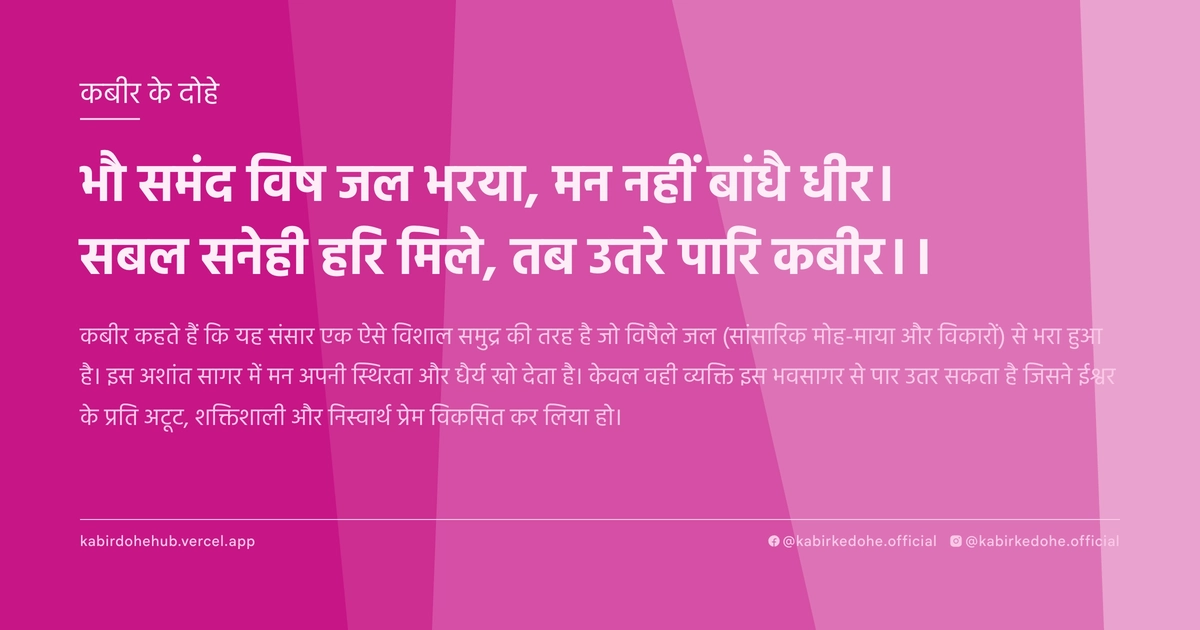
भौ समंद विष जल भरया, मन नहीं बांधै धीर।
सबल सनेही हरि मिले, तब उतरे पारि कबीर।।
Bhau samand vish jal bharya, man nahi bandhai dheer. Sabal sanehi hari mile, tab utre paari kabir.
इस पृष्ठ पर इस कबीर दोहे का अर्थ (meaning), हिंदी व्याख्या और अंग्रेज़ी अनुवाद, दार्शनिक विश्लेषण और व्यावहारिक जीवन सीख दी गई है। यह दोहा धैर्य (Patience) विषय से जुड़ा है — Kabir doha meaning and explanation in Hindi and English.
अर्थ (Meaning):
कबीर कहते हैं कि यह संसार एक ऐसे विशाल समुद्र की तरह है जो विषैले जल (सांसारिक मोह-माया और विकारों) से भरा हुआ है। इस अशांत सागर में मन अपनी स्थिरता और धैर्य खो देता है। केवल वही व्यक्ति इस भवसागर से पार उतर सकता है जिसने ईश्वर के प्रति अटूट, शक्तिशाली और निस्वार्थ प्रेम विकसित कर लिया हो।
Kabir describes the worldly existence as a vast ocean filled with poisonous waters, symbolizing the toxins of attachment, ego, and illusion. In this turbulent sea, the mind struggles to maintain patience and stability. Only those possessed of a powerful, unwavering, and selfless love for the Divine can successfully navigate and cross over to the shore of liberation.
व्याख्या (Interpretation):
यहाँ 'भौ समंद' (भवसागर) भौतिक जगत का रूपक है, जहाँ जन्म और मृत्यु का चक्र निरंतर चलता रहता है। 'विष जल' उन मानसिक विकारों—काम, क्रोध, लोभ और मोह—को दर्शाता है जो आत्मा को सत्य से दूर रखते हैं। जब मन विचलित होता है, तो वह धैर्य (धीर) खो देता है और माया के जाल में और अधिक उलझ जाता है। कबीर यहाँ निरगुण भक्ति का संकेत दे रहे हैं, जहाँ ईश्वर किसी मूर्ति में नहीं बल्कि हृदय के गहन प्रेम में स्थित है। यह द्वैत से अद्वैत की यात्रा है, जहाँ 'मैं' और 'तू' का भेद मिट जाता है। अंततः, केवल 'सबल सनेही' (शक्तिशाली प्रेमी) ही उस पार जा सकता है, क्योंकि प्रेम ही वह एकमात्र सेतु है जो सीमित अहंकार को असीमित ब्रह्म से जोड़ता है।
The 'Bhau Samand' (ocean of existence) serves as a metaphor for the material world, characterized by the relentless cycle of birth and death. The 'poisonous water' represents the psychological toxins—lust, anger, greed, and attachment—that cloud the soul's innate purity. When the mind is agitated, it loses its 'dheer' (steadfastness), sinking deeper into the illusions of Maya. Kabir points toward Nirgun Bhakti, suggesting that the Divine is not found in external rituals but in the profound depths of the heart. This is a transition from duality to Advaita (non-duality), where the distinction between the seeker and the sought vanishes. Ultimately, only the 'Sabal Sanehi' (the powerful lover) can cross over, as selfless love is the only bridge capable of collapsing the ego to merge the individual Atman with the universal Brahman.
दार्शनिक विश्लेषण (Philosophical Analysis):
कबीर का यह दोहा उस कालखंड की प्रतिक्रिया है जब धर्म केवल कर्मकांडों और बाहरी दिखावे तक सीमित था। उन्होंने स्पष्ट किया कि मंदिर, मस्जिद या तीर्थयात्राएं उस 'विष जल' को नहीं हटा सकतीं जो मन के भीतर व्याप्त है। उनका दर्शन सूफीवाद के 'इश्क-ए-हकीकी' (ईश्वरीय प्रेम) और वेदांत के 'अद्वैत' का एक अनूठा संगम है, जहाँ प्रेम ही ज्ञान का उच्चतम रूप है।
यहाँ 'विष' का अर्थ केवल नकारात्मकता नहीं, बल्कि वह 'अहंकार' है जो मनुष्य को यह विश्वास दिलाता है कि वह ईश्वर से अलग है। यह अलगाव ही दुख का मूल कारण है। कबीर तर्क देते हैं कि बौद्धिक ज्ञान या शास्त्रों का रट्टा मारना पर्याप्त नहीं है; जब तक हृदय में करुणा और प्रेम की तीव्रता नहीं होगी, तब तक मुक्ति संभव नहीं है।
सामाजिक स्तर पर, यह दोहा जाति और वर्ग के भेदभाव को नकारता है। 'सबल सनेही' बनने के लिए किसी विशेष कुल या वर्ण में जन्म लेने की आवश्यकता नहीं है; प्रेम एक लोकतांत्रिक मार्ग है जो सबके लिए खुला है। यह उस समय के रूढ़िवादी समाज के लिए एक क्रांतिकारी प्रहार था।
मनोवैज्ञानिक रूप से, 'धीर' या धैर्य का अभाव मानसिक अस्थिरता को दर्शाता है। जब हम बाहरी दुनिया की इच्छाओं के पीछे भागते हैं, तो हम वास्तव में विष पी रहे होते हैं। कबीर हमें अंतर्मुखी होने का आह्वान करते हैं, जहाँ शांति और स्थिरता का अनुभव केवल आत्म-साक्षात्कार के माध्यम से ही संभव है।
अंततः, यह दोहा इस सत्य को स्थापित करता है कि मोक्ष कोई भौगोलिक स्थान नहीं है, बल्कि चेतना की एक अवस्था है। जब प्रेम इतना शक्तिशाली हो जाता है कि वह स्वयं को मिटा दे, तब व्यक्ति 'पार' उतर जाता है, अर्थात वह माया के बंधन से मुक्त होकर शुद्ध चैतन्य में विलीन हो जाता है।
This couplet is a profound reaction to an era where religion had devolved into mere ritualism and external displays of piety. Kabir asserts that temples, mosques, or pilgrimages cannot neutralize the 'poisonous water' residing within the human psyche. His philosophy is a unique synthesis of Sufism's 'Ishq-e-Haqiqi' (Divine Love) and the non-dualism of Advaita Vedanta, positioning love as the highest form of knowledge.
The 'poison' mentioned is not merely negativity, but the 'Ahamkara' (ego) that creates the illusion of separation between the individual and the Divine. This perceived separation is the root cause of all human suffering. Kabir argues that intellectual accumulation or the rote memorization of scriptures is insufficient; unless there is an intense, burning longing and love in the heart, liberation remains an impossibility.
On a social plane, this teaching dismantles the hierarchies of caste and class. To become a 'Sabal Sanehi' (powerful lover), one does not need to be born into a specific lineage or varna. Love is a democratic path, accessible to all regardless of social standing. This was a revolutionary strike against the orthodox societal structures of his time.
Psychologically, the lack of 'dheer' (steadfastness) reflects the fragmented nature of the human mind. When we chase external desires, we are essentially consuming the poison of attachment. Kabir calls for an inward turn, suggesting that true stability is found only through the realization of the Self, away from the noise of the world.
Ultimately, the doha establishes that salvation is not a geographical destination but a state of consciousness. When love becomes so potent that it annihilates the ego, the individual 'crosses over,' meaning they are liberated from the shackles of Maya and merge into the pure, infinite consciousness of the Absolute.
मूल संदेश (Core Message):
- सांसारिक मोह एक विषैला जाल है जो आत्मा को जकड़े रखता है।
- मानसिक स्थिरता और धैर्य ही इस मायावी सागर के एकमात्र सहारे हैं।
- केवल बौद्धिक ज्ञान पर्याप्त नहीं, हृदय की तीव्रता अनिवार्य है।
- निस्वार्थ प्रेम ही वह शक्ति है जो अहंकार के बंधन को काटती है।
- ईश्वर बाहरी कर्मकांडों में नहीं, बल्कि आंतरिक करुणा में बसता है।
- जब 'मैं' मिटता है, तभी अनंत ब्रह्म का अनुभव संभव होता है।
- Worldly attachment is a poisonous web that binds the soul.
- Mental stability and patience are the only anchors in this illusory ocean.
- Intellectual knowledge is insufficient; the intensity of the heart is mandatory.
- Selfless love is the only force capable of severing the bonds of ego.
- The Divine resides not in external rituals, but in internal compassion.
- Only when the 'I' dissolves does the experience of the Infinite become possible.
व्यावहारिक उदाहरण (Practical Example):
वाराणसी के एक पुराने घाट पर रहने वाली एक वृद्ध विधवा, जानकी, का जीवन अकेलेपन और कड़वाहट से भरा था। वर्षों पहले परिवार से अलग होने के बाद, उन्होंने अपने हृदय में एक दीवार खड़ी कर ली थी। वे हर किसी को संदेह की दृष्टि से देखती थीं और मानती थीं कि दुनिया केवल स्वार्थ और धोखे का 'विषैला समुद्र' है।
उनकी दिनचर्या केवल मंदिर जाने और मंत्र पढ़ने तक सीमित थी, लेकिन उनके मन में शांति नहीं थी। वे दूसरों की मदद तो करती थीं, लेकिन उसमें एक प्रकार का अहंकार था कि वे 'पुण्य' कमा रही हैं। उनका मन निरंतर अतीत के दुखों में भटकता रहता था, जिससे वे धैर्य खो चुकी थीं।
एक दिन, घाट पर एक छोटा बच्चा, जो किसी अनाथालय से था, अपनी फटी हुई कमीज में ठंड से कांप रहा था। जानकी ने पहले उसे अनदेखा किया, क्योंकि उनका मन अभी भी 'शुद्धता' और 'दूरी' के नियमों से बंधा था।
लेकिन उस बच्चे की आँखों में एक ऐसी मासूमियत और पुकार थी जिसने जानकी के भीतर कुछ तोड़ दिया। अचानक, उन्हें महसूस हुआ कि उनकी सारी पूजा और अनुष्ठान व्यर्थ थे यदि वे एक पीड़ित बच्चे का दर्द नहीं समझ पा रही थीं।
उन्होंने बिना सोचे अपनी एकमात्र गर्म शॉल उस बच्चे को ओढ़ा दी। उस क्षण, उनके भीतर का 'मैं' गायब हो गया। उन्होंने महसूस किया कि वह बच्चा कोई बाहरी व्यक्ति नहीं, बल्कि उनके अपने भीतर का वह हिस्सा था जिसे उन्होंने वर्षों से दबा रखा था।
यह एक 'कबीर ट्विस्ट' था। जानकी ने महसूस किया कि जिस 'विष' से वे दुनिया को बचा रही थीं, वह वास्तव में उनके अपने भीतर का अलगाव और अहंकार था।
अगले कुछ महीनों में, जानकी का व्यवहार पूरी तरह बदल गया। उन्होंने अब केवल मंत्र पढ़ना नहीं, बल्कि निःस्वार्थ सेवा को अपना धर्म बना लिया। उन्होंने घाट पर आने वाले हर असहाय व्यक्ति के लिए अपने घर के दरवाजे खोल दिए।
अब उनके चेहरे पर एक ऐसी शांति थी जो किसी भी तीर्थयात्रा से नहीं आई थी। उन्होंने जान लिया था कि ईश्वर किसी मूर्ति में नहीं, बल्कि उस निस्वार्थ प्रेम में है जो दूसरे के दुख को अपना बना लेता है।
उनका जीवन अब एक संघर्ष नहीं, बल्कि एक प्रवाह बन गया था। उन्होंने समझ लिया था कि जब प्रेम शक्तिशाली होता है, तो वह संसार के सारे विष को अमृत में बदलने की क्षमता रखता है।
अंततः, जानकी ने उस भवसागर को पार कर लिया, जबकि वे अभी भी उसी वाराणसी के घाट पर रह रही थीं। उनकी मुक्ति बाहरी दुनिया से पलायन में नहीं, बल्कि प्रेम के माध्यम से आंतरिक रूपांतरण में थी।
Janaki, an elderly widow living on an ancient ghat in Varanasi, led a life saturated with loneliness and bitterness. After being estranged from her family years ago, she had constructed a formidable wall around her heart. She viewed everyone with suspicion, believing the world to be a 'poisonous ocean' of selfishness and deceit.
Her routine was limited to visiting the temple and chanting mantras, yet her mind remained turbulent. While she performed acts of charity, they were laced with a subtle ego—a belief that she was accumulating 'spiritual merit.' Her mind constantly wandered through the grief of the past, leaving her devoid of inner peace.
One winter evening, a small child from a nearby orphanage, shivering in a tattered shirt, sat near her. Initially, Janaki ignored him, bound by her rigid notions of ritual purity and social distance.
However, there was a raw innocence and a silent plea in the child's eyes that shattered something deep within her. Suddenly, she realized that all her prayers and rituals were hollow if she could not feel the pain of a suffering child.
Without a second thought, she wrapped her only warm shawl around the boy. In that fleeting moment, the 'I' vanished. She felt that the child was not a stranger, but a reflection of the neglected, vulnerable part of her own soul.
This was the 'Kabir Twist.' Janaki realized that the 'poison' she had been guarding herself against was actually the isolation and ego she had nurtured within her own heart.
Over the following months, Janaki's existence underwent a total transformation. She shifted from the mechanical recitation of mantras to the living practice of selfless service. She opened her doors to every destitute soul who wandered onto the ghats.
A serenity descended upon her face—a peace that no pilgrimage could have provided. She discovered that the Divine was not residing in an idol, but in the selfless love that adopts another's suffering as its own.
Her life ceased to be a struggle and became a flow. She understood that when love is truly powerful, it possesses the alchemy to turn the poison of the world into the nectar of grace.
Ultimately, Janaki crossed the ocean of existence while still residing on the same ghats of Varanasi. Her liberation was not an escape from the world, but an internal transmutation through the power of love.
अभ्यास मार्गदर्शन (Practice Guidance):
- प्रतिदिन 20 मिनट 'साक्षी भाव' का अभ्यास करें: अपने मन में उठने वाले विचारों को 'विष' की तरह देखें और बिना उनसे जुड़े केवल उन्हें गुजरते हुए देखें।
- आत्म-पूछताछ जर्नल: हर रात लिखें कि आज किस क्षण में मेरा 'अहंकार' (Ego) हावी हुआ और मैंने प्रेम के बजाय निर्णय (Judgment) को चुना।
- व्यवहारिक परिवर्तन: सप्ताह में एक बार किसी ऐसे व्यक्ति की निस्वार्थ मदद करें जिससे आपका वैचारिक मतभेद हो, ताकि हृदय का संकुचन मिट सके।
- डायग्नोस्टिक चेकलिस्ट: क्या मैं दूसरों की मदद 'पुण्य' कमाने के लिए कर रहा हूँ या वास्तव में उनके दुख को महसूस कर रहा हूँ? क्या मेरा मन शांत है या बाहरी परिस्थितियों से विचलित है?
- Practice 'Witness Consciousness' for 20 minutes daily: Observe the arising thoughts in your mind as 'poisonous' distractions and let them pass without identification.
- Self-Inquiry Journaling: Every night, record a specific moment where your 'Ego' took precedence and you chose judgment over love.
- Behavioral Shift: Once a week, perform a selfless act of service for someone with whom you have a deep ideological conflict, to dissolve the boundaries of the heart.
- Diagnostic Checklist: Am I helping others to accumulate 'merit' (Punya) or am I truly feeling their pain? Is my mind anchored in stability or is it tossed by external circumstances?
चिंतन प्रश्न (Reflection Questions):
- मेरे जीवन का वह कौन सा 'विष' (मोह या क्रोध) है जिसे मैं सबसे अधिक सहेज कर रखता हूँ?
- क्या मेरी धार्मिकता वास्तव में मुझे विनम्र बना रही है, या यह मेरे अहंकार को एक नया 'आध्यात्मिक' रूप दे रही है?
- यदि मैं अपनी सामाजिक पहचान (नाम, पद, जाति) खो दूँ, तो मेरे भीतर ऐसा क्या बचेगा जो ईश्वर से जुड़ा है?
- मैं प्रेम का दावा करता हूँ, लेकिन क्या मैं उस व्यक्ति को प्रेम कर सकता हूँ जो मुझे सबसे अधिक नापसंद है?
- क्या मेरा 'धैर्य' वास्तव में आंतरिक शांति है, या केवल परिस्थितियों के आगे एक मजबूरी?
- What is the specific 'poison' (attachment or anger) in my life that I cling to most tenaciously?
- Is my spirituality truly making me humble, or is it merely giving my ego a new 'spiritual' mask?
- If I were stripped of my social identity (name, rank, caste), what would remain within me that is connected to the Divine?
- I claim to love, but can I extend that love to the person who dislikes me the most?
- Is my 'patience' actually an inner stillness, or is it merely a forced resignation to circumstances?