
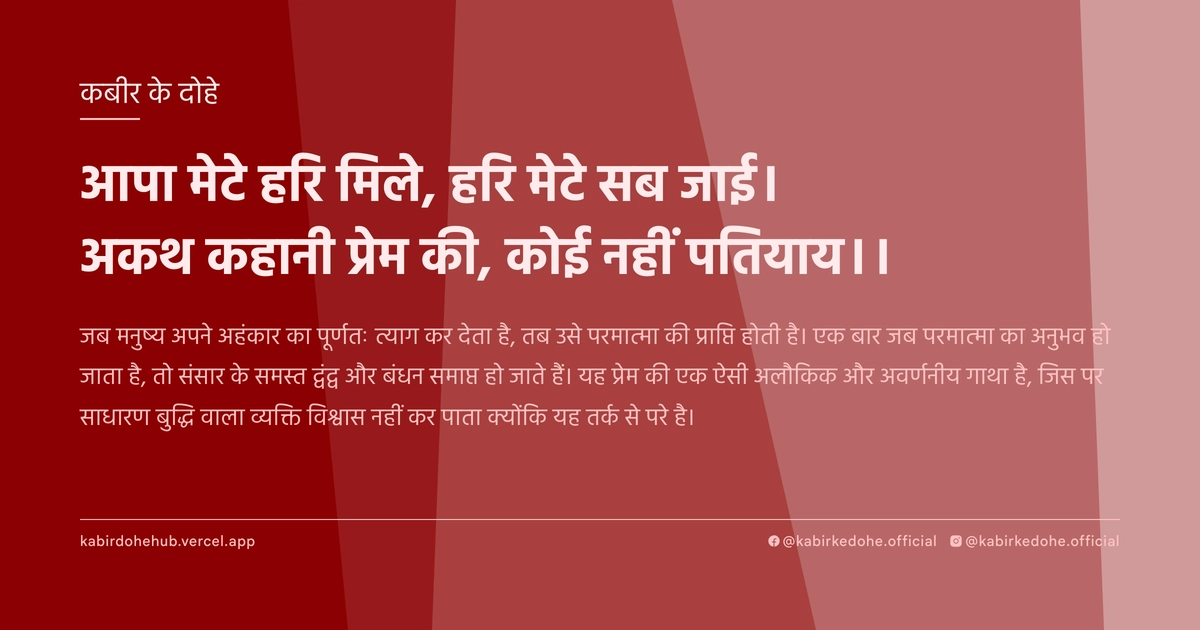
आपा मेटे हरि मिले, हरि मेटे सब जाई।
अकथ कहानी प्रेम की, कोई नहीं पतियाय।।
Aapa mete Hari mile, Hari mete sab jaayi. Akath kahani prem ki, koi nahi patiyaay.
इस पृष्ठ पर इस कबीर दोहे का अर्थ (meaning), हिंदी व्याख्या और अंग्रेज़ी अनुवाद, दार्शनिक विश्लेषण और व्यावहारिक जीवन सीख दी गई है। यह दोहा अहंकार (The Ego) विषय से जुड़ा है — Kabir doha meaning and explanation in Hindi and English.
अर्थ (Meaning):
जब मनुष्य अपने अहंकार का पूर्णतः त्याग कर देता है, तब उसे परमात्मा की प्राप्ति होती है। एक बार जब परमात्मा का अनुभव हो जाता है, तो संसार के समस्त द्वंद्व और बंधन समाप्त हो जाते हैं। यह प्रेम की एक ऐसी अलौकिक और अवर्णनीय गाथा है, जिस पर साधारण बुद्धि वाला व्यक्ति विश्वास नहीं कर पाता क्योंकि यह तर्क से परे है।
When a human completely annihilates their ego, they encounter the Divine. Once the Divine is realized, all worldly attachments and dualities vanish. This is an ineffable saga of divine love—a mystery so profound that those bound by rational logic find it impossible to believe, as it transcends the limits of the intellect.
व्याख्या (Interpretation):
इस दोहे का शाब्दिक अर्थ है कि 'स्व' या अहंकार को मिटाने पर ही ईश्वर मिलते हैं। यहाँ 'आपा' केवल घमंड नहीं, बल्कि वह पृथक पहचान है जो हमें ब्रह्मांड से अलग करती है। यह निर्गुण भक्ति का सार है जहाँ भक्त और भगवान के बीच की दूरी केवल अहंकार की दीवार है। जब यह दीवार गिरती है, तो अद्वैत की स्थिति उत्पन्न होती है—जहाँ केवल एक ही चेतना शेष रहती है। 'हरि मेटे सब जाई' का अर्थ है कि परमात्मा का प्रकाश पड़ते ही माया का अंधकार और जन्म-मृत्यु के चक्र का भ्रम समाप्त हो जाता है। यह प्रेम सांसारिक मोह नहीं, बल्कि आत्मा का परमात्मा में विलीनीकरण है। यह एक ऐसा विरोधाभास है कि जिसे पाया जा सकता है, उसे शब्दों में व्यक्त नहीं किया जा सकता, और जो व्यक्त नहीं हो सकता, उस पर दुनिया विश्वास नहीं करती।
Literally, the verse suggests that the Divine is found only when the 'I' (ego) is erased. Here, 'Aapa' refers not just to pride, but to the perceived separate identity that isolates the soul from the cosmos. This is the essence of Nirgun Bhakti, where the only barrier between the devotee and the Formless One is the wall of ego. When this wall collapses, the state of Advaita (non-duality) emerges—where only one consciousness remains. 'Hari mete sab jaai' implies that upon the dawn of Divine realization, the darkness of Maya and the illusion of the cycle of birth and death are obliterated. This love is not worldly attachment but the merging of the Atman into Brahman. It presents a central paradox: that which is truly experienced cannot be articulated, and that which cannot be articulated is dismissed as unbelievable by the rational mind.
दार्शनिक विश्लेषण (Philosophical Analysis):
कबीर का यह दर्शन उनके समय के कट्टर धार्मिक कर्मकांडों और जातिगत श्रेष्ठता के विरुद्ध एक सशक्त प्रहार है। वे बताते हैं कि मोक्ष किसी मंदिर, मस्जिद या कठिन तपस्या से नहीं, बल्कि आंतरिक अहंकार के विसर्जन से मिलता है। यह विचार सूफी मत के 'फना' (स्वयं को मिटा देना) और वेदांत के 'अहं ब्रह्मास्मि' के अत्यंत निकट है। कबीर यहाँ तर्क देते हैं कि जब तक 'मैं' जीवित है, तब तक 'वह' (परमात्मा) अनुपस्थित है।
ऐतिहासिक रूप से, कबीर ने उस समाज को चुनौती दी जहाँ लोग बाहरी प्रतीकों (माला, तिलक) के माध्यम से पवित्रता का दावा करते थे। उनके लिए, वास्तविक पवित्रता अहंकार की मृत्यु में है। यह मनोवैज्ञानिक रूपांतरण की प्रक्रिया है जहाँ व्यक्ति अपनी सामाजिक पहचान, पद और प्रतिष्ठा को शून्य कर देता है।
अद्वैत वेदांत के परिप्रेक्ष्य में, यह दोहा अज्ञान (Avidya) के विनाश की बात करता है। माया हमें यह विश्वास दिलाती है कि हम शरीर हैं, जबकि हम शुद्ध चेतना हैं। जब यह भ्रम टूटता है, तो 'आपा' मिट जाता है।
सूफीवाद में, प्रेमी और प्रियतम का एक होना ही अंतिम लक्ष्य है। कबीर इसी 'इश्क-ए-हकीकी' की बात कर रहे हैं। यह प्रेम कोई भावना नहीं, बल्कि एक आध्यात्मिक अग्नि है जो अशुद्धियों को जला देती है।
अंततः, कबीर यह स्पष्ट करते हैं कि आध्यात्मिक अनुभव व्यक्तिपरक (subjective) होते हैं। तर्क और भाषा केवल सीमित अनुभवों को व्यक्त कर सकते हैं, लेकिन अनंत के अनुभव को शब्दों में बांधना असंभव है, इसीलिए इसे 'अकथ' कहा गया है।
Kabir’s philosophy here serves as a potent critique of the rigid religious rituals and caste-based hierarchies of his era. He asserts that liberation is achieved not through temples, mosques, or grueling penance, but through the internal dissolution of the ego. This thought aligns closely with the Sufi concept of 'Fana' (annihilation of the self) and the Vedantic realization of 'Aham Brahmasmi' (I am Brahman).
Historically, Kabir challenged a society where purity was claimed through external symbols like prayer beads or tilaks. For him, true purity lies in the death of the ego. This is a process of psychological transformation where an individual strips away their social identity, status, and prestige to reach a state of absolute void.
From the perspective of Advaita Vedanta, this verse speaks of the destruction of Avidya (ignorance). Maya convinces us that we are the physical body, whereas we are actually pure consciousness. When this illusion shatters, the 'Aapa' or the false self is erased.
In Sufism, the ultimate goal is the union of the Lover and the Beloved. Kabir refers to this 'Ishq-e-Haqiqi' (Divine Love). This love is not a mere emotion but a spiritual fire that incinerates all impurities and separations.
Ultimately, Kabir clarifies that spiritual experiences are deeply subjective. Logic and language can only describe limited experiences; attempting to bind the Infinite within words is impossible, which is why he labels this saga as 'Akath' (ineffable).
मूल संदेश (Core Message):
- अहंकार वह पर्दा है जो ईश्वर और आत्मा के बीच खड़ा है।
- स्वयं को मिटाना ही वास्तव में स्वयं को पाना है।
- दिव्य प्रेम तर्क का विषय नहीं, बल्कि अनुभव का विषय है।
- जब 'मैं' समाप्त होता है, तब केवल 'सत्य' शेष रहता है।
- परमात्मा की प्राप्ति बाहरी यात्रा नहीं, बल्कि आंतरिक विसर्जन है।
- The ego is the veil standing between the Soul and the Divine.
- To annihilate the self is the only way to truly find the Self.
- Divine love is not a matter of logic, but of direct experience.
- When the 'I' vanishes, only the 'Truth' remains.
- Realization of God is not an external journey, but an internal dissolution.
व्यावहारिक उदाहरण (Practical Example):
वाराणसी के घाटों पर रहने वाली एक वृद्ध विधवा, जानकी, का जीवन अत्यंत कठिन था। समाज ने उन्हें 'अशुभ' मानकर हाशिए पर धकेल दिया था। जानकी ने वर्षों तक इस अपमान को सहा और मन ही मन एक गहरी कड़वाहट पाल ली। उन्हें लगता था कि दुनिया उनके साथ अन्याय कर रही है और वे अपनी इस पीड़ा को अपनी पहचान बना चुकी थीं।
एक दिन वे एक साधु के पास गईं और पूछा कि इस मानसिक यंत्रणा से मुक्ति कैसे मिलेगी। साधु ने केवल इतना कहा, 'तुम अपनी पीड़ा को पकड़कर बैठी हो, और यही तुम्हारा अहंकार बन गया है। इस 'मैं पीड़ित हूँ' वाले भाव को मिटा दो।'
जानकी को पहले यह बात समझ नहीं आई। उन्होंने सोचा कि जब उनके पास कुछ बचा ही नहीं, तो अहंकार कैसा? लेकिन धीरे-धीरे उन्हें अहसास हुआ कि उनकी 'बेचारगी' ही उनका सबसे बड़ा अहंकार था, जो उन्हें दूसरों से अलग और श्रेष्ठ (नैतिक रूप से) महसूस कराता था।
उन्होंने अपनी इस पहचान को छोड़ने का निर्णय लिया। उन्होंने घाट पर आने वाले अजनबियों की निस्वार्थ भाव से मदद करना शुरू किया, बिना यह सोचे कि वे उनके साथ कैसा व्यवहार करते हैं।
एक समय ऐसा आया जब उन्हें अपनी सामाजिक स्थिति का कोई दुख नहीं रहा। वे अब खुद को एक 'विधवा' या 'पीड़ित' के रूप में नहीं, बल्कि केवल एक सेवा करने वाले माध्यम के रूप में देखने लगीं।
जैसे-जैसे उनका 'मैं' मिटता गया, उनके भीतर एक असीम शांति का संचार हुआ। उन्हें महसूस हुआ कि जिस ईश्वर को वे मंदिर की मूर्तियों में खोज रही थीं, वह वास्तव में उनके भीतर की इसी करुणा में छिपा था।
एक दिन, शहर के एक बड़े सेठ ने उनकी निस्वार्थ सेवा देखी और उन्हें आर्थिक सहायता देना चाहा। जानकी ने उसे सहजता से स्वीकार किया, लेकिन अब उनके मन में न तो सेठ के प्रति कोई लालच था और न ही अपनी गरीबी के प्रति कोई शिकायत।
उनका जीवन अब एक जीवित प्रार्थना बन गया था। उन्होंने अनुभव किया कि जब उन्होंने अपनी 'दुखिया' वाली पहचान (आपा) को मिटाया, तब उन्हें वह परम आनंद (हरि) मिला जो किसी भी भौतिक सुख से ऊपर था।
Janaki, an elderly widow living on the ghats of Varanasi, led a life of extreme hardship. Society had marginalized her, labeling her 'inauspicious.' For years, Janaki endured this humiliation, harboring a deep bitterness. She felt the world was profoundly unfair to her, and she eventually turned this suffering into her primary identity.
One day, she approached a wandering monk and asked how to find liberation from this mental agony. The monk simply replied, 'You are clinging to your pain, and that clinging has become your ego. Erase this feeling of "I am the victim."'
Initially, Janaki couldn't grasp this. She wondered how she could have an ego when she had nothing left. However, she gradually realized that her 'helplessness' was actually her greatest ego—it made her feel separate from others and morally superior in her suffering.
She decided to let go of this identity. She began helping strangers on the ghats selflessly, without considering how they treated her in return.
There came a moment when she no longer felt the sting of her social status. She stopped seeing herself as a 'widow' or a 'victim' and began to see herself merely as a vessel for service.
As her 'I' dissolved, an immense peace flooded her being. She realized that the Divine she had sought in temple idols was actually hidden within this very compassion.
One day, a wealthy merchant noticed her selfless service and offered her significant financial aid. Janaki accepted it with grace, but she no longer felt greed for the merchant nor resentment for her poverty.
Her life became a living prayer. She experienced that by erasing her identity as the 'suffering one' (Aapa), she found that supreme bliss (Hari) which transcends all material comforts.
अभ्यास मार्गदर्शन (Practice Guidance):
- प्रतिदिन 20 मिनट मौन ध्यान करें, जहाँ आप अपने विचारों को केवल देखें और उनमें 'मैं' की पहचान को खोजने का प्रयास करें।
- एक 'अहंकार डायरी' लिखें: दिन भर में उन क्षणों को नोट करें जब आपको लगा कि आप दूसरों से श्रेष्ठ हैं या जब आपको अपमान महसूस हुआ। विश्लेषण करें कि वहाँ कौन सा 'आपा' सक्रिय था।
- सेवा का अभ्यास: किसी ऐसे व्यक्ति की मदद करें जिससे आप घृणा करते हैं, यह महसूस करते हुए कि आप और वह एक ही चेतना के दो रूप हैं।
- निदान चेकलिस्ट: क्या आप अभी भी अपनी उपलब्धियों का श्रेय खुद ले रहे हैं? क्या आप दूसरों की आलोचना करते समय स्वयं को सही मानते हैं? यदि हाँ, तो 'आपा' अभी जीवित है।
- Practice 20 minutes of silent meditation daily, observing your thoughts and attempting to pinpoint where the sense of 'I' originates.
- Maintain an 'Ego Journal': Note moments throughout the day when you felt superior to others or felt offended. Analyze which specific 'Aapa' (identity) was being triggered.
- Practice selfless service: Help someone you dislike, consciously realizing that you and they are manifestations of the same universal consciousness.
- Diagnostic Checklist: Do you still take sole credit for your achievements? Do you believe you are inherently 'right' while criticizing others? If yes, the 'Aapa' is still active.
चिंतन प्रश्न (Reflection Questions):
- मेरी वह कौन सी सामाजिक या पेशेवर पहचान है, जिसके बिना मैं खुद को शून्य महसूस करता हूँ?
- क्या मेरी 'आध्यात्मिकता' या 'परोपकार' भी मेरे अहंकार को पोषण देने का एक सूक्ष्म तरीका है?
- जब मैं कहता हूँ कि 'मैं दुखी हूँ', तो क्या मैं वास्तव में उस दुख से चिपका हुआ हूँ क्योंकि वह मुझे एक विशिष्ट पहचान देता है?
- यदि मेरी सारी उपलब्धियाँ और स्मृतियाँ छीन ली जाएँ, तो मेरे भीतर क्या बचेगा?
- मैं किन लोगों के प्रति सबसे अधिक कठोर हूँ, और क्या वह कठोरता मेरे अपने भीतर के किसी दबे हुए अहंकार का प्रतिबिंब है?
- Which social or professional identity do I cling to so tightly that without it, I would feel like a void?
- Is my 'spirituality' or 'philanthropy' actually a subtle way of feeding my ego?
- When I say 'I am suffering,' am I actually clinging to that pain because it gives me a distinct identity?
- If all my achievements and memories were stripped away, what would remain within me?
- Toward whom am I most critical, and is that criticality a reflection of a suppressed ego within myself?